What Does a Smart Farm Look Like in 2026? Technologies, Systems and Real Farm Examples
A smart farm in 2026 does not necessarily look like a futuristic farm filled with robots, autonomous tractors and expensive machines.
In many cases, it looks surprisingly familiar.
There may still be workers walking through fields, tractors preparing land, irrigation systems supplying water and farmers inspecting crops. The difference is that these activities are increasingly supported by connected sensors, satellite imagery, drones, weather data, farm management software, artificial intelligence and automated equipment.
The defining feature of a smart farm is therefore not how advanced the machinery looks. It is how effectively the farm collects information, turns that information into useful decisions and uses technology to carry out those decisions accurately.
This shift is becoming increasingly important in agriculture. In 2026, the global smart farming conversation is increasingly centred on combining data, artificial intelligence, Internet of Things devices, precision agriculture and sustainable resource management rather than simply purchasing individual pieces of technology.
For farmers, the practical question is not whether a farm has the newest technology. It is whether technology helps the farm solve real problems such as excessive water use, uneven fertiliser application, labour shortages, pest pressure, unpredictable weather, machinery downtime, poor record keeping or post-harvest losses.
What Is a Smart Farm in 2026?
A smart farm is a farm where digital technologies and conventional agricultural practices work together to improve decision-making, monitoring, precision and operational efficiency.
The farm may collect information from soil sensors, weather stations, machinery, irrigation equipment, drones, satellites, cameras, livestock devices and farm records.
That information can then be analysed by farm software or artificial intelligence systems to identify patterns, detect unusual conditions, generate alerts or support decisions.
The farmer remains central to the process.
For example, instead of irrigating an entire field according to a fixed timetable, a farmer may combine soil moisture readings, weather information, crop growth stage and irrigation-flow data to decide when and where irrigation is required.
Instead of discovering a crop disease after visible symptoms have spread throughout a field, the farmer may use field scouting, smartphone images, drone imagery or satellite data to identify suspicious areas earlier.
Instead of maintaining machinery according to a simple calendar, connected equipment can provide operating information that helps identify maintenance requirements or abnormal performance.
The farm becomes more connected and more measurable.
The Main Difference Between a Traditional Farm and a Smart Farm
Traditional farming is not necessarily unscientific or inefficient. Experienced farmers have always collected information through observation, field experience, weather patterns and practical records.
Smart farming adds more continuous and location-specific information to those decisions.
| Farm activity | Conventional approach | Smart farming approach |
|---|---|---|
| Irrigation | Fixed schedule or visual assessment | Soil moisture, weather and flow data |
| Crop scouting | Walking fields manually | Field scouting combined with satellite, drone and sensor data |
| Fertiliser application | Field-wide application | Soil data, crop maps and variable-rate application where appropriate |
| Pest monitoring | Visual inspection | Sensors, cameras, scouting data and predictive analytics |
| Weather management | General weather forecast | Farm-specific weather stations and forecast data |
| Machinery management | Manual inspection and service schedules | Machine data, diagnostics and maintenance records |
| Farm records | Paper notebooks or spreadsheets | Digital farm management systems |
| Livestock monitoring | Physical observation | Sensors, cameras and connected livestock devices |
| Greenhouse management | Manual adjustment | Automated climate and irrigation controls |
| Decision-making | Experience plus periodic observations | Experience plus continuous and historical data |
The important point is that smart farming does not eliminate agricultural knowledge.
It gives farmers additional information with which to apply that knowledge.
A Smart Farm Starts With Data
Data is the foundation of most smart farming systems.
A farm cannot become genuinely smart simply because it has a drone or an AI application. The technology needs reliable information about the farm and a practical method for turning that information into action.
A connected farm may collect data about:
- Soil moisture
- Soil temperature
- Soil nutrients
- Crop growth
- Weather
- Rainfall
- Irrigation volume
- Water pressure
- Machinery operation
- Fuel consumption
- Livestock activity
- Disease symptoms
- Pest activity
- Yield
- Labour
- Input applications
- Storage conditions
- Harvest operations
The value comes from connecting these different information sources.
For example, soil moisture data alone may tell a farmer that a field is becoming dry. When combined with weather forecasts, rainfall measurements, crop growth stage and irrigation data, the same information can support a much more useful irrigation decision.
This is why a smart farm should be viewed as a system rather than a collection of gadgets.
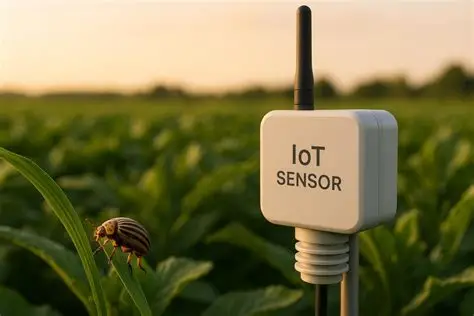
IoT Sensors Are the Eyes and Ears of the Farm
Internet of Things technology allows physical devices to collect and transmit information.
On a farm, these devices can include soil moisture sensors, weather stations, water meters, temperature sensors, humidity sensors, pressure sensors, tank-level sensors and equipment monitoring devices.
A sensor installed in a field can collect measurements at regular intervals and send the information to a gateway, mobile network or other communication system.
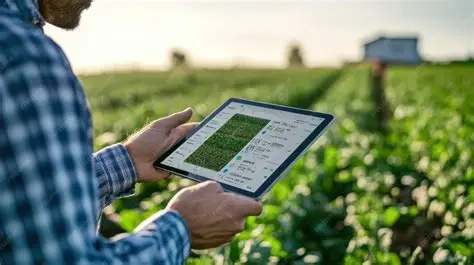
The farmer may then see the information through a dashboard or mobile application.
For example, a vegetable farmer using drip irrigation might install soil moisture sensors in representative areas of a field. Instead of relying only on a calendar, the farmer can monitor soil conditions and adjust irrigation according to crop requirements and field conditions.
The technology becomes especially valuable when measurements are collected continuously rather than occasionally.
However, sensors must be installed correctly and maintained properly. Poor sensor placement, calibration problems, damaged equipment or inappropriate thresholds can produce misleading information.
Smart farming still requires good farm management.
Weather Stations Become Part of the Farm
Weather is one of the most important variables affecting agricultural decisions.
A smart farm can use weather stations to monitor conditions such as:
- Temperature
- Relative humidity
- Rainfall
- Wind speed
- Wind direction
- Solar radiation
- Leaf wetness in some systems
- Atmospheric pressure
This information can support decisions about irrigation, spraying, disease risk, planting, harvesting and field operations.
Farm-specific weather data can also be more useful than relying exclusively on a general weather forecast because conditions can vary considerably between locations.
A farmer may receive a general forecast for a large area while the farm itself experiences different rainfall, temperature or wind conditions.
Weather data becomes even more useful when integrated with other farm information.
For example, rainfall measurements can be combined with soil moisture data to determine whether additional irrigation is necessary.
Satellite Imagery Gives Farmers a View From Above
Satellite technology has become an important part of modern farm monitoring.
Instead of physically inspecting every hectare, farmers and agricultural service providers can use satellite imagery to monitor vegetation, field conditions, land cover and changes over time.
Different satellite datasets can provide different types of information. Multispectral imagery, for example, can help analyse vegetation characteristics, while other satellite systems can support monitoring of soil moisture, land conditions and environmental changes.
This is particularly useful for large farms where walking every field frequently is difficult.
Satellite monitoring can help identify areas that deserve closer investigation.
For example, if one part of a maize field begins showing a different vegetation pattern from the surrounding crop, the farmer can inspect that location to determine whether the cause is water stress, nutrient problems, pests, disease, poor emergence or another field condition.
Satellite imagery therefore does not necessarily replace field scouting.
It can make field scouting more targeted.
In Nigeria, satellite-based agricultural monitoring is also becoming increasingly relevant. NASRDA reported in 2026 that satellite-based tools were being advanced for mapping irrigated croplands, monitoring seasonal dynamics and supporting agricultural decision-making.
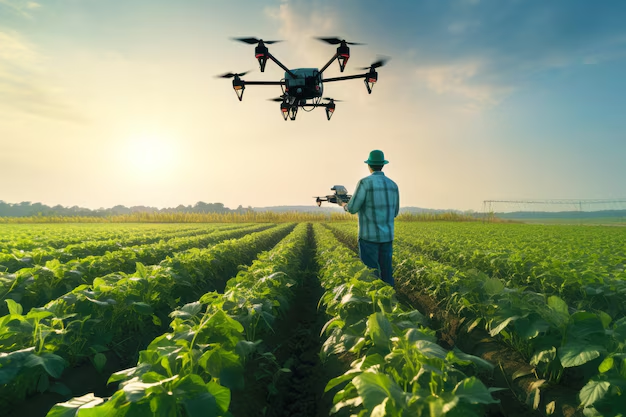
Drones Provide High-Resolution Farm Information
Drones can operate at a much lower altitude than satellites and can therefore provide highly detailed imagery of selected areas.
A farmer or agricultural service provider may use drones for:
- Crop scouting
- Stand assessment
- Crop health monitoring
- Field mapping
- Pest and disease inspection
- Irrigation assessment
- Plant counting
- Farm boundary mapping
- Targeted spraying where appropriate and legally permitted
A drone is particularly useful when a farmer wants detailed information about a specific field.
However, owning a drone is not always necessary.
For many farms, drone-as-a-service can make more sense. A farmer can pay an operator to map or inspect the farm when needed rather than purchasing, maintaining and operating the aircraft personally.
This service model can be especially useful for smaller farms or farms that only need aerial monitoring several times during a production cycle.
Artificial Intelligence Turns Farm Data Into Decisions
Artificial intelligence is one of the most discussed technologies in agriculture in 2026, but its practical value depends heavily on the quality of the underlying data.
AI can be used for tasks such as image analysis, crop monitoring, disease identification, yield estimation, anomaly detection, forecasting and decision support.
For example, an AI-enabled crop monitoring system could analyse images collected from smartphones, drones or satellites and identify areas that require further investigation.
AI can also analyse large datasets that would be difficult for a farmer to evaluate manually.
The important distinction is between AI that provides useful decision support and AI that simply produces impressive-looking predictions.
A farmer should still ask:
Does the system work with my crop?
Has it been tested under conditions similar to my farm?
What data does it use?
How accurate is it?
Can I verify its recommendations?
What happens when the internet is unavailable?
Who provides technical support?
Smart farming should not turn the farmer into a passive user of automated recommendations.
Farm Management Software Becomes the Digital Control Centre
A smart farm needs somewhere to organize its information.
Farm management software can act as a digital record and operational management system.
Depending on the platform, it may record:
- Field boundaries
- Crops and varieties
- Planting dates
- Fertiliser applications
- Pesticide applications
- Irrigation
- Labour
- Machinery
- Fuel
- Harvest quantities
- Sales
- Expenses
- Inventory
- Weather
- Farm tasks
The value increases when different data sources can be connected.
For example, a farmer may combine field maps with crop records, sensor readings, weather information and machinery records.
Instead of keeping disconnected records in notebooks, spreadsheets and separate applications, the farmer can gradually build a more complete digital picture of the farm.
This is one of the most practical characteristics of a smart farm.
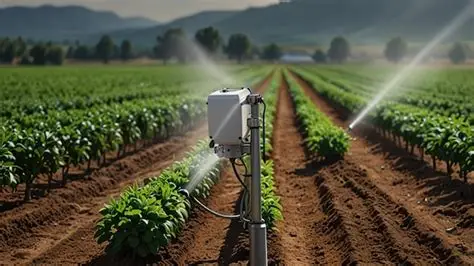
Smart Irrigation Uses Information Instead of Guesswork
Water management is one of the clearest applications of smart farming.
A smart irrigation system can combine:
- Soil moisture sensors
- Weather data
- Rainfall measurements
- Crop growth stage
- Evapotranspiration information
- Flow meters
- Water pressure sensors
- Irrigation controllers
The objective is not simply to automate watering.
The objective is to apply the appropriate amount of water at the appropriate time and location.
A farmer may therefore move from asking, “Should I irrigate today?” to asking a more specific question: “Which field zones require water, how much is required and when should irrigation take place?”
Automation can then help implement the decision.
Precision Fertiliser Application Becomes More Targeted
Smart farming can also change how farmers manage nutrients.
Traditional uniform application treats an entire field as though soil conditions and crop requirements are identical.
Precision agriculture recognizes that fields can contain considerable variability.
Soil testing, yield maps, crop imagery and other information can help identify differences within a field.
Where suitable equipment and reliable recommendations are available, variable-rate technology can adjust application rates according to mapped field conditions.
The objective is not always to reduce fertiliser use.
In some situations, the objective may be to redistribute inputs more accurately so that areas requiring more nutrients receive appropriate amounts while areas requiring less are not over-applied.
FAO reported in 2026 that precision, site-specific approaches combining optimisation algorithms and remote sensing have demonstrated potential to reduce fertiliser use while maintaining or increasing yield potential in certain rice production systems. Results from such studies should not, however, be treated as a guaranteed outcome for every crop or farm.
Smart Pest and Disease Monitoring
One of the most promising areas of agricultural technology is early detection.
Instead of waiting until an entire field shows obvious symptoms, farmers can use a combination of scouting, cameras, imagery, sensors and AI-supported image analysis to identify potential problems earlier.
A smart system may flag an unusual area on a crop-health map.
The farmer can then visit that location and determine what is actually happening.
The cause could be:
- Pest infestation
- Disease
- Nutrient deficiency
- Water stress
- Poor drainage
- Soil compaction
- Mechanical damage
- Weed competition
- Poor crop establishment
This is important because the same visual symptom can have different causes.
Technology should therefore support diagnosis rather than automatically replacing agronomic judgment.
Smart Machinery Is Becoming More Connected
Modern agricultural machinery increasingly includes electronic control systems, positioning technology, sensors and onboard computing.
On a smart farm, machinery can become part of the farm’s digital system.
Examples include:
- GPS guidance
- Automatic steering
- Section control
- Variable-rate application
- Machine performance monitoring
- Fuel monitoring
- Field-operation records
- Remote diagnostics
- Equipment tracking
The practical benefit is that machinery operations can become more precise and easier to document.
A farmer may know where a machine worked, what operation was performed and how much area was covered.
This information can later be combined with production and input records.
Greenhouses Can Become Highly Automated
A smart farm does not have to be an open field.
Greenhouses and protected cultivation systems can use sensors and automation to control the production environment.
A connected greenhouse may monitor:
- Temperature
- Humidity
- Light
- Carbon dioxide
- Soil or growing-medium moisture
- Nutrient conditions
- Irrigation
- Ventilation
Controllers can then operate irrigation, ventilation, cooling, shading or other equipment according to defined conditions.
For high-value crops, this can make it easier to maintain a more consistent production environment.
FAO’s Smart Farming approach also highlights protected cultivation, efficient resource use, local technical capacity and digital technologies as important components of technology-enabled horticultural production.
Livestock Farms Can Be Smart Too
Smart farming is not limited to crop production.
Livestock operations can use connected technology to monitor animals and their environment.
Depending on the production system, technologies can include:
- Activity monitoring
- Temperature monitoring
- Automated feeding
- Water monitoring
- Camera systems
- Electronic identification
- Environmental sensors
- Automated climate control
- Digital health records
The objective is to provide farmers with earlier information about unusual behaviour or environmental conditions.
For example, an animal monitoring system may identify a change in activity that prompts a farmer to inspect an animal.
Technology does not replace the stockperson.
It can help the stockperson decide where attention is needed first.
Post-Harvest Operations Are Also Becoming Smart
A farm can produce an excellent crop and still lose money after harvest.
Smart agriculture therefore extends beyond production in the field.
Digital technologies can be used to monitor:
- Storage temperature
- Humidity
- Cold-room conditions
- Transport conditions
- Inventory
- Product traceability
- Grain quality
- Produce movement
- Processing operations
For perishable crops, connected temperature monitoring can help identify conditions that may increase the risk of quality deterioration.
For grains, digital systems can support monitoring of storage conditions and quality.
This makes the smart farm more than a production system.
It becomes part of a connected agricultural value chain.
What a Smart Farm Looks Like During a Normal Day
Consider a hypothetical 100-hectare commercial maize and vegetable farm.
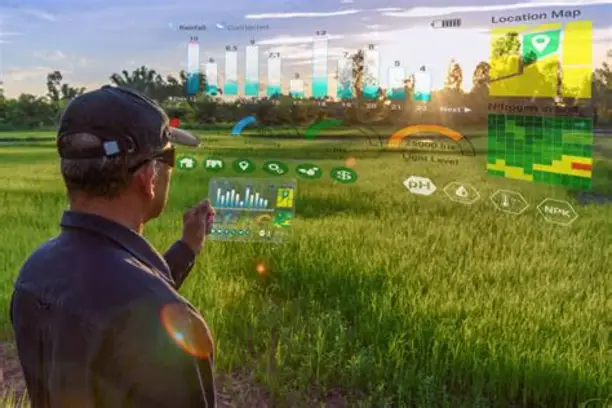
Early in the morning, the farm manager opens a mobile dashboard.
The system shows overnight rainfall, soil moisture levels, weather conditions and alerts from selected fields.
One maize block has lower-than-expected vegetation readings.
The manager checks the field map and compares it with soil and rainfall information.
A farm worker is sent to inspect the affected area.
The inspection reveals a blocked irrigation line rather than a crop disease.
The problem is repaired before significant crop stress develops.
Later in the day, the farm’s machinery records show where fertiliser was applied.
The manager checks the application records against the field map.
Meanwhile, a weather alert indicates conditions that may affect a planned spraying operation.
The spray activity is reviewed and potentially rescheduled based on the farm’s agronomic requirements and the actual weather conditions.
None of these technologies has independently “run the farm.”
Instead, they have improved the speed and quality of information available to the people managing it.
That is what a practical smart farm looks like.
A Smart Farm Is Built as a Connected System
The technologies become much more valuable when they communicate with each other.
A simplified smart-farm architecture looks like this:
Field → Sensors and Machines → Connectivity → Data Platform → Analytics and AI → Farmer or Farm Manager → Action → New Data
For example:
Soil sensor → IoT gateway → farm dashboard → irrigation recommendation → irrigation system → flow meter → irrigation record
Another example could be:
Satellite image → crop-health analysis → anomaly detected → field inspection → agronomist diagnosis → targeted intervention → updated farm record
This creates a continuous feedback loop.
The farm collects information, makes a decision, acts on the decision and collects new information about the result.
Connectivity Is a Critical Part of Smart Farming
A sensor is only useful if its data can reach the system where it needs to be used.
Depending on the farm, connectivity may involve:
- Mobile networks
- Wi-Fi
- LoRaWAN
- Radio communication
- Satellite connectivity
- Local gateways
- Bluetooth for short-range devices
The appropriate solution depends on farm size, terrain, distance between devices, network availability, power requirements and budget.
A farm in a location with unreliable mobile coverage may require a different architecture from a farm located near strong 4G or 5G coverage.
This is especially important in Africa.
A smart farming system designed for an environment with continuous electricity, reliable broadband and easy access to replacement parts may require substantial adaptation before it can work effectively on another farm.
Solar Power Can Support Remote Farm Technology
Many farms have equipment operating far from buildings and electrical infrastructure.
Solar-powered sensor systems, batteries and low-power communication devices can help operate equipment in remote locations.
This can be useful for:
- Weather stations
- Water monitoring
- Remote pumps
- Field sensors
- Security cameras
- Livestock monitoring
- Irrigation controllers
However, solar power does not eliminate maintenance.
Batteries deteriorate, panels become dirty, cables can be damaged and electronic devices can fail.
A smart farm therefore needs an operational plan for maintaining the technology.
Cybersecurity and Data Ownership Matter More in 2026
As farms become more connected, agricultural data becomes increasingly important.
Farm data can include field boundaries, yields, input records, machinery information, financial information and production history.
Farmers should understand:
Who owns the data?
Where is it stored?
Who can access it?
Can the farmer export the data?
What happens if the subscription ends?
Can equipment continue operating without the cloud service?
Can different systems communicate with each other?
These questions are important because a farm should not become completely dependent on a technology provider without understanding the implications.
How Much Does a Smart Farm Cost?
There is no single price for a smart farm.
A small farm might begin with a weather station, smartphone-based records and a few soil moisture sensors.
A commercial operation may eventually use satellite monitoring, drones, connected machinery, automated irrigation, farm management software, weather stations, IoT gateways and advanced analytics.
The major cost categories can include:
| Cost area | What the farmer may pay for |
|---|---|
| Sensors | Purchase, installation, calibration and replacement |
| Connectivity | SIM cards, data plans, gateways or other communications |
| Software | Subscription, licences and support |
| Drones | Equipment, pilots, maintenance, batteries and data processing |
| Machinery technology | Guidance, controllers, sensors and upgrades |
| Irrigation automation | Controllers, valves, sensors, pumps and communication |
| Power | Solar systems, batteries, charging and backup power |
| Data services | Satellite imagery, analytics and specialist reports |
| Training | Operator and farm-management training |
| Technical support | Installation, maintenance and troubleshooting |
Exact prices vary significantly according to equipment specifications, supplier, farm size, location, service model and installation requirements.
Farmers should therefore evaluate the total cost of ownership rather than focusing only on the purchase price.
Does Every Farm Need AI, Drones and Robots?
No.
This is one of the most important points about smart farming in 2026.
A farmer with a recurring irrigation problem may gain more value from accurate flow meters and soil moisture sensors than from an expensive autonomous machine.
A livestock farmer struggling with water availability may need tank-level monitoring before investing in advanced AI.
A large commercial farm may benefit from satellite monitoring and automated machinery because of its scale.
A vegetable farmer may gain substantial value from greenhouse climate sensors and automated irrigation.
The right technology depends on the farm problem.
The smartest farm is not necessarily the farm with the most technology.
It is the farm where technology is solving important problems at a sustainable cost.
Smart Farming in Nigeria and Africa
The African context is particularly important because farm structures, infrastructure, climate, financing and technology access differ considerably from those in highly mechanised agricultural markets.
In Nigeria, smart farming development is increasingly involving satellite monitoring, IoT, drones, AI, digital advisory systems and precision agriculture.
Nigeria’s agricultural policy planning for 2026 includes digital agriculture initiatives involving digital platforms, early-warning and weather services, farmer adoption of digital technologies and expansion of precision farming.
NASRDA has also reported initiatives involving satellite and Earth-observation technology for agricultural monitoring, irrigation mapping and resource management.
There are also examples of Nigerian initiatives exploring connected farm infrastructure. NIGCOMSAT previously documented a smart agriculture project involving IoT sensors, farm connectivity, drones and other precision technologies on a commercial farm in Ogun State.
These developments show that smart farming is not simply a concept for farms in Europe or North America.
However, African deployment requires local adaptation.
Important considerations include:
- Electricity availability
- Mobile network coverage
- Internet reliability
- Equipment importation
- Spare parts
- Local technical support
- Farmer training
- Financing
- Farm fragmentation
- Equipment security
- Data costs
- Local crop systems
- Language and digital literacy
- Climate conditions
Service-based models may therefore be important.
A farmer does not always need to own every technology.
Drone services, satellite-based monitoring, soil testing services, precision agriculture contractors, digital advisory platforms and equipment rental can make advanced technology accessible without requiring large upfront investment.
The Role of the Human Farmer Does Not Disappear
One misconception about smart farming is that technology will make farmers unnecessary.
Agriculture remains a biological production system.
Plants respond to weather, soil, water, pests, diseases and management in complex ways.
Animals behave differently under different environmental and health conditions.
Machines operate under changing physical conditions.
Data can improve decisions, but farmers still need to understand the production system.
The future farm manager may increasingly spend less time simply collecting information and more time interpreting information, coordinating operations and deciding what action should be taken.
That is a change in the role of technology, not the disappearance of farming expertise.
How Farmers Can Start Building a Smart Farm
Farmers do not need to transform an entire operation in one season.
A practical approach is to begin with one measurable problem.
Start by identifying where the farm is losing money, time, water, labour or production.
Then collect baseline information.
For example, a farmer concerned about irrigation should first determine how much water is currently being applied, how frequently irrigation occurs and how crops respond.
After that, the farmer can introduce appropriate monitoring technology.
A practical implementation sequence can look like this:
Identify the problem → measure the current situation → choose the appropriate technology → run a small pilot → train workers → evaluate the results → integrate the technology into farm operations → expand gradually.
This approach reduces the risk of purchasing technology that looks impressive but does not solve an important farm problem.
What a Small Smart Farm Could Look Like
A small commercial vegetable farm does not need a huge technology budget to begin.
It could use:
- A smartphone for digital records
- A basic weather station
- Soil moisture sensors
- Smart irrigation controls
- Digital farm maps
- Satellite imagery
- Mobile agricultural advisory services
The farmer could record planting dates, irrigation, fertiliser applications, pest observations and harvest quantities digitally.
Over time, the accumulated records would become increasingly valuable because the farmer could compare seasons and identify recurring patterns.
This is a form of smart farming even without robots or autonomous machinery.
What a Large Commercial Smart Farm Could Look Like
A large commercial farm could have a considerably more complex technology ecosystem.
It might include:
- GPS-guided tractors
- Connected farm machinery
- Variable-rate equipment
- IoT sensor networks
- Weather stations
- Automated irrigation
- Satellite monitoring
- Drone scouting
- AI-based analytics
- Farm management software
- Digital inventory systems
- Automated storage monitoring
- Fleet management
- Digital traceability
The challenge is no longer simply collecting data.
The challenge becomes integrating large amounts of data into a system that farm managers can actually use.
Too much information can become a problem if the farm receives hundreds of alerts without clear priorities.
The Biggest Challenge Is Data Quality
Smart farming systems depend on data.
If the data is wrong, the recommendation can also be wrong.
Common causes of poor farm data include:
- Incorrect sensor placement
- Poor calibration
- Missing records
- Faulty equipment
- Inconsistent field boundaries
- Weak connectivity
- Incorrect crop information
- Inaccurate manual entries
- Incompatible software
- Poor maintenance
Farmers should therefore treat calibration, validation and maintenance as part of smart farming rather than as optional technical tasks.
Smart Farming Should Produce Actionable Information
A dashboard full of charts does not automatically make a farm smarter.
The farmer needs information that leads to a useful decision.
For example:
“Field 7 soil moisture is 19 percent.”
That is information.
“Field 7 has reached the farm’s irrigation threshold and no meaningful rainfall is forecast, so inspect the irrigation system and consider irrigation according to the crop’s water requirement.”
That is actionable information.
The purpose of smart agriculture is therefore not to produce more data.
It is to improve decisions and operations.
What Smart Farms May Look Like in the Near Future
The direction of smart farming is toward greater integration.
Instead of separate systems for weather, irrigation, machinery, crop monitoring and farm records, more farms are likely to connect these information sources.
AI can increasingly help interpret the data.
Sensors can provide continuous field information.
Satellites can monitor large areas.
Drones can provide detailed inspections.
Automated equipment can carry out precisely defined operations.
Farm software can record what happened.
The result is a more connected agricultural management system.
However, the pace of adoption will vary widely.
Large commercial farms may integrate multiple systems, while smaller farms may use individual services or shared platforms.
In many African farming systems, the growth of service providers may be just as important as farmers purchasing technology themselves.
The Smart Farm of 2026 Is Not a Robot Farm
The image of a smart farm is often dominated by autonomous tractors, robots and artificial intelligence.
Those technologies are important, but they represent only one part of the picture.
A genuinely smart farm in 2026 may look like a normal farm from the outside.
The difference becomes visible in how the farm operates.
The manager knows how much water was used.
Field workers know which areas require inspection.
The farm has digital records of production activities.
Weather information influences decisions.
Satellite or drone imagery helps identify field variability.
Sensors monitor important conditions.
Software connects information from different operations.
AI may help analyse complex datasets.
Machines can perform selected tasks with greater precision.
And the farmer can use all of this information to make better-informed decisions.
That is the real meaning of smart farming.
It is not about replacing agriculture with technology.
It is about using technology to make agricultural decisions more measurable, precise, timely and resource-efficient.
Frequently Asked Questions
What is a smart farm in 2026?
A smart farm in 2026 is a farm that uses digital technologies such as sensors, IoT devices, satellite imagery, drones, farm software, AI, automation and precision equipment to collect information and improve farm decisions and operations.
Does a smart farm need robots?
No. Robots are not required for a farm to be considered smart. A farm using sensors, digital records, satellite monitoring, weather data and smart irrigation can already have a functioning smart farming system.
What is the most important technology on a smart farm?
There is no single technology that is most important for every farm. The appropriate technology depends on the farm’s main production problem, crop or livestock system, size, infrastructure and budget.
Can small farmers use smart farming technology?
Yes. Small farmers can use technologies such as mobile applications, digital farm records, weather services, soil moisture sensors, satellite imagery and technology-as-a-service models without necessarily purchasing expensive machinery.
How does AI help farmers?
AI can analyse large amounts of agricultural data and support tasks such as crop monitoring, image analysis, anomaly detection, forecasting, disease identification and decision support. Its usefulness depends on the quality of data and how well the system fits the farm.
Is smart farming expensive?
It can be expensive, particularly when it involves automated machinery, large sensor networks and complex software. However, smart farming can also begin with relatively simple technologies. Farmers should evaluate the cost against the specific problem the technology is intended to solve.
Can smart farming work in Nigeria?
Yes. Smart farming technologies can be used in Nigeria, but systems need to account for local conditions such as connectivity, electricity, farm size, financing, technical support, equipment availability, climate and farmer training.
What should a farmer do before buying smart farming technology?
The farmer should first identify a measurable production or management problem, establish a baseline, determine what information is needed, compare suitable technologies and test the solution on a manageable part of the farm before scaling it.