How to Manage a Sow During Pregnancy for a Healthy Litter
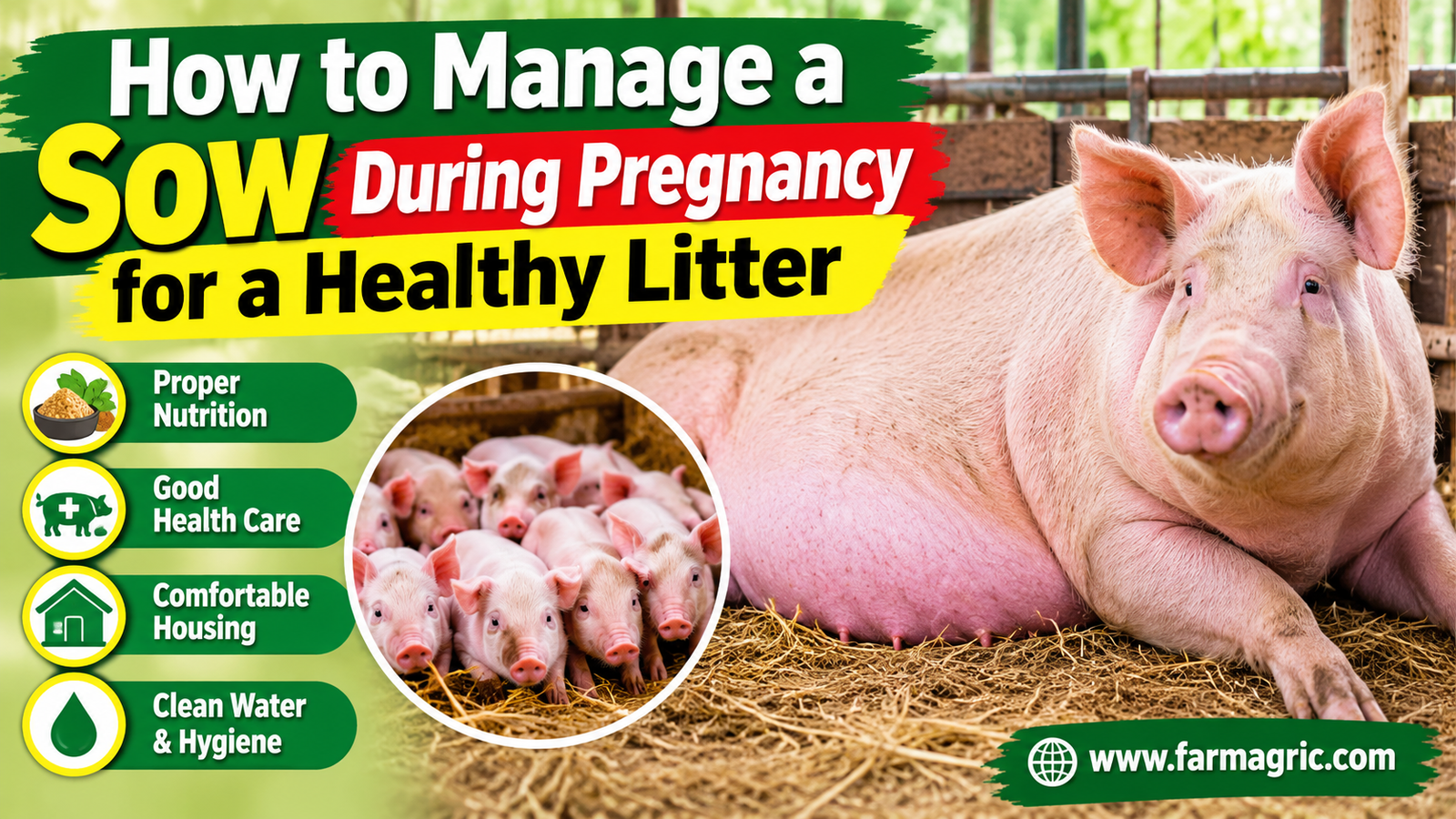
How to Manage a Sow During Pregnancy for a Healthy Litter
I once had a sow that looked magnificent the day she farrowed. Broad, glossy, and heavy, she was the fattest animal on the farm, and I was proud of her. She gave me eight small, weak piglets after a long and difficult night, had almost no milk, and was off her feed for days. I had fed her like a champion for four months and wrecked the litter in the process. Her thinner neighbour farrowed twelve strong piglets without trouble. That was the day I stopped judging a pregnant sow by how fat she was.
Here is the direct answer. A healthy litter starts with a sow that enters pregnancy in good condition, is fed the right amount of the right feed at each stage (not too thin, not too fat), stays free of disease and parasites, has clean water and a comfortable, low-stress environment, and is moved into a clean farrowing pen a few days before she is due. Pregnancy in a sow lasts about 114 days, roughly three months, three weeks, and three days, and what you do in each third of it shapes the size, strength, and survival of the piglets. Most problems come from over- or under-feeding, stress, and neglected health, all of which you control.
Let me walk you through it stage by stage.
What most farmers get wrong
The first mistake is feeding a pregnant sow as much as she will eat. A sow left to eat freely during pregnancy becomes fat, farrows with difficulty, crushes more piglets, eats poorly after farrowing, and gives less milk. Overfat sows are also more prone to leg problems and lower fertility.
The second mistake is the opposite, underfeeding. A sow that is too thin will not support her growing piglets and her own body, so the litter is small or weak, and she struggles to recover and breed again.
The third mistake is missing the early weeks. The first weeks after mating are when embryos attach and survive, and stress, rough handling, heat, or sudden feed changes can reduce litter size without you ever knowing.
The fourth mistake is ignoring health. Parasites, infections, and missed vaccinations all hit the unborn litter.
The fifth mistake is poor record keeping. If you do not write down the mating date, you cannot know when she will farrow, or whether she is really pregnant at all.
The sixth mistake is a rushed move to the farrowing pen. A sow that is moved at the last minute into a dirty, unfamiliar pen is stressed, and stress delays and complicates farrowing.
Start before mating
A healthy litter begins before the sow is bred. A gilt (a young female) should be mature enough and heavy enough at first mating, since breeding too young stunts her and gives small litters. Ask your livestock officer for the right age and weight for your breed. A sow coming off a litter should be in good body condition, not too thin from lactation. Some farmers give extra feed in the period before mating to help the sow ovulate more eggs, a practice called flushing. Ask your vet or livestock officer whether it suits your sows.
Make sure she is healthy, dewormed, and vaccinated as advised before breeding. Choose a healthy, fertile boar or good-quality semen, and record the date of every mating or insemination. Many farmers mate twice, about a day apart, to improve conception, but ask for advice on what suits your system.
Know the pregnancy timeline
A sow’s pregnancy lasts about 114 days, though it can vary by a few days. Write down the date of mating, then work out the expected farrowing date. Mark it on a calendar.
Check for a return to heat about three weeks after mating. A sow that comes into heat again around 18 to 24 days after mating is probably not pregnant, and should be rebred. A sow that does not return to heat may be pregnant, but this is not certain. Ask your vet about pregnancy testing with ultrasound or other methods, which can confirm pregnancy early, around a month after mating. Confirming early saves feed on sows that are not in pig.
It helps to think of pregnancy in three stages: the first month, the middle stage, and the last month before farrowing.
Early pregnancy: the first month
This is a delicate time. Embryos are floating free, and then attaching to the womb, and many can be lost if the sow is stressed.
Keep the sow calm and comfortable. Avoid rough handling, fighting, moving her around, mixing with unfamiliar pigs, or sudden changes in pen and routine. Avoid heat stress, and provide shade and cool water in hot weather. Avoid overfeeding in this phase, as too much feed in early pregnancy can reduce embryo survival.
Feed a measured amount of a balanced sow ration, according to her body condition. A thin sow needs a little more, and a fat one needs less. Ask your livestock officer for the correct amount for your breed and feed. Provide clean water at all times.
Avoid vaccinating or giving medicines unless advised by a vet, since some products can harm early pregnancy.
Mid pregnancy: the second and third months
Now the embryos have settled, and the sow’s aim is to maintain a good body condition while the piglets develop slowly.
This is where many farmers overfeed. Feed to condition, not appetite. Aim to keep the sow in good shape, with ribs she can feel with a firm hand but cannot see. Many farmers use a body condition score, where the sow is scored on a scale based on how much fat covers her ribs, hips, and backbone. Ask your livestock officer to show you how to score, and check your sows regularly. A sow that is gaining too much fat should have her ration cut slightly, and a sow that is thin should have it raised slightly.
Make sure the feed is balanced, with enough protein, vitamins, and minerals, especially calcium and phosphorus for developing bones. Some sows benefit from added fibre, which helps them feel full and reduces constipation and stomach ulcers. Sudden changes in feed can upset the sow, so adjust gradually. Avoid mouldy feed, which can cause abortions and weak piglets. Store feed properly and inspect it before feeding.
Give her room to exercise. Sows that are kept confined and inactive may develop weak legs and have more difficult farrowings, while sows with room to move stay fitter. If you keep sows in groups, provide enough space and feeding stalls so that they all get their fair share, and avoid bullying. Feed sows in stalls or separate them while feeding so that dominant sows do not take extra. Avoid mixing new sows into groups during early pregnancy.
Keep up health management. Follow a vaccination schedule set by your vet, which commonly includes vaccines to protect against diseases that cause abortion, stillbirths, and scours in piglets. Deworm the sow as advised, usually a few weeks before farrowing, and treat for lice and mange if present. Parasites rob the sow of nutrients and can pass infections to the litter. Do not guess on products or timing, since some drugs are unsafe in pregnancy.
Watch for signs of trouble. Keep an eye out for a sow that is off her feed, has a discharge from the vulva, is lame, has a fever, or is aborting. Abortions, mummified foetuses, or stillbirths in more than one sow are a warning sign of disease, and you should call a vet quickly. Some diseases that cause abortion can also affect people, so use gloves when handling aborted material and wash your hands well.
Late pregnancy: the last month
In the last few weeks, the piglets grow very rapidly, and the sow’s needs rise. Many farmers raise the feed a little in the last month, according to the sow’s condition, so that the piglets develop well and the sow has reserves for farrowing and lactation. Ask your livestock officer for the right level, and be careful not to overdo it, since a very fat sow at farrowing can have a hard time.
A few days before farrowing, some farmers adjust the diet to reduce constipation, as constipation can slow farrowing and increase the risk of problems. Providing more fibre in the diet, or other measures recommended by your vet, can help. Make sure the sow always has plenty of clean water.
Move the sow to the farrowing pen about a week before she is due, so she can settle in, as advised by your livestock officer. Before she goes in, clean and disinfect the pen and let it dry. Wash the sow gently to remove dirt and parasites, taking care not to chill her. Provide a safe, clean, dry, non-slippery floor, with guard rails or a crate to protect piglets from crushing, and a warm creep area for the piglets. Provide bedding in moderation, if recommended for your system.
Keep the farrowing area quiet and calm. Avoid sudden noise, new animals, and unfamiliar people. A relaxed sow farrows more easily.
Prepare your farrowing supplies: clean towels, a torch, antiseptic for navels, clean scissors, a thermometer, gloves, and your vet’s number. Read up on farrowing and, if possible, get an experienced person to show you what to expect.
Watch for the signs of approaching farrowing
In the days and hours before farrowing, the sow’s udder enlarges and becomes firm, the vulva swells, and milk may be present when the teats are squeezed. Many sows become restless, start nesting by gathering bedding, and may lose their appetite. Her breathing may speed up, and her temperature may rise a little. When you see these signs, stay close, and make sure supplies and heat are ready. Farrowing is usually started by straining, passing of fluids, and then the first piglet. See my guide on keeping piglets alive after birth for what to do next.
Common problems in pregnant sows
Constipation. This is common in late pregnancy, particularly in confined sows. It can slow farrowing and contribute to illness. Adequate fibre, water, and exercise help. Ask your vet if the problem persists.
Lameness and leg weakness. Poor flooring, lack of exercise, inadequate calcium and phosphorus, and being overweight all contribute. Provide non-slippery floors, proper nutrition, and room to move.
Urinary tract infections. These can occur when sows drink too little water or are kept in dirty pens. Offer plenty of clean water, and keep pens clean. Call the vet if the sow seems unwell.
Abortion and stillbirths. Causes include infections, mouldy feed, high fever, stress, injury, and poor nutrition. Call a vet if more than one sow aborts or the number of stillbirths is high.
Heat stress. Hot weather can reduce litter size and cause abortions. Provide shade, ventilation, and cool water. Ask your livestock officer about cooling methods that suit your system.
False pregnancy. Sometimes a sow shows signs of pregnancy, but is not pregnant. Scanning or pregnancy testing confirms it.
Warning signs to watch for
I keep an eye out for any sow that stops eating, a vaginal discharge, fever, lameness, difficulty standing, excessive weight gain or thinness, signs of abortion, restlessness far from the due date, and sows that are bullied or injured by others. Any of these needs attention the same day.
What I would do differently if I started today
I would learn to body-condition score my sows from the start, and do it every few weeks.
I would record the mating date for every sow, and mark the expected farrowing date on the wall.
I would stop feeding by appetite and feed by condition.
I would plan vaccination and deworming at the right stages with my vet.
I would prepare the farrowing pen well before it was needed.
And I would keep sows calm, since I have never seen a stressed sow farrow well.
Frequently asked questions
How long is a sow pregnant?
About 114 days, which is roughly three months, three weeks, and three days. It can vary by a few days.
How much should I feed a pregnant sow?
It depends on her breed, size, body condition, and stage of pregnancy. Feed to condition, not appetite, and ask your livestock officer for a feeding plan that suits your sows.
How do I know if my sow is pregnant?
The best early signs are no return to heat after about three weeks, and a pregnancy test or ultrasound scan from about a month. Physical changes in the belly and udder come much later.
When should I move a sow to the farrowing pen?
Usually about a week before she is due, so she can settle in. Clean and disinfect the pen beforehand, and ask your livestock officer for the timing that suits your system.
Can a sow be too fat during pregnancy?
Yes. Overfat sows often have difficult farrowings, crush more piglets, eat poorly after farrowing, and produce less milk. Aim for good condition, not fatness.
The advice worth bookmarking
A pregnant sow is not a champion to be fattened, she is a mother to be balanced, so feed her by condition, keep her calm and clean, write down her dates, and the litter will thank you at birth.