How to Control Tick Infestation in Cattle Naturally
How to Control Tick Infestation in Cattle Naturally
I lost a young bull to ticks once, and the ticks never killed him directly. They carried the sickness that did. He was fine on Monday, dull and off his feed on Wednesday, and gone by the weekend. I had seen the ticks clustered in his ears and under his tail for weeks and told myself I would deal with them when I had time. That sentence has cost me more than any bad harvest.
Here is the direct answer. You can bring tick numbers down a long way without relying only on chemicals, by working on three fronts at once: the animal, the pasture, and the sheds. Hand-picking and regular checks keep numbers low on the animal. Pasture rest, rotation, and sensible grazing break the tick life cycle on the ground. Clean, sealed housing removes the hiding places. Add tick-tolerant breeding and a few plant-based remedies, and many farmers can hold ticks at a level the herd copes with.
I also want to be honest about the limits. Natural methods work best for light to moderate infestations and as a long-term system. In a heavy outbreak, or where deadly tick-borne diseases are common in your area, natural methods alone may not be enough, and you should bring in your vet and use an approved treatment. I will explain where that line sits.
What most farmers get wrong
The first mistake is treating only the animal. A tick spends a large part of its life off the cow, in the grass, in cracks in walls, and in the soil. If you kill the ticks on the animal and send her straight back to the same infested pasture and shed, she picks up a fresh load within days.
The second mistake is checking only the easy places. Ticks hide where the skin is thin, warm, and hard to reach: inside the ears, around the eyes, under the tail, between the hind legs, around the udder and scrotum, in the armpit, and in the dewlap. If you only look at the back and flanks, you will miss most of them.
The third mistake is using home mixtures that are dangerous. I have seen farmers pour used engine oil, diesel, or kerosene on cattle to kill ticks. These can burn the skin, poison the animal, contaminate milk and meat, and pollute the land. They are not natural remedies, whatever people say. Please do not do it.
The fourth mistake is waiting. Ticks multiply fast, and a handful of ticks this week can be a heavy load in a month.
The fifth mistake is ignoring what ticks actually do. The bite itself is a nuisance, but the real danger is disease. Depending on where you farm, ticks can carry illnesses such as East Coast fever, babesiosis (redwater), anaplasmosis (gall sickness), and heartwater. These can kill adult cattle and young calves. A herd that grows up with some tick exposure often builds natural immunity, and managing ticks wisely means keeping numbers low without leaving animals completely unprotected in a place where disease is common. That balance is a decision to make with a local vet who knows the disease risk in your area.
Understanding the tick so you can beat it
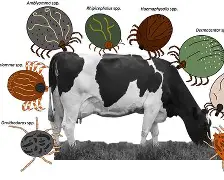
Most cattle ticks spend part of their lives on the animal, feeding on blood, and part on the ground, where the engorged female drops off, lays thousands of eggs, and dies. The eggs hatch into tiny larvae that climb grass stems and wait for a passing animal. Some ticks stay on one animal through their whole feeding life, while others drop off and re-attach as they grow, depending on the species.
This matters because it shows you where to strike. Pull ticks from the animal, and you stop them laying eggs. Rest the pasture, and you starve the larvae waiting in the grass. Seal the shed, and you remove the places where females lay eggs. Attack all three and the population collapses.
Controlling ticks on the animal
Check and hand-pick. Go over your cattle regularly, ideally at least once a week and more often in the wet season when ticks multiply. Check the ears, eyes, brisket, belly, udder, tail, and between the legs. Remove ticks by gripping them close to the skin with tweezers or gloved fingers and pulling steadily, without crushing the body or leaving the head behind, because that can cause infection. Drop the removed ticks into a container of strong salt water or burn them so they cannot lay eggs. Do not just throw them on the ground. On a small herd, hand-picking makes a big difference. On a large herd it is harder, but you can focus on calves, high-value animals, and the favourite hiding places.
Keep the coat and skin in good shape. Healthy, well-fed animals cope far better with ticks than weak, underfed ones. Good nutrition, enough minerals, and clean water support the skin and the immune system. A thin, hungry cow gets overrun first.
Use plant-based washes carefully. Many farmers have used neem for generations, and there is some evidence that neem preparations can repel and reduce ticks. A common approach is to crush neem leaves or seeds, soak them in water, strain the liquid, and spray or wipe it on the animal. Other farmers use preparations from plants such as tobacco leaf, wild marigold, or certain local herbs. I want to be careful here. Plant remedies vary widely in strength, results are mixed, and some plants are toxic to animals when used wrongly. Tobacco in particular can poison cattle if the mixture is too strong. Neem is generally regarded as safer, but check with your local extension officer or vet about what is suitable and safe in your area, and test any new preparation on a small patch of skin on one animal before treating the herd. I will not give you a strength or dose, because I cannot see your animals, and getting it wrong is a real risk.
Use wood ash and similar dusts with care. Some farmers dust the animal’s coat and bedding areas with fine wood ash, and others offer a dust bath area where cattle can roll. It can help dry out and discourage some parasites, but it is not a cure. Keep dust away from the eyes and nose, and do not use it on wet skin or in a way that irritates the animal.
Let birds help. Chickens, guinea fowl, and cattle egrets will pick ticks off animals and out of the pasture. I let my guinea fowl follow the cattle, and they clean the ground around the shed as well. Birds will not clear a heavy infestation, but they help keep numbers down day after day for free.
Breed for tolerance. This is the most powerful natural tool over the long run. Some cattle, especially many indigenous and zebu-type breeds, resist ticks far better than imported breeds. Within any herd, some animals carry fewer ticks than others, and that trait is partly inherited. If you notice certain cows always seem clean while their neighbours are loaded, breed from them. Over a few years, that selection builds a herd that needs far less treatment. If you cross with high-producing exotic breeds, remember that the offspring may be less tolerant and need closer tick management.
Controlling ticks in the pasture
Rotate and rest your grazing. Ticks on the ground need a host to survive. If you remove cattle from a paddock for a long enough rest, the waiting larvae run out of time and die. How long depends on the tick species, the weather, and the season, and it can be many weeks to a few months. Ask your vet or extension officer what rest period suits the ticks in your area. Rotating cattle through several paddocks, rather than letting them graze one area all year, breaks the cycle and also improves your grass.
Do not overgraze. Short, trampled grass with bare patches can make conditions worse in some situations, and overgrazing weakens the pasture and the animals. Keep grass at a healthy height.
Control bush and shade where ticks thrive. Ticks like humid, shaded ground with long grass and brush. Clearing thick bush and tall weeds along fence lines and around water points makes the environment harsher for them. Do this sensibly, because you also want to keep useful shade trees for the cattle.
Consider other animals. Rotating with goats, sheep, or other species that are not hosts for the same ticks can help starve them, though some ticks do feed on several species. This is one of those details that depends on your local tick species, so ask your vet.
Be careful with burning. Some farmers burn pasture to reduce ticks. A well-timed burn can kill ticks on the ground, but it can also damage soil, destroy grass cover, and get out of control. I do not recommend it unless local advisors say it is appropriate and legal where you farm.
Controlling ticks in the shed and pens
Ticks lay eggs in cracks in walls, floors, posts, and under feeding troughs. Seal or plaster cracks in mud or concrete walls. Clear old bedding, manure heaps, and rubbish regularly. Keep floors dry and clean. Remove the places where females can hide and lay.
If you find a heavily infested shed, thorough cleaning followed by treating the structure under your vet’s guidance can make a huge difference. Letting the shed stand empty and dry for a period also helps.
Warning signs to watch for
I keep my eyes open for animals scratching, rubbing, or licking constantly, patches of hair loss or scabs, dull, rough coats, ticks clustered in the ears, tail, and udder, calves that are weak or pale, and cattle with sudden fever, loss of appetite, laboured breathing, pale or yellow gums, dark urine, reduced milk, or sudden weakness. Those last signs can point to a tick-borne disease and need a vet urgently. Do not try to treat suspected tick fever with natural remedies at home. It can become fatal fast.
When natural methods are not enough
Be honest with yourself about this. If you have a heavy infestation, if animals are showing signs of illness, if you farm where deadly tick-borne diseases are common, or if you keep high-value dairy or exotic breeds, a purely natural approach is a risk. In these cases, work with a vet to use approved acaricides correctly, for example by spraying or dipping on a proper schedule, and combine them with the natural measures above. Following label directions on dose, frequency, and withdrawal periods for milk and meat is critical, and rotating products as advised helps prevent the ticks from becoming resistant. The best systems I know mix natural management with careful, minimal chemical use, rather than choosing one extreme.
What I would do differently if I started today
I would check my animals weekly from the first day and keep a simple record of tick levels in each group.
I would choose tick-tolerant breeding stock from the start and cull the animals that always carry a heavy load.
I would set up proper paddock rotation before buying more cattle, because land management does most of the work.
I would plaster and seal my sheds early.
I would build a friendship with my vet well before an outbreak and learn which tick-borne diseases are actually present in my area.
Frequently asked questions
What is the best natural way to kill ticks on cattle?
No single remedy does it all. Regular hand-picking, good nutrition, tick-tolerant breeds, pasture rotation, and clean sheds together give the best natural control. Plant preparations like neem may help but should be used carefully and with local advice.
Is neem safe for cattle?
Neem is widely used and generally considered one of the safer plant options, but strength and method matter, and results vary. Test on a small area first and ask your extension officer or vet about suitable preparations.
Can I use engine oil or diesel to kill ticks?
No. These can burn the skin, poison the animal, contaminate meat and milk, and harm the environment. Avoid them completely.
How long should I rest a pasture to get rid of ticks?
It depends on the tick species and the climate, and can range from several weeks to a few months. Your local vet or livestock officer can give a figure that fits your area.
Do ticks make cattle sick?
Yes, in two ways. Heavy burdens drain blood and damage the skin, and ticks can also transmit serious diseases. If an animal develops fever, weakness, pale gums, or dark urine, call a vet quickly.
The advice worth bookmarking
Ticks are beaten on the ground as much as on the cow, so clean the shed, rest the pasture, and check the animal every week, and use the sprayer only as the tool of last resort.