How to Stop Bees From Becoming Too Aggressive
How to Stop Bees From Becoming Too Aggressive
The afternoon my neighbour’s goat died, I knew I had a problem. I had not touched the hives that day. A passing child had thrown a stone, and within seconds a cloud of bees poured out, chased the goat across the fence, and stung it more times than I could count. I spent the evening crying, apologising, and wondering whether I should burn every hive I owned. I did not burn them. I spent the next two seasons learning that aggression in bees is partly genetics, partly management, and partly something I was doing myself.
Here is the direct answer. Bees become aggressive for four main reasons: their genetics (some bee races and lines are naturally defensive), their environment (hot weather, poor forage, pests, predators, and disturbance make them irritable), their management (rough handling, too much or too little smoke, frequent opening, bad timing, and queenless colonies), and their surroundings (a hive placed near paths, animals, children, or noise). You calm a defensive colony by replacing its queen with a gentler one, giving it better conditions, handling it quietly and rarely, siting it well away from people and livestock, and managing it at the right time of day and weather. Some colonies cannot be calmed and should be requeened or removed, because safety comes before honey.
Let me walk you through how I find the cause, and what I do about it.
What most farmers get wrong
The first mistake is blaming the bees. Many beekeepers assume aggression is just what bees are like. It is not always. Some colonies are gentle and some are not, and what you do makes a big difference.
The second mistake is poor siting. A hive next to a path, a school, a market, a livestock pen, or a doorway is a hive that will be disturbed daily. Disturbance is the biggest trigger of defensive behaviour.
The third mistake is rough handling. Banging boxes, dropping frames, crushing bees, and working quickly all release alarm pheromone, which sets off the whole colony.
The fourth mistake is wrong smoke use. Too little smoke fails to calm the bees, and too much, or hot, harsh smoke, panics them. Using smelly fuels can make things worse.
The fifth mistake is working at the wrong time. Opening a hive in the evening, on a cold, windy, cloudy, or rainy day, or in a dearth when foragers are all at home, finds bees at their most irritable.
The sixth mistake is ignoring pests and queen problems. A queenless colony, a colony with a failing queen, or one under attack from ants, wasps, honey badgers, or mites often becomes defensive.
The seventh mistake is keeping a dangerous colony. A colony that repeatedly attacks people or animals at a distance from the hive is a safety hazard. Keeping it in the hope that it will calm down is risky.
Why bees become defensive
Genetics. Bee races and strains differ greatly in temperament. In many tropical regions, the local bees are naturally more defensive than the gentler European races common in temperate climates. Within any race, individual colonies vary. Defensiveness is passed on through the queen and the drones she mated with. A gentle queen mated with defensive drones can produce defensive daughters.
Queen problems. A queenless colony, or one with a young unmated or poorly mated queen, often behaves aggressively. A colony that has recently lost its queen is stressed, and the bees are on edge.
Weather. Heat, humidity, thunderstorms, and approaching rain can make bees irritable. Bees are generally calmest on warm, sunny, calm days with good forage.
Dearth and hunger. When nectar is scarce, bees are more defensive of their stores, and more likely to rob. A hungry colony is an irritable colony.
Disturbance. Frequent hive inspections, vibrations from vehicles or machinery, noise, repeated passing of people and animals, children throwing stones, and lawn mowers or brush cutters near the hive all stir up bees.
Predators and pests. Honey badgers, ants, wasps, mice, lizards, and others that attack the hive make bees edgy. Even after the attacker is gone, the colony may stay defensive for a while.
Smells and clothing. Bees react to strong smells, including sweat, perfume, alcohol, and the smell of bananas, which resembles alarm pheromone. Dark, fuzzy clothing resembles predators such as bears and honey badgers, and bees tend to attack it.
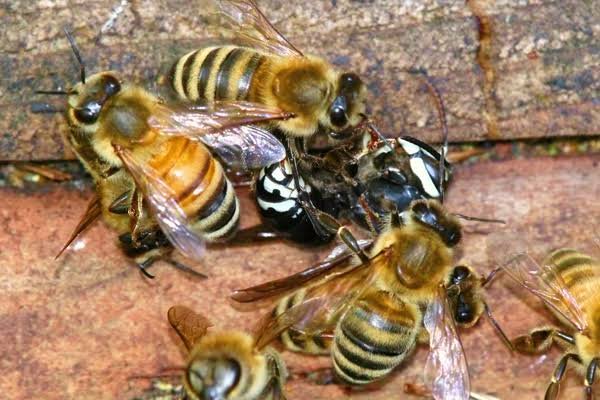
Robbing. When bees from other colonies or wasps try to steal honey, the guard bees fight, and the whole apiary becomes tense.
Overcrowding and heat in the hive. A hot, crowded hive with poor ventilation leads to irritable bees.
First, safety
Aggressive bees can be dangerous to people and animals, and in some cases can cause serious injuries and deaths. If you keep bees, take safety seriously.
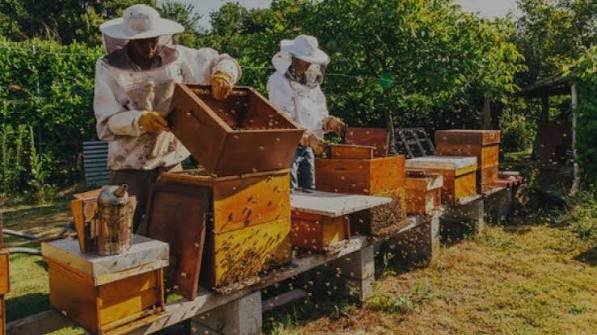
Wear a good, bee-proof suit, a veil, and gloves, with the trousers tucked into boots and the cuffs sealed. Have a well-lit smoker ready before you open the hive. Keep children, animals, and bystanders well away. Have a plan for escape, and a first aid kit nearby. Know where the nearest medical help is. Anyone with a known allergy to bee stings should not go near the hives, and anyone who has a severe reaction to stings needs urgent medical care.
If bees attack, walk away quickly and calmly, covering your face, and get into a building or vehicle. Do not stand and fight, and do not jump into water, as bees may wait for you to surface. Once you are away from the bees, remove stingers by scraping them off sideways with a fingernail or card, instead of pinching, which squeezes more venom in.
Check your local laws on keeping bees. Some areas have rules about distances from roads and neighbours, and beekeepers may be held responsible for damage caused by their bees.
How to calm aggressive bees
Site hives sensibly. Put hives well away from paths, roads, houses, livestock, schools, and public areas. A distance of many metres, often at least 30 metres or more, is commonly recommended, but ask your local beekeeping association for guidelines. Place the entrance facing away from paths and neighbours. Use a fence, hedge, or wall to make the bees fly up and over, away from people. Provide a water source near the hives so that bees do not gather at neighbours’ taps and troughs.
Requeen with a gentle queen. This is the most effective long-term fix for a defensive colony. Replace the existing queen with one from a calm, productive line. Buy queens from reputable breeders, or raise queens from your gentlest colonies. Remember that the new queen’s daughters will mate with local drones, so aggression may still show up in the next generation. Keep records of temperament, and breed only from the gentlest colonies. It may take a few seasons to improve the temperament of your apiary. Ask your association about gentle strains suited to your area.
Handle bees gently and slowly. Move calmly, avoid jarring the hive, and do not slam or drop boxes or frames. Lift frames slowly and avoid crushing bees. If you do crush bees, use a little smoke to mask the alarm pheromone.
Use smoke properly. Light the smoker with clean fuel, such as dry grass, wood shavings, burlap, or dry leaves, which produces cool, white smoke. Avoid treated wood, plastic, or chemicals. Puff a little smoke at the entrance, wait a minute, then puff under the lid as you open it. Use a little more as needed. Do not blast the bees with smoke or burn them with hot smoke.
Work at the right time. Open hives on warm, sunny, calm days, mid-morning to early afternoon, when many foragers are out. Avoid working in the evening, or when it is cool, windy, wet, or thundery. Avoid opening hives during a dearth, or when robbing is active.
Inspect less often. Open the hive only when needed, and make inspections short. Every inspection disturbs the colony, so inspect with a purpose.
Keep bees fed and healthy. Provide forage, water, and, if necessary, supplementary feeding in a dearth. Control pests and diseases. Healthy, well-fed colonies are generally calmer.
Reduce robbing. Do not leave honey, syrup, or comb exposed. Use reduced entrances on weak colonies, feed in the evening, and clean up spills. Work quickly during inspections, keep frames covered, and do not leave boxes open.
Protect against predators. Fence the apiary, raise hives on stands, use ant barriers, and keep out honey badgers, monkeys, and other animals. A calm apiary is a safe apiary.
Check the queen and the colony. A queenless colony, or one with a failing queen, should be given a new queen or united with a stronger colony. Look for laying workers, disease, and pests, and treat or manage them as advised locally.
Improve hive ventilation and shade. Keep hives cool and comfortable. Provide shade and good ventilation to reduce stress. Avoid crowding. Add supers, or split strong colonies before they become overcrowded.
Manage smells and clothing. Avoid strong perfumes, sweat, alcohol, and food smells when working with bees. Wear light-coloured, smooth clothing, and clean protective gear. Wash gear regularly, since old venom on a suit can trigger more stinging.
Train workers and visitors. Brief everyone who works with the bees on how to behave, what to wear, and what to do if bees attack. Keep visitors away, or give them protective gear.
When a colony is too dangerous
Some colonies remain extremely defensive despite your best efforts. If a colony chases people or animals from a long distance, attacks without provocation, or stings repeatedly through protective clothing, it is a hazard. Requeen the colony with a gentle queen as soon as you can, or, if that fails, remove or destroy it safely.
If you need to remove a dangerous colony, do it with professional help, such as an experienced beekeeper, or a bee-removal or pest control service, and take proper precautions. Do not use fire or poisons without guidance, and never do this alone. Contact your local authority or bee inspector if you are worried about public safety.
Never move a dangerous colony to a place where it can harm others.
If bees have attacked someone
Get the person away from the bees and into a building or vehicle. Remove stingers by scraping them off. Wash the stings, apply a cold pack, and watch for signs of an allergic reaction, such as difficulty breathing, swelling of the face or throat, dizziness, hives, or vomiting. These signs are an emergency, and the person needs urgent medical help. Multiple stings can also be dangerous, even without allergy, so seek medical care if a person has been stung many times. Take care of the animals, too, and call a vet if livestock have been attacked.
Warning signs of an aggressive colony
I note colonies that fly at my veil from the moment I approach, bees that follow me across the apiary, many guards at the entrance, loud buzzing or roaring, bees bumping into me or the veil, stinging without provocation, running on the combs, and bees that boil out of the hive when opened. Mark those hives, work them last, and plan to requeen.
What I would do differently if I started today
I would site every hive far from paths, houses, and animals.
I would buy gentle queens from a reputable breeder.
I would keep notes on temperament for every colony.
I would work only in good weather and in the right hours.
I would use cool smoke and move slowly.
I would requeen aggressive colonies without delay.
And I would treat safety as the first rule of beekeeping.
Frequently asked questions
Why are my bees suddenly aggressive?
Common causes are queen problems, dearth, robbing, predators, bad weather, rough handling, or disturbance. Check the queen, food, and pests, and handle the colony more gently.
How do I make my bees calmer?
Requeen with a gentle strain, site hives away from people and animals, use cool smoke, work in good weather, and keep the colony fed and healthy.
Are some bees more aggressive than others?
Yes. Some races and strains are naturally more defensive. Choose gentle stock and breed from the calmest colonies.
What time of day are bees calmest?
Generally in the middle of a warm, sunny day, when many foragers are out and the weather is settled.
What should I do if my bees attack someone?
Get away from the bees, remove stingers, and watch for allergic reactions. Seek medical help if there is difficulty breathing, swelling, or many stings.
The advice worth bookmarking
An angry colony is a message, not a curse, so check the queen, the weather, the food, and your own hands, then requeen with a gentler bee and move the hive far from people, because no honey is worth a child’s safety.