How to Know When Honey Is Ready for Harvest
How to Know When Honey Is Ready for Harvest
The first honey I ever sold went sour in the jar. I had harvested a full super in a hurry, because the frames looked heavy and golden and the market was a week away. Three weeks later, a customer sent back a bottle with a lid that bulged and a smell like cheap wine. That jar cost me a customer, a good deal of embarrassment, and a lesson I have repeated to every new beekeeper since: bees do not finish making honey when they fill the comb. They finish when they cap it.
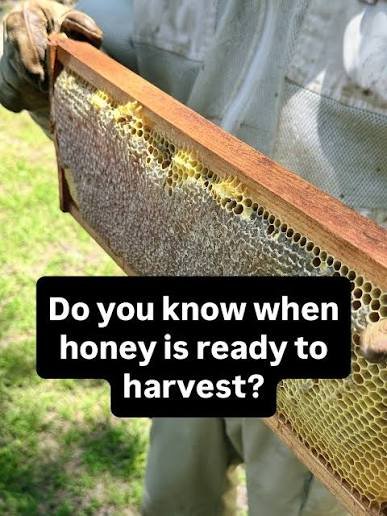
Here is the direct answer. Honey is ready for harvest when the bees have capped most of the cells on the frame with white wax, which tells you they have dried the nectar down to safe honey. As a working rule, many beekeepers harvest frames that are fully or at least about four-fifths capped, and you confirm ripeness by checking that the honey does not drip when you shake the frame, or better, by measuring the moisture with a refractometer, where the honey should sit below the limit your local food rules and beekeeping advisers recommend. Honey taken too early has too much water, and can ferment. Waiting a little longer costs you nothing, while harvesting early can cost you the whole batch.
Let me walk you through how I check, step by step, and what to do with the frames that are not quite ready.
What most farmers get wrong
The first mistake is harvesting by calendar or by weight. A heavy frame is not necessarily a ripe frame. Nectar is mostly water when the bees bring it in, and a frame full of fresh nectar can be just as heavy as a frame of ripe honey.
The second mistake is harvesting when the market is ready instead of when the honey is. Orders, festivals, and cash needs push farmers to take honey a week too early. The result is runny honey that ferments, and unhappy customers.
The third mistake is judging only by looks. Colour and thickness depend on the flowers, so a thin, light honey can be perfectly ripe, and a dark thick one can still be wet.
The fourth mistake is harvesting the whole hive. Taking honey from the brood nest, or removing every store, leaves the colony with nothing to survive on, and the bees may starve or abscond.
The fifth mistake is ignoring the weather. Honey taken on a humid or rainy day absorbs moisture from the air, and even ripe honey can pick up water during extraction and storage.
The sixth mistake is dirty or damp equipment. Wet buckets, damp extractors, and unclean containers can undo the work of a perfect harvest.
Why ripeness matters
Fresh nectar is about half water or more. The bees turn it into honey by adding enzymes and by evaporating the water, fanning their wings in the hive to blow warm air across the nectar. When the water content drops low enough, they seal the cell with a thin cap of wax. That cap is the bees’ own signal that the honey is finished and stable.
If you harvest honey with too much water in it, yeasts that are naturally present in honey can start to multiply and ferment the sugars, giving a sour smell, froth, bubbles, and a bulging lid. Fermented honey has a short shelf life and a poor flavour, and it is difficult to sell. High-moisture honey also granulates unevenly. Properly ripened honey keeps for a very long time.
Signs honey is ready
Capped cells. This is your first and most reliable sign. Hold a frame up to the light and look at the comb. Ripe honey cells are sealed with a flat, white or cream-coloured wax cap. A frame that is fully capped, or has most of its cells capped, is usually ready. Some beekeepers use the rule of at least four-fifths capped, or at least one side fully capped, though local practice varies. Ask your beekeeping association what rule suits your climate and flowers. Be careful with honey from some floral sources that is ripe but not fully capped, and honey in very humid climates that may need extra checking. Unripe honey cells, by contrast, are open, shiny, and full of wet nectar.
The shake test. Hold the frame flat over the hive and give it a gentle downward shake. If nectar sprays or drips from the uncapped cells, the honey is still too wet. Ripe honey stays in the cells. This is a rough field test, so do it over the hive and not over your tablecloth, and treat it as a warning, not a measurement.
The bee behaviour. In a strong flow, you will see bees fanning at the entrance and a strong smell of nectar at the hive. As the flow slows and the bees have capped most of their stores, the activity settles down. A sudden drop in the incoming nectar is often the end of the flow, which is the usual time to harvest.
The moisture reading. The most accurate way to check honey is with a honey refractometer, a small, inexpensive instrument that measures the moisture content from a drop of honey. Most countries and buyers set a maximum moisture limit for honey that is sold. A common upper limit is around 20 percent, though some markets want it lower, especially in humid climates. Ask your local standards body or beekeeping association for the limit that applies to you. If your reading is above the limit, give the frames more time, or dry them under controlled conditions, with expert advice. Using a refractometer also lets you protect your reputation, and it is worth buying one, or borrowing one from your association.
Smell and taste. Ripe honey has a clean floral smell and a rich flavour. A sour, yeasty, or fermented smell means the honey is already spoiled. Do not mix it with good honey.
The end of the flow. Learn the flowering calendar in your area. In many regions, the main harvest comes at or just after the main flow, once the bees have had time to ripen and cap the honey. If you harvest during the flow, only take capped frames, and leave the rest. Ask your local association about the best harvest periods.
How to check a hive step by step
I check on a calm, warm, dry day when most foragers are out, usually mid-morning. I light the smoker, wear protective clothing, and open the hive gently, using smoke sparingly. I lift the honey supers, which are the boxes above the brood nest, and inspect frame by frame, looking at both sides. I hold each frame over the hive, handle it gently, and avoid rolling or crushing bees. I note how much of each frame is capped, and use the shake test on borderline frames. If I plan to harvest, I take frames that meet my standard, and leave unripe frames in the hive. If I have a refractometer, I test a drop of honey from a few frames. I put each checked frame back carefully in its original position.
I do not harvest from the brood nest, which is the lower box where the queen lays. That honey belongs to the bees.
If the honey is not quite ready
Sometimes a super is mostly capped but has several wet frames. You have options. Leave the super on the hive a little longer, if the flow is still on, and check again in a week. Take the capped frames and return the uncapped ones to the hive for the bees to finish, then harvest later. Mix frames carefully, since a few wet frames can raise the moisture of the whole batch. Avoid harvesting from frames that are mostly uncapped, even if you are short of honey.
If you already have honey that is a little high in moisture, ask an experienced beekeeper or your local association for advice about safe ways to reduce moisture. Do not simply bottle it and hope.
Harvest day: protect what the bees made
Choose the right day. Harvest on a warm, dry, calm day, ideally with low humidity. Avoid rainy, damp, or very humid days when honey absorbs moisture from the air. Harvest in the middle of the day, when most foragers are in the field, and avoid times when robber bees or wasps are active. Strong robbing can start fast.
Remove bees gently. Use gentle methods, such as a bee brush, a bee escape board placed under the super the day before, or a fume board used according to the instructions. Use smoke sparingly. Avoid chemicals that taint honey or harm bees. Ask your association for methods that are safe and accepted where you live.
Keep the work area clean. Work in a clean, enclosed, bee-proof room, since open-air extraction attracts bees and wasps and invites contamination. Keep equipment food-grade, clean, and dry. Wash hands, wear clean clothes, and keep pets and children out of the work area.
Uncap and extract carefully. Remove the wax cappings with a clean, warm knife or uncapping fork, and extract the honey with a hand or powered extractor, or use the crush-and-strain method if you use a simple system, following local practice. Handle combs gently and, if you can, return empty combs to the hive so that the bees can clean them and use them again.
Filter and settle. Strain honey through clean mesh or a food-grade filter to remove wax and bits of bee. Let it settle in a clean, covered container for a day or two so that bubbles and fine particles rise to the top, and skim them off. Avoid excessive heating, which damages flavour and quality. Do not overheat honey to make it flow faster.
Bottle and store properly. Use clean, dry, food-grade bottles or buckets with tight-fitting lids. Label them with the date and source. Store honey in a cool, dry place away from strong smells and direct sun. Honey absorbs moisture from the air if left open, so keep lids tight.
Check your local rules. Many countries require hygiene standards and labelling for honey sold to the public. Ask your food authority or beekeeping association what applies.
Leave the bees enough
Whatever you take, leave the colony enough honey to live on. The bees need food through the dry season, cold weather, and any other dearth, and to build up for the next flow. Ask local beekeepers how much to leave in your area. Taking too much and replacing it with sugar syrup is a risky practice, and often leads to weak colonies, poor honey quality, and absconding.
Warning signs you are harvesting too early or too late
If your honey is runny, foamy, sour-smelling, or has a bulging lid, you harvested it too early or stored it badly. If you wait too long, risks include honey granulating in the comb, making it difficult to extract, robbing by other insects, wax moths and beetles invading, and the colony using up its stores in a dearth. Check your supers on time, and plan to harvest soon after the flow ends.
What I would do differently if I started today
I would buy a refractometer in my first season.
I would never harvest a frame that was less than mostly capped.
I would keep a calendar of the flowers and flows in my area.
I would plan my harvest dates around the weather, not the market.
I would keep my extraction room spotless and dry.
I would test and label every batch, and keep a sample.
And I would always leave the bees more than I thought they needed.
Frequently asked questions
How do I know when honey is ripe?
The main sign is capped cells. Most beekeepers harvest frames that are fully or mostly capped. You can confirm with the shake test, and best of all, with a refractometer to measure moisture.
Can I harvest honey that is not capped?
Only if you have tested its moisture and it is within a safe limit. Uncapped honey is often too wet and can ferment. When in doubt, leave it on the hive.
What moisture content should honey have?
Limits depend on your country and your buyers, but many standards set an upper limit of around 20 percent. Ask your local standards body or beekeeping association for the figure that applies to you.
What happens if I harvest unripe honey?
It can ferment, taste sour, froth, and spoil. It may be difficult to sell, and can damage your reputation.
When is the best time of year to harvest honey?
At or just after the main nectar flow in your area, when most of the honey is capped. This differs by region, so learn your local flowering calendar.
The advice worth bookmarking
The bees tell you when honey is ready by sealing it, so wait for the wax cap, trust the refractometer more than your eyes, and never let a deadline do the bees’ work.