
How to Attract Wild Bee Swarms Into an Empty Hive
How to Attract Wild Bee Swarms Into an Empty Hive
For my first two seasons I hung six empty hives in the bush and waited. Nothing came. I rubbed them with every herb I was told about, moved them twice, and complained to anyone who would listen that the bees in my area were stubborn. Then an old honey hunter walked my apiary line, looked up at one hive, down at another, and said, “You are building houses nobody wants to live in.” He moved four of my hives by less than a hundred metres, fixed the entrances, and within a month I had three colonies.
Here is the direct answer. Wild swarms move into an empty hive when it looks, smells, and feels like a good natural nest cavity, and when it is placed where scout bees are likely to find it. That means a clean, dry, sound hive of the right size, a small entrance, a little beeswax or other bee-friendly scent inside, a spot that is shaded, sheltered, a few metres above the ground or at least off it, and close to forage and water, and positioned before the swarming season starts. Add a lot of patience, check regularly, and learn the swarm season in your area. Done properly, a good hive site can catch a swarm in days, but some sites never will, so be ready to move a hive that has stayed empty for a full season.
Let me walk you through what attracts a swarm, step by step.
What most farmers get wrong
The first mistake is hanging the hive at the wrong time. Swarms leave their old homes at certain times of year, usually when forage is plentiful and colonies are strong. If you put your hive out after the swarm season has passed, nothing will come.
The second mistake is choosing the wrong place. Hot sun beating on the hive, a damp, deeply shaded hollow, a windy ridge, or a spot far from flowers and water will not appeal to scouting bees.
The third mistake is a bad hive. A leaking roof, big gaps, damp boards, strong paint or chemical smells, or a box that is too big or too small all put scouts off.
The fourth mistake is overdoing the lure. Too much strong scent, rancid wax, or unsuitable chemicals can repel bees.
The fifth mistake is not checking. A swarm may move in, and then abscond if the hive is poor, ants get in, or there is no food. Or ants, wasps, or moths may take over an empty hive.
The sixth mistake is giving up too soon. In some areas, bees may take a while to find a hive. Do not judge a site on the first week or two.
The seventh mistake is setting out a hive where swarms are not common. If there are few wild colonies near your apiary, there are few swarms to catch.
Understand swarms
A swarm is a group of bees, including a queen, that leaves a crowded colony to start a new home. After leaving, the swarm usually clusters on a branch or similar place near the old nest while scout bees fly out to look for a suitable cavity. Scouts return and communicate what they have found by dancing, and the swarm chooses a site based on the scouts’ reports. This can take hours to days.
Scouts look for a cavity of a certain size, with a small entrance, high enough off the ground, dry, well-ventilated but not draughty, with a clean smell, protected from the weather, and not too far from the cluster. This is why a properly prepared hive, a bait hive, can be attractive to a swarm.
Be aware that in some tropical areas, bees may also abscond, meaning that a whole colony leaves when conditions deteriorate. Absconding colonies may be looking for a new home too, and good bait hives can catch them. Swarms and absconding colonies tend to behave differently, and may be more or less defensive. Handle caught swarms with care.
Know your swarm season
Swarm timing depends on where you live. In many regions, swarms appear at the start of or during the main nectar flow, when colonies are growing fast and forage is abundant. In some tropical regions, there may be one or two swarming seasons per year, linked to the rains and flowering. Absconding is often linked to the dry season or dearth.
Ask experienced local beekeepers, honey hunters, and your beekeeping association when swarms are most common near you. Watch what is flowering and when wild colonies are active. Set up your bait hives a few weeks before the expected swarming season starts, so that scouts have time to find them.
Choose and prepare the hive
Pick the right size. Natural nest cavities that swarms prefer usually have a volume somewhere around 30 to 50 litres. Many beekeepers use a standard brood box, a nucleus box, or a purpose-made bait hive of about this volume. A box that is too small or too large is less attractive. Ask local beekeepers what size works best in your area and with your type of hive.
Make it clean, dry, and sound. Use a hive with no leaks, a tight roof, and smooth interior surfaces. Repair cracks and holes, except for the entrance. Sand rough edges. Clean out dust, insects, and old nests. Make sure the box is dry.
Avoid strong smells and chemicals. Do not use paints, varnishes, or preservatives with strong fumes inside the hive. If you treat the wood, use bee-safe products on the outside only, and let them air thoroughly. Ask your association what is acceptable.
Make the entrance suitable. A small entrance, similar to the natural entrances bees like, is more attractive and easier for a swarm to defend. A common size is around 2 to 3 centimetres across, but ask local beekeepers. Place the entrance near the bottom, or according to your hive style.
Provide comb or foundation. Old, clean comb is a powerful attractant. Bees recognise the smell of beeswax and comb. Placing a few frames with old drawn comb, ideally from a healthy colony that never had disease, inside the hive can help. Make sure the comb is clean, free from disease, and not mouldy or infested with moths. If you have no old comb, use frames with fresh foundation, or top bars with a strip of wax along the underside as a guide. Do not use combs from colonies that had brood disease.
Use a natural lure. A little beeswax rubbed on the inner walls, or a small amount of melted wax, can help. Some beekeepers also use lemongrass oil, a drop or two of lemongrass essential oil on a cloth or inside the box, or rub the hive with lemongrass or lemon balm leaves, because scent resembles the pheromone used by bees to mark a good site. Others use propolis, honey, or sugar syrup smears. Results vary, and too much scent can be off-putting. Use very small amounts, replace them every few weeks, and ask local beekeepers what works for them. I would rather have a good site and clean comb than a bottle of lure.
Protect it from ants and pests. Stand the hive on a pole or stand with ant barriers. Check for ants, termites, wasps, and wax moths every time you visit. An invaded empty hive will not attract bees, and may destroy the comb.
Choose the site
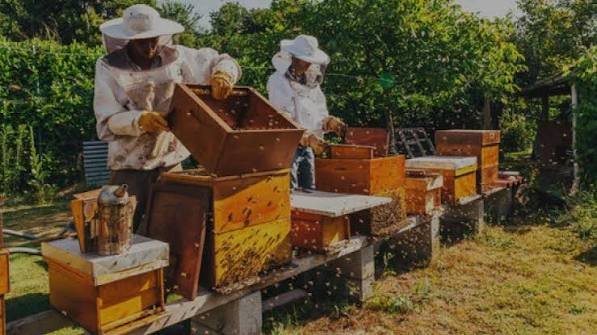
Height. Many wild colonies nest in tree hollows several metres up. Hanging a hive from a branch, or placing it on a platform or stand above the ground, usually makes it more attractive and keeps out ground pests. In places where hanging hives is common, it is a proven method. Make sure the hive is secure and level. If you cannot hang it, a stand of knee to waist height or higher is a common compromise. Be careful when climbing trees or ladders to place hives, and use safe methods.
Shade and shelter. Choose a location with dappled shade or afternoon shade, protected from strong wind and heavy rain. Avoid places where the hive will be baked by the sun all day or sit in a damp, dark hollow. A spot under a tree canopy with an open flight path in front of the entrance is ideal.
Forage and water. Scouts prefer sites with flowers nearby and a water source. Place hives in areas where bees are already working flowers, or near wild colonies or old nesting sites. Look for places where honey hunters or local people say bees nest.
Landmarks. Bees like conspicuous landmarks, such as a lone tree or the edge of a woodland. Place the hive where scouts will find it easily, and not hidden in dense thickets.
Distance from your other hives. Swarms from your own colonies may settle in a bait hive close to your apiary. If you want to catch wild swarms from further away, spread bait hives around the area, including some at a distance.
Away from disturbance. Keep bait hives away from busy paths, noisy areas, and spraying. Make them safe for people and livestock, and mark them clearly to avoid accidents. Ask neighbours’ permission before placing hives on their land.
Multiple hives. Set out several bait hives in different locations to increase your chances. Those that stay empty for a full season can be moved.
Check and handle the hive
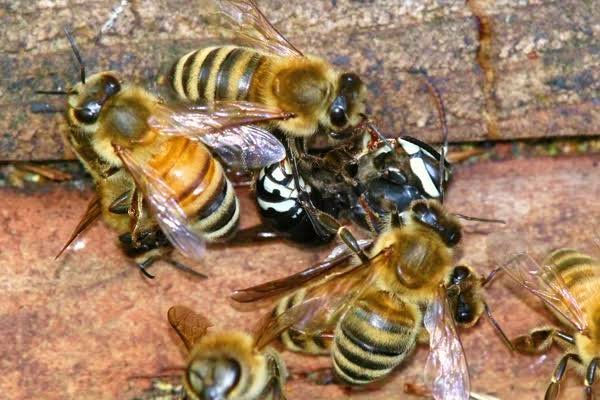
Check your bait hives every week or two during the swarming season, from a distance first. Look for scout bees investigating the entrance, hovering around it and landing. Scouts are a good sign that your hive has been noticed. When a swarm moves in, you will see a steady stream of bees going in and out of the entrance, often carrying pollen within a few days.
Do not open the hive for the first week or two after a swarm moves in, unless there is a clear problem. The swarm needs time to settle, build comb, and start brood. Opening the hive too early can make bees abscond.
Make sure the new colony has food and water. A swarm moves in with limited stores, and if the weather turns, or forage is scarce, it may starve or abscond. Feed with sugar syrup in the evening if needed, according to local advice, and provide water nearby.
Check for the queen, eggs, and brood after a couple of weeks, once the colony has settled. If you see eggs and young larvae, you have a queenright colony. If not, seek advice.
Move the hive to its permanent spot at the right time. If you want to relocate a colony that has moved into a bait hive, do it at night with the entrance closed and ventilation provided, and move it either less than a metre or more than three kilometres, so foragers do not get lost. Ask an experienced beekeeper to guide you.
Safety and good practice
Swarms can be defensive, particularly in regions with defensive bee races. Wear protective clothing when working with caught swarms. Keep a safe distance from the hive until you are ready, and keep children and animals away.
Be careful with hanging or climbing. Never place a hive somewhere you cannot reach safely.
Check local laws. Some places require beekeepers to register apiaries, or have rules about catching swarms, and about hive placement on public or private land.
Keep records of where you placed each bait hive, the dates, what you used as lure, and whether you caught a swarm. Over a few seasons, patterns will tell you the best sites.
Warning signs your bait hive is not working
I watch for hives that stay empty season after season, ants, termites, or wasps taking over, signs of mice or lizards nesting, wax moth damage in the comb, damp or mouldy boxes, a lure that has gone rancid, bees investigating but leaving, and swarms that arrive and then abscond. If I see these, I check the site, size, entrance, smell, and protection, and move or modify the hive.
What I would do differently if I started today
I would learn the local swarm season before I built a single bait hive.
I would hang hives at a good height in dappled shade near flowers and water.
I would use clean old comb, and no chemicals.
I would put several bait hives in different places, instead of putting all my hopes in one.
I would check them every week in season, with ant barriers always in place.
And I would ask local honey hunters where bees nest, because they know.
Frequently asked questions
When is the best time to put out a bait hive?
A few weeks before the swarm season in your area. Ask local beekeepers when swarms usually occur.
What size should a bait hive be?
Roughly the size of a natural nest cavity, often around 30 to 50 litres, but ask local beekeepers what works with your hive type.
Does lemongrass really attract bees?
Many beekeepers use it as a lure, and some report success, but results vary. Use it sparingly, and combine it with good hive preparation and site selection.
How long does it take for a swarm to move in?
It can take days or weeks, or it may not happen at all in a poor site. Be patient, and move hives that stay empty for a whole season.
Why did the bees move in and then leave?
Common reasons include ants or other pests, lack of food, heat, damp, disturbance, a poor site, or an unsuitable hive. Check and fix these quickly.
The advice worth bookmarking
Bees do not settle in hives, they settle in homes, so build one that smells like wax, stays dry, sits high in dappled shade near flowers and water, and wait for the scouts to find it.