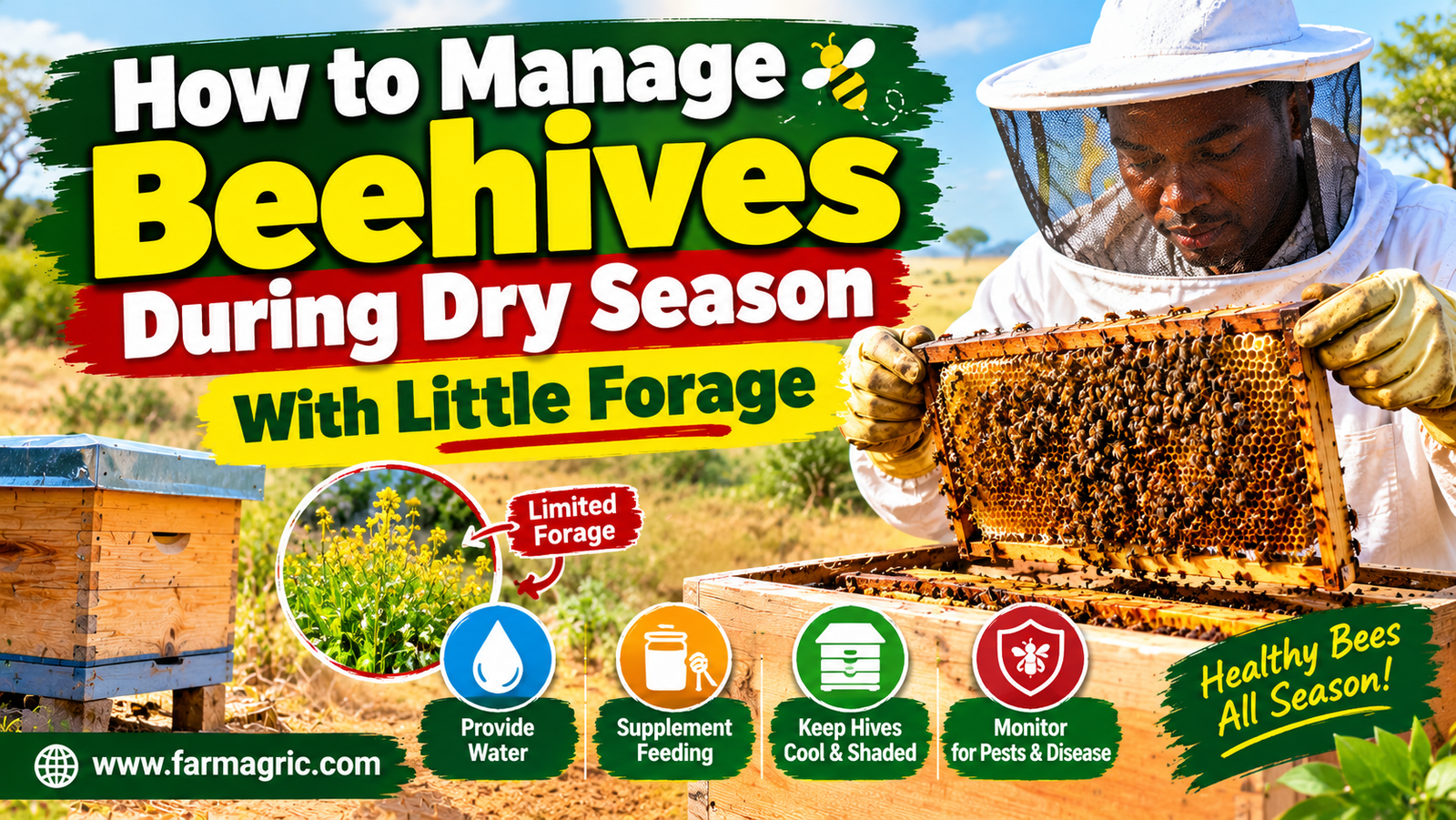
How to Manage Beehives During Dry Season With Little Forage
How to Manage Beehives During Dry Season With Little Forage
The dry season that broke my heart as a beekeeper began with a good harvest. I took off nearly every full super in December, sold the honey quickly, and congratulated myself on a clever year. By March the grass was brown, nothing was flowering, and I found hive after hive with a thin cluster of bees and empty combs. Six colonies had absconded. Three had starved where they sat. I had harvested the bees’ food and sold it, and the dry season collected its debt.
Here is the direct answer. In the dry season with little forage, you keep bees alive by making sure every colony has enough honey and pollen stored before the flowers fade, shrinking the hive to a size the bees can defend and keep cool, supplying water, feeding when stores run low, protecting hives from heat, ants, robbers, and pests, planting or moving to better forage if you can, and avoiding unnecessary opening and harvesting. A colony that goes into the dearth strong, well-stocked, and queenright will usually come out of it. A weak, hungry, or overexposed colony will starve or abscond. The work is done mostly before the dry season starts, and then kept up with a few well-timed checks.
Let me walk you through the steps, from preparation to recovery.
What most farmers get wrong
The first mistake is harvesting too late and too much. Honey taken at the end of the flow is honey the colony needed for the dry months. Many colonies are lost because the beekeeper treated the last good flow as a pure harvest.
The second mistake is doing nothing until the bees are in trouble. By the time bees are dying at the entrance, or the colony has absconded, it is too late for easy fixes.
The third mistake is leaving too much empty space. Extra boxes and empty frames become heat traps and moth nurseries, and the small cluster cannot defend them.
The fourth mistake is ignoring water. In dry, hot weather, bees need large amounts of water to cool the hive and feed brood. When water is far, bees lose time and energy, and colonies weaken.
The fifth mistake is feeding badly. Spilling syrup, feeding in the daytime, or feeding without reducing entrances invites robbing, ants, and wasps, which can destroy weak colonies.
The sixth mistake is opening hives too often during the dearth. Constant inspection stresses colonies, breaks down their defences, and increases robbing.
The seventh mistake is overlooking pests and predators. Ants, wax moths, beetles, wasps, and honey badgers all become more of a problem when colonies are weak and forage is scarce.
What the dry season does to a colony
When flowers fade, nectar and pollen income drops. The queen may reduce or stop laying, brood shrinks, and the colony starts using up its stores. Foragers fly long distances for little reward, and the population falls as old bees die and fewer replacements are raised. Heat adds stress: the bees must spend water and energy cooling the hive.
Some colonies cope, shrinking to a small, tight cluster that lives on stored honey and pollen. Others starve, or abscond to look for better forage. African honey bees in particular are known for absconding in a dearth, while some other races are better at sitting it out. Knowing how your local bees behave helps you plan.
The key point is that the dry season is not one problem but several: hunger, thirst, heat, pests, and robbing, all acting together on a shrinking colony.
Before the dry season: preparation
This is where most of the work is done.
Know your calendar. Find out when flowers begin to fade in your area, how long the dearth lasts, and when the next flow starts. Keep a record of what flowers and when, year by year. Ask experienced beekeepers about the typical pattern. With this knowledge, you can plan harvest dates, feeding, and moves.
Harvest wisely. Take honey only if the colony has enough stored for the dry season. Ask local beekeepers how much a colony needs to survive the dearth in your area, and leave at least that much, plus some margin. A colony with abundant stores is more likely to stay and to build up quickly when the rains return. Do not harvest from the brood nest, or take the last of the honey. In a poor year, harvest little or nothing.
Requeen if needed. A young, healthy queen is more likely to lay well when forage returns, and to keep the colony strong. Replace failing queens before the dearth, not during it. Ask an experienced beekeeper to show you how to check your queen.
Unite weak colonies. A small colony is unlikely to survive a long dearth. Merge weak colonies with stronger ones before the flowers fade, using the newspaper method or other safe techniques. One strong colony is better than two weak ones.
Check for pests and disease. Treat or manage problems before the dearth, using approved methods. Weak, diseased colonies seldom survive hard times. Clean the hive floors and remove old, black combs.
Reduce the space. Take off empty supers and extra boxes. Use dividers or follower boards to compress the colony into the space it can cover, with the brood and stores together. A snug hive is easier to cool, defend, and keep clear of moths.
Prepare the hive. Repair leaks and cracks. Reduce the entrance to a size the colony can guard, especially for weak colonies, but leave enough ventilation for hot weather. Stand hives on stands with ant barriers. Check that the roof is secure.
Prepare the site. Provide shade, so that hives are not baked by the afternoon sun. Planting trees takes time, but you can use shade cloth, grass thatch, or a covering supported above the hive with an air gap. Keep the apiary clear of tall dry grass, which is a fire risk. Create firebreaks, because bush fires in the dry season destroy many apiaries. Ask neighbours and local leaders about fire control.
Set up water. Install a reliable water supply close to the hives before the dry season starts. A shallow container, trough, or drip system with stones, floating sticks, or gravel for bees to land on works well. Keep it clean and filled, in the shade if possible. Bees quickly learn to use a regular water source, and may annoy neighbours if they cannot find water at the apiary.
Plant forage. Planting bee-friendly trees, shrubs, and crops that flower in the dry season is one of the best long-term investments. Species that bloom during the dearth can make a big difference. Ask your agricultural officer, local beekeepers, or research institute what works well in your area. Fruit trees, certain flowering shrubs, and irrigated crops can all help. Plant a variety, so there is something flowering as much of the year as possible.
Consider migration. In some regions, beekeepers move hives to areas with better forage during the dry season, following flowering crops or trees. Moving needs planning, transport, permission from landowners, and attention to local regulations and the safety of people and animals. Move at night, with hives secured and ventilated, and avoid moving during extreme heat. Ask experienced migratory beekeepers for advice.
During the dry season: care and feeding
Check lightly and quickly. Inspect only when necessary, and keep inspections short, early in the morning or on a cool day, when robbers are less active. Concentrate on stores, queen activity, space, pests, and the weight of the hive. Lifting the back of the hive gives a rough idea of how heavy it is. If the hive feels very light, it may be running out of food. Ask your local association how to judge hive weight and stores.
Feed when needed. If a colony has little honey and no incoming nectar, it will starve. Supplementary feeding can save colonies. The usual emergency feed is sugar syrup. Pollen substitutes can help when pollen is lacking, particularly when you want the colony to keep brood. Ask a local bee expert for the best feed, ratios, and amounts for your climate and the season, and whether to feed continuously or in small amounts.
Feed in the evening, so that bees can settle before robbers appear. Use feeders placed inside the hive, or a design that prevents bees from drowning and robbers from reaching. Reduce the entrance when feeding, and clean up spills straight away. Keep feeders clean. Do not feed honey from unknown sources, as it can carry disease. Feeding is a rescue measure, not a replacement for good forage and good management.
Do not overfeed with syrup if it causes honey to be stored in the brood area and prevents the queen from laying. Ask your beekeeping association for guidance on balancing feeding and brood space.
Provide water. Check the water supply daily if possible. If it dries out, bees will leave to find water elsewhere, or die.
Control robbing. Robbing is a major danger in the dearth. Strong colonies and wasps steal honey from weak ones, causing fighting and sometimes the death of the victim. Reduce entrances on weak colonies, avoid leaving honey or syrup exposed, work quickly and keep boxes covered, and do not open hives in the heat of the day when robbers are active. If robbing starts, reduce the entrance, cover the hive with a damp sheet, and consider moving the weak colony to a different place.
Defend against ants and other pests. Check ant barriers regularly, and keep the area around the hives clear. Watch for wax moths, beetles, and wasps. Strong colonies handle these better than weak ones, so fixing the colony strength is the best defence. Ask your bee inspector about pest control in your area.
Handle absconding risk. If colonies often abscond in your area, take extra care with food, water, shade, pests, and disturbance. Give small colonies a smaller space. Smoke lightly, if at all. A colony in a protected, well-stocked hive is less likely to leave.
Keep records. Note stores, population, and weights across the dry season, and what you did. Over a few years, you will learn how much feeding your colonies need, and how to time your preparation.
Dealing with heat
Heat is a major problem in the dry season. Hive temperatures that are too high cause bees to cluster outside the entrance, called bearding, fan constantly, and use large amounts of water. Brood can be damaged, and combs can melt in extreme heat.
Provide shade, ventilation, and water. Do not close the hive too tightly. Use a slightly larger entrance or extra ventilation in very hot weather, but balance this against robbers. Light-coloured hives reflect heat better than dark ones. Raise the roof slightly on a small spacer or add an insulated cover. Avoid placing hives on hot ground, concrete, or metal.
After the dry season: recovery
When the first flowers appear and rains return, colonies need to build up quickly.
Do not remove feeding too early or harvest too soon. Check that the queen is laying and the colony is growing. Add space as the colony expands, but not too early. Continue to provide water and watch for pests. Check for signs of swarming once the flow begins. Requeen weak colonies. Replace damaged combs. Record what worked and what did not.
Warning signs to watch for
I stay alert for very light hives, empty combs, dead bees at the entrance or on the floor, bees weak and sluggish, no brood, dwindling numbers, intense robbing, ants and moths, bearding on hot days, and bees leaving the hive. Any of these means check stores and act quickly.
What I would do differently if I started today
I would leave more honey in the hives than I thought I needed.
I would plant dry-season forage trees in my first year.
I would set up a permanent water source before the dearth began.
I would reduce hive space and entrances early.
I would clear firebreaks around the apiary.
I would keep a stock of sugar for emergencies, and keep records of hive weights.
And I would learn from experienced local beekeepers about how their bees survive the dry season.
Frequently asked questions
How do I know if my bees are starving?
Signs include a very light hive, empty combs, no stored honey or pollen, bees dying with their heads in the cells, and a weak, listless colony. Check stores, and feed if necessary.
What should I feed bees in the dry season?
Sugar syrup is the usual emergency feed, and pollen supplements can help in some cases. Ask local experts for ratios and methods suited to your area.
Should I harvest honey in the dry season?
Usually not, unless the colony has plenty of stores. Leave enough honey for the bees to survive the dearth.
Why do bees abscond in the dry season?
Common causes are lack of food and water, heat, pests, and disturbance. Preparing well, feeding, and providing shade and water can reduce absconding.
How can I protect my bees from bush fires?
Clear a firebreak around the apiary, keep dry grass short, work with neighbours on fire control, and keep water and tools ready.
The advice worth bookmarking
The dry season is survived by the stores you leave in July, the water you set out before the flowers fade, and the weak colonies you merge before they starve, so prepare while the bees are still busy.