How IoT Sensors Monitor Soil Moisture in Real Time for Smarter Irrigation
One of the most difficult irrigation decisions on a farm is knowing when the soil actually needs water. Looking at the soil surface does not always tell the farmer what is happening deeper in the root zone. A field can appear dry on top while sufficient moisture remains around the roots, or the surface can look wet after rainfall while deeper soil is already becoming dry.
This uncertainty can lead to unnecessary irrigation, delayed irrigation, excessive pumping, nutrient leaching, water stress, or uneven crop development. Traditional methods such as feeling the soil by hand, observing crop symptoms, following a fixed irrigation schedule, or estimating water use from weather conditions can still be useful, but they do not provide continuous measurements from specific points in the field.
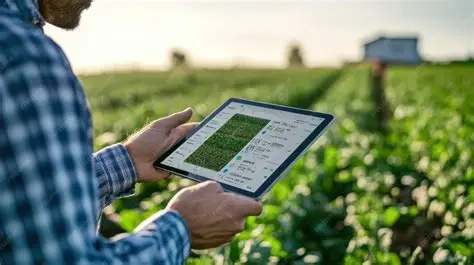
IoT soil moisture sensors provide another approach. A sensor installed in the soil measures a soil-water-related property, while an IoT communication system sends the measurement to a gateway, mobile device, dashboard, or cloud platform. Instead of visiting every sensor manually, a farmer or irrigation manager can monitor readings remotely and use them alongside rainfall, weather, crop stage, soil type, and irrigation records.
The important point is that the sensor does not make the irrigation decision by itself. It provides field data that can improve the decision.
For commercial farming, that distinction matters. A technically impressive sensor system will not improve irrigation if the sensors are installed in the wrong locations, poorly calibrated, disconnected from the root zone, or ignored when making irrigation decisions.
What Is an IoT Soil Moisture Sensor?
An IoT soil moisture monitoring system combines a soil moisture sensor with communication and data-management technology.
The sensor is the part placed in or near the soil. It measures a property related to soil water content or soil water tension. Depending on the technology, the measurement may be converted into a value representing volumetric water content, soil tension, or another indicator of soil water status.
The IoT component allows the measurement to be transmitted without requiring someone to physically visit the sensor every time data is needed.
A basic system may contain a soil moisture probe, a small electronic controller, a communication module, a power source, and a dashboard or application. Larger systems can include multiple sensors, weather stations, gateways, irrigation controllers, pumps, valves, and farm-management software.
This creates a chain:
Soil → Sensor → Data logger or controller → Communication network → Dashboard → Irrigation decision
In more advanced systems, the final step can include automated control:
Soil → Sensor → IoT controller → Irrigation rule → Valve or pump
That does not mean every IoT system should automatically turn irrigation on and off. Automatic control requires suitable irrigation infrastructure, reliable sensor data, properly configured thresholds, and safeguards against inappropriate irrigation.
Why Soil Moisture Matters for Irrigation
Plants do not use irrigation water simply because the farmer applies it. The important question is whether enough water is available in the crop root zone at the right time.
Soil acts as a storage medium for water. Different soils store and release water differently. Sandy soils generally drain more quickly, while heavier soils can retain water for longer, although drainage, structure, organic matter, compaction, and other properties affect actual behaviour.
Crop roots also do not occupy the same depth in every production system.
This means a fixed irrigation schedule can be unreliable when field conditions vary.
A soil moisture sensor provides a direct measurement from a selected location and depth. When that measurement is interpreted alongside crop water requirements and the soil’s water-holding characteristics, it can help determine whether irrigation should be delayed, applied, or adjusted.
Extension guidance from the University of Minnesota explains that soil moisture measurements can be used to estimate soil-water depletion within the root zone and support irrigation scheduling. USDA Agricultural Research Service publications likewise describe soil moisture sensors as tools for monitoring soil-water status and supporting irrigation decisions.
The value therefore comes from connecting soil measurements to actual farm decisions.
How IoT Soil Moisture Monitoring Works
The process starts with the sensor.
Soil moisture measurement
Different sensor technologies measure soil moisture in different ways. Common agricultural systems include capacitance or frequency-domain sensors, time-domain reflectometry sensors, electrical resistance sensors, and tensiometers.
Some sensors estimate volumetric water content. Others measure soil water tension, which indicates how strongly water is held by the soil.
These measurements are not interchangeable.
A reading from one sensor type cannot automatically be interpreted using a threshold designed for another sensor type.
The soil itself also affects sensor readings. Soil texture, salinity, temperature, density, and other properties can influence measurements, which is why installation and calibration matter.
Data collection
A controller or data logger records measurements from the sensor.
For a basic installation, the system may record soil moisture at regular intervals. More advanced systems can collect measurements from several depths and locations.
For example, a vegetable farm using drip irrigation might monitor moisture near the active root zone at two depths. A plantation or orchard may use multiple sensor stations because soil conditions and root distribution vary across the field.
The objective is not to collect the largest possible amount of data. The objective is to collect useful data from representative locations.
Wireless communication
The monitoring device then sends the data through a communication network.
Depending on the farm and system, this could involve cellular networks, Wi-Fi, LoRaWAN, other low-power radio technologies, satellite communication, or a local gateway.
This is one reason farmers should not buy a sensor simply because it says “IoT.”
The communication technology must work at the actual farm location.
A sensor with excellent measurement capability is of limited value if its data cannot reliably reach the farmer or irrigation controller.
Dashboard and alerts
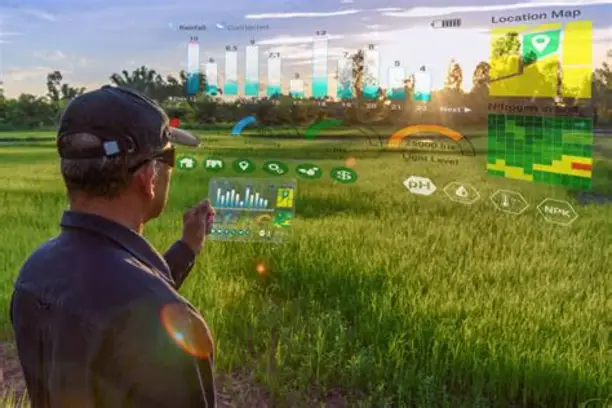
The transmitted data is displayed through a dashboard, application, web interface, or another monitoring system.
The farmer may see current readings, historical trends, sensor status, rainfall information, or irrigation events.
Some systems can send alerts when readings move above or below defined thresholds.
For example, an irrigation manager might receive an alert when soil moisture falls below a predetermined management level.
The threshold should not be selected arbitrarily. It should reflect the crop, soil, rooting depth, irrigation system, and farm management strategy.
What Does “Real-Time” Mean in Agriculture?
Real-time does not necessarily mean that the sensor sends a new measurement every second.
For agricultural soil monitoring, the appropriate measurement interval depends on how quickly soil moisture changes and how quickly the farmer needs to respond.
A high-value greenhouse crop may benefit from frequent measurements because irrigation can change rapidly. A mature plantation with deeper roots and slower changes may require a different monitoring interval.
The important question is whether the data arrives quickly enough to support the intended decision.
A system that reports soil moisture every few minutes may be unnecessary for one farm but useful for another. Conversely, a system that reports only once per day may be too slow for a highly controlled irrigation operation.
What Types of Soil Moisture Sensors Are Used?
There is no single soil moisture sensor that is ideal for every farm.
| Sensor approach | What it indicates | Potential advantages | Important considerations |
|---|---|---|---|
| Capacitance or frequency-domain | Estimates soil water content through electrical properties | Fast response and suitable for continuous monitoring | Readings can be affected by soil characteristics and calibration |
| Time-domain reflectometry | Estimates water content from electromagnetic signal behaviour | Can provide high-quality measurements | Equipment and installation can be more demanding |
| Electrical resistance | Relates electrical resistance to soil water conditions | Can be relatively simple for some applications | Interpretation depends on sensor and soil conditions |
| Tensiometer | Soil water tension | Directly relates to how strongly water is held by soil | Requires appropriate installation and maintenance |
| Multi-depth probes | Moisture at several depths | Shows how water moves through the root zone | Higher equipment cost and more complex interpretation |
Recent research reviews continue to emphasize that sensor selection depends on soil conditions, application requirements, installation, calibration, salinity, temperature, and the required measurement scale.
For a farmer, the question should therefore be less about which sensor is technologically newest and more about which measurement method produces useful information for the particular crop and irrigation system.
Where Should Soil Moisture Sensors Be Installed?
Sensor placement is one of the most important parts of the entire system.
A sensor installed in an unrepresentative location can produce technically correct measurements that are practically misleading.
For example, placing a sensor in a depression that receives more runoff than the surrounding field may make the entire field appear wetter than it actually is.
Similarly, installing a sensor beside an irrigation emitter may produce a very different reading from the surrounding root zone.
University extension guidance recommends considering multiple depths and locations, with placement related to the crop root zone and representative soil conditions.
Sensor depth
Sensors should be positioned where the measurements help explain the water available to the crop.
The appropriate depth depends on the crop’s effective rooting zone, soil profile, irrigation method, and sensor design.
A shallow sensor may respond quickly to rainfall or surface irrigation but fail to show conditions deeper in the root zone.
A deeper sensor may show whether irrigation water is reaching lower roots, but it may not provide sufficient information about shallow-rooted crops.
For this reason, multi-depth monitoring can be more useful than relying on one sensor at one depth.
Sensor location
Sensors should represent the management zone being monitored.
If a field contains substantially different soil types, slopes, drainage patterns, or irrigation zones, one sensor may not represent the entire field.
Precision agriculture takes this idea further by dividing the farm into management zones and monitoring areas that behave differently.
That is where soil moisture sensing becomes more than simply measuring moisture. It becomes a way to manage spatial variation within the farm.
How IoT Sensors Help Farmers Decide When to Irrigate
The sensor does not simply answer “water” or “do not water.”
The farmer needs to interpret the reading.
One approach is to compare current soil moisture with the soil’s field capacity and the acceptable level of depletion for the crop.
Field capacity refers broadly to the amount of water retained in soil after excess water has drained under defined conditions.
If the soil approaches a predetermined depletion level, irrigation may be scheduled.
The exact threshold depends on the crop, soil, rooting depth, irrigation system and production objective.
Weather information can also be added. Evapotranspiration estimates describe the combined movement of water from the soil and plants into the atmosphere and can help explain why soil moisture is changing.
Rainfall data provides another important input.
A practical irrigation decision can therefore combine:
Soil moisture + rainfall + weather + crop stage + root-zone depth + irrigation system performance
This is much more useful than treating a single sensor number as an automatic instruction.
How IoT Soil Sensors Can Work With Automated Irrigation
The next step beyond monitoring is irrigation control.
An IoT system can potentially connect soil moisture data to irrigation valves or pumps.
For example, a drip irrigation system may be configured so that irrigation is allowed when soil moisture falls below a defined management threshold and stopped after a suitable irrigation event.
However, automation should not be treated as simply connecting a sensor to a pump.
The system needs safeguards.
A faulty sensor could otherwise trigger irrigation at the wrong time. A communication failure could prevent a command from reaching the irrigation controller. A broken valve could cause water to continue flowing.
Good automated irrigation systems therefore need sensible control logic, equipment monitoring, manual override capability, and maintenance procedures.
Penn State Extension describes IoT-enabled irrigation systems in which soil moisture sensing can support remote or automatic valve operation. This illustrates how soil monitoring can become part of a broader irrigation-control system rather than remaining a standalone sensor.
What Crops Can Use IoT Soil Moisture Sensors?
IoT soil moisture monitoring can be used across many irrigated agricultural systems.
Vegetables
Vegetable crops can benefit from close monitoring because irrigation timing can affect crop quality as well as plant growth.
Drip-irrigated tomato, pepper, cucumber, melon and other vegetable systems can use sensors to observe moisture around the active root zone.
The sensor should be installed according to the irrigation layout rather than simply placed wherever it is convenient.
Maize and other field crops
Large field crops can use soil moisture sensors to support irrigation scheduling where irrigation infrastructure is available.
The challenge is spatial representation.
A large field may contain substantial variation in soil texture and water-holding capacity, so a single sensor may not represent the entire field.
Orchards and plantations
Tree crops can require monitoring at multiple depths because roots may occupy a deeper soil profile than many annual crops.
Sensors can help identify whether irrigation is penetrating sufficiently into the root zone and whether moisture remains available between irrigation events.
Greenhouses
Greenhouses are particularly suitable for sensor-based irrigation because the production environment is more controlled.
Sensors can be combined with irrigation controllers, weather measurements, fertigation equipment and crop-management systems.
However, greenhouse substrates can behave differently from field soils, so the sensor and interpretation method must match the production system.
What Equipment Is Required for an IoT Soil Moisture Monitoring System?
A basic system can be relatively simple, while a commercial precision irrigation system can contain many components.
| Component | Function |
|---|---|
| Soil moisture sensor | Measures soil water status |
| Controller or node | Reads sensor information and prepares it for transmission |
| Communication module | Sends data from the field |
| Gateway | Collects data from multiple devices where required |
| Power supply | Provides electricity to sensors and communication equipment |
| Data platform | Stores and displays readings |
| Mobile or web interface | Allows users to monitor information remotely |
| Weather sensor | Provides rainfall and environmental information where included |
| Irrigation controller | Controls valves or pumps in automated systems |
| Field installation hardware | Protects and positions sensors correctly |
The equipment list depends heavily on the farm.
A small irrigated vegetable farm may only need a few sensor stations and a mobile dashboard.
A large commercial operation may require dozens of sensors, multiple gateways, weather stations, irrigation controllers and different management zones.
Does an IoT Soil Moisture System Need Internet?
Not necessarily in the same way that a smartphone application does.
The sensor itself may communicate locally with a gateway using a low-power wireless technology. The gateway may then use cellular or another connection to transmit data to a cloud platform.
Some systems can also operate locally without continuous cloud connectivity.
This distinction matters in areas where mobile coverage is unreliable.
Before purchasing a system, determine:
| Question | Why it matters |
|---|---|
| Is cellular coverage available? | Determines whether cellular transmission is practical |
| Is a gateway required? | Affects installation and cost |
| What happens when connectivity fails? | Data should not necessarily be lost |
| Does the device store readings locally? | Provides resilience during outages |
| Is cloud access required? | Determines dependence on internet connectivity |
| Can the system send local alerts? | Useful where internet service is unreliable |
| How much data does it transmit? | Affects communication requirements |
A farm does not necessarily need broadband internet across every field, but the communication architecture must suit the location.
What About Solar Power?
Remote sensor stations often need an independent power source.
Solar power can be useful where electrical infrastructure does not extend to the monitoring location.
A solar-powered system normally requires more than a small panel. The design may include a solar panel, battery storage, charge controller, electronics and the sensor or communication equipment.
The correct size depends on the energy consumption of the system, communication frequency, local solar conditions, battery capacity and environmental conditions.
Farmers should also consider physical security. Equipment installed in an exposed field may be vulnerable to accidental damage, farm machinery, animals, theft, flooding or vegetation growth.
Power reliability is therefore both an engineering and farm-management issue.
How Much Does an IoT Soil Moisture Monitoring System Cost?
There is no single price for an IoT soil moisture monitoring system.
The cost depends on sensor type, accuracy requirements, number of monitoring points, communication technology, gateway requirements, power system, software, installation, maintenance and whether the system controls irrigation.
A low-cost sensor node and a commercial multi-zone irrigation monitoring system should not be treated as equivalent products.
Even within the same sensor category, prices can vary significantly according to build quality, calibration, communication capability and support.
For this reason, farmers should request a complete system quotation rather than comparing only the price of the soil moisture probe.
The total cost can include:
- Soil moisture sensors
- Data loggers
- Communication modules
- Gateways
- Solar power systems
- Batteries
- Installation
- Calibration
- Software
- Cloud services
- Irrigation controllers
- Valves
- Pumps
- Maintenance
- Replacement sensors
- Technical support
The University of Minnesota’s agricultural extension guidance provides examples of sensor costs for some sensor categories, but those figures should not be treated as current Nigerian market prices because equipment, suppliers, exchange rates, specifications and local installation costs differ.
For a Nigerian farm, the most useful approach is to obtain current local quotations and calculate the complete installed cost.
What Are the Benefits of Real-Time Soil Moisture Monitoring?
The main benefit is better information about what is happening below the soil surface.
A farmer can use sensor data to identify whether the root zone is drying, whether rainfall has supplied enough moisture, whether irrigation is penetrating to the desired depth, and whether different areas of the farm are behaving differently.
This can support more responsive irrigation scheduling.
Research and extension literature associate soil moisture monitoring with improved irrigation management, while recent reviews identify IoT sensing as an important component of precision irrigation systems.
However, the sensor itself does not automatically produce water savings or higher yields.
Those outcomes depend on how the information is interpreted and acted upon.
A farmer who receives excellent soil moisture data but continues irrigating according to an unrelated fixed schedule may gain little practical benefit.
Can Soil Moisture Sensors Reduce Water Waste?
They can support better water management, but a specific percentage reduction should not be promised without evidence from the particular farm and production system.
Over-irrigation can increase pumping costs and can contribute to nutrient movement below the crop root zone. Under-irrigation can create water stress.
Sensor information helps the manager see the soil-water situation more directly.
The potential benefit is therefore improved timing and quantity of irrigation rather than an automatic reduction in water use.
The actual result depends on irrigation system efficiency, soil characteristics, crop requirements, rainfall, management practices and how accurately the sensor system represents the field.
What Are the Limitations of IoT Soil Moisture Sensors?
IoT soil monitoring is not a perfect replacement for field observation and agronomic judgement.
The first limitation is representativeness.
A sensor measures a specific location. A large field can contain much more variation than a small number of sensors can capture.
The second limitation is sensor accuracy.
Different sensors respond differently to soil properties, and factory calibration may not perfectly represent every soil.
The third limitation is installation.
Poor contact between the sensor and surrounding soil can affect readings. Incorrect depth can also make the information less useful.
The fourth limitation is connectivity.
Wireless communication can fail because of weak coverage, damaged equipment, power problems or gateway faults.
The fifth limitation is maintenance.
Sensors can become damaged by machinery, animals, flooding, soil movement or field operations.
The sixth limitation is interpretation.
A soil moisture number without knowledge of crop rooting depth, soil water-holding characteristics, field capacity, rainfall and irrigation performance may lead to poor decisions.
Why Sensor Calibration Matters
Calibration is one of the areas that should not be ignored simply because a sensor comes with factory settings.
Soil properties vary considerably.
A sensor’s response can be influenced by soil texture, electrical conductivity, temperature, density and other factors. Recent USDA Agricultural Research Service work has continued to evaluate differences among common soil moisture sensors and has highlighted limitations of relying blindly on default calibration equations across varying soil conditions.
For a commercial farm, calibration should therefore be considered part of system setup rather than an optional technical exercise.
Where appropriate, sensor readings should be checked against known soil conditions or an established measurement method.
The objective is to understand what the sensor reading means in the actual field.
Can One Sensor Monitor an Entire Farm?
Usually, that is not a sound assumption for a large or variable farm.
The number of sensors required depends on field size, soil variation, irrigation layout, crop type, terrain and the level of precision required.
A uniform field may need fewer monitoring points than a highly variable field.
A precision agriculture approach can use soil mapping, field history, irrigation zones, crop performance and other information to identify representative management zones.
Sensors can then be positioned within those zones.
The objective is not necessarily to install hundreds of sensors.
It is to install enough sensors in the right places to make decisions that are better than the decisions being made without them.
IoT Soil Sensors and Precision Agriculture
Precision agriculture is about managing field variation rather than treating every part of a farm identically.
Soil moisture sensors contribute to this approach by providing information about water conditions at specific locations.
The data becomes more useful when combined with other farm information.
For example:
Soil moisture + soil map + weather + crop stage + irrigation records
can provide a stronger basis for irrigation decisions than any one data source alone.
Remote sensing can also complement ground sensors. Satellite imagery or drone imagery can show spatial patterns in vegetation, while soil sensors provide direct measurements at selected locations.
This combination can help a farm investigate why one part of a field behaves differently from another.
A Practical Example on a Nigerian Vegetable Farm
Consider a hypothetical five-hectare irrigated tomato farm.
The farmer currently irrigates on a fixed schedule because the irrigation team needs a simple routine.
However, the farm has sandy soil in one section and heavier soil in another.
The same irrigation schedule therefore does not produce exactly the same soil-water conditions across the entire farm.
The farmer installs IoT soil moisture sensors in representative irrigation zones and places sensors at appropriate depths within the crop root zone.
After rainfall, the dashboard shows that some zones remain adequately moist while another area dries more quickly.
Instead of automatically irrigating the entire farm for the same duration, the farm manager can investigate the readings, rainfall, crop stage and irrigation system before deciding how each zone should be managed.
The example is hypothetical, but it illustrates the central value of the technology: better information about variation within the farm.
The technology does not replace the irrigation manager. It gives the manager better field evidence.
How to Implement IoT Soil Moisture Monitoring on a Farm
Start With the Irrigation Problem
Do not begin by asking which sensor to buy.
Begin by identifying the current problem.
Are you over-irrigating?
Are crops experiencing water stress?
Is rainfall making the irrigation schedule unreliable?
Does one part of the field dry faster than another?
Is the irrigation system applying water unevenly?
Are you spending too much time manually checking fields?
Does the farm need remote monitoring?
The answer determines what type of system is appropriate.
Map the Farm
Identify soil types, irrigation zones, crop types, slopes, drainage patterns and areas with different production performance.
This helps determine where sensors should be installed.
Select the Sensor Technology
Compare sensor measurement method, accuracy, installation requirements, power consumption, communication options, durability and local support.
Do not select purely on purchase price.
Design the Communication System
Determine whether cellular, LoRaWAN, Wi-Fi, satellite or another communication method is appropriate.
Test the actual farm location rather than relying solely on a supplier’s coverage statement.
Install Sensors Correctly
Follow the manufacturer’s installation procedure.
Ensure good soil contact and appropriate depth.
Avoid locations that do not represent the crop root zone.
Protect the equipment from machinery and other field hazards.
Establish Irrigation Thresholds
Work with the crop’s rooting depth, soil characteristics, irrigation system and agronomic requirements to determine useful decision thresholds.
Do not simply copy a threshold from another farm.
Monitor and Validate
Compare sensor readings with field observations, rainfall, irrigation events and crop condition.
If the data consistently conflicts with physical observations, investigate the system rather than assuming the sensor is correct.
Expand Gradually
Once the system demonstrates value in one field or irrigation zone, expand to additional areas where the same problem exists.
This approach reduces the risk of spending heavily on a system before its practical usefulness has been demonstrated.
Who Should Consider IoT Soil Moisture Monitoring?
The technology is particularly relevant to farms where irrigation is important and where water-management decisions have meaningful financial consequences.
Commercial vegetable farms, orchards, plantations, greenhouse operations, irrigated field crops, nurseries and other intensive production systems may benefit from continuous monitoring.
It can also be useful for farms where fields are geographically dispersed and managers cannot physically inspect every area frequently.
Smaller farms can also use the technology, but the economics need to be considered carefully.
If irrigation is simple, fields are small, water is readily available, and the farmer can easily assess soil conditions manually, a sophisticated IoT system may provide limited additional value.
When May an IoT Soil Moisture System Not Be Worth the Cost?
The technology may not be justified when there is little irrigation, the crop depends almost entirely on rainfall, the field is very small, or the farmer does not intend to change irrigation decisions based on the data.
It may also be unsuitable where there is no practical way to maintain the sensors or communication system.
A farmer should not install IoT sensors simply because they are classified as smart farming technology.
The business case should be based on whether better soil-water information can improve an important farm decision.
What Should Farmers Ask an IoT Sensor Supplier?
Before purchasing, ask the supplier how the sensor measures moisture and what units it reports.
Ask how the sensor performs in your soil type and whether local calibration is available.
Ask how many sensors are recommended for your field size and soil variation.
Ask what communication network the system uses and what happens when connectivity fails.
Ask how long the battery is expected to last.
Ask whether solar power is supported.
Ask whether the system can integrate with your irrigation controller.
Ask what happens if a sensor stops reporting.
Ask whether the software requires a subscription.
Ask where replacement sensors and spare components can be obtained.
Ask whether installation and training are included.
Most importantly, ask the supplier to demonstrate how the data will lead to an actual irrigation decision on your farm.
If the answer is simply “you will see the moisture level on your phone,” the system may still be useful, but the supplier has not yet demonstrated the full agricultural value.
IoT Soil Moisture Monitoring vs Manual Soil Checking
Manual observation should not necessarily disappear when sensors are installed.
| Approach | Strength | Limitation |
|---|---|---|
| Soil feel and appearance | Low cost and requires little equipment | Subjective and difficult to monitor continuously |
| Fixed irrigation schedule | Simple to manage | Does not respond directly to changing soil conditions |
| Weather-based scheduling | Uses rainfall and atmospheric demand | May not show actual soil moisture at the root zone |
| Portable soil probe | Can inspect multiple locations | Requires field visits |
| IoT soil moisture sensors | Continuous or frequent remote measurements | Requires installation, power, connectivity and interpretation |
| Automated sensor-based irrigation | Can respond rapidly to defined conditions | More complex and requires reliable sensors, controls and safeguards |
In practice, these methods can complement one another.
A farmer can use sensors for continuous monitoring while still physically inspecting fields.
That combination is often more useful than relying exclusively on either technology or visual observation.
The Future of IoT Soil Moisture Monitoring
Current research is moving toward systems that combine soil moisture sensors with weather data, remote sensing, machine learning and automated irrigation.
The purpose is not simply to collect more data.
Advanced systems attempt to turn sensor readings into better irrigation recommendations by considering previous moisture conditions, weather, irrigation events and crop requirements.
Research reviews published in 2025 and 2026 describe increasing integration of IoT, remote sensing, machine learning and other technologies for soil moisture monitoring and irrigation decision support.
However, more sophisticated analytics do not remove the need for good field data.
If the sensor is incorrectly installed or the monitoring location is not representative, a sophisticated algorithm can still receive poor information.
The foundation remains good measurement, good installation, appropriate calibration and sound agronomic interpretation.
Final Considerations
IoT sensors can give farmers something that conventional irrigation routines often lack: frequent information about what is happening inside the soil.
That information can support better irrigation scheduling, help identify differences between management zones, provide remote visibility across dispersed fields, and potentially connect soil monitoring with automated irrigation systems.
But the technology should not be treated as an automatic solution to every irrigation problem.
The sensor must be appropriate for the soil and crop. It must be installed at useful locations and depths. The communication system must work reliably. The readings must be interpreted correctly, and the farm must actually use the information when making irrigation decisions.
For Nigerian and other African farms, connectivity, electricity, equipment cost, technical support, sensor durability and availability of replacement parts also deserve attention.
The most practical approach is to start with the irrigation decision that needs improvement.
Then choose the sensor, communication system and software that can provide the information required to make that decision.
That is the difference between simply installing an IoT device and actually using IoT technology for precision irrigation.
Frequently Asked Questions
How do IoT sensors monitor soil moisture in real time?
A soil moisture sensor measures a property related to the amount or availability of water in the soil. An electronic controller records the measurement and transmits it through a communication network to a dashboard, application, or irrigation-control system. The farmer can then monitor changes remotely.
What type of sensor is best for monitoring soil moisture?
There is no single sensor that is best for every farm. Capacitance, time-domain, resistance-based and tensiometer technologies have different characteristics, costs and installation requirements. Soil type, crop, rooting depth, salinity, irrigation method and the required accuracy should influence the selection.
Can IoT soil moisture sensors automatically control irrigation?
Yes, some systems can connect soil moisture monitoring with irrigation controllers, valves or pumps. However, automation should be based on properly selected thresholds, reliable sensor readings and appropriate control safeguards. Automatic irrigation should not be enabled simply because a sensor is connected to a controller.
Do IoT soil moisture sensors require internet?
Not necessarily. Sensors can communicate with local gateways using different wireless technologies, while the gateway may use cellular or another connection to send data to a cloud platform. Some systems can continue storing data locally when external connectivity is unavailable.
How deep should a soil moisture sensor be installed?
The correct depth depends on the crop’s active root zone, soil profile, irrigation method and sensor design. Monitoring more than one depth can help show how water is moving through the root zone. Sensors should be installed according to the manufacturer’s instructions and agricultural requirements.
Can soil moisture sensors reduce irrigation water use?
They can support better irrigation management, but a specific water-saving percentage cannot be assumed. Results depend on the soil, crop, irrigation system, rainfall, sensor placement, management practices and how the data is used.
Are IoT soil moisture sensors suitable for small farms?
They can be, particularly where irrigation is important and water-management decisions are difficult. However, small farms should compare the cost of the complete system with the value of improved irrigation management. A simple soil monitoring method may be more appropriate where the farm is small and easy to inspect.
What should farmers check before buying an IoT soil moisture system?
Check sensor accuracy, soil compatibility, installation requirements, communication coverage, power requirements, battery life, software costs, data storage, irrigation-controller compatibility, warranty, technical support, replacement parts, calibration options and total installed cost. Most importantly, determine how the system will change an actual irrigation decision on the farm.