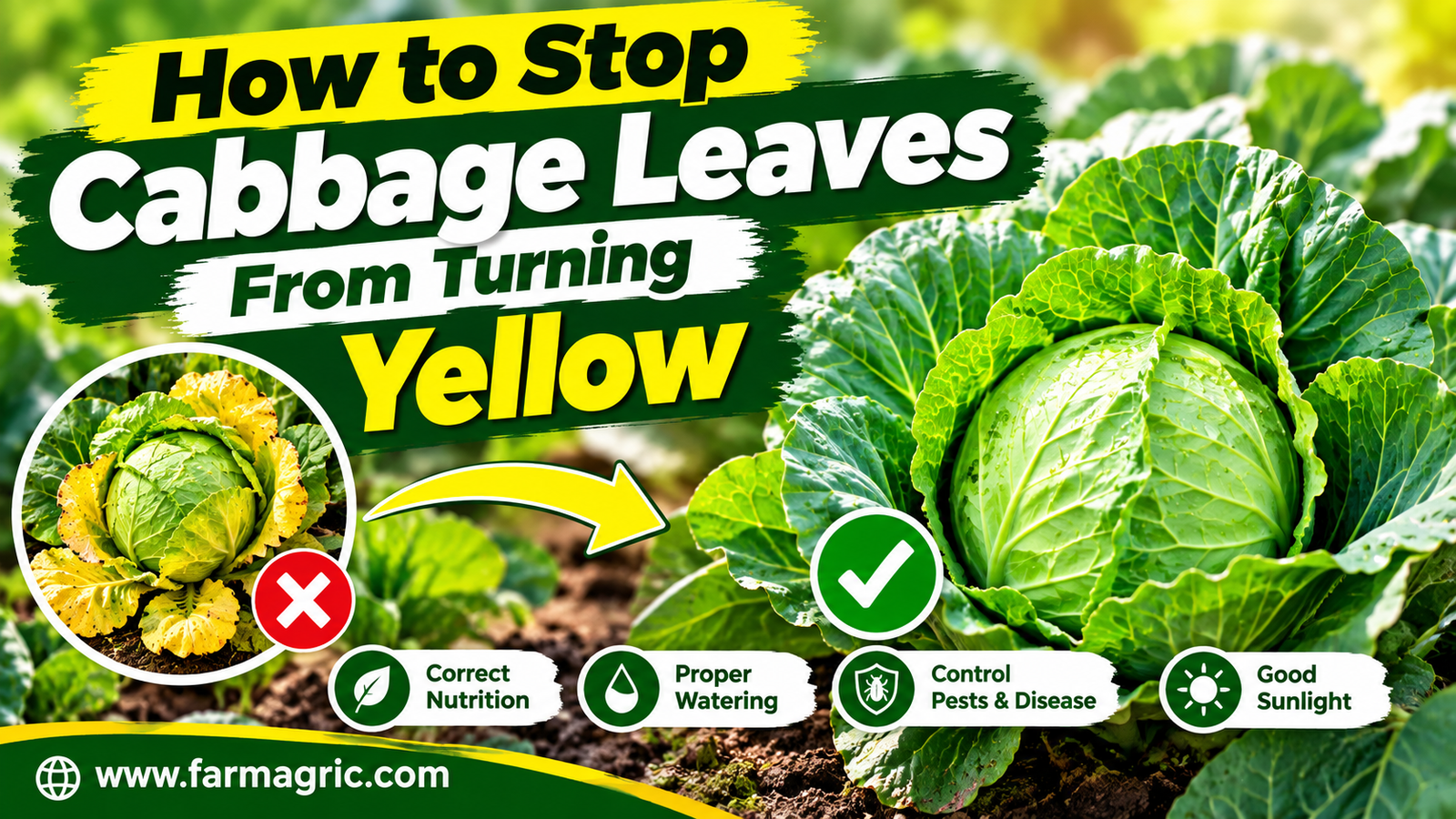
How to Stop Cabbage Leaves From Turning Yellow
How to Stop Cabbage Leaves From Turning Yellow
I once planted a field of cabbages that looked perfect for the first three weeks, then watched the lower leaves turn yellow one row at a time. I fed them. They stayed yellow. I fed them again, and some of the plants got worse. It was only when I dug up a few and looked at the roots and the soil that I understood the leaves were never asking for fertilizer. They were reporting a problem somewhere else. Yellow leaves are a symptom, not a disease, and the farmer who treats the symptom without finding the cause usually loses money twice.
Here is the plain answer. Cabbage leaves turn yellow for one of a handful of reasons: not enough nitrogen, waterlogged or compacted soil, a dry spell, root damage from pests or disease, a disease such as black rot, Fusarium yellows, or downy mildew, or simply old lower leaves dying off naturally near harvest. The pattern of the yellowing tells you which one. Yellowing that starts on the oldest, lowest leaves and moves up evenly points to low nitrogen. Yellowing with wet soil points to poor drainage. Yellow V-shaped patches from the leaf edge point to black rot. Yellowing on one side of the plant points to Fusarium. Fix the cause, not the color.
The short version of what I do is this. I look at which leaves are yellow and in what pattern, dig up a plant to check the roots, test the soil moisture with my finger, correct drainage or watering first, give a measured nitrogen feed only if the plant is truly hungry, and remove diseased plants early. The rest of this article shows you how to read each pattern and what to do about it.
What Most Farmers Get Wrong
The first mistake is feeding every yellow plant. Yellow means hungry to most farmers, so they apply fertilizer without checking anything else. If the real problem is wet soil, damaged roots, or disease, the fertilizer does nothing, and a heavy dose can burn roots and make the plant worse.
The second mistake is overwatering. When leaves yellow and droop, many farmers assume thirst and water more. In heavy or poorly drained soil, that suffocates the roots, which makes the yellowing worse. More water on a drowning plant is the wrong medicine.
The third mistake is spraying fungicide at everything. Several causes of yellowing are not fungal. Black rot is bacterial, and nutrient shortage, waterlogging, and root damage are not diseases at all. A spray gives you a bill and no result.
The fourth mistake is ignoring the roots. Yellow leaves above ground often start with trouble below it, such as clubroot swellings, root maggots, nematodes, or rot. Most farmers never dig a plant up to look.
The fifth mistake is panicking over normal yellowing. The oldest outer leaves of a cabbage naturally turn yellow and drop as the head matures. That is not a problem, and stripping or treating them wastes effort.
The sixth mistake is changing many things at once. If you add fertilizer, change watering, and spray in the same week, you never learn what worked.
Read the Pattern First
Before you do anything, walk the field and answer four questions.
Which leaves are yellow? Old, lower leaves point to nitrogen shortage or natural aging. Young, inner leaves point to a shortage of minerals such as sulfur or iron, or to high soil pH.
Is the yellowing even or patterned? An even fade across the whole leaf suggests nutrition or water trouble. V-shaped patches from the edge suggest black rot. Yellow patches on top with gray fuzz underneath suggest downy mildew. Yellowing on only one side of the plant suggests Fusarium.
Where in the field is it? Yellow patches in low spots suggest waterlogging. Yellow in a whole block suggests nutrition or soil problems. Single scattered plants suggest disease or root pests.
What are the roots doing? Pull up one affected plant. Healthy roots are white and spread through the soil. Brown, mushy, or smelly roots mean rot. Swollen, club-shaped lumps mean clubroot. Small knots mean nematodes. Tunnels or white maggots in the stem base mean root fly.
Five minutes of looking beats a month of guessing.
Cause One: Not Enough Nitrogen
Cabbage is a heavy feeder, and nitrogen shortage is the most common cause of yellowing. The signs are pale green to yellow lower leaves, slow growth, and small heads. The yellowing starts on the oldest leaves and works upward. Heavy rain on sandy soil washes nitrogen away, so the problem often appears after a wet spell.
The fix is to apply nitrogen in measured amounts. Use a recommended nitrogen fertilizer or well-rotted manure at the rate on the label or from a soil test, placed in a ring a few centimeters from the stem, then watered in. Split the feed into two or three smaller doses through the early weeks, because one heavy dose can be washed out or burn the plant. Stop heavy nitrogen as the heads begin to firm, since late feeding causes loose heads and splitting. Compost and manure worked in before planting prevent the problem next season.
Cause Two: Waterlogged or Compacted Soil
Roots need air. In heavy clay, compacted ground, or low spots that hold water, the roots suffocate, stop taking up nutrients, and the leaves yellow even though the soil is full of fertilizer. The plant often wilts in the afternoon despite wet soil, and the roots look brown and weak.
Stop watering until the top of the soil is dry a knuckle deep. Open the soil carefully between rows with a hoe, without cutting roots, and dig a small drain to move standing water away. For the long term, plant on raised beds or ridges, add compost to improve soil structure, and avoid walking or driving on wet soil. If the roots are already brown and slimy, the plant will not recover and is better replaced.
Cause Three: Uneven or Too Little Water
A dry spell makes cabbage leaves yellow, curl, and drop, and a plant that swings from dry to flooded does the same. Check by pushing a finger a knuckle deep into the soil. If it is dry, water slowly and deeply instead of in quick splashes.
Mulch the rows with straw or dry grass to keep moisture even, and use drip irrigation if you can. Steady moisture is worth more than any fertilizer you can buy.
Cause Four: Soil pH and Mineral Problems
If the soil is too acidic, nutrients lock up and clubroot thrives, and if it is too alkaline, iron and some other minerals become hard to take up, giving yellow young leaves. Cabbage prefers a pH of roughly 6.0 to 7.0. A basic soil test tells you where you stand, and liming acidic soil according to the result helps. Sulfur and magnesium shortages can also yellow leaves, and a soil test or local advice will tell you if they are low in your soil.
Cause Five: Diseases
Several diseases yellow cabbage leaves, and each has its own pattern.
Black rot gives yellow V-shaped patches from the leaf edge, with blackened veins inside. It is bacterial, so fungicides do not work. Remove affected plants, rotate crops, and use clean seed.
Fusarium yellows turns the leaves on one side of the plant yellow, stunts the plant, and may show a brown ring in the cut stem. It lives in the soil for years and is worst in warm weather. There is no cure, so rotate and use resistant varieties where available.
Clubroot swells the roots into club-shaped lumps, so the plant wilts and yellows in the heat of the day. Acidic, wet soil encourages it. Liming, drainage, and long rotations help, and infected plants should be removed.
Downy mildew shows yellow patches on top of the leaf and gray fuzz underneath in cool, damp weather. Spacing, airflow, and approved fungicides help where it is a regular problem.
If you are unsure which disease you have, take fresh samples to your extension officer or a plant clinic.
Cause Six: Pests Attacking the Roots and Leaves
Cabbage root fly maggots tunnel into the roots and stem base, and the plant yellows, wilts, and may die. Nematodes cause stunting and yellowing with small knots on the roots. Aphids on the leaves and cutworms at the soil line can also weaken plants and yellow the foliage. Turn the leaves over, check the stem base, and dig a few plants up. Treat early with products approved for cabbage in your area, following the label and the days to wait before harvest, and use protective measures such as clean seedlings and crop rotation.
Cause Seven: Natural Aging
A few lower, outer leaves yellowing as the head matures is normal. If the plant is growing well, the head is firming up, and only the oldest leaves are affected, leave it alone. Remove loose yellow leaves from the field and bury them, so they do not harbor pests and disease.
Step-by-Step Practical Fix
If your cabbage leaves are yellow right now, here is the order I would work through.
Start by noting which leaves are yellow, in what pattern, and where in the field.
Next, dig up one or two affected plants and check the roots and stem base.
Then check the soil moisture with your finger. If it is soggy, stop watering and improve drainage. If it is bone dry, water slowly and deeply and mulch.
After that, if the roots are healthy and the oldest leaves are evenly pale, give a measured nitrogen feed in a ring away from the stem, and water it in.
If you see V-shaped patches, one-sided yellowing, root swellings, or gray fuzz, treat it as a disease: remove affected plants in a bag, bury or burn them, and plan rotation.
Check for pests under the leaves and at the stem base, and treat early with approved products.
Change one thing at a time, and give it a week or two before judging. New leaves should come in healthy green if you have found the cause.
Warning Signs to Watch For
Learn to catch it early. Pale lower leaves with slow growth point to hunger. Yellow leaves with wet soil and brown roots mean waterlogging. Yellow V-shaped patches from the leaf edge mean black rot. Plants yellowing on one side suggest Fusarium. Wilting in the afternoon with swollen roots suggests clubroot. Gray fuzz under yellow patches means downy mildew. White maggots at the stem base mean root fly.
If you see any of these, act that week, not next month.
What I Would Do Differently If Starting Again Today
If I were starting fresh, I would dig up a plant the first time I saw yellow, before I bought anything. I would test my soil for pH and nutrients before planting and add compost and lime where the test said to. I would plant on raised beds with mulch and drip irrigation, split my nitrogen into small early doses, and rotate cabbage family crops every year without exception. I would also keep a notebook of when yellowing started, what the weather was doing, and what I changed, because patterns show up on paper that memory never catches.
And I would stop treating every yellow leaf as a hunger signal. Most of my wasted fertilizer went onto plants that were drowning.
FAQ
Why are my cabbage leaves turning yellow?
The most common causes are low nitrogen, waterlogged soil, uneven watering, root damage, and diseases like black rot or Fusarium. The pattern of yellowing and the condition of the roots tell you which one it is.
Should I fertilize yellow cabbage?
Only if the oldest leaves are evenly pale, the roots are healthy, and the soil is not waterlogged. Apply a measured nitrogen dose away from the stem. Feeding a plant with root rot or disease does not help.
Is it normal for outer cabbage leaves to turn yellow?
Yes, a few old outer leaves yellowing near maturity is normal. It is a problem if yellowing is widespread, starts early, or comes with stunting, spots, or rot.
Can overwatering turn cabbage leaves yellow?
Yes. Waterlogged roots cannot breathe or take up nutrients, so leaves yellow and droop. Water only when the soil is dry a knuckle deep, and plant on raised beds if your soil holds water.
Will yellow cabbage leaves turn green again?
Leaves that have yellowed usually do not recover fully, but new growth should be green once you fix the cause. Remove badly yellowed leaves and watch the new leaves for progress.
The Advice Worth Bookmarking
A yellow leaf is a message, not a mistake. Dig up the roots and read the pattern before you reach for the fertilizer.