How to Manage Water Levels in Rice Farming
How to Manage Water Levels in Rice Farming: A Farmer’s Guide to Getting the Flood Right
I used to think water management in rice meant one thing, keep the field flooded, and the deeper and more constant that flood, the safer the crop. It took a genuinely bad season, one where I lost yield to a combination of weak tillering and a disease outbreak I now understand was made worse by water I’d kept too deep for too long, to realize that rice doesn’t actually want to be drowning at every stage the way I assumed. Water depth needs change constantly through the crop’s life, and the seasons I’ve managed that depth deliberately, stage by stage, rather than just keeping the field wet and calling it done, have consistently outperformed the seasons where I treated flooding as a single, unchanging decision made once at the start.
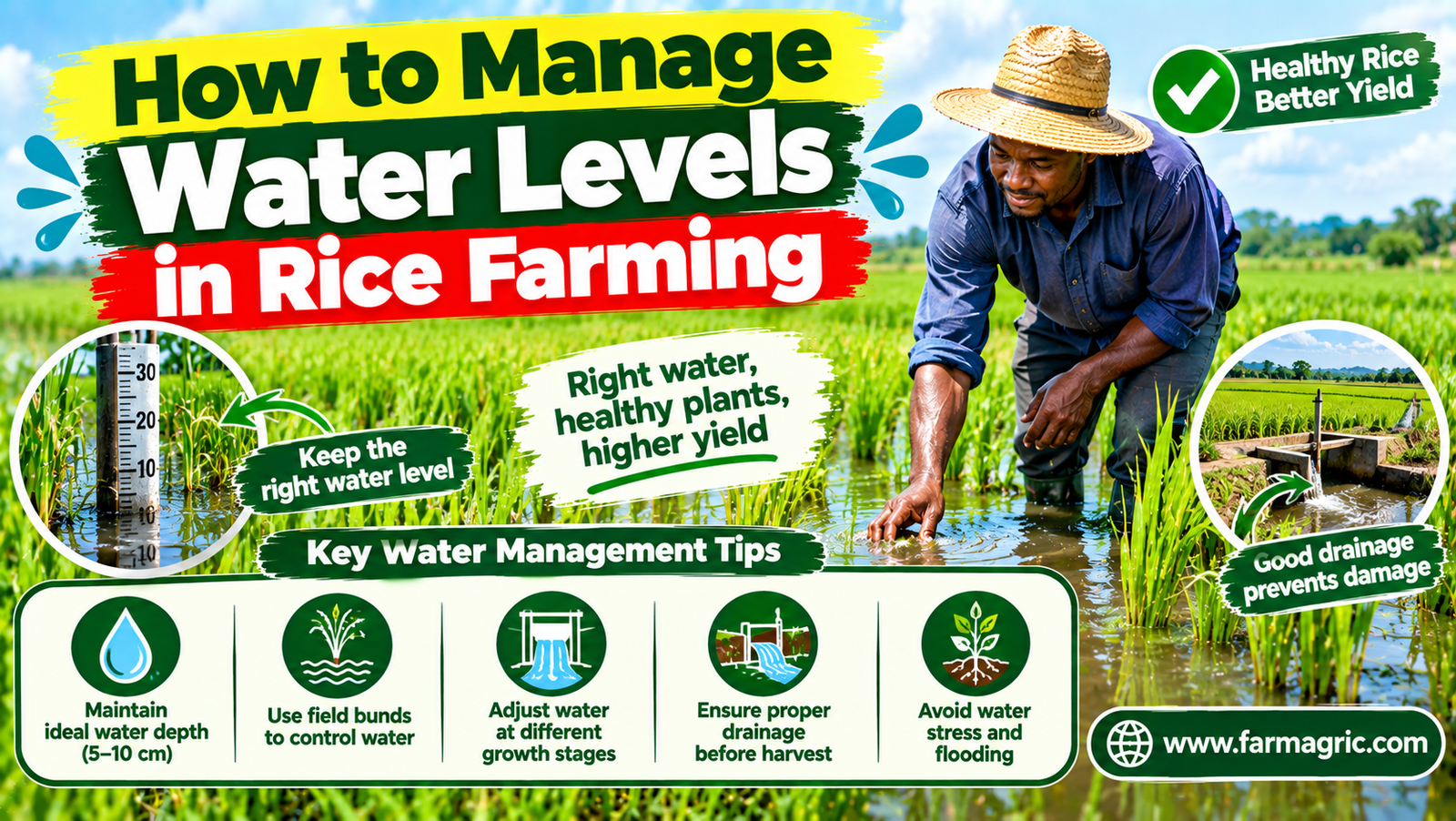
So let me answer you straight, because I know you’re standing at your inlet right now trying to decide how much water this field actually needs this week. Rice water levels should be managed in stages, shallow water of around two to three centimeters during the early vegetative and tillering stage, slightly deeper flooding of five to ten centimeters through the reproductive stage from panicle initiation through flowering, and a controlled drain-down starting about ten to fourteen days before harvest, rather than maintaining one constant water depth throughout the entire season. Water depth isn’t a single decision you make at planting, it’s a schedule that shifts with the plant’s actual needs at each growth stage, and getting that schedule wrong, either too deep too early or too shallow during the stages that need real depth, costs yield in ways that are easy to avoid once you understand what each stage actually requires.
Why Water Depth Needs Change Through the Season
Rice has different physiological needs at different points in its life, and water depth interacts directly with several of them. During early establishment and tillering, the plant is putting energy into producing new shoots from the base, and shallow water during this stage actually encourages more vigorous tillering than deep flooding does, since excessively deep water at this stage can suppress the plant’s ability to produce tillers efficiently. Once the plant moves into the reproductive stage, from panicle initiation through flowering, water demand and sensitivity both increase substantially, and maintaining more consistent, slightly deeper flooding during this window protects the crop through its most vulnerable and highest-value developmental period. As the crop approaches maturity, continuing to hold deep water no longer serves a purpose and actually complicates harvest, so a controlled drain-down toward the end of the season lets the field firm up enough for proper harvesting while grain finishes maturing.
What Most Farmers Get Wrong
The first mistake, the one that led to my bad tillering season, is maintaining the same deep flood level from transplanting straight through to harvest, treating water management as a single decision rather than an evolving schedule. Deep water during early tillering actively works against the plant’s own natural growth pattern at that stage.
The second mistake is allowing water levels to fluctuate unintentionally due to poor field leveling or inconsistent water source availability, rather than managing depth deliberately according to growth stage. Uneven water depth across a poorly leveled field creates a patchwork of different conditions within the same paddy, with some areas essentially getting the wrong water management regardless of what the farmer intended overall.
The third mistake is draining too early or too late relative to harvest timing. Draining too early, well before the fourteen-day window, can stress the crop during still-critical grain filling and reduce final grain weight. Draining too late leaves the field too wet and soft for efficient harvest, increasing both harvest difficulty and the risk of lodged plants sinking into soft, muddy ground.
The fourth mistake is not adjusting water management in response to disease or pest pressure specifically. Certain diseases and pest issues are worsened by particular water conditions, stagnant, overly deep water can worsen iron toxicity and some fungal pressures, while water stress can increase susceptibility to others like blast, and failing to factor disease risk into water decisions misses an important layer of integrated management.
The fifth mistake is ignoring water management as a weed control tool and treating it purely as a plant-growth question, missing the significant weed suppression benefit that correctly maintained flood depth provides essentially for free during the early season.
Step-by-Step Water Management Plan Through the Rice Growth Cycle
1. Keep the field saturated but not deeply flooded immediately after transplanting. In the first few days after transplanting, maintain shallow water, just enough to keep the soil saturated, around one to two centimeters, allowing transplant shock to pass and root establishment to begin without stressing fragile new roots under excessive depth.
2. Maintain shallow water of two to three centimeters through active tillering. This shallow depth through the tillering stage, typically the first several weeks after transplanting, supports vigorous tiller production, which directly determines how many productive stems and eventually how many panicles the plant will produce.
3. Gradually increase depth as the plant moves toward panicle initiation. As tillering slows and the plant transitions toward its reproductive stage, begin increasing water depth toward the five to ten centimeter range, providing the more consistent moisture the plant needs as it shifts its energy from producing new shoots to developing the panicle.
4. Maintain consistent moderate flooding through flowering. This reproductive window, from panicle initiation through flowering, is one of the most water-sensitive periods in the entire crop cycle, and maintaining reliable, consistent flood depth here protects the plant through pollination and early grain development.
5. Consider alternate wetting and drying if water supply is limited or if using intensive management methods. Rather than maintaining continuous flooding throughout the vegetative stage, allowing the field to dry slightly before reflooding, a practice sometimes used specifically to conserve water or as part of more intensive management approaches, can work well when managed carefully, though it requires closer monitoring than continuous flooding to avoid excessive stress.
6. Begin planning your drain-down window as the crop approaches physiological maturity. Track days since flowering, and begin the drain-down process roughly ten to fourteen days before your expected harvest date, timed so the field firms up sufficiently for harvest while the final stages of grain filling still complete properly beforehand.
7. Drain gradually rather than abruptly where field conditions allow. A more gradual reduction in water level, rather than an abrupt full drain, gives the field a smoother transition and can reduce stress compared to suddenly removing all standing water at once, though the exact approach often depends on your specific drainage infrastructure and soil type.
8. Adjust water management around any specific disease or pest pressure you’re managing. If iron toxicity has been a recurring problem, incorporate periodic draining and reflooding rather than continuous static flooding even during stages that otherwise call for consistent depth. If blast pressure is high, avoid unintentional water stress, since moisture-stressed plants show reduced natural resistance to the disease.
9. Level your field as precisely as possible to support accurate water depth management. All of this staged water management depends on your field actually holding water at the depth you intend across its whole area, so investing time in proper leveling before the season even starts underpins every other water decision that follows.
10. Monitor water depth directly and regularly rather than assuming the schedule is holding on its own. Check actual water depth at multiple points across the field regularly through the season, since evaporation, seepage, and rainfall all shift depth continuously, and a schedule only works if someone is actually verifying it’s being maintained in practice.
Warning Signs Your Water Management Needs Adjustment
Weak, sparse tillering despite otherwise healthy-looking plants often traces back to water that was kept too deep during the early vegetative stage, suppressing the tiller production that shallow water during this period would have supported. Yellowing or bronzing consistent with iron toxicity, particularly in fields with a history of stagnant water management, signals a need to incorporate periodic draining and reflooding rather than continuous static flooding. Visible soil cracking or plant leaf rolling during what should be the consistently flooded reproductive stage indicates water depth has dropped too low during a period the crop genuinely can’t tolerate stress well. And a field still too wet and soft to support harvest equipment or foot traffic well past your planned drain-down date suggests the drainage window was started too late relative to your actual harvest timing.
What I’d Do Differently If Starting Again Today
If I were starting over, I’d manage water depth as a genuine stage-by-stage schedule from my very first season instead of defaulting to constant deep flooding the way I did for years, since that single mental shift, understanding that shallow water actually helps early tillering rather than just being an inconvenience to correct later, would have improved my yields long before that difficult season finally forced the lesson. I’d invest more seriously in field leveling early on, since I now understand how much of my later water management difficulty traced back to a field that simply didn’t hold water evenly no matter how carefully I tried to schedule depth changes. I’d also check actual water depth directly and regularly rather than assuming my intended schedule was holding on its own, since evaporation and seepage shifted my real conditions more than I gave them credit for in those early years. And I’d factor disease risk into my water decisions specifically, rather than treating water management and disease management as two separate conversations, since I now see clearly how connected they actually are.
Frequently Asked Questions About Water Management in Rice Farming
Why does rice need shallow water during tillering instead of deep flooding?
Shallow water of around two to three centimeters during the tillering stage supports more vigorous production of new productive shoots from the base of the plant, while excessively deep water during this same period can actually suppress the plant’s natural tillering ability, ultimately reducing the number of panicles the crop produces.
When should I drain my rice field before harvest?
Most fields should begin a controlled drain-down roughly ten to fourteen days before the expected harvest date, timed so the soil firms up enough for efficient harvesting while allowing the final stages of grain filling to complete properly before water is fully removed.
What is alternate wetting and drying in rice farming?
It’s a water management approach where the field is allowed to dry slightly before being reflooded, rather than maintaining continuous standing water throughout the vegetative stage, often used to conserve water or as part of more intensive management systems, though it requires closer monitoring than continuous flooding.
Does water depth affect disease risk in rice?
Yes, stagnant, continuously deep water can worsen certain problems like iron toxicity, while water stress from inconsistent or insufficient flooding can increase susceptibility to other issues like blast disease, making water management an important part of overall disease prevention, not just a growth question.
What water depth is best for rice during flowering?
Consistent, moderate flooding in the range of five to ten centimeters is generally recommended through the flowering stage, since this reproductive window is highly sensitive to water stress, and maintaining reliable depth here protects pollination and early grain development.
If there’s one thing I want you to remember from all this, it’s that rice doesn’t want to be drowning every single day of its life, it wants the right depth at the right stage, so manage your water like a schedule that changes with the plant, not a switch you flip once at transplanting and forget about until harvest.