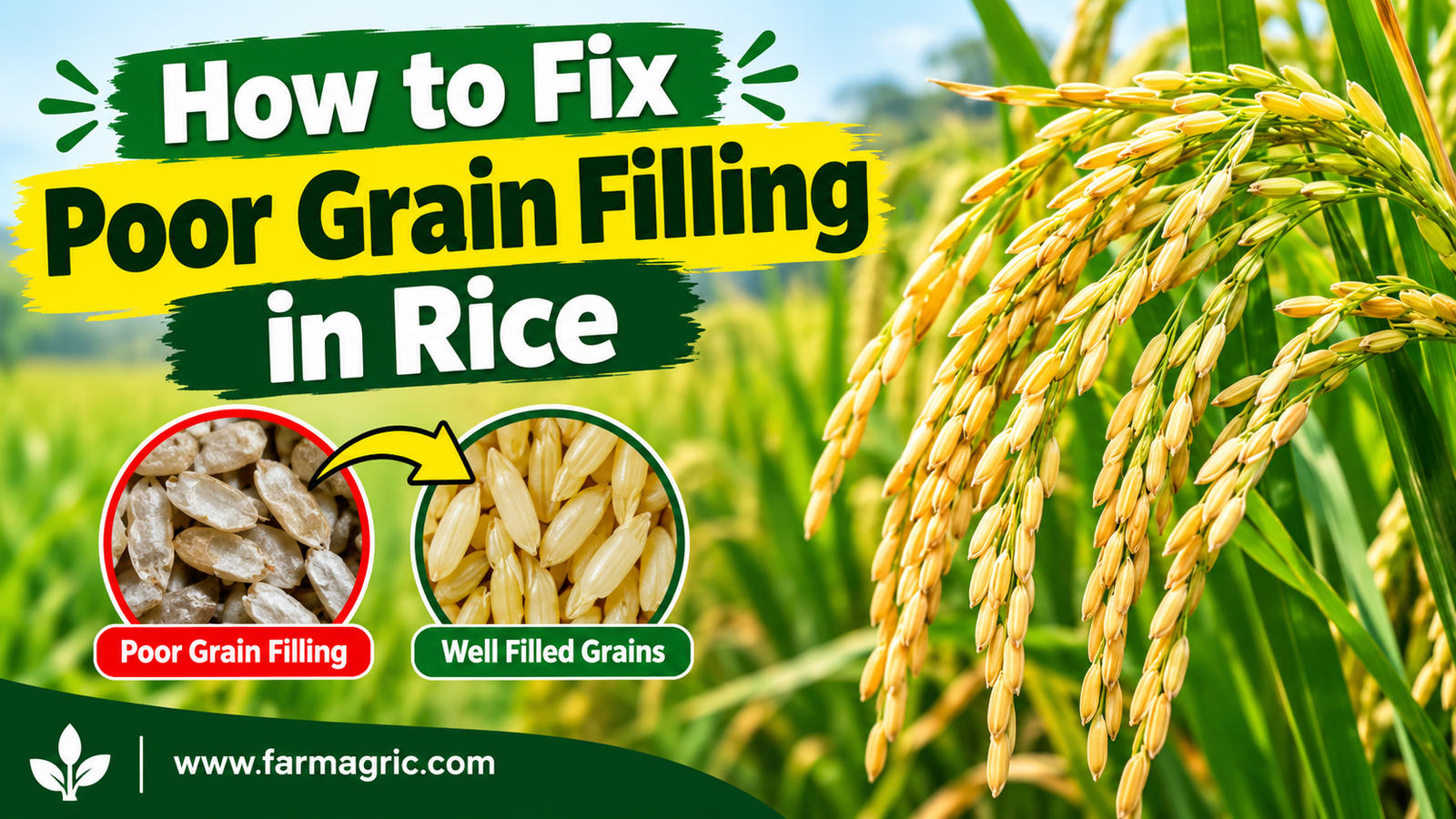
How to Fix Poor Grain Filling in Rice
A noticeably higher proportion of light, empty-feeling panicles when handled compared to previous seasons, even before threshing confirms it numerically, is often the first practical sign that grain filling has been compromised somewhere in that critical window. Panicles that droop less than expected at what should be near-harvest maturity can indicate a lighter than normal grain load, since a fully filled panicle carries a distinct, heavier bend that a poorly filled one often lacks. Visible pest or disease damage to the flag leaf specifically during flowering, even if the rest of the plant looks reasonably healthy, is worth treating as a direct grain filling risk rather than just a general plant health concern. And any dry spell, even a relatively short one, that happens to fall right around your field’s flowering period deserves immediate attention to water management, since the timing sensitivity here is higher than almost anywhere else in the crop’s cycle.
What I’d Do Differently If Starting Again Today
If I were starting over, I’d treat the two to three week window around flowering as the single highest-priority period for water reliability in my entire season, rather than only recognizing its outsized importance after that disappointing harvest taught me directly. I’d apply potassium as a deliberate, separate, properly timed application from the very beginning instead of treating it as secondary to nitrogen, since I now understand how directly it’s tied to the sugar transport process that grain filling actually depends on. I’d scout specifically for flag leaf and upper canopy damage during flowering with real intention, rather than applying the same general scouting approach across the whole season regardless of growth stage, since I now know that damage at this specific point and location matters more than similar damage almost anywhere else on the plant. And I’d keep better seasonal records tying weather, nutrient timing, and pest pressure together around that flowering window specifically, since working backward through my own scattered memory to diagnose that bad harvest was far harder than it should have been with better notes from the start.
Frequently Asked Questions About Poor Grain Filling in Rice
What causes empty or chaffy rice grains at harvest?
Empty or chaffy grains most often result from stress, drought, heat, or poor pollination, occurring right around the flowering period, since this is when the plant is most sensitive to disruption in the process of developing and filling each grain, even if the rest of the plant appeared healthy at the time.
Does potassium deficiency really affect how well rice grain fills?
Yes, potassium plays a particularly important role in transporting sugars produced in the leaves down into the developing grain, so insufficient potassium during the reproductive and grain-filling stages specifically can result in poorly filled grain even when nitrogen and general plant vigor look adequate.
Can a short dry spell really cause poor grain filling if the rest of the season had good rainfall?
Yes, because the two to three week window around flowering is so sensitive to moisture stress that even a relatively brief dry spell during this specific period can cause more grain filling damage than a much longer dry spell occurring at almost any other stage of the crop’s growth.
How can I tell if poor grain filling was caused by heat stress versus a nutrient problem?
Chalky, opaque grain that developed during unusually hot conditions around flowering often points toward heat stress specifically, while a broader pattern of light or underweight grain across a field with otherwise normal temperatures during flowering more often points toward a nutrient limitation, particularly potassium, during the grain-filling period.
Does planting rice too densely affect grain filling?
Yes, overly dense planting can create a shaded canopy where lower leaves contribute little to overall sugar production, potentially limiting the total energy available to fill every grain on panicles that a very dense stand has produced, making moderate, well-planned spacing a relevant factor in grain filling outcomes as well as overall yield.
If there’s one thing I want you to remember from all this, it’s that grain filling is decided in a narrow, critical window around flowering that the plant will never announce clearly while it’s happening, so protect your water, your potassium, and your flag leaf hardest right at that moment, because by the time the thresher shows you the damage, that season’s chance to fix it has already passed.