How to Know When a Ewe Is Close to Lambing
How to Know When a Ewe Is Close to Lambing: What 30 Years of Cold Nights in the Lambing Shed Taught Me
I lost my first set of twin lambs because I trusted a calendar. The ewe was not due for another four days by my count, so I left her in the field and went to bed. At first light I found her standing over one lamb that had died of cold and another that was still wet, weak, and unable to stand. She had lambed in a windy corner with no shelter, and I had been asleep. A calendar tells you roughly when to start watching. The ewe herself tells you when to be there.
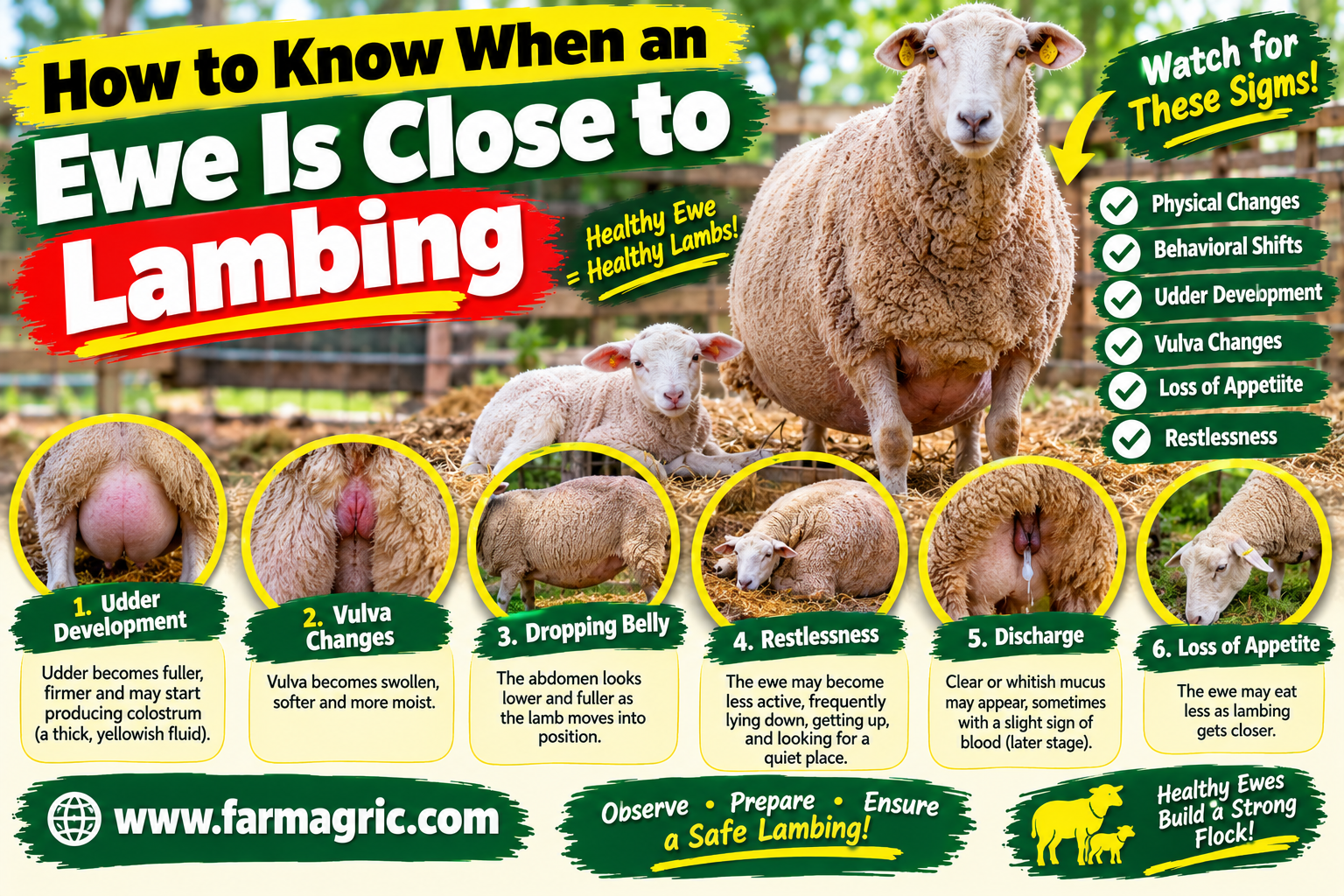
Here is the direct answer. A ewe is close to lambing when you see a combination of signs that build over the last few days and sharpen in the final hours. Her udder fills and becomes tight, shiny, and warm. Her belly drops and the area around her tail head hollows and softens. Her vulva swells and may show a little clear or slightly tinged mucus. She walks away from the flock, paws at the ground, turns in circles, lies down and gets up repeatedly, and loses interest in feed. In the final hours she may curl her lip, stretch out her neck, and strain. Once you see her straining or a water bag showing, a lamb should follow within a reasonable time, and you should be close by and quiet.
No single sign is enough, and ewes differ. You read them together, against a due date you have recorded.
Start With the Calendar
Pregnancy in a ewe lasts about five months, roughly 145 to 150 days, with some variation by breed and by whether she carries twins or triplets. Ewes carrying multiples often go a little earlier. The calendar only works if you recorded when the ram went in with the flock, or better, when each ewe was marked by the ram. Many farmers fit a harness with a coloured crayon on the ram, so each served ewe carries a mark and the date can be written down.
Without those records, you are guessing, and you will need to rely entirely on the physical signs below, checking more often and for longer.
What Most Farmers Get Wrong
The first mistake is trusting the calendar alone. Ewes do not read it. I have had ewes lamb several days early and several days late, and the flock does not wait for your convenience.
The second mistake is trusting one sign. An udder can fill up a couple of weeks before lambing in some ewes, especially older ones, and a belly can drop early. A farmer who waits up night after night because of one sign is exhausted by the time the real thing arrives.
The third mistake is leaving ewes far from the house in the last days. A ewe that lambs in a distant corner, in rain or wind, with nobody near, is a ewe whose lambs are at risk. Bring the flock close enough to see and hear.
The fourth mistake is having no shelter, dry bedding, or clean space. Newborn lambs lose heat quickly. A wet lamb on cold, damp ground can die within hours.
The fifth mistake is disturbing ewes in early labour. Dogs, strangers, loud work, and crowding can stop labour or make a ewe leave her lamb. Quiet, patient watching works far better than hovering.
The sixth mistake is interfering too early. A restless ewe is not always in trouble. I have seen new shepherds catch and handle a ewe hours before she was ready, which stresses her and risks infection if they go inside her.
The seventh mistake is not knowing what normal looks like. If you do not know how long labour should take, you cannot tell when it has gone wrong.
The eighth mistake is poor feeding in late pregnancy. A ewe with twins can run short of energy in the last weeks, which can bring on pregnancy toxaemia, a serious and often fatal condition. A thin, tired ewe who is weak and off her feed in late pregnancy needs a vet quickly.
The Step-by-Step Way I Read a Ewe
Step one: know the dates and bring ewes in close. About two weeks before the first expected lambs, I move the flock to a paddock near the house or shed, with good shelter and a clean, dry lying area. I check the fences and clear any hazards, such as open drains, loose wire, or deep water, that could trap a newborn lamb.
Step two: watch the udder. In the last weeks the udder grows, and in the final days it becomes tight, firm, and shiny, with the teats standing out. In many ewes, the udder fills within a few days to a day or two of lambing. Ewes that carry multiples often bag up earlier. Older ewes sometimes bag up late. I treat the udder as a signal to start watching more closely, not as a clock.
Step three: look at the vulva and tail area. In the last days, the vulva becomes soft, swollen, and sometimes reddish. The muscles on either side of the tail head loosen and the area looks hollow and slack. I run a hand lightly along it to feel the softness. A ewe that looks suddenly slack around the tail head is usually within a day or so of lambing.
Step four: look at the belly and shape. The belly drops, and the ewe looks lower and rounder. Some ewes look as though the lamb has settled down and back. She may seem uncomfortable lying down and breathe a little faster.
Step five: watch her behaviour. This is where experience pays. A ewe close to lambing often leaves the flock and looks for a quiet corner. She paws at the ground, sniffs the bedding, circles, lies down, gets up, and lies down again. She may stop eating while the rest of the flock grazes, and she may bleat softly, or call to nobody in particular. A ewe standing alone while the others graze, with a distant look, is a ewe I watch.
Step six: recognise active labour. In active labour, the ewe lies on her side, stretches her neck out, curls her upper lip, and strains. Her belly tightens with each effort. A water bag, a clear or slightly yellow balloon of fluid, may appear first, and after it bursts, the front feet and nose of the lamb should show. A normal lamb is usually born with two front feet, soles down, and the nose resting on top of them like a diver.
Step seven: give her time, but not too much. I note the time when I first see strong straining or the water bag. If a ewe has been straining hard for a long time with no progress, or if I can see only one foot, a tail, or a head with no feet, I call my vet or an experienced shepherd without delay. Do not pull on a lamb that is stuck without knowing what you are doing, because it is easy to injure the ewe or the lamb. Ask your vet to show you the proper technique on a quiet day.
Step eight: prepare before she starts. I set up a clean, dry, well-bedded pen with a heat lamp or a warm corner, clean towels, iodine or another approved navel disinfectant, clean gloves, a bucket of warm water, a torch, a feeding tube and a bottle in case of a weak lamb, and my vet’s number written on the wall. I prepare colostrum, the first milk, as well, in case a lamb cannot suckle. Lambs need colostrum soon after birth. It gives them energy and antibodies, and a lamb that does not get it early is far more likely to die.
Step nine: stay near but stay quiet. Once I see the strong signs, I stay where I can see her without crowding. I keep dogs and visitors away. A calm ewe and a calm shepherd get the best result.
Step ten: check the aftermath. After the lamb is born, I make sure the ewe is licking it, the lamb is breathing, and it gets up and suckles within a reasonable time. I dip the navel in disinfectant, check that the ewe has passed the afterbirth within several hours, and check the udder for milk. If twins or triplets may be coming, I do not assume she is finished after the first, and I watch for more.
Warning Signs That Something Is Wrong
A ewe that has been straining hard for a long time without progress, or one that stops pushing with no lamb born and seems exhausted, needs help. A lamb presented the wrong way, with a head but no feet, one foot only, a tail first, or two legs that look like back legs, needs expert help. A foul-smelling or bloody discharge, heavy bleeding, or a ewe that seems in severe pain should be seen by a vet immediately. A ewe that is weak, off her feed, standing apart, or trembling in late pregnancy, especially with twins, may have pregnancy toxaemia and needs urgent veterinary attention. A ewe that goes well past her due date with no signs deserves a call to the vet. A prolapse, where tissue is pushed out through the vulva, is an emergency.
After lambing, a ewe that refuses her lamb, a lamb that cannot stand or suckle, a ewe with a hot, hard, discoloured udder, or a ewe that stays down and will not rise, all need prompt attention.
What I Would Do Differently If I Were Starting Today
I would record the ram’s joining date from the first season, and use crayon marks to know each ewe’s due date. I would bring ewes close and set up a clean, sheltered, well-lit lambing area before the first signs, not after the first dead lamb. I would feed ewes properly in the last weeks, especially those carrying twins, and watch the thin ones closely. I would learn to assist a difficult birth from a vet in person before I ever needed it. I would keep a simple lambing notebook, with times, numbers, sexes, and problems, because the patterns teach you more than any book. And I would never again walk away from a ewe pawing the ground and standing apart from the flock.
Frequently Asked Questions
How long before lambing does a ewe show signs?
The earliest signs, such as a filling udder and a dropping belly, can appear one to two weeks before. Looseness around the tail head and a swollen vulva usually appear in the last few days, and restlessness and separation from the flock in the last day or hours. Ewes vary, so treat this as a guide.
How long does a ewe take to lamb?
A normal first lamb often arrives within an hour or so of the start of strong straining, and later lambs usually follow at intervals. First-time mothers can take longer. If a ewe strains hard for a long time without progress, call a vet or an experienced shepherd.
What if I do not know when the ewes were bred?
You will have to rely on the physical signs, so check the flock more often and more carefully, and look at udders and tail areas daily as the flock approaches the likely lambing period. A vet can scan the ewes to estimate stage of pregnancy and the number of lambs. Keep better records from now on.
Can a ewe lamb without showing any signs?
Some ewes show very little, especially young ones and quiet ones. That is why you rely on a combination of the calendar and regular checks, and not on a single sign.
Should I help a ewe during lambing?
Usually no. Most ewes lamb without help, and unnecessary handling can cause harm. Stay close, keep things calm, and step in only if progress stops, the lamb is positioned wrongly, or the ewe is in trouble.
One Thing to Remember
The calendar tells you when to start watching, the udder tells you when to stay close, and the ewe tells you when to be ready. Never leave a ewe that walks away from the flock, paws the ground, and will not eat.