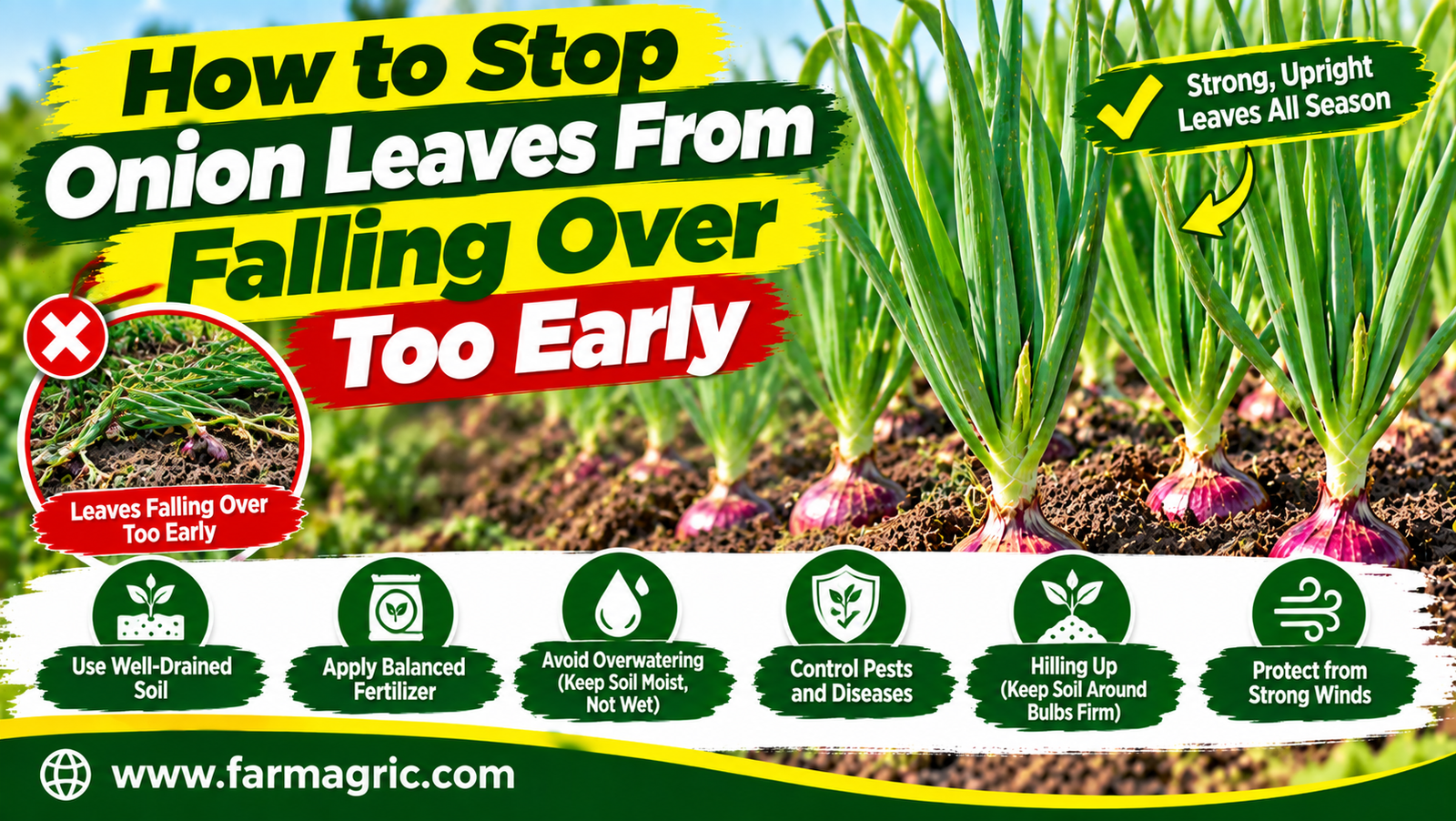
How to Stop Onion Leaves From Falling Over Too Early
How to Stop Onion Leaves From Falling Over Too Early: A Farmer’s Guide to Telling Natural Maturity From a Genuine Problem
I remember walking my onion bed one morning and feeling a jolt of worry at the sight of nearly a third of the leaves lying flat on the soil, bent over at the neck as if something had physically knocked them down overnight. My first assumption was disease, since collapsed foliage is exactly the kind of dramatic symptom that makes a farmer’s stomach drop, and I nearly started pulling bulbs early out of fear that whatever was happening would spread and ruin the whole bed before I could salvage anything. An older grower who happened to be passing by stopped, looked closely at how the leaves had fallen and how the bulbs beneath them felt, and told me calmly that most of what I was looking at was simply onions doing exactly what mature onions are supposed to do. A smaller portion of that bed, it turned out, genuinely was falling over too early from a real problem, and learning to tell the difference between those two situations that morning changed how I have read onion beds ever since.
So let me answer you straight, because I know you are looking at leaning or collapsed onion leaves right now and trying to figure out whether you are watching a disaster or simply watching your crop mature. Onion leaves falling over too early, well before the bulbs have reached a reasonable size and before most of the bed is showing the same natural maturity signs, is usually caused by overcrowding and competition, inconsistent or excessive watering that weakens the neck tissue, nutrient imbalance particularly too much nitrogen late in the season, disease affecting the bulb or neck, or physical damage from wind, pests, or careless cultivation near the base of the plant, and distinguishing a genuine early-fall problem from normal, healthy maturity comes down to checking bulb size, overall bed uniformity, and the condition of the neck and bulb themselves rather than reacting to fallen leaves alone. Onion foliage naturally falling over at the end of the season is not a problem at all, it is the plant’s clearest, most reliable signal that bulbs are finished growing and ready for harvest, which makes learning to separate that normal process from a genuine early collapse one of the more useful skills an onion grower can develop.
Why Falling Leaves Can Mean Two Completely Different Things
Onion plants naturally redirect their energy away from leaf maintenance and toward the bulb as the growing season nears its end, and this shift shows up visibly as the neck tissue softening and the leaves gradually bending over and eventually lying flat, a process that happens across most of a healthy bed within a relatively short window once the bulbs have reached their mature size for that variety and set of growing conditions. This natural process looks superficially similar to leaves collapsing from stress, disease, or physical damage, which is exactly why a farmer unfamiliar with the distinction, the way I was that worried morning, can mistake one for the other. The genuine difference lies not primarily in how the leaves look once they have fallen, but in the timing, the uniformity across the bed, and the condition of the bulb and neck tissue underneath, all of which tell a very different story depending on whether you are looking at a crop finishing its natural cycle or a crop in actual distress partway through it.
What Most Farmers Get Wrong
The first mistake, the one that nearly had me pulling bulbs early out of pure anxiety, is reacting to fallen leaves as an automatic emergency without first checking whether the bulbs underneath have actually reached a reasonable mature size, since healthy, natural leaf fall at the right stage of the season looks visually similar to a genuine problem but requires an entirely different response, or often no response at all.
The second mistake is not checking how uniform the leaf falling is across the whole bed, since natural maturity tends to affect a large portion of a planting within a fairly compressed window once conditions are right, while a genuine problem, whether disease, pest damage, or localized stress, often shows up first in scattered, isolated plants or in a specific section of the bed rather than across the whole planting at once.
The third mistake is overcrowding onion beds, planting bulbs too closely together in an effort to fit more into the same space, which creates exactly the kind of competition for light, water, and soil nutrients that can genuinely weaken neck tissue and cause premature leaf fall well before bulbs have reached their proper size.
The fourth mistake is watering inconsistently, alternating between periods of drought stress and heavy, sudden watering, which puts real physiological stress on the plant and can contribute to weakened neck tissue and early leaf collapse independent of whether the bulb itself has actually finished developing.
The fifth mistake is continuing nitrogen fertilizer too late into the season, well past the point where the plant should be shifting its energy toward bulb development and eventual maturity, since excess nitrogen late in the season can produce soft, overly lush neck and leaf tissue that is both more prone to premature collapse and sometimes more vulnerable to disease at exactly the stage when the plant should be firming up and preparing for harvest instead.
Step-by-Step Guide to Diagnosing and Responding to Early Onion Leaf Fall
Begin by checking the overall uniformity of leaf fall across your bed, walking the full planting and noting whether collapsed leaves are scattered evenly throughout a large portion of the bed, suggesting natural maturity, or concentrated in specific patches, isolated individual plants, or one particular section, which points more strongly toward a localized cause such as disease, pest pressure, or a soil condition specific to that part of the bed.
Dig up a few bulbs from areas showing fallen leaves and assess their actual size and development relative to what you would expect from that variety at full maturity, since bulbs that have reached a reasonable, well-rounded size consistent with the variety’s typical mature dimensions support the conclusion that you are looking at natural, healthy leaf fall rather than a problem requiring intervention.
Examine the neck and bulb tissue of a few affected plants directly, checking for firmness, normal coloring, and the absence of any soft, mushy, or discolored areas, since a genuinely mature bulb approaching harvest should feel solid and the neck tissue, while softened compared to earlier in the season as part of the natural maturity process, should not show signs of rot, unusual discoloration, or an off smell that would instead point toward disease.
Review your planting density if early leaf fall appears to correlate with the most crowded sections of your bed, since overcrowding-related stress tends to show up first and most severely exactly where competition between neighboring plants has been most intense, and this pattern, once recognized, is valuable information for adjusting spacing in your next planting even if it is too late to meaningfully correct the current one.
Assess your recent watering history for any significant inconsistency, particularly stretches of drought followed by sudden heavy watering, or persistently waterlogged conditions from poor drainage, since both extremes can weaken neck tissue and contribute to premature leaf collapse independent of whether bulb development has genuinely finished.
Check your fertilizer records for the season, noting whether nitrogen application continued later than it should have relative to your expected harvest window, since continued heavy nitrogen feeding right up to or past the point where bulbs should be maturing can produce the kind of soft, prematurely weakened tissue that falls over before the bulb has actually finished developing properly.
Look closely at the base of affected plants and the surrounding soil surface for any sign of pest activity, such as visible insects, tunneling, or damage to the bulb’s outer layers, since certain pests that attack the base of the plant or the bulb itself can cause genuine premature leaf collapse that has nothing to do with the natural end-of-season maturity process.
Inspect for disease symptoms specifically, checking for soft, watery rot at the neck or bulb, unusual discoloration, a sour or unpleasant smell, or visible fungal growth, since several onion diseases can cause premature leaf collapse that, unlike natural maturity, continues to worsen the affected bulb’s quality and storage potential rather than simply indicating the crop is ready for harvest.
For a bed where leaf fall is confirmed to be natural maturity based on bulb size, bed uniformity, and healthy neck and bulb condition, proceed with harvest at the appropriate time for your variety and growing conditions rather than treating the fallen leaves as a problem needing correction, since this is simply the crop telling you it is ready.
For a bed where genuine early collapse is confirmed through small bulb size, poor uniformity, or signs of disease or pest damage, address the specific cause identified, whether that means improving drainage and watering consistency, reducing nitrogen application immediately, treating identified pest pressure, or removing and isolating diseased plants to protect the remainder of the bed from further spread.
Harvest any genuinely diseased or severely pest-damaged bulbs promptly and separately from the rest of your crop, since these compromised bulbs generally store poorly regardless of what you do afterward, and keeping them isolated from your main harvest protects the storage potential of the healthy bulbs that were not affected by whatever caused the early collapse in that specific section.
Adjust your planting density, watering schedule, and fertilizer timing for future plantings based on what you have identified as the likely cause of any genuine early leaf fall this season, treating a confirmed problem as useful, specific information for improving your approach next time rather than a mystery you simply hope does not repeat itself.
Warning Signs That Distinguish a Real Problem From Natural Maturity
Leaf fall that is scattered unevenly across the bed, with some areas showing collapsed foliage while neighboring plants of similar age and variety remain fully upright and green, points toward a localized cause worth investigating rather than natural, uniform end-of-season maturity. Bulbs that feel notably small and underdeveloped when checked directly, well short of what the variety typically produces at full maturity, confirm that whatever caused the leaves to fall happened before the bulb had actually finished developing, a genuinely different situation from healthy maturity. Soft, mushy, discolored, or foul-smelling tissue at the neck or bulb, rather than the firmer, simply softened neck tissue typical of natural maturity, signals disease rather than a normal end-of-season process and calls for prompt removal of affected plants. Leaf collapse that continues to worsen and spread to previously unaffected plants over the following days, rather than stabilizing once a large portion of the bed has naturally matured together, suggests an active, spreading problem rather than a one-time natural event affecting the whole planting at once. And collapsed leaves concentrated specifically in the most crowded, poorly drained, or otherwise stressed sections of a bed, while better-managed areas of the same planting remain upright and healthy, point clearly toward a correctable management factor as the underlying cause rather than simple, uniform crop maturity.
What I’d Do Differently If Starting Again Today
If I were starting over, I would check bulb size and bed uniformity immediately upon seeing fallen leaves rather than reacting with the same immediate worry that nearly had me pulling bulbs early that first confusing morning, since I now understand how much useful information those two simple checks provide before any drastic response is actually warranted. I would space my onion beds more generously from the very beginning, understanding now how directly overcrowding can contribute to genuine premature leaf fall in exactly the crowded sections where I used to assume more plants simply meant more onions. I would ease off nitrogen application earlier in the season relative to my expected harvest window, recognizing now how much that continued late feeding was working against the natural firming and maturing process the plant needed to go through properly. And I would pay closer attention to watering consistency throughout the season rather than only thinking carefully about water during the most obviously dry stretches, since I now see how much steady, even moisture matters for keeping neck tissue strong right through to the point where natural maturity, rather than stress, is what finally brings those leaves down.
Frequently Asked Questions About Onion Leaves Falling Over Early
How do I know if my onion leaves are falling over from natural maturity or a real problem? Check whether the fallen leaves are spread fairly evenly across most of the bed rather than scattered in isolated patches, dig up a few bulbs to confirm they have reached a reasonable mature size for the variety, and examine the neck and bulb tissue for firmness and normal color, since natural maturity shows uniform timing and healthy bulbs while a genuine problem typically shows uneven patterns and smaller or compromised bulbs.
Can overcrowding really cause onion leaves to fall over too early? Yes, onion plants spaced too closely together compete for light, water, and soil nutrients in a way that can genuinely weaken neck tissue and cause premature leaf collapse well before the bulbs underneath have reached their proper mature size, making adequate spacing an important preventive factor.
Does too much nitrogen late in the season affect onion leaf fall? Yes, continued heavy nitrogen application past the point where the plant should be shifting its energy toward bulb maturation can produce soft, prematurely weakened neck and leaf tissue that collapses before bulbs have genuinely finished developing, making it important to taper nitrogen as the expected harvest window approaches.
Should I harvest my onions as soon as I see the leaves starting to fall over? If the leaf fall is confirmed to be natural maturity, spread fairly uniformly across the bed with bulbs that have reached good size and firm, healthy neck tissue, this is indeed the signal that harvest time has arrived, though many growers wait until a majority of the bed has fallen over naturally before harvesting the whole planting together.
What should I do if I find disease causing my onion leaves to collapse early? Remove and isolate affected plants promptly to limit the spread of disease to healthy neighbors, harvest any salvageable bulbs from diseased plants separately since they generally will not store well regardless of further care, and address the underlying conditions, such as drainage, watering consistency, or crowding, that may have contributed to disease pressure in that part of the bed for future plantings.
If there is one thing I want you to remember from all this, it is that a fallen onion leaf is asking you a question rather than announcing a disaster, so dig a bulb, check the neck, and look across the whole bed before you let worry make the decision for you, because the morning that once had me ready to pull an entire crop early taught me that onions falling over is very often not a crop failing at all, but a crop quietly telling you, in the only language it has, that it is finally finished and ready to be dug.