How to Control Diamondback Moth in Cabbage Naturally
How to Control Diamondback Moth in Cabbage Naturally: A Farmer’s Guide to Beating the Pest That Shrugs Off Spray
I remember spraying a cabbage bed three times in ten days once, convinced I was finally getting ahead of a diamondback moth infestation that had been chewing small, ragged holes through my young cabbage leaves, only to walk the field after that third spray and find the damage continuing almost exactly as before, with small green caterpillars still visibly feeding on the undersides of leaves as if nothing had touched them at all. That frustrating stretch taught me something I now tell every cabbage grower who asks me about this particular pest, that diamondback moth has become notorious across many growing regions for developing resistance to a wide range of insecticides faster than almost any other common vegetable pest, which means a farmer who leans entirely on spray as the answer is very often fighting a losing battle without realizing it. The methods that have actually worked for me since that frustrating season are ones that attack this pest from several directions at once, rather than relying on any single chemical tool that the moth population may have already learned to shrug off.
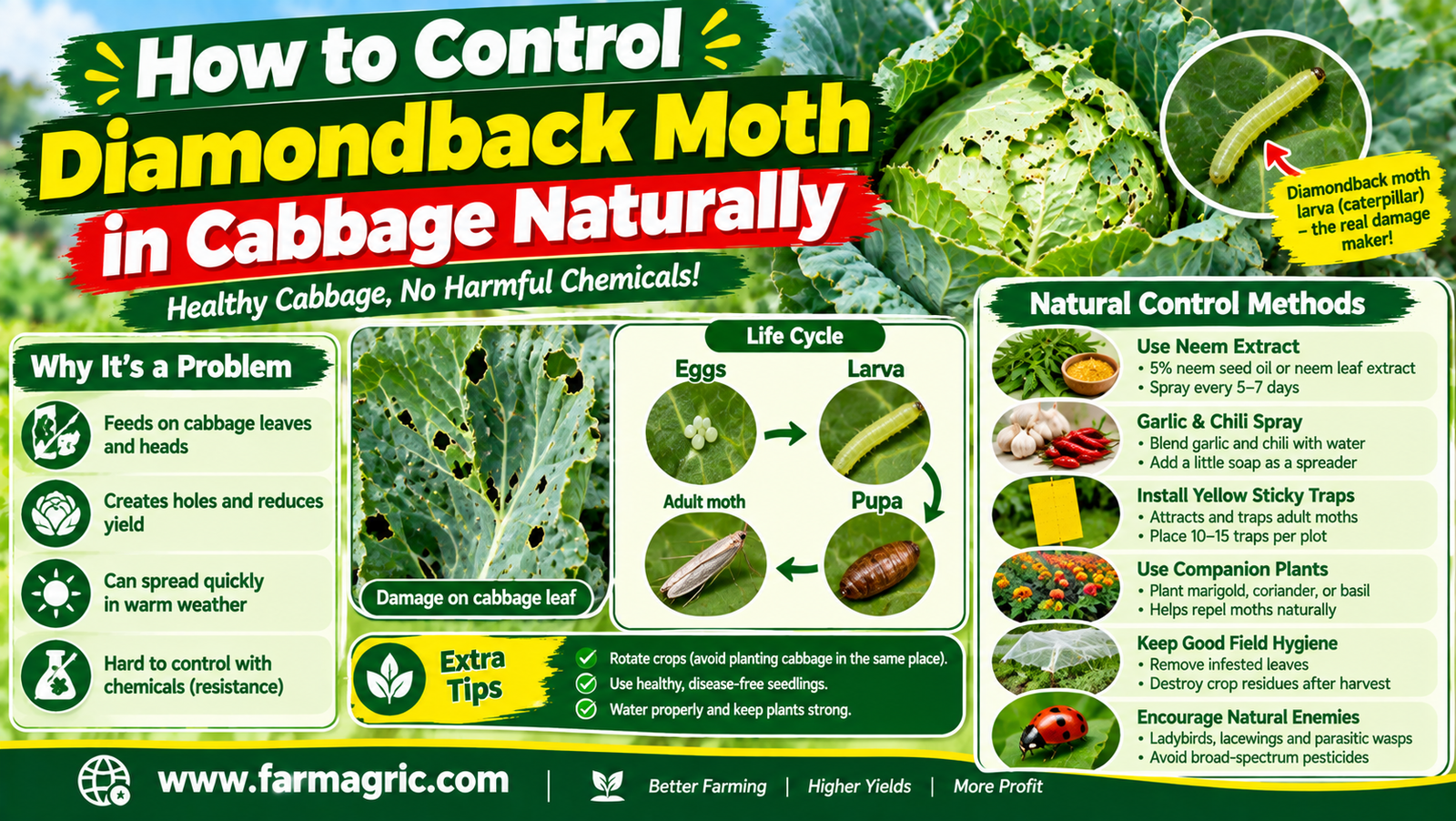
So let me answer you straight, because I know you are looking at small, ragged, papery holes in your cabbage leaves right now and wondering why your usual approach is not working as well as it used to. You control diamondback moth in cabbage naturally by scouting regularly and specifically on the undersides of leaves where the small green caterpillars feed and hide, encouraging natural predators and parasitic wasps by avoiding broad-spectrum insecticide that has often stopped working well against this particular pest anyway, using a biological spray based on Bacillus thuringiensis which targets caterpillars specifically without harming most beneficial insects, planting trap crops like mustard or collard greens that diamondback moth prefers over cabbage, and rotating and intercropping to disrupt the pest’s ability to build up heavy populations season after season on the same plot. This is a pest where chemical reliance has backfired on farmers across many regions for years now, which makes natural, layered control not just an alternative approach but often genuinely the more effective one available.
Why Diamondback Moth Is Such a Difficult Pest to Control With Spray Alone
Diamondback moth has a short life cycle, sometimes completing egg to adult in as little as two weeks under warm conditions, which means its populations can multiply and shift genetically very quickly compared to many other pests with longer generational gaps. This rapid cycling has allowed populations in many cabbage-growing regions around the world to develop resistance to numerous insecticide classes over time, sometimes within just a handful of seasons of heavy reliance on a particular chemical. The caterpillars themselves also tend to feed on the undersides of leaves and can drop from the plant on a silk thread when disturbed, both behaviors that reduce how much direct spray contact they actually receive even when an application is made, further undermining the effectiveness of chemical control compared to pests that feed more openly and remain more exposed on the plant surface.
What Most Farmers Get Wrong
The first mistake, the one behind my own frustrating three-spray stretch, is continuing to reach for the same chemical option repeatedly even when it has clearly stopped working as effectively as it once did, rather than recognizing resistance as a real possibility and shifting toward a different, layered approach instead of simply spraying more often or at a higher concentration.
The second mistake is scouting the tops of leaves only, where damage is often most visible, without turning leaves over to check the undersides where the small, pale green caterpillars actually spend most of their feeding time, meaning a casual inspection can significantly underestimate how heavy an infestation has actually become.
The third mistake is relying entirely on broad-spectrum insecticide even when it still provides some control, not realizing this approach also kills the parasitic wasps and other natural predators that provide meaningful, ongoing control of diamondback moth populations when their numbers are allowed to build up undisturbed over a season.
The fourth mistake is planting cabbage continuously in the same location season after season without any rotation or diversification, allowing diamondback moth populations specific to that plot to build steadily over successive plantings rather than ever being meaningfully interrupted.
The fifth mistake is ignoring trap cropping as a genuine option, not realizing that diamondback moth shows a strong preference for certain related plants over cabbage itself when both are available, an opportunity that goes unused when a field is planted purely with cabbage and nothing else.
Step-by-Step Natural Control Plan for Diamondback Moth
Begin scouting your cabbage at least twice a week from very early in the plant’s development, specifically turning leaves over to check their undersides where small, pale green caterpillars and the tiny, pale yellow eggs that precede them are most commonly found, rather than relying on a quick glance at the tops of leaves where visible feeding damage tends to show up only after the caterpillars have already been active for some time.
Hand-pick and destroy caterpillars and egg clusters whenever you find them during scouting, particularly useful on smaller plantings where this remains practical, since each caterpillar removed at this stage is one less insect contributing to feeding damage and the next generation of egg-laying moths.
Apply a biological spray based on Bacillus thuringiensis, often referred to as Bt, which specifically targets caterpillars through a mechanism that affects their digestive system while leaving most beneficial insects, including the parasitic wasps that provide ongoing natural control, largely unharmed. Apply this according to label instructions, ideally in the early morning or evening when caterpillars are most actively feeding, and reapply as directed since Bt breaks down relatively quickly in sunlight and does not provide extended residual protection the way some chemical options do.
Encourage natural predator and parasite populations by avoiding unnecessary broad-spectrum insecticide use throughout the season, since several parasitic wasp species specifically target diamondback moth eggs and larvae, laying their own eggs inside the pest and providing substantial, ongoing control when allowed to establish and build their populations without being wiped out by indiscriminate spraying.
Plant a trap crop such as mustard, collard greens, or another related brassica known to be particularly attractive to diamondback moth, positioned around the edges of or interspersed with your main cabbage planting, since moths will often preferentially lay eggs on these more attractive plants when given the choice, drawing pressure away from your primary crop and concentrating it somewhere you can monitor and manage more intensively.
Monitor and manage the trap crop specifically, since it is meant to concentrate pest pressure rather than simply relocate it unmanaged, removing and destroying heavily infested trap crop material periodically to prevent it from becoming a source that eventually overflows back onto your main cabbage planting once populations there become too large.
Intercrop cabbage with companion plants that are known to help confuse or deter diamondback moth, such as tomato, onion, or certain aromatic herbs, since mixed plantings can make it somewhat more difficult for egg-laying moths to locate and concentrate on cabbage plants compared to a large, uniform block of cabbage alone.
Rotate your cabbage and related brassica plantings to different areas of your land each season where your space allows it, since this interrupts the buildup of diamondback moth populations specific to a plot that has grown cabbage or related crops continuously, giving each new planting a somewhat reduced starting pest pressure compared to land that has hosted the same susceptible crop repeatedly.
Remove and destroy crop residue after harvest rather than leaving old cabbage and brassica plant material in the field, since diamondback moth can continue to survive and potentially reproduce on this residue, carrying pressure forward into whatever is planted next in that same location.
Manage field margins and nearby vegetation to support beneficial insect habitat, maintaining some flowering plants or less disturbed areas near your cabbage planting that can provide nectar sources and shelter for the adult stage of parasitic wasps and other beneficial insects contributing to natural control.
Use pheromone traps where available specifically for diamondback moth to monitor adult moth activity levels over the season, giving you an early warning system for rising pressure that lets you intensify scouting and other control measures proactively rather than only reacting once visible leaf damage has already become significant.
Consider the timing of your planting relative to known periods of heavy diamondback moth pressure in your area if local knowledge or extension guidance identifies such patterns, since avoiding having your most vulnerable young plants coincide directly with peak moth activity can meaningfully reduce overall pressure for that particular planting.
Warning Signs to Watch For
Small, ragged, papery holes in cabbage leaves, often described as a windowpane appearance where the caterpillar has fed on the leaf surface without eating all the way through in certain spots, are the clearest and earliest visible sign of diamondback moth feeding damage, and catching this early allows intervention before the caterpillars have grown larger and more damaging. Small, pale green caterpillars, often wriggling vigorously or dropping on a silk thread when disturbed, found on the undersides of leaves during close inspection confirm active feeding and should prompt immediate action through hand-picking, Bt application, or both. Tiny, pale yellow, oval eggs scattered individually or in small groups on leaf undersides, before any visible feeding damage has yet appeared, represent your earliest possible opportunity to interrupt the pest’s life cycle before caterpillars even hatch and begin feeding. A pattern of continued or worsening damage despite repeated insecticide application is a strong signal that resistance may be present in your local diamondback moth population, calling for a shift toward the natural, layered methods described above rather than continuing to rely on the same chemical approach. And heavy feeding damage concentrated on younger, more tender growth near the center of developing cabbage heads deserves particular urgency, since damage at this specific growth point can directly affect the marketable quality of the head itself rather than remaining limited to outer leaves alone.
What I’d Do Differently If Starting Again Today
If I were starting over, I would build a twice-weekly scouting habit focused specifically on leaf undersides from the very first weeks of every cabbage planting, rather than only noticing diamondback moth damage once it had become obvious enough to spot from a casual glance at the tops of leaves, since that frustrating three-spray season taught me how much easier this pest is to manage when caught at the egg or very young caterpillar stage. I would turn to Bt as a standard tool far earlier in my farming life rather than continuing to lean on broad-spectrum chemical options that I now understand this particular pest has become notably good at shrugging off across many growing regions. I would plant mustard or another attractive trap crop around my cabbage beds as routine practice rather than something I only tried after years of disappointing chemical control, given how clearly it has drawn pressure away from my main planting in the seasons where I have used it consistently. And I would commit to genuine crop rotation for my brassica plantings rather than returning cabbage to the same convenient plot repeatedly, understanding now how much that convenience was quietly building the very pest pressure that made each subsequent season’s control efforts more difficult than they needed to be.
Frequently Asked Questions About Natural Diamondback Moth Control
Why does insecticide seem to stop working against diamondback moth over time? Diamondback moth has a short life cycle that allows its populations to multiply and shift genetically very quickly, and this has led to widespread insecticide resistance developing in many growing regions over just a handful of seasons of heavy reliance on particular chemical products, making continued effectiveness of any single chemical option genuinely uncertain over time.
Is Bacillus thuringiensis safe to use on cabbage close to harvest? Yes, Bt is generally considered safe with a short or no withholding period compared to many chemical insecticides, since it works through a specific biological mechanism affecting caterpillar digestion and breaks down relatively quickly in the environment, though always check the specific product label for exact guidance relevant to your situation.
Does planting mustard near cabbage really help reduce diamondback moth damage? Yes, mustard and certain other related brassicas are often more attractive to egg-laying diamondback moths than cabbage itself, so planting them as a trap crop around or near your main cabbage planting can draw a meaningful portion of pest pressure away, provided the trap crop itself is monitored and managed rather than left to become an unmanaged pest reservoir.
Can natural predators alone control diamondback moth without any other intervention? Natural predators and parasitic wasps provide substantial, genuinely valuable ongoing control when their populations are allowed to establish, but they work best as part of a broader layered approach that includes regular scouting, trap cropping, and targeted biological control like Bt, rather than as a complete standalone solution, particularly during periods of unusually heavy moth pressure.
How can I tell if my diamondback moth problem is a resistance issue rather than just needing a stronger spray? Continued or worsening caterpillar damage despite repeated, properly applied insecticide treatment, especially using a product that worked reasonably well in previous seasons, is a strong practical indicator of developing resistance, and the appropriate response is generally shifting toward a different, layered natural control approach rather than increasing the rate or frequency of the same chemical product.
If there is one thing I want you to remember from all this, it is that diamondback moth has already beaten a great many farmers who relied on spray alone, so turn the leaf over before you turn to the sprayer, trap the moths with a crop they like even more than your cabbage, and let the small wasps you never see do a share of the work for free, because the pest that shrugs off chemical after chemical is often most vulnerable to the layered, patient methods that never gave it the chance to learn how to resist them in the first place.