How to Prevent Pepper Leaf Curl Virus
How to Prevent Pepper Leaf Curl Virus
The hardest lesson I ever learned about leaf curl is that by the time you can see it, you are already late. I once watched a healthy-looking block of peppers go from deep green to twisted and stunted over a few weeks. I kept waiting for the curling to “pass,” the way a plant sometimes recovers from heat or a dry spell. It never did. The plants that curled first never made a decent crop, and the rest followed. The disease had been introduced weeks earlier by tiny white insects I barely noticed, and nothing I sprayed after that could reverse it.
Here is the blunt answer. Pepper leaf curl virus cannot be cured once a plant has it, so prevention is everything. You prevent it by controlling the whiteflies that carry it, starting with clean, protected seedlings and continuing through the season. You also remove infected plants early, keep weeds and alternate host plants away from your peppers, choose resistant or tolerant varieties where you can get them, and avoid planting next to crops that harbor whiteflies and the virus. Do all of that together, and you cut your risk dramatically. Skip the early steps and rely on sprays later, and you will probably lose plants.
The rest of this article walks through why that is true and how to do it in practice.
What the disease actually is
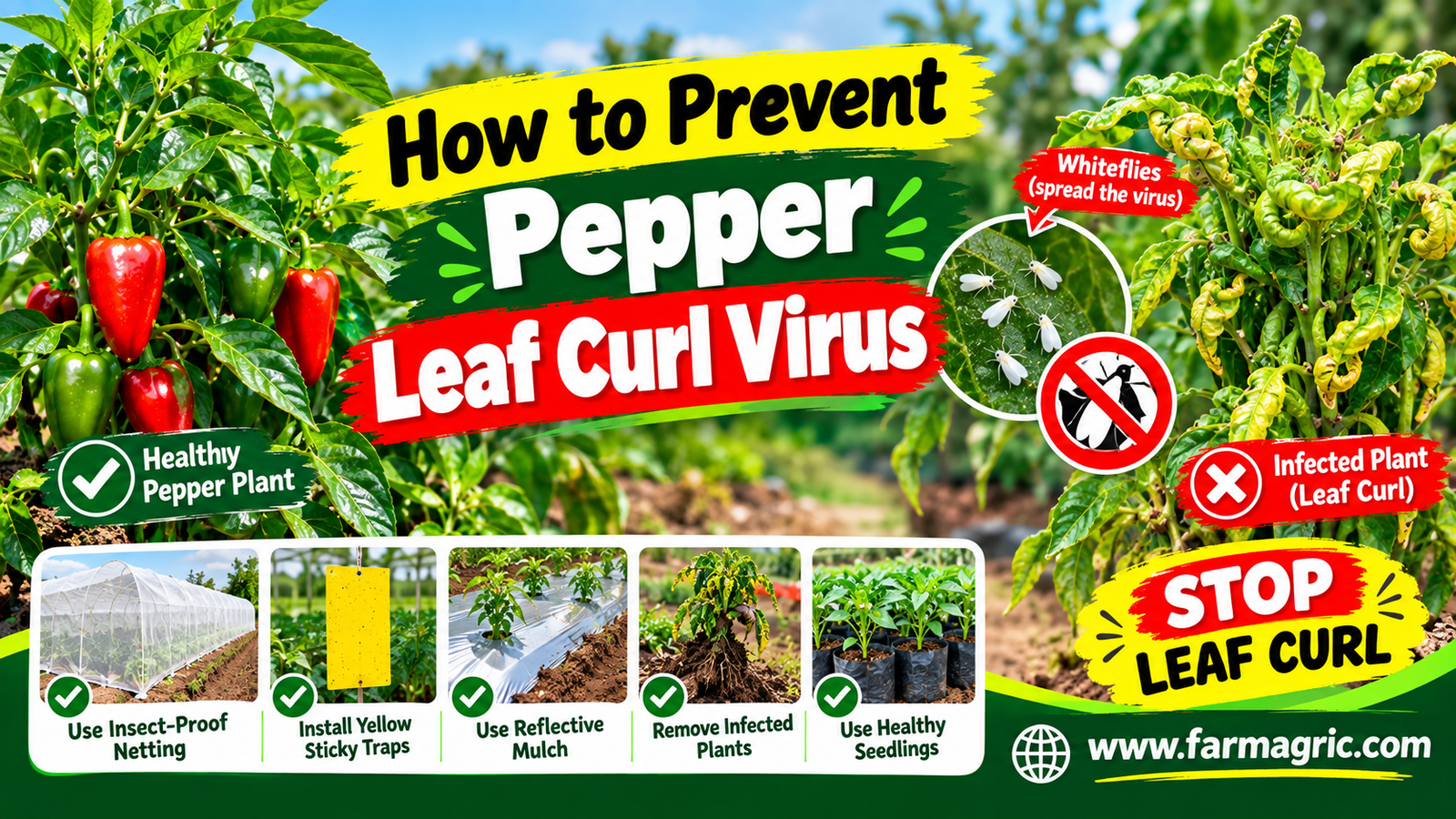
Pepper leaf curl disease is caused by a group of viruses called begomoviruses. Several different species can cause it, and which one shows up depends on your region. What they have in common is how they spread. They travel from plant to plant inside whiteflies, which pick up the virus when feeding on an infected plant and carry it to healthy ones. The virus is not spread by touching plants, by your hands or tools in the normal way, or by watering. The whitefly is the delivery truck.
Infected plants usually show leaves that curl upward and inward, thickened and puckered leaf tissue, thickened or yellowing veins, and a stunted, bunchy look. Plants infected young often flower poorly and produce few, small or misshapen fruit. Plants infected later may still crop, but at a much lower level. This is why timing matters so much. The younger the plant is when the virus arrives, the worse the damage.
What most farmers get wrong
They treat the symptom instead of the cause. I have seen farmers spray fertilizer, fungicide and growth boosters on curled leaves hoping the plants would green up. None of it works, because the leaves are curled by a virus inside the plant. You cannot spray a virus out of a living pepper.
They confuse leaf curl virus with other problems. Curled leaves can also come from broad mites or thrips feeding on young growth, from herbicide drift, from heat and water stress, and from other viruses. If you treat the wrong problem, you lose time while the real one spreads. Look closely at the undersides of the leaves for whiteflies and for the tiny pests that cause similar damage, and notice whether the curling follows a pattern across the field or comes in patches near a weedy edge or a neighboring crop.
They start whitefly control too late. By the time you see a cloud of white insects lift off the plants when you shake them, the virus may already have been spread. Prevention has to begin in the nursery, before the first transplant goes in the ground.
They leave infected plants standing. A single infected plant is a source. Whiteflies feed on it, pick up the virus, and spread it to healthy neighbors. Farmers hate pulling plants that still look half alive, but leaving them is how a few sick plants become a sick field.
They plant peppers next to tomato, okra, cotton or cucurbits. Many of these crops host whiteflies and some carry related viruses. A neighboring field in poor condition can pour insects into your crop all season.
Why prevention beats everything else
There is no treatment that cures an infected pepper plant. Insecticides can reduce whitefly numbers, but they do not remove the virus from a plant that already has it. Even worse, whiteflies can transmit the virus very quickly after they land, sometimes before a spray has time to kill them. That means a sprayer alone is not enough. The goal is to stop whiteflies from reaching your plants in the first place, keep their numbers low, and remove virus sources, so the chance of infection stays small.
Step-by-step: how I would protect a pepper crop from leaf curl virus
Step 1: Raise clean seedlings in a protected nursery. This is the single most important step, and the one most often skipped. Raise your seedlings under fine insect-proof netting, in a screened or enclosed space where whiteflies cannot reach them. A seedling infected in the nursery carries the problem straight into your field and spreads it for you. Inspect the seedlings before transplanting, and discard any that show curling, yellowing veins or stunting, or any with whiteflies on them. Never buy or accept seedlings from a source you cannot trust to be clean.
Step 2: Choose resistant or tolerant varieties where available. Plant breeders have developed pepper lines with resistance or tolerance to leaf curl viruses in some regions. Ask your seed supplier and local agricultural extension service what is recommended and available for your area. Resistance is rarely complete, and it may not cover every virus species, so treat it as one layer of protection and not a guarantee. Still, a tolerant variety gives you a real advantage when whitefly pressure is high.
Step 3: Choose your planting site and timing carefully. Avoid placing your peppers right beside tomato, okra, cotton, cucurbits or other crops that attract whiteflies, especially if those crops are old, neglected or already showing virus symptoms. If you can, plant at a time of year when whitefly numbers are lower in your area, which often means avoiding the hottest, driest stretches when they build up fastest. Try not to overlap an old crop with a new one. Planting new peppers next to old, infected ones is like placing a new, clean tray beside a spoiled one.
Step 4: Clear weeds and alternate hosts. Many weeds shelter whiteflies and some carry begomoviruses. Clean the field and its edges before transplanting, and keep them clean through the season. Do not let weeds flower and seed along the borders. This takes steady work, but it removes both the insects’ hiding places and the virus reservoirs.
Step 5: Use physical barriers and reflective mulch. After transplanting, young plants are the most vulnerable. Fine-mesh insect netting or row covers over the new transplants can keep whiteflies off during the critical early weeks, as long as you remove the cover before flowering so pollination and ventilation are not blocked. Reflective mulch, such as silver or metallic-coated film, tends to confuse flying whiteflies and aphids, and can reduce how many land on young plants. A border of tall barrier plants, such as maize or sorghum, around the field can also help intercept some insects, though it is not a complete shield.
Step 6: Monitor for whiteflies from the first week. Put up yellow sticky traps around the field edges and among the plants. They will tell you when whiteflies arrive and roughly how many. Walk the rows at least twice a week, gently turn leaves over, and look at the undersides for tiny white adults and the flat, scale-like young stages. Early warning gives you time to act before numbers explode.
Step 7: Control whiteflies with the gentlest effective methods first. At low numbers, a firm spray of water on the undersides of leaves, insecticidal soap, or horticultural oils can knock populations down. Neem products can help reduce feeding and reproduction, though they work slowly. Follow the label on anything you buy, spray in the cool part of the day, and cover the undersides of the leaves. If you decide to use a stronger insecticide, rotate between different types according to local advice so whiteflies do not become resistant, and try to protect the natural enemies that keep numbers down, such as the small parasitic wasps and predatory bugs that feed on whitefly nymphs.
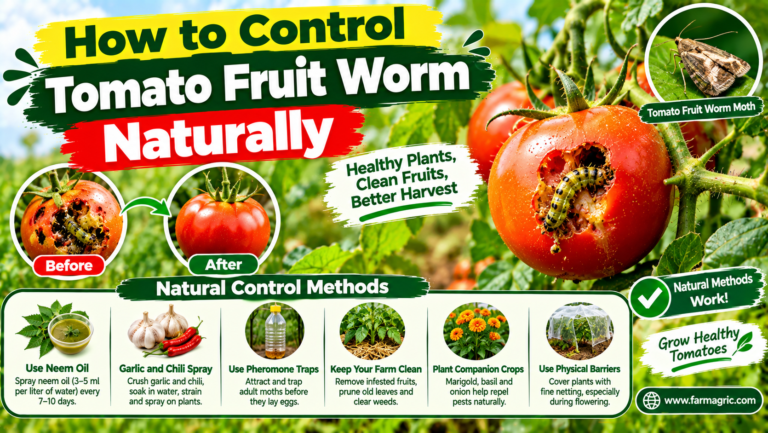
Step 8: Remove infected plants right away. The moment you confirm a plant is infected, pull it out. Place it in a bag or cover it before carrying it away so whiteflies on the plant do not scatter, and destroy it away from the field. Do not compost it where insects can escape. It hurts to lose a plant, but it is much cheaper than losing the block. Do this early and consistently, especially in the first weeks after transplanting, when removing a few plants can still save the rest.
Step 9: Keep the plants strong and not over-fed. Healthy, evenly watered peppers cope with stress better. Avoid heavy nitrogen, which produces soft, lush growth that whiteflies find very attractive. A balanced feeding program and steady moisture give the plants a better chance of holding up if some infection does occur.
Step 10: Clean up at the end of the season. When the crop is finished, remove and destroy old pepper plants and nearby weedy residue. Do not leave a ratoon or volunteer crop standing, because those plants can carry the virus and the whiteflies into your next planting. A clean break between crops is one of the best, cheapest protections there is.
Warning signs to watch for
Early on, look for new leaves that curl upward or inward, feel thick or leathery, and look puckered. Check the veins, which may look thicker or yellow. Notice plants that seem shorter, bushier or more compact than their neighbors. Watch for flower drop, poor fruit set and small, distorted fruit. And always check the leaf undersides for whiteflies, which may fly up in a small cloud when you disturb the plants.
If you see symptoms on a few scattered plants, treat that as an alarm bell. Remove them, step up your whitefly control, and look hard at where the insects might be coming from, whether that is a weedy border, a neighboring crop or a poorly protected nursery.
What I would do differently if I were starting again today
I would spend my first and best effort on the nursery. Clean seedlings under fine netting are worth more than any spray I could buy later. I would plant a resistant or tolerant variety if one was available. I would keep the field and borders clean of weeds before the first transplant. I would put up sticky traps right away and start scouting in week one, not week five. And I would be strict about pulling infected plants early, without waiting to see whether they might recover. They do not.
The painful truth is that most leaf curl disasters are decided in the first few weeks of a crop, long before the symptoms are obvious. The farmers who protect their young plants carefully tend to have a much easier season.
FAQ
Can pepper leaf curl virus be cured?
No. Once a plant is infected, there is no treatment that removes the virus. The only reliable approach is to prevent infection and remove infected plants so they cannot spread it.
What spreads pepper leaf curl virus?
Whiteflies spread it from plant to plant as they feed. It is generally not spread by touching plants or by watering, and the main route into a field is through infected seedlings or whiteflies arriving from nearby infected plants.
How can I tell leaf curl virus from mite damage or herbicide injury?
It can be hard to tell by looking at a single leaf. Check for whiteflies on the undersides of leaves, look at whether the pattern spreads from plant to plant, and compare with other causes such as mites, thrips, heat stress or herbicide drift from a nearby field. If you are unsure, take a sample to your local agricultural extension office for a proper diagnosis.
Should I pull up infected pepper plants?
Yes, as early as possible. Infected plants act as a source for whiteflies to pick up the virus and spread it. Bag the plants before removal, and destroy them away from your field.
Are there pepper varieties resistant to leaf curl virus?
In some regions, yes. Resistant or tolerant varieties exist, but availability and effectiveness depend on the virus species in your area. Ask your seed supplier or local extension service what works locally, and combine resistance with whitefly control and good field hygiene.
Bookmark this
You cannot cure a pepper that has leaf curl, so win the fight before it starts: clean seedlings, clean borders, and no whiteflies on young plants.