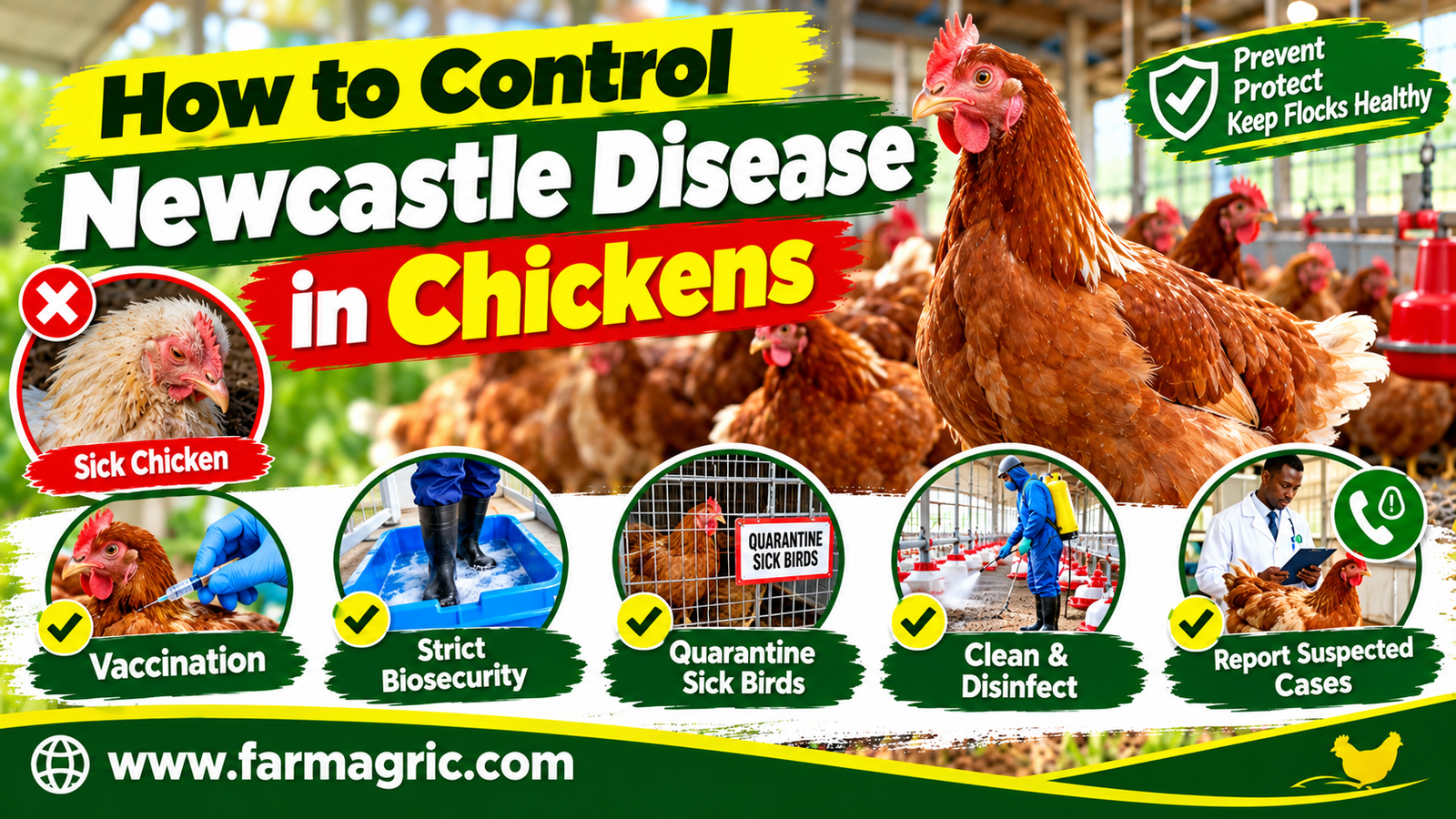
How to Control Newcastle Disease in Chickens
How to Control Newcastle Disease in Chickens
I will never forget the morning I walked into my poultry house and found it too quiet. Normally my birds greet you with noise the moment the door opens. That morning, about a third of them were sitting hunched in the corners with their eyes half shut and their heads drooping, and the floor was covered in watery green droppings. By the evening I could hear some of them gasping and rattling as they breathed. By the end of the week, more than half the flock was gone. I had skipped one vaccination round because money was tight and the birds looked healthy. That one skipped round cost me many times what the vaccine would have.
That was Newcastle disease. I have raised chickens for over thirty years, and I have never lost a flock to it since that season. Newcastle disease cannot be cured once birds are sick, but it can be controlled very well. This is how I do it.
The short answer
To control Newcastle disease in chickens, vaccinate every flock on a proper schedule with a good quality vaccine kept cold from the shop to the farm, and back it up with strict biosecurity: keep visitors, wild birds, new stock and shared equipment away from your birds, clean and disinfect the house between batches, and quarantine any new bird for at least two to three weeks. Report sudden heavy deaths to a veterinary officer quickly, because Newcastle disease is a notifiable disease in many countries. There is no medicine that kills the virus, so prevention is the only real answer.
What most farmers get wrong
I made some of these mistakes myself, so I say this as a friend.
They wait for the disease to appear before they act. By the time birds are gasping and passing green droppings, the virus has already spread through the house, and treatment is too late. Vaccines protect healthy birds. They do not rescue sick ones.
They treat Newcastle disease with antibiotics and think that is the cure. Antibiotics do not kill viruses. A veterinarian may use them to control secondary bacterial infections in a sick flock, but they will not stop Newcastle disease itself.
They skip a vaccination because the birds look fine. Immunity fades with time. A flock that is protected at six weeks may be wide open at four months.
They store vaccine badly. Newcastle vaccines are living viruses that die quickly in heat and sunlight. A vaccine that sat on a shop shelf, travelled in a hot bag or stood in the sun while you mixed it may be dead before it reaches the chickens, and you will not know until the flock gets sick.
They buy cheap day old chicks or point of lay birds from unknown sources without asking about vaccination, and they put them straight into the house with their existing birds.
They treat visitors, boots and shared crates as harmless. The virus travels on shoes, clothes, vehicles, egg trays, feed bags and the hands of people who have visited another farm.
Know the enemy
Newcastle disease is caused by a virus that spreads very fast through a flock. Sick birds shed it in their breath, droppings and discharge from the eyes and nose, and the virus can survive for a long time on surfaces, in manure and in dust. Infected birds, contaminated equipment, wild birds, rodents, and even the wind and shared water sources carry it between farms.
The disease comes in different forms, depending on the strain and on how well the flock was vaccinated. In unvaccinated flocks the most severe forms can kill almost every bird within days. In partly protected flocks the signs may be milder, such as a drop in egg production and a few birds with twisted necks, which can confuse farmers into thinking it is something else.
Local village chickens, free range birds and unvaccinated backyard flocks are often the reservoir that keeps the virus alive in an area. That is why one farmer’s carelessness can threaten everyone around him, and why community vaccination matters so much.
Warning signs to watch for
Early signs often include a sudden drop in feed and water intake, birds that sit with drooping wings and closed eyes, a drop in egg production, and thin shelled, misshapen or pale eggs. Many farmers see sneezing, coughing, gasping, gurgling or rattling sounds when the birds breathe. Watery, greenish or whitish droppings are very common.
As the disease advances, you may see swollen eyelids and heads, bluish combs and wattles, and nervous signs such as tremors, twisted necks, circling, paralysis of the legs or wings, and birds falling over and unable to stand. Sudden deaths of many birds in a short time, with few signs beforehand, is another typical pattern in unvaccinated flocks.
Several other diseases look like Newcastle disease, including infectious bronchitis, avian influenza, infectious coryza and fowl cholera, and only a laboratory test can tell them apart for certain. So whenever you see these signs in several birds at once, call a veterinary officer or animal health worker. Do not guess, and do not sell or move birds while you wait. Avian influenza can also infect people, so use gloves and a mask when handling sick or dead birds, and wash your hands carefully afterwards.
Step by step: how I control Newcastle disease
Step 1: Vaccinate every flock, on schedule
Vaccination is the foundation of control. Every chicken you keep, whether broilers, layers, breeders or village birds, should be on a Newcastle vaccination programme suited to your area. Poultry vaccines are sold under different names and strains, and the exact programme depends on your local disease pressure, the age and type of your birds and what vaccines are registered in your country. A veterinarian or your extension office will give you the right schedule, and I always confirm mine with them. In general, the pattern I follow looks like this.
Chicks get a first vaccine in the first week of life, often a mild strain such as Hitchner B1, given by eye drop or in the drinking water. A second vaccine, commonly a stronger strain such as Lasota, follows at around two to three weeks of age. A further dose comes at around six to eight weeks, and layers and breeders then get regular boosters, often every two to three months, or an inactivated oil based vaccine injected before they begin to lay, as your veterinarian recommends. Village and backyard birds are often protected with a heat tolerant vaccine such as I-2, which is easier to use without a cold chain, and it is worth asking your animal health office whether it is available in your area.
Keep a vaccination record with dates, vaccine names, batch numbers and expiry dates. I stick mine on the wall of the poultry house so nobody forgets a round.
Step 2: Keep the vaccine cold and alive
This is the step that quietly ruins many vaccination programmes. Buy vaccines from a registered, reliable agro veterinary shop that keeps them in a fridge. Check the expiry date and that the seal is intact. Carry the vials in a cooler box with ice packs, keep them out of the sun, and put them in a refrigerator at home, never in a freezer, until you use them. Do not use a vial that has been left in the heat, and never use expired vaccine. Once you open or mix a vaccine, use it within the time on the label, usually within an hour or two, and throw away what is left.
Step 3: Give the vaccine the right way
Follow the instructions on the vaccine label carefully. For eye drop vaccination, hold the bird, drop one drop into one eye, and wait until it blinks it in before letting go. For drinking water vaccination, remove all disinfectants and chlorine from the water, use clean water in clean drinkers, and let the birds go thirsty for an hour or two beforehand so they drink the vaccine quickly. Some farmers add skimmed milk powder to the water to help protect the vaccine virus. For injectable vaccines, use clean needles and the right site and dose, and change needles regularly.
Only vaccinate healthy birds. Do not vaccinate a flock that is already sick, stressed, or suffering from another disease, because it will not respond properly. Avoid vaccinating in the heat of the day.
Step 4: Lock down your biosecurity
Biosecurity is the second half of the defence, and it works every day, not just on vaccination day. Fence the poultry area, and keep one entrance that you control. Allow few visitors, and keep strangers, traders and other poultry keepers out of the houses. Put a footbath with a suitable, fresh disinfectant at the door, and keep a pair of boots and overalls for use inside the poultry area only. Wash your hands before and after you handle the birds.
Keep wild birds, rats, dogs and cats away from the houses, feed and water. Use bird proof netting on windows and vents, and store feed in sealed containers. Do not let your birds mix with ducks, geese, pigeons, turkeys, guinea fowl or village chickens, because many of them carry the virus without showing signs. Do not borrow or lend equipment, crates, feeders or egg trays, and if you must, wash and disinfect them thoroughly first. Do not allow vehicles from other farms near the houses.
Step 5: Quarantine every new bird
Never add new birds straight into your flock. Keep any new or returning birds in a separate house, well away from the others, for at least two to three weeks, and watch them closely for signs of disease. Handle the quarantine birds last, after you have done your main flock, and wash your hands and change your boots. Buy day old chicks, growers and point of lay birds only from reliable hatcheries and farms that can show you a vaccination record.
Step 6: Clean and disinfect between batches
After every batch, remove all birds, litter and old feed. Clean out the manure and dust thoroughly, then wash the walls, floors, feeders and drinkers with detergent and clean water. A disinfectant works poorly on dirty surfaces, so washing comes first. Then apply a suitable disinfectant, as directed on the label. Let the house dry out completely, and leave it empty for at least two to three weeks before restocking, longer if you have had disease. Dispose of the old litter and manure well away from the poultry houses, preferably by composting it away from other birds, because the virus can survive in it for a while.
Step 7: Feed and water well
Well fed, well managed birds respond better to vaccines. Give a good balanced feed, clean water at all times, and enough space so the birds are not crowded. Poor nutrition, heat stress, overcrowding and ammonia from wet litter weaken the immune system and make flocks more likely to fail after vaccination. Keep litter dry and ventilation good, without letting cold draughts blow directly onto the birds.
Step 8: Know what to do if the disease strikes
If you suspect Newcastle disease, act immediately. Isolate the sick birds as far as you can, stop all movement of birds, eggs, manure, equipment and people in and out of your farm, and call your veterinary officer or animal health authority at once. In many countries Newcastle disease is a reportable disease, and acting quickly protects your neighbours as well as you. Do not sell, give away or eat sick or dead birds, and do not throw carcasses into bushes, rivers or open pits where dogs and wild birds can reach them.
Follow the advice of the veterinary officer on how to dispose of dead birds, which usually means deep burial with lime or burning. A veterinarian may take samples to confirm the disease, and may advise supportive care, such as clean water with electrolytes and vitamins, and treatment for secondary bacterial infections. Keep the survivors apart from any new stock, and disinfect everything you used. After an outbreak, clean and disinfect the house very thoroughly, leave it empty for several weeks, and review your vaccination programme and biosecurity before restocking, because the survivors may carry the virus for some time.
What I would do differently if I started again today
If I were starting my first flock again, I would write the vaccination schedule on the wall before the chicks arrived, and I would treat each date as seriously as a school exam.
I would buy a cooler box and ice packs on day one, and I would never carry vaccine home in a plain bag again.
I would build a footbath and a simple fence before I ever bought the first bird, and I would keep a separate pair of boots and overalls for the poultry house only.
I would buy chicks only from a hatchery that could show me their vaccination record, and I would quarantine every new bird for three weeks without exception.
And I would introduce myself to the nearest veterinary officer before I ever had a problem. Having a name and a phone number ready is worth more than any tonic on the shelf.
Frequently asked questions
Can Newcastle disease be cured?
No. There is no medicine that kills the Newcastle virus once birds are sick. A veterinarian can advise supportive care and treatment for secondary infections, but the real protection is vaccination and biosecurity.
When should I vaccinate chicks against Newcastle disease?
Most programmes give a first vaccine in the first week of life, followed by a stronger dose at around two to three weeks, and further doses at about six to eight weeks, with regular boosters for layers and breeders. Confirm the exact schedule with a veterinarian, because it depends on your area and your vaccines.
Can humans catch Newcastle disease?
People can catch a mild eye infection, such as red, watery eyes, or mild flu like signs from close contact with infected birds, but it is generally not serious. Wear gloves, protect your eyes, and wash your hands well after handling sick or dead birds. Other diseases that look similar, such as avian influenza, can be more serious, which is another reason to call a veterinary officer.
How long does the Newcastle virus survive in the environment?
It can survive for days to weeks, and longer in cool, damp conditions and in manure, feathers and carcasses. This is why thorough cleaning, disinfection and an empty rest period between batches are so important.
Can free range and village chickens be vaccinated?
Yes, and they should be. Village chickens often carry and spread the virus. Heat tolerant vaccines such as I-2 are designed for use where cold storage is hard to find. Ask your animal health office about community vaccination campaigns in your area.
The one thing to bookmark
You do not treat Newcastle disease, you prevent it, so vaccinate on time, keep the vaccine cold, shut the gate on strangers, and the virus never gets its first bird.