How to Prevent Plantain Weevil Damage
How to Prevent Plantain Weevil Damage: A Farmer’s Guide to Protecting the Plant From the Inside Out
I remember pushing against a mature plantain stem that should have offered real resistance and feeling it give way far too easily, wobbling at the base in a way healthy plantain never does. When I eventually cut into that pseudostem to investigate, I found a network of tunnels running through the tissue, packed with frass, and several fat, pale grubs working their way through what should have been solid, healthy plant material. That plant eventually toppled over entirely before I ever got a bunch from it, and the damage had clearly been progressing for weeks, maybe months, completely hidden inside the stem where nothing about the leaves or outward appearance had given me any clear warning. Plantain weevil, I learned that season, does nearly all of its damage in a place a farmer cannot see without deliberately cutting into the plant, which means prevention has to rely on understanding the insect’s behavior and protecting the plant proactively, rather than waiting for a symptom that, by the time it is obvious, often means the damage is already severe.
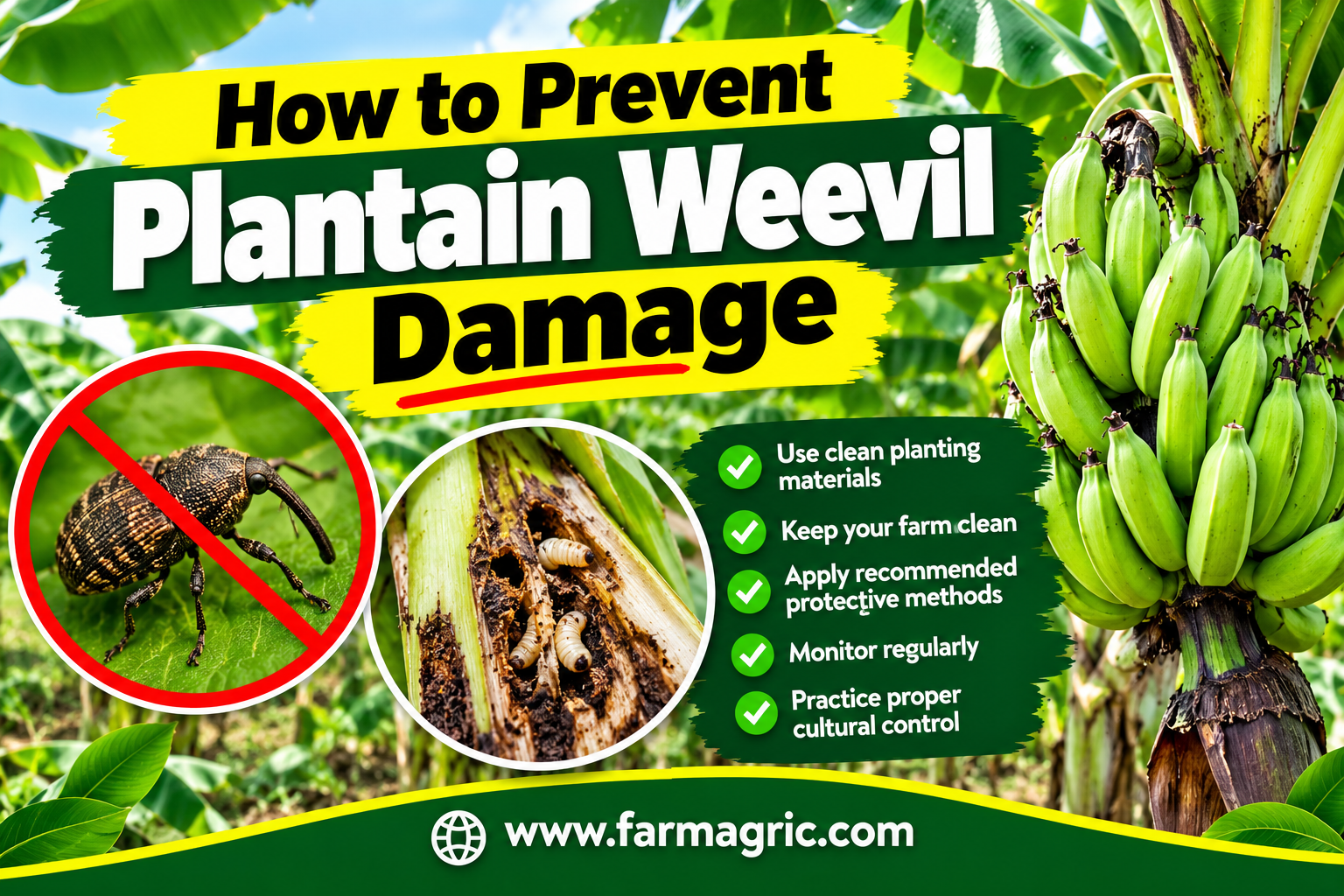
So let me answer you straight, because I know you have either found that same hollowed, tunnel-riddled stem already, or you are trying to protect a healthy stand before that happens to you. You prevent plantain weevil damage mainly by maintaining good field sanitation through removing and destroying old pseudostems and crop residue where the weevil breeds and hides, using clean, weevil-free planting material when establishing new mats, trapping adult weevils using pseudostem traps placed strategically around the field, maintaining plant vigor through proper nutrition and water management since healthy, vigorous plants resist and tolerate weevil damage better than stressed ones, and avoiding unnecessary wounds to the base of the plant that give adult weevils an easier entry point. This pest spends nearly its entire damaging life cycle hidden inside the stem where no spray can reliably reach it, which means the real battle happens at the field sanitation and trapping stage, intercepting the adult weevil and denying it breeding sites before it ever has the chance to lay eggs that become the next generation of tunneling grubs.
Why Plantain Weevil Is So Difficult to Detect and Treat Directly
The adult plantain weevil is a dark, hard-shelled beetle that is active mainly at night and tends to hide in plant debris, old pseudostem material, and soil cracks during the day, making it genuinely difficult for a farmer to spot during normal daytime field activity even when a meaningful population is present. The adult lays eggs at the base of the plant or in wounds and cracks in the pseudostem, and the larvae that hatch tunnel directly into the plant tissue, where they spend their entire developing period feeding and growing completely hidden from view, protected from both casual observation and from any spray that might be applied to the plant’s exterior. By the time a farmer notices the external signs of infestation, a weakened, wobbling stem, yellowing leaves, or in severe cases a plant toppling over entirely, the larvae responsible have usually been feeding for an extended period and the structural damage to that particular stem is often already extensive and essentially irreversible.
What Most Farmers Get Wrong
The first mistake, the one that cost me that toppled plant, is not recognizing how completely hidden this pest’s damaging stage actually is, continuing with normal field management without any deliberate weevil-specific monitoring or prevention until a plant has already shown dramatic, late-stage external symptoms.
The second mistake is leaving old, harvested pseudostems and plant debris lying in the field after harvest rather than removing and destroying them promptly, not realizing that this residual plant material provides exactly the kind of breeding and hiding habitat adult weevils favor, allowing populations to build steadily within a planting that continues generating this debris season after season.
The third mistake is using suckers from an already infested mat or field as planting material for establishing new plantain stands, inadvertently carrying weevil eggs or small larvae directly into a fresh planting rather than sourcing clean, inspected material specifically chosen to avoid this risk.
The fourth mistake is neglecting general plant health and vigor, not recognizing that a stressed, poorly nourished, or water-stressed plantain plant is generally more vulnerable to weevil damage and less able to tolerate and grow through a moderate level of tunneling than a vigorous, well-maintained plant growing under good conditions.
The fifth mistake is creating unnecessary wounds at the base of plants through careless cultivation, machete damage during weeding, or rough handling during sucker removal, not realizing that these wounds provide adult weevils with easier entry points for egg-laying compared to an intact, undamaged pseudostem surface.
Step-by-Step Plan to Prevent Plantain Weevil Damage
Begin with thorough field sanitation as your foundation, removing and destroying old pseudostems promptly after harvest rather than leaving them to decompose slowly in the field, since this residual material is one of the primary habitats adult weevils use for both hiding during the day and laying eggs, and consistently removing it denies the pest population much of its preferred breeding ground within your planting.
Chop or shred removed pseudostem material if practical, since breaking down larger pieces speeds decomposition and reduces the length of time that material remains a viable weevil habitat compared to leaving whole or large sections of old stem lying intact in the field.
Source clean, healthy planting material when establishing new plantain stands or replacing mats, inspecting sucker material carefully for any sign of existing tunnel damage, soft spots, or visible weevil presence before planting, and avoiding suckers taken from fields with known heavy weevil pressure wherever alternative, cleaner planting material is available.
Set up pseudostem traps around your field as an active monitoring and population reduction tool, cutting sections of harvested pseudostem into pieces, splitting them lengthwise, and placing the split side down on the soil near the base of growing mats, since adult weevils are attracted to this material as a hiding and breeding site, and checking and destroying weevils found in these traps regularly removes adults from the population before they have the chance to lay further eggs in your actual growing plants.
Check and refresh pseudostem traps regularly, ideally every few days to about a week, since decomposing trap material eventually stops being as attractive to adult weevils, and replacing traps periodically with fresher material maintains their effectiveness as an ongoing monitoring and control tool throughout the season.
Maintain strong plant nutrition and consistent water management across your planting, since vigorous, well-fed, adequately watered plantain plants generally tolerate a moderate level of weevil presence considerably better than stressed plants, both resisting initial attack somewhat better and recovering growth more effectively even where some tunneling damage has occurred.
Apply mulch around the base of plants using material other than old plantain pseudostem debris specifically, since while general mulching benefits moisture retention and weed suppression, mulch made from fresh, non-host material avoids inadvertently creating additional weevil habitat compared to using plantain’s own residue for this purpose.
Avoid unnecessary wounding at the base of plants during routine field work, handling sucker removal, weeding, and any other activity near the base of mats carefully to minimize cuts, bruises, or other damage to the pseudostem that could otherwise provide an easier entry point for adult weevils seeking a site to lay eggs.
Inspect plants periodically for early, subtle signs of weevil activity, such as small holes near the base of the pseudostem, a small amount of visible frass, or slight softening felt when the lower stem is gently pressed, rather than waiting for the more dramatic late-stage signs of wobbling or toppling that indicate damage has already become severe.
Remove and destroy any plant showing clear, confirmed weevil damage promptly, rather than leaving a compromised stem standing in the field, since a heavily infested plant continues serving as a breeding source for the weevil population that could otherwise be reduced by removing that specific habitat from the planting.
Rotate planting locations where practical for new plantain establishment, avoiding replanting directly into land with a known recent history of heavy weevil pressure without an intervening period of different land use, since this can help reduce the carryover population available to immediately threaten a fresh planting.
Practice good general field hygiene beyond pseudostem removal specifically, keeping the broader planting area reasonably free of general plant debris and clutter that could provide additional hiding habitat for adult weevils independent of pseudostem material specifically.
Warning Signs to Watch For
Small holes near the base of the pseudostem, sometimes accompanied by a small amount of visible frass or plant debris pushed out from inside, represent an early sign of weevil activity worth taking seriously, and catching infestation at this stage, before extensive internal tunneling has occurred, gives the best chance of the plant tolerating and growing through the damage with continued good management. A pseudostem that feels notably softer or gives more than expected when gently pressed near the base, compared to the firm resistance of healthy plantain tissue, suggests internal tunneling may already be underway even before more dramatic external symptoms become visible. Yellowing or wilting of lower leaves on an otherwise seemingly healthy plant, without an obvious explanation from water or nutrient stress, can sometimes trace back to weevil damage affecting the plant’s ability to take up water and nutrients normally through a compromised base. A plant that wobbles noticeably at the base when gently pushed, offering less resistance than neighboring, unaffected plants, indicates significant structural damage has likely already occurred and that plant may be at real risk of toppling, particularly during wind or when carrying the weight of a developing bunch. And finding adult weevils themselves, dark, hard-shelled beetles, when inspecting old pseudostem debris, trap material, or soil cracks near the base of plants, confirms an active population present in your planting and signals that increased trapping and sanitation effort is warranted.
What I’d Do Differently If Starting Again Today
If I were starting over, I would commit to prompt, thorough pseudostem removal after every harvest as a non-negotiable standard practice from the very beginning, rather than allowing old stems to linger and decompose slowly in the field the way I did before that toppled plant finally taught me how much habitat I had been quietly providing for this pest all along. I would set up pseudostem traps as routine, ongoing monitoring from the start of every planting rather than only learning about this technique after years of dealing with damage I could have caught and reduced far earlier. I would inspect planting material far more carefully before establishing new mats, understanding now how easily infested suckers can carry this problem directly into what should have been a clean, fresh start. And I would pay much closer attention to general plant vigor and avoiding unnecessary base wounds throughout the season, recognizing now how much these less obviously weevil-specific practices still meaningfully contribute to how well a planting resists and tolerates whatever weevil pressure does eventually arrive.
Frequently Asked Questions About Preventing Plantain Weevil Damage
How can I tell if my plantain plants have weevil damage before they topple over? Look for small holes near the base of the pseudostem, a softer than normal feel when gently pressing the lower stem, and yellowing of lower leaves without another clear explanation, since these earlier, subtler signs can appear well before a plant shows the more dramatic wobbling or toppling associated with severe, advanced damage.
Do pseudostem traps really help reduce plantain weevil populations? Yes, split sections of pseudostem placed near the base of plants attract adult weevils seeking a hiding and breeding site, and checking these traps regularly to find and destroy the weevils drawn to them genuinely removes adults from the population before they have the chance to lay eggs directly in your growing plants.
Why is it so hard to treat plantain weevil once it has infested a plant? The larvae feed entirely hidden inside the pseudostem tissue, protected from both casual observation and from sprays applied to the plant’s exterior, meaning that by the time external symptoms become obvious enough to notice, the larvae responsible have often already been feeding for an extended period with damage that is difficult to reverse at that stage.
Can using suckers from an infested field spread plantain weevil to a new planting? Yes, suckers taken from a field with existing weevil pressure can carry eggs or small larvae directly into a new planting location, which is why careful inspection of planting material and sourcing from cleaner, less affected areas where possible is an important preventive step when establishing new plantain stands.
Does keeping plantain plants healthy and well fed really help against weevil damage? Yes, vigorous, well-nourished, adequately watered plants generally both resist initial weevil attack somewhat better and recover and continue growing more effectively even where some tunneling damage has occurred, compared to stressed or poorly maintained plants that have fewer reserves available to tolerate and grow through pest pressure.
If there is one thing I want you to remember from all this, it is that plantain weevil wins its fight entirely out of sight, deep inside a stem you cannot see into without cutting it open, so take the fight to the adult beetle instead, clear away the old stems it hides in, trap it before it lays its eggs, and keep every plant vigorous enough to shrug off whatever pressure still gets through, because the wobble I felt pushing against that doomed stem was the sound of a battle that had already been lost weeks earlier, in a place I never thought to look until it was far too late to matter.