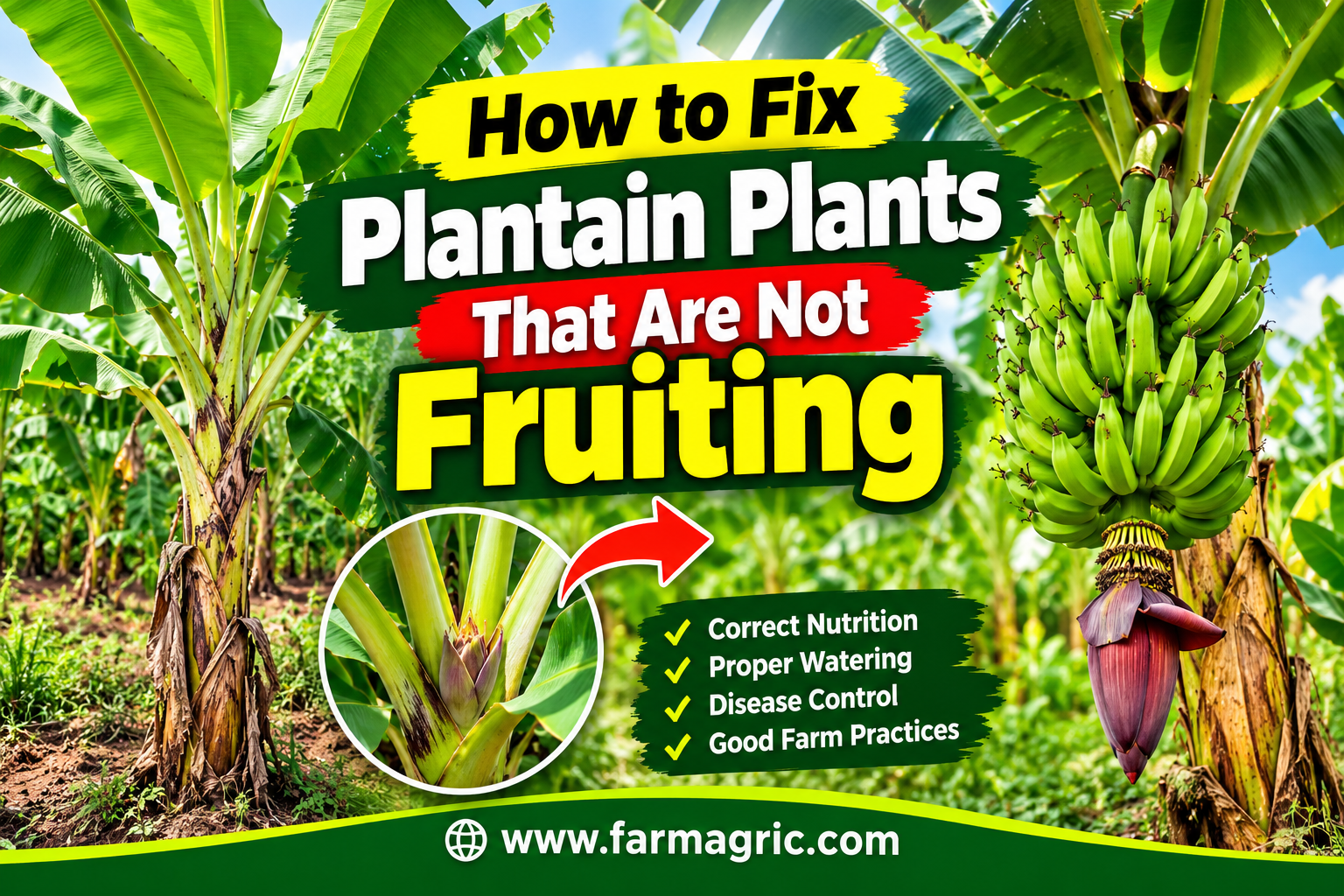
How to Fix Plantain Plants That Are Not Fruiting
How to Fix Plantain Plants That Are Not Fruiting: A Farmer’s Guide to Getting a Mat That Actually Bears
I once had a plantain stand that I was genuinely proud to walk past, tall, dark green, broad-leaved suckers crowding a mat that had clearly been thriving for a couple of years, the kind of stand that made visitors stop and comment on how healthy it looked. What it was not doing was fruiting, not the main stems that should have thrown a bunch a year earlier, and not the younger suckers coming up around them either. I spent a long time assuming patience was the answer, that a plant that looked that vigorous would surely bear eventually if I just waited a little longer. It took a conversation with an older plantain farmer, who walked the mat with me and asked a series of pointed questions about spacing, suckers, and soil, to show me that vigorous leaf growth and a mat too crowded to ever fruit properly can look almost identical from a casual glance, and that mine had quietly drifted from the first into the second without my noticing.
So let me answer you straight, because I know you have a plantain mat standing tall and green with no sign of a bunch coming, and you are starting to wonder whether something is simply wrong with the plant itself. Plantain plants fail to fruit mainly because of overcrowding from too many suckers left on the same mat, nutrient deficiency, particularly potassium, which plantain needs in large amounts specifically to support bunch development, water stress during the critical flowering period, poor soil drainage or compaction restricting the root system, or a plant that simply has not yet reached the physiological maturity needed to flower, and fixing it means identifying which of these applies to your specific mat and correcting what can genuinely still be influenced, since some of these causes respond within a season while others require patience through to the next growth cycle. A plantain mat that looks green and vigorous above ground is not necessarily a mat on track to fruit, since the two things, healthy vegetative growth and successful bunch production, depend on a different balance of conditions than most farmers initially assume.
Why a Healthy-Looking Mat Can Still Fail to Fruit
Plantain is a crop that reproduces and regrows through suckers rising continuously from the base of the parent plant, and left entirely unmanaged, a mat will keep producing new suckers indefinitely, each one competing with the others and with the original parent plant for the same limited pool of soil nutrients, water, and light. A plant’s ability to flower and produce a bunch depends on it accumulating enough stored energy and nutrients, particularly potassium, to support that enormous reproductive effort, and a plant in a crowded, competing mat often simply never accumulates enough surplus to make that transition, continuing instead to put out leaves and additional suckers in a kind of extended vegetative holding pattern rather than ever committing to flowering. This is part of why a stand with abundant green growth can be, counterintuitively, further from fruiting than a more open, carefully thinned mat with fewer, more vigorous individual plants, since the crowded mat’s apparent vigor is often spread too thin across too many competing stems to ever support the demands of bunch development in any one of them.
What Most Farmers Get Wrong
The first mistake, the one that fooled me for far longer than it should have, is equating a lush, leafy, crowded mat with a healthy, productive one, without recognizing that too many suckers competing on the same mat is one of the single most common reasons an otherwise vigorous-looking plantain stand fails to fruit on any reasonable timeline.
The second mistake is not managing sucker numbers deliberately, allowing every new sucker that emerges to remain and grow rather than selecting a limited number of the strongest, best-positioned suckers to retain while removing the rest, which would otherwise be competing for resources that could instead be concentrated into fewer, more productive stems.
The third mistake is underestimating how much potassium plantain specifically requires to support bunch development, applying a general fertilizer program without particular attention to this nutrient, when plantain’s potassium demand during flowering and fruit development is considerably higher than many other common crops a farmer might be more used to fertilizing.
The fourth mistake is allowing moisture stress during the flowering period specifically, treating plantain as generally capable of handling some degree of dry weather without recognizing that the flowering and early bunch development stage is considerably more sensitive to water availability than the plant’s overall reputation for resilience might suggest.
The fifth mistake is planting or maintaining plantain on poorly drained or compacted soil, not recognizing that plantain’s root system, while reasonably extensive, still requires adequate drainage and loose soil structure to support the plant’s substantial size and its eventual reproductive effort, and that root restriction from poor soil conditions can quietly undermine fruiting potential even while the visible parts of the plant continue to look reasonably healthy.
Step-by-Step Plan to Fix a Plantain Mat That Is Not Fruiting
Start by counting the number of suckers currently growing on the affected mat and comparing this honestly against the recommended number for productive management, which is generally three to four stems per mat at staggered stages of maturity, a mother plant, a follower sucker, and one or two younger suckers coming along behind, rather than the much larger number that an unmanaged mat often accumulates over a couple of seasons.
Select and thin your sucker population deliberately if overcrowding is clearly present, choosing to retain the healthiest, best-positioned suckers at staggered growth stages while removing excess suckers, cutting them out at the base and ideally destroying the growing point to prevent regrowth from that same sucker, since this single intervention is often the most impactful correction available for a mat that has drifted into unproductive overcrowding.
Assess your fertilizer history for the mat, checking specifically whether potassium has been included in any meaningful amount, since plantain’s demand for this nutrient during flowering and bunch development is considerably higher than general fertilizer programs often account for, and apply a potassium source such as muriate of potash or wood ash if this has clearly been lacking, timing the application to support the plant through its approach to flowering.
Check soil moisture and your recent watering or rainfall pattern, particularly if the mat has reached a reasonable age and sucker management is not the primary issue, since a prolonged dry stretch during the period when a mature sucker should be approaching flowering can meaningfully delay or disrupt that transition, and where you have any irrigation capacity, prioritizing it for mats approaching this stage can help.
Dig carefully near the base of the mat, without damaging the root system significantly, to assess soil structure and drainage, checking for compaction or waterlogging that might be restricting root development, and where this is identified as a factor, work in organic matter around the mat and consider whether drainage improvements are needed for the surrounding area.
Confirm the physiological age of the plant you are concerned about, since plantain generally takes somewhere between ten and fifteen months from planting or from sucker emergence to flowering under good conditions, and a mat that has simply not yet reached this maturity threshold, rather than one that is being actively prevented from flowering by a correctable problem, may simply need more time rather than any specific intervention.
Review the mother plant and primary sucker specifically, since these are typically the stems closest to flowering readiness on an established mat, and focus your corrective efforts, whether thinning, fertilizing, or watering, on supporting these particular stems through to flowering rather than spreading limited attention evenly across every stem on an overcrowded mat.
Mulch around the base of the mat generously, using available organic material, since this helps stabilize soil moisture, suppresses competing weed growth that would otherwise draw on the same resources the plantain needs, and gradually contributes organic matter back into the soil as it breaks down over the season.
Remove competing weeds and any unwanted volunteer growth from around the base of the mat thoroughly, since weeds compete directly for the same water and nutrients the plantain needs to accumulate toward flowering, and a weedy mat base undermines fertilizer and water management efforts even when those are otherwise well executed.
Monitor the mat over the following one to two months after making these corrections, watching specifically for signs that the mother plant or primary sucker is beginning to show the thicker pseudostem and other subtle signs that typically precede flowering, since improvement from corrected overcrowding, nutrition, or water stress is not usually immediate but should become apparent within this general timeframe if the correction addressed the actual limiting factor.
Plan ongoing sucker management as a permanent practice going forward rather than a one-time correction, since mats left unmanaged after an initial thinning will simply drift back into the same overcrowded, non-fruiting pattern over subsequent seasons without continued attention to limiting sucker numbers on each mat.
Warning Signs to Watch For
A mat crowded with numerous suckers of similar size and age, none of which show any sign of the thicker pseudostem typically associated with an approaching flowering stage, strongly suggests overcrowding is preventing any individual stem from accumulating the resources needed to transition toward fruiting. Pale or yellowing leaves combined with an otherwise mature-looking mat points toward a nutrient deficiency, particularly potassium, limiting the plant’s ability to support bunch development even as it continues producing vegetative growth. Visible wilting or leaf curling during a dry stretch, particularly in a mat that has reached what should be flowering age, signals that moisture stress may be interrupting or delaying the flowering transition at exactly the stage when the plant is most vulnerable to this kind of stress. Standing water or visibly compacted, hard soil around the base of a mat that is otherwise mature but not fruiting points toward a root restriction problem limiting the plant’s overall capacity regardless of what is happening above ground. And a mat where even the oldest, most established stem shows no sign of flowering well beyond the fifteen-month mark from planting or sucker emergence, despite reasonable management in other respects, deserves closer investigation into variety suitability or a more fundamental soil fertility issue rather than simply continuing to wait.
What I’d Do Differently If Starting Again Today
If I were starting over, I would commit to deliberate sucker thinning as a standard, ongoing practice from the very first season rather than letting every new sucker remain simply because removing healthy-looking growth felt wasteful, since that proud but unproductive mat taught me directly how much that reluctance was actually costing me in fruiting potential across the whole stand. I would pay far more specific attention to potassium in my fertilizer program rather than assuming a general feeding approach was automatically adequate for a crop with demands as particular as plantain’s turned out to be. I would prioritize water availability during the approach to flowering far more deliberately, understanding now how sensitive this specific window actually is compared to the plant’s overall tolerance for dry conditions at other stages. And I would check soil drainage and structure around my plantain mats earlier and more carefully, rather than assuming a crop with as substantial a root system as plantain’s would automatically handle whatever soil conditions I happened to plant it into without any real consequence to its eventual fruiting.
Frequently Asked Questions About Plantain Plants Not Fruiting
How many suckers should I leave on a plantain mat for good fruiting? Most recommendations suggest keeping around three to four stems per mat at staggered maturity stages, typically a mother plant, a follower sucker, and one or two younger suckers coming along behind, rather than allowing every emerging sucker to remain and compete for the same limited resources.
How long does it take for a plantain plant to start fruiting? Under generally good conditions, plantain typically takes somewhere between ten and fifteen months from planting or sucker emergence to flowering, so a mat that has not yet reached this age may simply need more time rather than any specific correction, while one well beyond this window without flowering likely has a correctable underlying issue.
Why does my plantain mat look healthy and green but never produces a bunch? This is most often caused by overcrowding from too many suckers competing for the same resources, preventing any individual stem from accumulating enough stored energy and nutrients to make the transition into flowering, even though the overall mat continues to look vigorous in its leaf growth.
Does potassium really matter that much for plantain fruiting specifically? Yes, plantain has a notably high demand for potassium during flowering and bunch development compared to many other common crops, and a fertilizer program that does not specifically account for this nutrient, even if nitrogen and general feeding seem adequate, can leave the plant without enough potassium to successfully support fruit development.
Can drought really stop a mature plantain plant from flowering? Yes, moisture stress occurring specifically as a mature sucker approaches its expected flowering stage can meaningfully delay or disrupt that transition, making this a more sensitive period for water availability than plantain’s generally resilient reputation might otherwise suggest to a farmer managing the crop.
If there is one thing I want you to remember from all this, it is that a plantain mat crowded with green, healthy-looking suckers is not necessarily a mat on its way to bearing fruit, so count your stems honestly, thin without hesitation, feed the potassium this crop specifically needs, and protect it through the dry stretches that matter most, because the proud, leafy stand that once fooled me into thinking patience alone would be enough taught me that a plantain mat left to manage itself very often settles into exactly the kind of crowded, competing pattern that keeps it from ever doing the one thing you actually planted it to do.