How to Stop Hens From Eating Their Own Eggs
How to Stop Hens From Eating Their Own Eggs: What 30 Years of Cracked Shells and Yolk-Stained Beaks Taught Me
I once walked into my layer house on a Tuesday morning and found yolk smeared across the floor of a nest box and a hen standing over it with her beak dripping. I stood there and watched her finish the whole egg. By the end of that week, six more hens had picked up the habit. By the end of the month, I was collecting less than half the eggs I should have been, and I was losing sleep over it. A flock can learn this from one hen faster than you would believe.
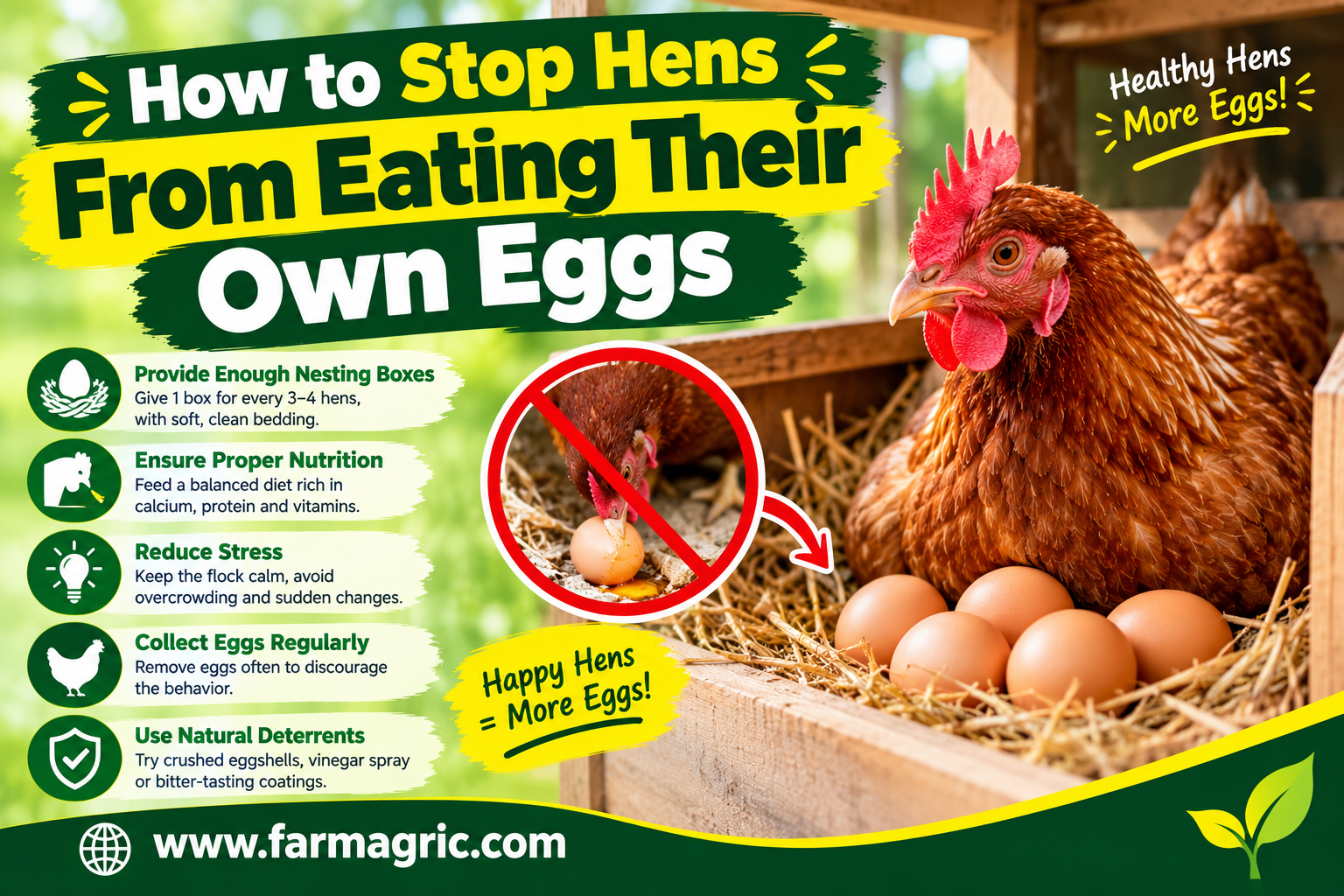
Here is the direct answer. Hens eat their own eggs for a handful of reasons: the shells are thin or cracked so eggs break easily, the diet is short on calcium or protein, the nests are crowded or bright so eggs get knocked about, eggs are left lying too long, or the birds are bored and stressed. Once one hen tastes egg, others copy her. You stop it by fixing the cause, collecting eggs often, making the nests dark and comfortable, feeding properly, and removing the habitual egg eater from the flock before she teaches the rest.
If you do these things together, most flocks stop within a couple of weeks. A hen that has been eating eggs for months is harder to cure, and sometimes the honest answer is that she has to go. Let me walk you through how I handle it.
Why a Hen Starts Eating Eggs
Almost every egg eating problem begins with an accident. An egg cracks in the nest, a hen pecks at the leaking yolk out of curiosity, and she finds out it tastes good. Eggs are rich in protein and fat, and a hen that has once learned that is a very quick student. From there it can go one of two ways. If the cause is fixed and the habit is caught early, it fades. If the cracks keep happening and nobody intervenes, it spreads through the flock like gossip.
So the real question is never just how to stop the eating. It is why the first egg broke, and why nobody got to it before the hen did.
What Most Farmers Get Wrong
The first mistake is blaming the hen and ignoring the egg. People see a bird with yolk on her face and treat her like a criminal. Often the shell was already weak, and she was just finishing a broken egg she found. If your shells are thin, you will keep having broken eggs no matter how many hens you cull.
The second mistake is leaving eggs in the nest all day. Eggs that sit for hours get sat on, stepped on, and pecked at. Every extra hour is another chance for a crack. I used to collect once in the evening because it was convenient for me. It was not convenient for my egg count.
The third mistake is crowded nests. When too many hens share too few boxes, they squabble, push, and trample eggs. I have watched three hens try to squeeze into one box while a fourth waited and scratched at the straw. That is how shells break.
The fourth mistake is feeding cheap and hoping. A layer ration that is short on calcium gives thin shells, and a diet short on protein can push hens to look for it elsewhere. Farmers who dilute their feed with too much kitchen waste, cassava peel, or grain scratch often see thinner shells within weeks.
The fifth mistake is a bright, open laying area. Hens prefer to lay in a dim, private spot. If your nest boxes sit in full light where every hen can see every egg, you are advertising your eggs to the whole house.
The sixth mistake is ignoring the culprit. One or two hens usually start the habit. If you leave them in, they pass it on. Early removal is cheaper than curing a whole flock later.
The seventh mistake is expecting a quick trick to solve a management problem. I have heard of every home remedy there is. Some help a little. None replace fixing the real cause.
The Step-by-Step Fix That Works
This is the routine I follow whenever I see egg eating start, and it is the routine I use all year to prevent it.
Step one: confirm the problem and find the culprit. Before you change anything, watch. Sit quietly near the nests for an hour or two during peak laying, usually mid-morning. Look for hens with yolk on their beaks or faces, hens that hang around nests without laying, and hens that peck sharply at eggs. Also check the eggs themselves. Are the shells thin, rough, or soft? Are the broken ones always in the same nest? Knowing whether you have a shell problem, a nest problem, or a bird problem tells you where to put your effort.
Step two: remove the habitual egg eater. When you find a hen that is clearly eating eggs, take her out. Put her in a separate pen for a while. A hen caught in the act, with a freshly yolked beak, is rarely a one-time offender. If she keeps doing it after isolation and after you have fixed the nest and feed, she may need to leave the flock for good, and that is a business decision, not a cruel one. Keeping her puts every other layer at risk.
Step three: collect eggs often. I collect at least three times a day during the main laying period, and more often in hot weather when hens lay faster and eggs dry out and crack more easily. Mid-morning is the most important collection, since most eggs are laid in the first half of the day. Do not let eggs pile up. A clean, empty nest gives a hen nothing to peck at.
Step four: fix the nest boxes. I give my layers one nest for every four or five hens, and I make sure they are dark and quiet. I hang a light cloth or sack across the front of each box, or I place the nests in a shaded corner of the house, so a laying hen has privacy and nothing is on show. I pad the floor of each box with plenty of clean straw, dry grass, or wood shavings so eggs land softly and do not crack from the drop. I check the bedding every day and replace it when it is dirty or flat. Keep the boxes slightly off the ground and firm, so they do not wobble or tip.
Step five: fix the feed. A proper layer ration with enough calcium and protein is the foundation. I make oyster shell or crushed snail shell available in a separate container so hens can take what they need, since a hen that is short on calcium will lay thin shells. I cut back on scratch grain and kitchen scraps, which fill hens up without giving them what they need. I do not give a number for how much calcium or protein your birds need, because it depends on age, breed, and laying rate. Check the feed bag label, and ask your feed supplier or a local poultry extension officer to confirm the ration suits your flock.
Step six: use dummy eggs. I place a few fake eggs in the nests, made of wood, plaster, or even golf balls. A hen that pecks at one finds it hard and tasteless and learns that eggs in the nest are not food. Dummy eggs also encourage hens to keep laying in the same safe spot.
Step seven: try the mustard egg trick as a short-term help, not a cure. Some farmers blow out the contents of an egg through a small hole and fill the shell with a strongly flavoured paste like mustard, then seal the hole and place it in the nest. The hen pecks it and gets a bad taste. I have seen this work on early egg eaters and fail on hens that have been at it for months. Think of it as a way to break a young habit, and always combine it with the other steps.
Step eight: reduce stress and boredom. Crowding, heat, noise, and nothing to do all make hens restless. I keep the house airy and well shaded, give birds enough floor space, and provide something to scratch or peck at, such as a handful of grass cuttings, greens, or a hanging cabbage. Fresh, cool water is essential, especially in the dry season. A hen that is hot, thirsty, and bored will find trouble.
Step nine: keep the shells strong. Besides calcium, check for illness. A flock with respiratory disease or other problems can lay thin, rough, or misshapen shells. If shell quality drops suddenly across the whole flock, call a vet or a poultry extension officer rather than guessing. Do not give any medication without proper advice.
Step ten: clean up broken eggs immediately. If one cracks, remove it right away and clean the bedding where the yolk spilled. Never leave broken egg lying in the nest, and never feed eggshell or raw egg back to your layers in a form that looks like egg. If you want to recycle shells as a calcium source, bake them until dry, crush them to a fine powder so they do not resemble eggs, and mix them into the feed.
Warning Signs to Watch For
Catching this early saves months of trouble, so watch for the clues.
Yolk smears on nest boxes, on the straw, or on hens’ beaks and chests are the clearest sign. Eggs that you find with a small hole pecked in one end, or with the contents gone and just the shell left, mean a hen has been at them. A sudden drop in the egg count, when your hens look healthy and are laying normally, is another warning. Thin, soft, or rough shells, or eggs that crack when you pick them up, point to a calcium or health problem. Hens that stand around the nest boxes and peck at the eggs rather than laying are probably working up to the habit. Finally, eggs missing from the nest with no sign of shell often mean the hen ate the lot, shell and all.
Make a habit of checking the nests every time you collect. Ten seconds of looking can spare you a month of lost eggs.
What I Would Do Differently If I Were Starting Today
I would build proper nest boxes from day one, dark, padded, and in the right number, instead of throwing together a few crates and hoping. I would collect eggs more often from the start, even when it was inconvenient. I would never run a flock on cheap feed without checking that it carried enough calcium and protein. I would keep dummy eggs in the nests as a routine, not as an emergency measure. I would act the moment I saw the first yolk on a beak, because the first week is when the problem is easy to solve. And I would keep a short note each day of egg count and any broken eggs, because a drop shows up in the notebook before it shows up in my pocket.
I would also be quicker to remove the one bad hen. I kept a known egg eater for two weeks once because she was a good layer. She cost me far more than she gave.
Frequently Asked Questions
Why are my hens suddenly eating their eggs?
Usually something has changed. A cracked egg, a feed with less calcium, a crowded or bright nest, a hot spell, or a new stress in the house can trigger it. Check each one in turn, and watch the flock to find which hens are doing it.
Can I cure a hen that already eats eggs?
Sometimes, if you catch it early. Remove her for a while, fix the nest and feed, use dummy eggs, and collect often. A hen with a long-standing habit rarely changes, and culling her may be the only way to protect the rest of the flock.
Does calcium really stop egg eating?
Calcium does not cure the habit by itself, but a shortage causes thin shells and broken eggs, which is how most egg eating starts. Giving oyster shell or crushed snail shell on the side helps hens lay stronger shells and removes one common cause.
How often should I collect eggs to prevent egg eating?
As often as you reasonably can. Three times a day is a good routine during peak laying, with the first collection mid-morning. In hot weather, more often is better.
Do dummy eggs and mustard eggs work?
Dummy eggs are cheap and useful, and I always keep a few in the nests. The mustard trick can help break a new habit but is unreliable on hens that have been eating eggs for a long time. Neither replaces fixing the nest, the feed, and the collection routine.
One Thing to Remember
A hen does not eat eggs because she is wicked, she eats them because we let eggs break and lie there. Keep the nests dark, the shells strong, and the eggs picked early, and the habit will never get a start.