
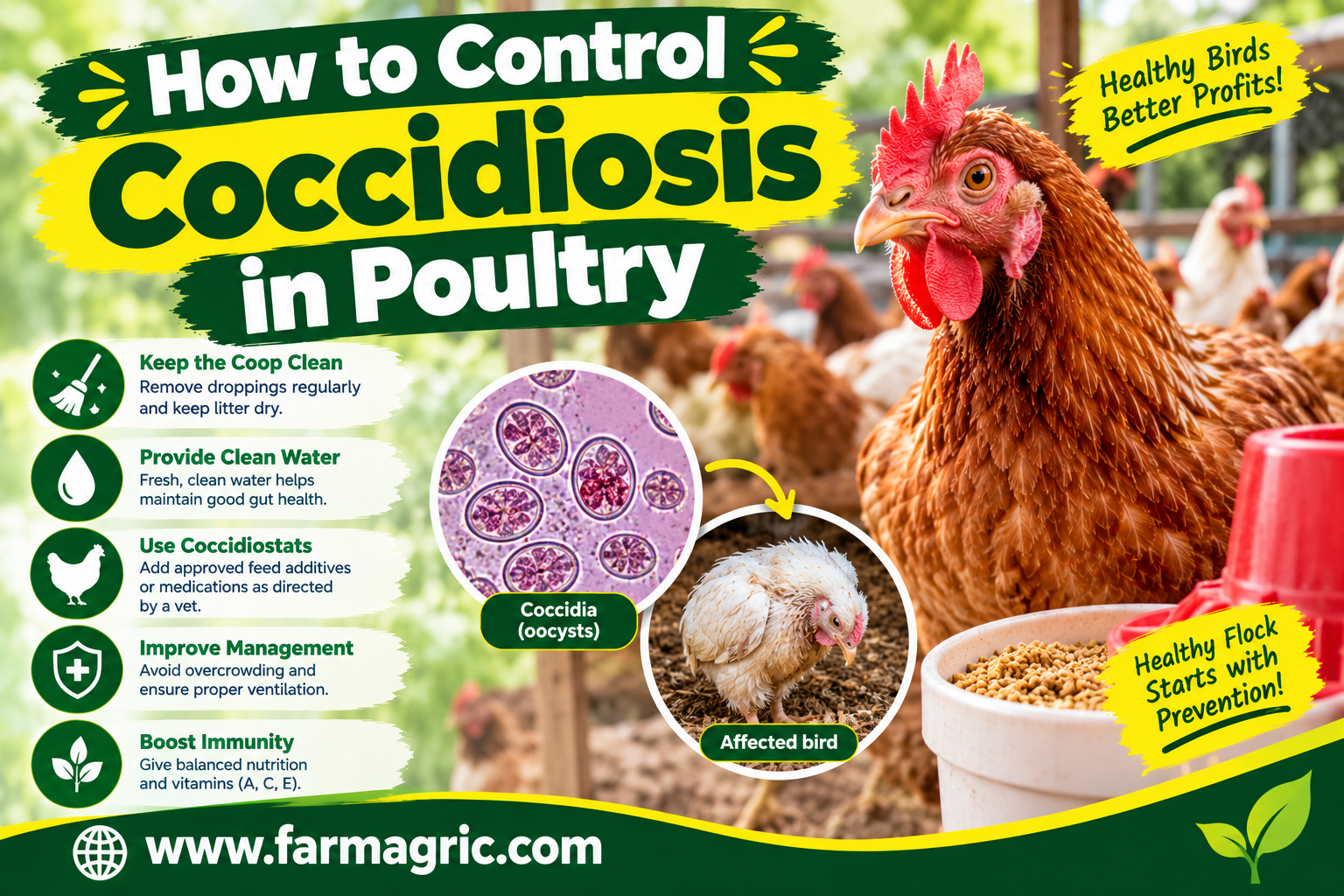
How to Control Coccidiosis in Poultry
How to Control Coccidiosis in Poultry: What 30 Years of Bloody Droppings and Sleepless Nights Taught Me
I lost sixty chicks in four days to coccidiosis, and the worst part is that I walked past the warning signs twice. The brooder looked fine to a tired man at dusk. A few chicks were sitting a little hunched, a few droppings looked darker than usual, and I told myself it was the feed. Two mornings later I found the floor covered in reddish-brown droppings and a row of dead birds along the wall. I had ten thousand naira worth of medicine in the cupboard and I had not used a drop of it.
Here is the direct answer. Coccidiosis is caused by microscopic parasites called Eimeria that live in the gut of birds and multiply in wet, warm litter. You control it by keeping the litter dry, never overcrowding birds, using a proper coccidiosis prevention program (anticoccidial feed or a vaccine) for young birds, spotting the early signs fast, treating sick flocks quickly with the right product under the advice of a vet, and cleaning the house thoroughly between batches. You will never get rid of the parasite entirely, because it is everywhere. What you can do is keep the numbers low enough that your birds build immunity without getting sick.
Farmers who do all of this lose very few birds to it. I have run flocks for years now with only the odd mild outbreak, caught early and handled without losses.
What Coccidiosis Actually Is
The parasite is spread through droppings. An infected bird passes tiny eggs, called oocysts, in its droppings. In warm, damp litter, those oocysts mature in a day or two and become infective. Another bird pecks at the litter, swallows them, and the parasite invades the lining of the gut, multiplies, and damages the tissue. That damage is what causes the bloody droppings, the poor feed use, the weight loss, and the deaths.
There are several species of Eimeria, and different ones attack different parts of the gut. Some cause the dramatic bloody droppings and sudden deaths. Others cause a quieter, ongoing problem with watery or pale droppings and poor growth that you might never notice unless you weigh your birds. The quiet kind costs farmers more money than they realise.
Young birds are hit hardest, usually in the first weeks after they leave the brooder warmth and start moving about and pecking at the floor. Older birds that have been exposed in small doses build up immunity, which is actually how a good program works.
What Most Farmers Get Wrong
The first mistake is wet litter. I cannot say this strongly enough. Dry litter is the best coccidiosis control I know, and it costs almost nothing. A leaking drinker, a damp corner, a low spot where rain blows in, or a house with poor airflow turns the floor into an incubator for oocysts. I have watched a single leaking nipple line cause an outbreak in one half of a house while the dry half stayed healthy.
The second mistake is overcrowding. More birds per square metre means more droppings, more moisture, more stress, and faster spread. Farmers squeeze in extra birds to make more money, and lose more than they gained.
The third mistake is waiting for deaths before acting. By the time birds are dying, the gut is badly damaged, and even correct treatment will not bring back what was lost. The time to act is when you see the first hunched chicks or the first dark droppings.
The fourth mistake is treating without knowing. Bloody droppings are not always coccidiosis. Other diseases, including necrotic enteritis, can look similar, and sometimes occur alongside it. If you treat the wrong disease, you lose days and birds. A vet or a poultry extension officer can confirm it, sometimes simply by opening a freshly dead bird and looking at the gut.
The fifth mistake is leaving the same medicine in the feed batch after batch for years. Parasites can become resistant to products that are overused without any rotation or change, and then the very drug you rely on stops working. This is why programs are rotated and why a good vet’s advice is worth paying for.
The sixth mistake is poor cleaning between batches. Oocysts are tough. Many ordinary disinfectants do not kill them. A farmer who scrapes out the old litter, sprays a bit of disinfectant and puts in new chicks the next day is bringing the old problem into the new flock.
The seventh mistake is mixing ages. Putting young chicks into a house or yard where older birds have been is asking for trouble, because the older birds carry the parasite and shed it into the environment.
The eighth mistake is giving vaccinated flocks the wrong treatment. If your chicks were vaccinated against coccidiosis, certain anticoccidial feed additives or medicines can wipe out the vaccine strain and undo the vaccination. Always tell your vet what vaccine your flock received before using any product.
The Step-by-Step Plan That Works
Step one: start with a clean, dry house. Before the new chicks arrive, remove all old litter and take it well away from the poultry area. Scrub the floor, walls, feeders, and drinkers. Let everything dry completely in the sun and air. Oocysts survive best in damp conditions and are weakened by heat and drying, so a house that has been left empty and open for a good stretch is far safer than one turned around in a day. Ask your vet about disinfectants proven to work against oocysts, because many common ones do not.
Step two: use fresh, clean, dry bedding. Wood shavings, rice husks, or dry sawdust that is free of mould all work. Spread it at a decent depth and keep it loose. Never use damp or mouldy bedding.
Step three: manage the drinkers. This is where most wet litter comes from. Set drinkers at the right height for the age of the birds, check them for leaks every morning, and raise or move them as the chicks grow. Use nipple drinkers or well-set bell drinkers where you can, and keep bell drinkers on a small raised platform or stand so spilled water does not soak the bedding.
Step four: give the birds enough space. Follow recommended stocking densities for your system and climate. Crowded birds make wet litter faster than you can turn it. If you have to choose between more birds and drier litter, choose drier litter.
Step five: ventilate well. Good airflow carries moisture out of the house. Keep the sides open appropriately, use fans if you have power, and avoid locking the house up tight at night. Ammonia smell in the house is a warning that the litter is too wet and too dirty, so treat it as a sign to act.
Step six: turn the litter and remove wet patches. I rake the litter daily in the first weeks and take out any caked or damp patches the same day. Replace them with fresh dry bedding. A few minutes of this each morning prevents most problems.
Step seven: put a prevention program in place. There are two main routes. One is to feed a starter ration that contains an approved anticoccidial. The other is to use a coccidiosis vaccine, usually given to chicks in the first days of life, which lets them build natural immunity under controlled conditions. Which is best depends on your type of bird, your scale, and what is available where you farm. Broiler farms commonly use feed additives, and many breeder and layer farms use vaccines because those birds live long enough to need strong natural immunity. I will not name a dose or a particular product to feed, because the right program depends on your birds, your country’s regulations, and your vet’s judgment. Ask a poultry vet or extension officer to set up a program for your flock, and follow the feed manufacturer’s label exactly.
Step eight: if you vaccinate, manage the house differently. Vaccinated chicks need a little moisture and contact with their own droppings so the vaccine strain can cycle and build immunity. That does not mean wet litter. It means slightly lower moisture control than you would use for an unvaccinated flock, along with careful watching in the weeks after vaccination. Your vet or the vaccine supplier will tell you exactly what to expect.
Step nine: watch the flock every day. Walk the house morning and evening, slowly, and look at the birds, not just the feeders. Check the droppings. Healthy droppings are firm with a white cap. Watch for chicks that huddle, ruffle their feathers, drop their wings, stop eating, or sit apart from the group.
Step ten: act fast if you suspect an outbreak. Separate obviously sick birds, call your vet or extension officer, and have a freshly dead bird examined if you can. Ask about treatment options that suit your birds. Several products are used against coccidiosis, often given in the drinking water for a set number of days, and your vet will tell you which one fits your situation, how long to give it, and what withdrawal period applies before eggs or meat can be sold. Never use a medicine on laying hens or meat birds without asking about the withdrawal period. Do not guess the dose.
Step eleven: support the birds while they recover. Sick birds lose fluids, blood, and appetite. Keep fresh, cool water available at all times. Your vet may recommend vitamin supplements, since some vitamins help with blood clotting and gut repair. Keep the house warm for chicks, dry, and calm. Remove dead birds at once and dispose of them by deep burial or burning.
Step twelve: clean out and rest between batches. After each flock leaves, take out every bit of litter and send it far from the farm. Scrub and disinfect with products your vet recommends, dry the house thoroughly, and let it rest empty as long as you can afford to. This single habit separates the farms that struggle with coccidiosis from the farms that do not.
Warning Signs to Watch For
Learn these well, because the first two days decide how many birds you keep.
Chicks sitting hunched with ruffled feathers and drooping wings, and refusing to move or eat, are often the first visible sign. Droppings that are watery, brownish, or mixed with blood are the classic warning. In some forms, droppings are orange, pale, or full of mucus rather than red. Pale combs and shanks in a young flock suggest blood loss. Birds crowd together for warmth even in warm weather. Feed consumption drops, and the flock looks uneven, with some birds stunted and others normal. A sudden jump in deaths in a flock that is two to six weeks old should make you suspect coccidiosis first. In layers, a drop in egg production with poor body condition and loose droppings can point to a mild, long-running infection.
A freshly dead bird can tell you more than any guess. Gut lining that is swollen, blood-filled, or covered in pale or red spots confirms that something is damaging the intestine, and a vet can tell you what.
What I Would Do Differently If I Were Starting Today
I would build drainage and good airflow into the house from day one, because I spent years fighting wet litter that a better design would have prevented. I would work with a poultry vet from the first batch, not after the first disaster. I would set up a proper prevention program before the chicks arrived, rather than hoping my luck would hold. I would check the drinkers every single morning without exception. I would never skip the empty period between flocks, even when buyers were waiting. I would keep a daily notebook with mortality, feed intake, droppings, and litter condition, so I could see a problem building before the dead birds showed me. And I would insist that anyone who works in my houses follows the same routine, because one careless worker can undo a month of good management.
Frequently Asked Questions
What causes coccidiosis in chickens?
It is caused by Eimeria parasites that birds swallow when they peck at contaminated litter or drink contaminated water. Warm, wet conditions let the parasite eggs mature quickly, which is why damp litter, overcrowding, and poor hygiene lead to outbreaks.
Can coccidiosis be cured?
Yes, if it is caught early and treated correctly. Treatment stops the parasite from multiplying, but it cannot repair damage already done to the gut, so birds in a late outbreak may be lost or recover slowly. That is why prevention and early detection matter more than treatment.
Is coccidiosis contagious to humans?
The Eimeria species that infect chickens do not infect people. Still, a flock with diarrhoea and weak birds should be handled with normal hygiene, including washing hands and boots, because other diseases can be present at the same time.
Can I use natural remedies instead of medicine?
Some farmers use herbs, vinegar, or other traditional additions. I have seen them support a healthy flock but not stop a real outbreak. Keeping litter dry and following a vet-approved prevention program will do far more than any home remedy. If birds are bleeding and dying, do not delay proper treatment while trying a home remedy.
Do vaccinated birds still get coccidiosis?
Vaccinated birds usually get a very mild, controlled infection that builds immunity, and you may see slightly looser droppings in the weeks after vaccination. Outbreaks can still happen if litter is too wet, birds are overcrowded, or the flock is stressed. Good management stays important either way.
One Thing to Remember
You cannot kill every parasite on a poultry farm, but you can decide whether they find a warm, wet bed to multiply in. Keep the litter dry and the birds uncrowded, and coccidiosis becomes a visitor instead of a landlord.


