How to Ripen Plantain Faster After Harvest
How to Ripen Plantain Faster After Harvest: A Farmer’s Guide to Turning Green Fingers Into Market-Ready Fruit on Your Own Schedule
I once had a buyer change her order on me the morning she was supposed to collect, asking for ripe plantain instead of the green ones she had originally requested, with barely two days to make it happen before she needed to leave for a trip. I had a whole stem sitting green and firm in my store, exactly the condition she no longer wanted, and I remember genuinely doubting whether I could turn that fruit around in time. An older trader who bought from me regularly showed me a few tricks that afternoon, things I had heard mentioned before but never actually tried myself, and within about three days that entire stem had turned from hard and green to soft, sweet, and properly ripe, ready for exactly the buyer who needed it. That experience taught me that ripening plantain is not simply a matter of waiting, it is a process a farmer can genuinely speed up or slow down with a bit of knowledge about what the fruit actually needs to trigger and complete that transformation.
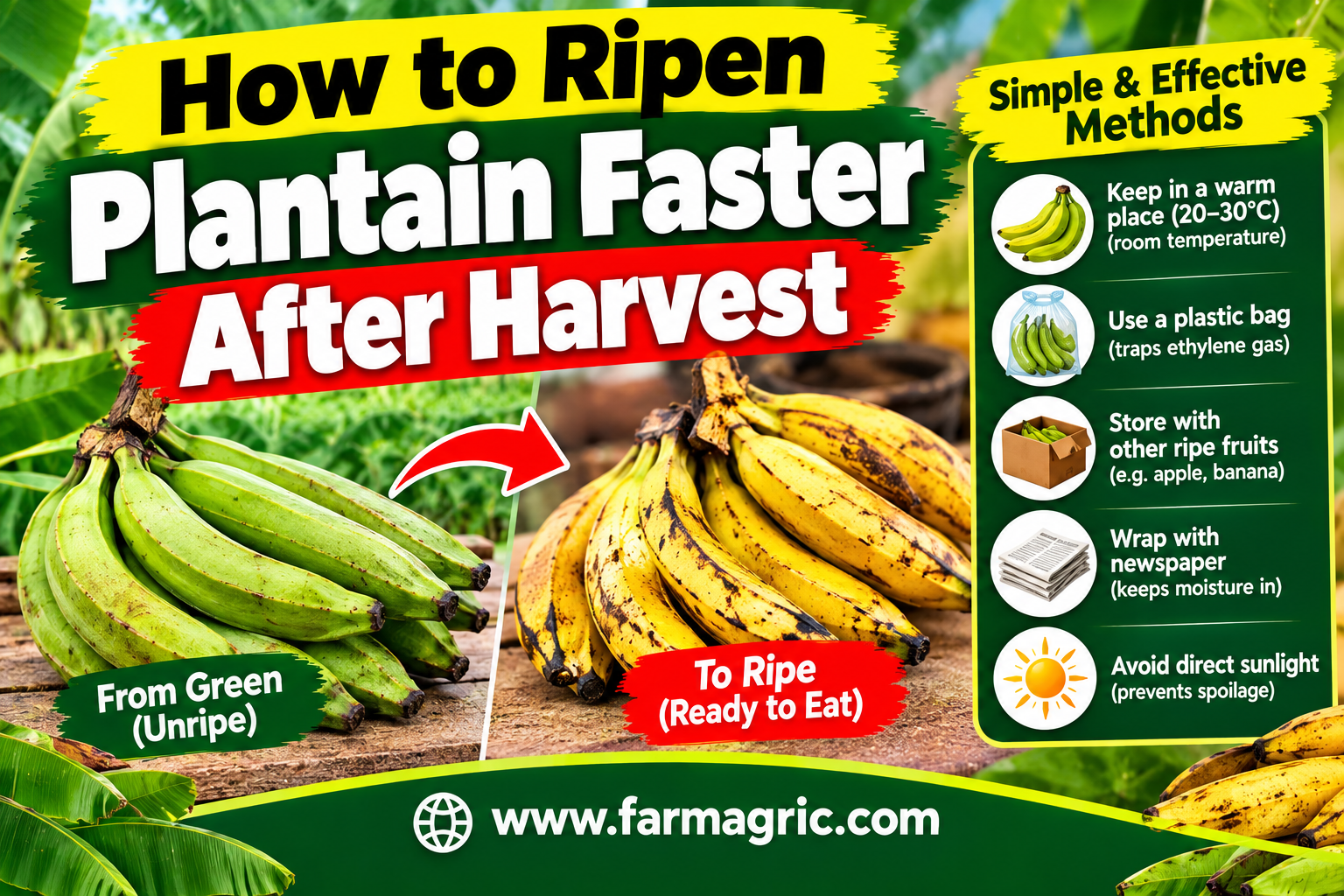
So let me answer you straight, because I know you have green plantain sitting somewhere right now and you need it ripe sooner than it would get there on its own. You ripen plantain faster after harvest mainly by keeping harvested fingers or hands in a warm, enclosed space, ideally between twenty and thirty degrees Celsius, placing them near other ripening fruit such as bananas or ripe plantain themselves which release the natural ripening gas ethylene, wrapping or covering the fruit to trap that ethylene and the humidity it needs around the fruit rather than letting it escape into open air, and avoiding refrigeration or cold storage entirely during this period since cold temperatures slow or even halt the ripening process rather than speeding it along. Plantain, like many fruit, ripens through a natural chemical process triggered and accelerated by ethylene gas and supported by warmth, and understanding how to concentrate both of those conditions around your harvested fruit is really the entire secret behind turning a green stem into ripe, market-ready plantain considerably faster than simply leaving it out in the open to ripen at whatever pace the surrounding air happens to allow.
Why Ethylene and Warmth Are the Two Things That Actually Matter
Plantain, once harvested, continues living and changing through its own internal chemical processes, and the specific process responsible for ripening is triggered and driven forward by a natural plant hormone called ethylene, a gas the fruit itself produces in small amounts as it begins to ripen and which then accelerates further ripening in a kind of self-reinforcing cycle once that process has started. This is exactly why placing green plantain near other ripening fruit speeds things up so reliably, since those neighboring fruit are already producing ethylene that the green plantain picks up and responds to, essentially borrowing a head start on a process it would otherwise need more time to begin entirely on its own. Warmth works alongside ethylene because the chemical reactions involved in ripening, breaking down starches into sugars, softening cell walls, and developing the characteristic ripe color and flavor, all proceed considerably faster at warm temperatures than at cool ones, which is exactly why refrigeration, so often reached for instinctively to preserve food, actually works directly against what you are trying to achieve when your actual goal is faster ripening rather than extended storage of fruit in its current state.
What Most Farmers Get Wrong
The first mistake, the one I nearly made with that demanding buyer before the older trader intervened, is simply leaving green plantain out in open, well-ventilated air and assuming that is the natural, correct way to let it ripen, not realizing that open air allows the ethylene gas the fruit itself produces to dissipate and escape rather than building up and concentrating around the fruit in a way that would genuinely speed up the process.
The second mistake is storing green plantain separately from other ripening fruit, missing the free, simple acceleration that comes from placing green fingers near bananas, ripe plantain, or other ethylene-producing fruit that are already further along in their own ripening process.
The third mistake is refrigerating plantain in an attempt to manage or speed up its condition, not understanding that cold temperatures slow the ripening process down considerably rather than speeding it up, which makes refrigeration appropriate for extending the usable life of fruit at whatever ripeness stage it has already reached, but directly counterproductive if the actual goal is faster ripening from a green starting point.
The fourth mistake is handling and storing plantain roughly during this period, allowing bruising or physical damage that can lead to localized spoilage or uneven ripening rather than the fruit progressing smoothly and evenly toward ripeness throughout.
The fifth mistake is not accounting for how the specific maturity of the plantain at harvest affects how quickly and how well it will ripen afterward, since plantain harvested too early, before reaching proper physiological maturity on the plant, often ripens poorly or unevenly regardless of what ripening techniques are applied afterward, making the harvest decision itself part of the overall ripening outcome.
Step-by-Step Guide to Ripening Plantain Faster After Harvest
Start with plantain that was harvested at proper maturity, generally when the fingers have filled out to a rounded rather than distinctly angular cross-section and the whole hand has reached a reasonable mature size for the variety, since fruit harvested too early, while still visibly green and underfilled, often struggles to ripen fully and evenly regardless of how carefully you manage the ripening process afterward.
Gather your plantain into a container or enclosed space that will help trap and concentrate the ethylene gas the fruit naturally produces, such as a covered basket, a cardboard box with the flaps closed, a large paper bag, or a similar enclosure that limits airflow without completely sealing the fruit away from all air exchange.
Add other ripening fruit to the same enclosed space wherever available, placing a few ripe bananas, already-ripening plantain, or another ethylene-producing fruit alongside your green plantain, since this significantly boosts the concentration of ripening gas surrounding your fruit compared to relying on the green plantain’s own, initially quite limited ethylene production alone.
Keep the enclosed fruit in a warm location, ideally somewhere in the range of twenty to thirty degrees Celsius, avoiding both unusually cool spots and, at the other extreme, excessive heat that could instead encourage spoilage rather than clean, even ripening, since warmth accelerates the chemical processes of ripening considerably compared to cooler conditions.
Check on the fruit daily, opening the container briefly to allow some fresh air exchange and to inspect the fingers for progress, since a completely sealed, airtight environment without any air exchange at all can sometimes encourage mold or spoilage rather than clean ripening, making a loosely covered rather than fully sealed enclosure generally the better approach.
Rotate or rearrange the fingers or hands within the container periodically if ripening appears uneven, since fruit positioned closest to other ethylene-producing fruit or deepest within a crowded container may ripen somewhat faster than fruit at the edges or surface of the same enclosure, and occasional rearrangement helps even this out across the whole batch.
Handle the fruit gently throughout this process, avoiding stacking heavy items on top of the container or otherwise creating pressure or impact that could bruise the softening fruit, since bruised areas can spoil or discolor unevenly compared to the rest of the ripening fruit even when overall conditions are otherwise well managed.
Separate out any fingers that show early signs of damage, cracking, or localized spoilage during the ripening process, since a single compromised piece of fruit can sometimes accelerate spoilage in fruit touching or near it, particularly within an enclosed, humid environment designed to concentrate ripening conditions.
Monitor color, firmness, and smell daily as your general indicator of ripening progress, watching for the shift from green toward yellow or the characteristic color associated with full ripeness in your specific variety, alongside a softening of firmness when gently pressed and the development of the sweet, characteristic smell of ripe plantain.
Remove fruit from the accelerated ripening setup as individual fingers or hands reach your desired ripeness stage, since not all fruit within the same batch will necessarily finish at exactly the same moment, and pulling pieces out as they become ready rather than waiting for the entire batch to ripen uniformly often gets usable, well-ripened fruit to buyers or your own kitchen sooner.
Move fully ripened fruit to cooler storage or refrigeration at that point if you need to slow further ripening or extend its usable life before sale or consumption, since this is exactly the stage where cold storage becomes genuinely useful, preserving the fruit at its current ripeness rather than working against a ripening process you have already successfully completed.
Communicate honestly with buyers about the timeline involved if you are deliberately accelerating ripening to meet a specific deadline, since even accelerated ripening generally takes a minimum of a few days rather than happening overnight, and setting realistic expectations avoids the kind of last-minute scramble that nearly caught me out with that demanding buyer before I learned these techniques properly.
Warning Signs to Watch For During Accelerated Ripening
Fruit that develops a sour or distinctly unpleasant smell, rather than the characteristic sweet aroma associated with properly ripening plantain, signals that spoilage rather than clean ripening is underway, likely from excessive heat, insufficient air exchange, or existing damage to the fruit before the ripening process even began. Visible mold developing on the fruit’s surface or at the stem ends, particularly in a tightly sealed container with little air exchange, indicates that humidity and enclosed conditions have favored fungal growth rather than clean ripening, and affected fruit should be removed promptly to prevent the problem spreading to nearby, still-healthy pieces. Uneven ripening, where some fingers within the same hand or batch are fully ripe while others remain stubbornly green despite several days in the same accelerated setup, often points toward inconsistent ethylene exposure or temperature within the storage container, worth addressing through better fruit placement or by adding more ripe fruit to boost the overall ethylene concentration throughout. Fruit that softens unusually quickly, within a day or two, while still showing mostly green coloring rather than the expected color change progressing alongside the softening, can indicate the fruit is beginning to spoil rather than ripen properly, particularly in conditions that are too warm or too humid for clean ripening to occur. And a batch where ripening seems to have stalled entirely after an initial day or two of apparent progress often points toward insufficient ethylene concentration, perhaps from too few ripe fruit included in the enclosure or from a container that is allowing too much ethylene to escape through excessive air exchange.
What I’d Do Differently If Starting Again Today
If I were starting over, I would learn these simple ripening acceleration techniques far earlier in my farming and trading life rather than discovering them somewhat by accident through an understanding trader who happened to bail me out of a difficult situation with a demanding buyer. I would keep a small stock of ripe bananas or already-ripening plantain on hand specifically as a ripening aid whenever I knew a buyer might request riper fruit on short notice, rather than only scrambling to find ethylene-producing fruit after the need had already become urgent. I would pay much closer attention to harvest maturity as part of my overall ripening strategy, understanding now how much a fruit’s readiness for ripening is actually determined well before harvest rather than purely through whatever techniques are applied afterward. And I would communicate more proactively and honestly with buyers about realistic ripening timelines from the very start of any transaction involving a specific ripeness requirement, rather than only having that conversation under the pressure of an unexpected last-minute request the way I did that first memorable time.
Frequently Asked Questions About Ripening Plantain Faster After Harvest
How long does it take to ripen plantain faster using these methods? Using warmth and concentrated ethylene exposure together, green plantain can often progress from firm and green to properly ripe within about three to five days, compared to potentially a week or more when simply left out in open, well-ventilated air without any deliberate acceleration technique applied.
Does putting plantain near bananas really help it ripen faster? Yes, bananas produce ethylene gas as they ripen, and placing green plantain in an enclosed space alongside ripening bananas or other ripe plantain allows the green fruit to absorb and respond to that ethylene, genuinely accelerating its own ripening process compared to being stored in isolation.
Why does refrigerating plantain slow down ripening instead of helping it? Cold temperatures slow the chemical reactions responsible for ripening considerably, which makes refrigeration useful for preserving fruit at whatever ripeness stage it has already reached, but directly counterproductive if your actual goal is speeding up the transition from green to ripe rather than pausing that process in place.
Can plantain harvested too early still ripen properly with these techniques? Plantain harvested before reaching proper physiological maturity on the plant often ripens poorly or unevenly regardless of what acceleration techniques are applied afterward, making harvest timing itself an important factor in how successfully and evenly the fruit will ripen once these methods are used.
Is it bad to seal plantain completely airtight while trying to ripen it faster? A completely sealed, airtight container without any air exchange can sometimes encourage mold or spoilage rather than clean ripening, so a loosely covered container that traps ethylene and humidity while still allowing some air exchange, checked and briefly opened daily, generally works better than a fully sealed environment.
If there is one thing I want you to remember from all this, it is that ripening plantain faster is not about forcing or tricking the fruit into doing something unnatural, it is about giving it more concentrated amounts of the exact same warmth and ethylene gas it would eventually encounter on its own anyway, so gather your green fingers close to their ripening neighbors, keep them warm and gently enclosed, and check on them daily, because the stem that once had me doubting whether three days was even possible taught me that plantain, given the right conditions, is often far more ready to ripen quickly than most farmers, myself included at the time, ever give it credit for.