The Best Agricultural Grants and Funding Programs for Farmers in 2027
The Best Agricultural Grants and Funding Programs for Farmers in 2027
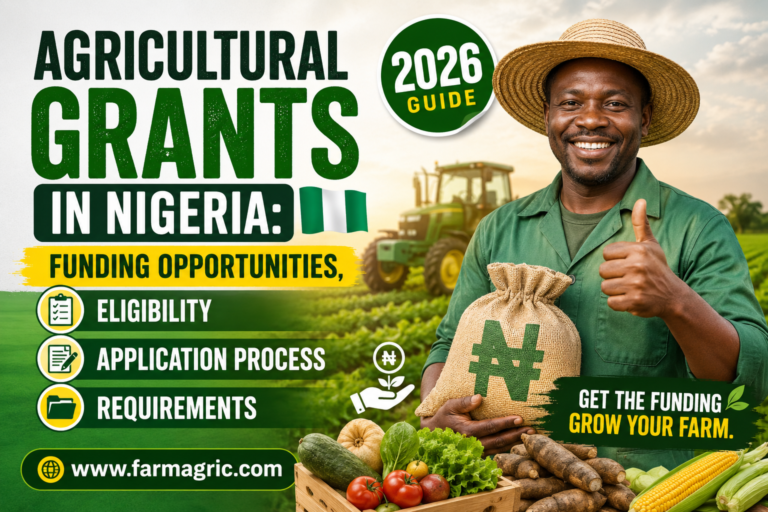
I have been farming long enough to know one hard truth. There are farmers out there right now doing everything right, rotating their crops, keeping clean records, treating their soil with respect, and they are still stuck, not because they lack skill, but because they lack capital. Meanwhile, there is money sitting in government agencies, banks, and foundations every single year, waiting for farmers who simply do not know it exists or do not know how to apply for it properly.
I have applied for a few of these myself. I have watched neighbours get rejected for silly, avoidable reasons, and I have watched others walk away with life-changing support because they understood the system. This article is my honest, on-the-ground breakdown of where the real money is in 2027, what it actually takes to get it, and the mistakes that keep good farmers out of the room.
The Quick Answer
If you are looking for agricultural funding as a Nigerian or African farmer, your options fall into five buckets: federal government schemes, state government support, international development programmes, private sector and foundation grants, and youth or innovation competitions. Almost every farmer qualifies for at least one of these, but very few farmers apply to more than one at a time. That is the first mistake worth fixing.
1. Federal Government Programmes
These are the ones most farmers have heard of, but few understand how they actually work.
The Anchor Borrowers’ Programme (ABP), through NIRSAL and the CBN. This was the flagship agricultural financing scheme in Nigeria, launched in 2015 to link smallholder farmers directly to processors who buy their produce. At its peak, it had financed millions of farmers across dozens of commodities. I need to be honest with you here. The programme has run into serious repayment problems in recent years, with a large share of disbursed funds not repaid, and disbursements have slowed considerably since 2020 in many states. Before you build a season’s plan around ABP, confirm directly with your state NIRSAL office or your bank whether fresh disbursements are actually running in your area. Do not rely on old flyers or last year’s promises.
The Presidential Fertiliser Initiative and its successor programmes exist to get subsidised fertiliser and farm inputs to registered farmers, usually distributed through state ministries of agriculture and farmer cooperatives.
The National Agricultural Development Fund (NADF), backed by a large federal allocation, works with private partners such as major food processors to provide on-lending facilities for grain and staple crop farmers.
The Youth in Agribusiness Land Trust Fund (YiALTF), launched in partnership with the International Institute of Tropical Agriculture (IITA), is built specifically to solve the land access problem for young farmers, alongside grants, training, and mechanisation support delivered through Youth Development Centres.
NALDA (the National Agricultural Land Development Authority) focuses on giving farmers access to cleared farmland, inputs, and production support, especially in designated farm settlements.
FarmerMoni, under the Government Enterprise and Empowerment Programme (GEEP), offers small interest-free loans to smallholder farmers, usually in the range of tens of thousands to a few hundred thousand naira, meant for quick input purchases rather than large-scale expansion.
The Agricultural Credit Guarantee Scheme Fund (ACGSF) is older and less talked about, but it still works quietly through commercial banks, guaranteeing a large share of agricultural loans so banks are more willing to lend to farmers who lack heavy collateral.
2. State Government Support
Do not sleep on your own state ministry of agriculture. Many states run their own input distribution schemes, mechanisation hubs, and small grants during planting season, and these rarely make national news. Lagos State, for example, has run the Lagos Agrithon, a competitive funding programme for innovative agribusinesses that has awarded substantial sums to selected agripreneurs. Other states run similar, smaller versions under different names. The catch is that these move fast and are barely advertised outside the state, so the only way to catch them is to physically follow your state ministry’s announcements or join your local farmers’ cooperative, since cooperatives usually hear first.
3. International and Multilateral Programmes
This is where the biggest, most stable money lives, but it is also the hardest for an individual farmer to access directly. These organisations rarely hand cash straight to a single smallholder. Instead, they fund projects, cooperatives, and local implementing partners who then reach farmers on the ground.
The International Fund for Agricultural Development (IFAD) funds long-running rural development projects across Nigeria and Africa, often channelling grants through partner organisations and state governments to reach small-scale producers directly, particularly after shocks like flooding.
The World Bank, through projects like APPEALS (Agro-Processing, Productivity Enhancement and Livelihood Improvement Support), works with state implementing agencies to deliver matching grants and technical support to farmers and agribusinesses.
USAID’s Feed the Future initiative supports agricultural SMEs and smallholder value chains, usually accessed through USAID’s implementing partners rather than direct application.
GIZ, the German development agency, runs programmes like SEDIN that provide matching grants and market linkage support to agricultural SMEs in specific target states.
The honest advice here is to stop looking for a “buy now” button on these. Instead, find out which local NGOs, cooperatives, or state agencies are currently implementing a World Bank or IFAD-funded project near you, and register with them directly.
4. Private Sector and Foundation Grants
This category moves quickly and changes every year, so treat any list as a starting point, not gospel.
AGRA (the Alliance for a Green Revolution in Africa), working with partners like the Mastercard Foundation, has funded multi-million dollar programmes specifically to improve smallholder access to finance, inputs, and storage across Ghana, Kenya, Tanzania, and beyond, often reaching hundreds of thousands of farming households through financial institutions and agro-dealer networks.
The BATN Foundation’s Farmers for the Future grant targets young Nigerian agripreneurs with funding, mentorship, and business support, often in the multi-million naira range per cohort.
Corporate-backed grants like the GrowthGia Agro Business Grant open and close within specific windows each year, aimed at operational farmers looking to scale an existing business rather than start from zero.
Large conglomerates such as Dangote Group, through its foundation, have also supported SME and agro-processing grant components tied to their industrial interests, which sometimes overlaps with farmer support in maize, tomato, and rice value chains.
5. Youth and Innovation Challenges
If you are under 35 and doing anything even slightly tech-driven on your farm, from a simple record-keeping app to a soil sensor, these competitions are worth your time.
The AYuTe Africa Challenge specifically funds technology-driven agricultural solutions aimed at smallholder farmers, with country-level prizes that have gone up to several thousand dollars per winner.
Broader entrepreneurship funds such as the Tony Elumelu Foundation programme are not agriculture-specific, but a meaningful share of each year’s beneficiaries are agribusiness founders, and the seed capital, mentorship, and business training that come with it are genuinely useful for a farmer trying to formalise operations.
The Mistakes That Keep Farmers Out
After watching this process for years, the same mistakes keep repeating themselves.
Farmers apply without a bank account in their own name, without any record of what they planted last season, or without being registered with any cooperative at all. Reviewers cannot verify a farmer who has no paper trail. Farmers also tend to apply to one programme, get rejected, and give up, instead of applying to three or four in the same season. And too many farmers wait for someone to bring the grant to them instead of walking into their state ministry of agriculture office and asking directly what is currently open.
What Actually Improves Your Chances
Join or form a proper farmers’ cooperative. Almost every serious programme, from CBN schemes to World Bank projects, prefers to lend to organised groups rather than scattered individuals, because it reduces their risk. Keep a simple written record of your farm size, what you planted, your yield, and your costs, even a notebook is enough, because most applications ask for exactly this. Register your farm or agribusiness properly where required. And apply early. Government and NGO budgets for these programmes are usually finished long before the official deadline passes, especially the popular ones.
Frequently Asked Questions
Do I need a company registration to apply for farm grants? Not always. Many smallholder-focused programmes, like FarmerMoni or state input schemes, only require proof of farming activity and a valid bank account. Larger grants aimed at agribusinesses or SMEs usually do require CAC registration.
Can I apply for more than one grant at the same time? Yes, and you should. There is no rule stopping a farmer from applying to a federal programme, a state scheme, and a private foundation grant in the same season, as long as you meet each one’s specific requirements honestly.
Are these grants free money, or do I have to pay anything back? It depends entirely on the programme. True grants, like most foundation and competition funding, do not require repayment. Schemes described as loans or on-lending facilities, even at low interest, do need to be repaid, so always read the fine print before assuming it is free.
Why do so many farmers never hear about these programmes in time? Because most of this information moves through cooperatives, state ministries, and word of mouth long before it reaches national media. This is exactly why joining a local farmers’ association is worth more than most farmers realise.
Money for farming exists every single year. The farmers who benefit are rarely the loudest or the largest, they are simply the ones who kept their records straight, joined the right group, and asked the question before everyone else did.