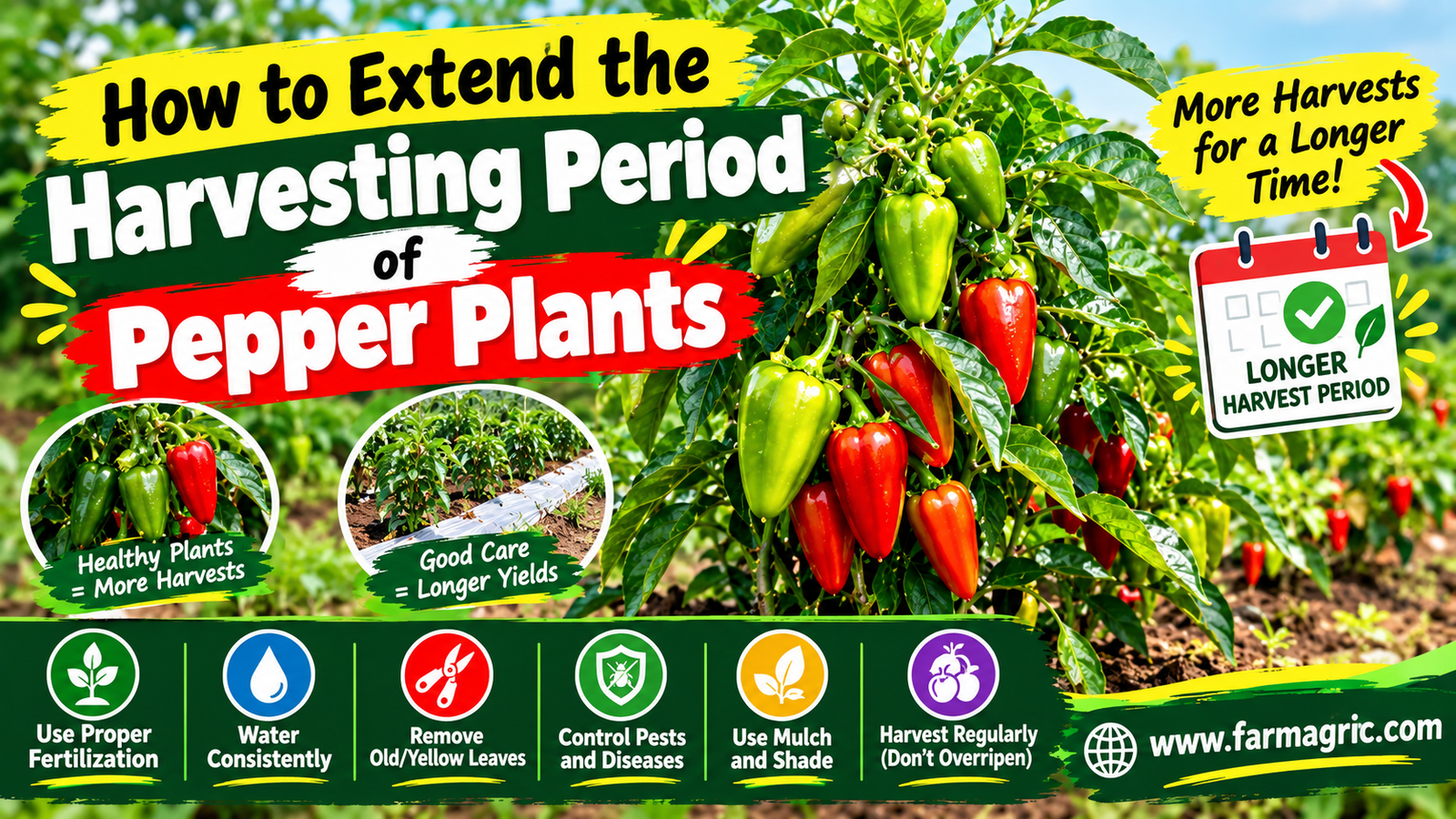
How to Extend the Harvesting Period of Pepper Plants
How to Extend the Harvesting Period of Pepper Plants
For years I made the same quiet mistake. I would pick my peppers in one big, satisfying harvest, feel proud of the basket, and then wonder why the plants seemed to slow down and give up a few weeks later. It took me a long time to understand that the plant was not tired. It was doing exactly what I had trained it to do. A pepper plant that is left to carry heavy, ripening fruit tells itself its job is done and eases off making new flowers. A pepper plant that is picked regularly, fed steadily and kept out of trouble keeps working for months.
Here is the direct answer. To extend the harvesting period of pepper plants, harvest often and on time so the plant keeps flowering, feed and water them steadily instead of in swings, protect them from heat, cold, pests and disease, and plan your crop so that not everything ripens at once. That means picking regularly, choosing varieties that mature at different times, planting in stages, and giving the plants a rest and a cut-back after their first big flush if your climate allows it. In warm regions where frost never comes, a well-managed pepper plant can keep producing for a year or longer.
The rest of this article shows you exactly how to do each of those things, and the mistakes that cut a harvest short.
What most farmers get wrong
They let fruit hang too long. Many growers wait for peppers to reach their biggest size or deepest color before picking anything. The trouble is that mature fruit, and especially fruit with ripening seed, signals the plant to slow down on new flowering. A plant loaded with fruit puts its energy into that fruit and not into the next round of flowers. Picking on time keeps the plant in production mode.
They plant everything at once. One planting date means one big flush, then a gap, then a tired crop. You get a glut for two or three weeks and then very little, which is hard on your income and your market.
They overfeed with nitrogen. A plant pushed hard with nitrogen becomes tall, leafy and dark green, but it flowers less and sets fewer fruits. A lush plant looks impressive and delivers disappointment.
They water and feed in swings. Long dry spells followed by heavy watering cause flowers to drop, fruit to crack, and the plant to stall. Peppers like steady conditions. Wild swings in moisture and nutrition shorten the life of the crop.
They ignore pests and disease until it is too late. A plant fighting aphids, whiteflies, mites or leaf diseases burns its energy defending itself. A plant that gets sick midseason often does not recover its full production.
They pull the plants too early. Many farmers treat the first heavy flush as the whole crop and clear the field. In the right climate, a pruned and well-fed pepper plant can bounce back for a second, sometimes third flush.
How a pepper plant decides whether to keep producing
It helps to understand what the plant is thinking, so the practical steps make sense. A pepper plant is a perennial by nature, which means that in a frost-free climate it wants to live and fruit for years. Its main goal is to produce seed. Once enough seed is developing in ripening fruit, the plant eases off flowering. By removing fruit before the seed fully matures, you keep telling the plant that it has not finished its job yet, so it keeps flowering and setting new fruit.
At the same time, the plant needs enough healthy leaf area to feed all that fruit. If leaves are lost to pests, disease, sunburn or breakage, production drops. And peppers are sensitive to temperature. Very high temperatures cause flowers to drop without setting fruit, and cold slows everything down. So extending the harvest is really about three things: keep removing mature fruit, keep the plant healthy and fed, and keep stress low.
Step-by-step: how I would extend the harvest on any pepper crop
Step 1: Choose varieties with different maturity times. Plant a mix of early, mid-season and later-maturing varieties. Early ones give you the first harvest quickly, mid-season ones carry the middle of the crop, and later ones keep you picking after the early plants slow down. Check the days to maturity on the seed packet or ask your supplier, and write them down so you can plan your harvest windows.
Step 2: Plant in stages. Instead of transplanting everything on one day, transplant in batches two to three weeks apart. The first batch matures first, the next follows, and by the time the earliest plants are slowing down, the later ones are in full production. This also spreads out your labor and gives you a steadier supply to sell.
Step 3: Pinch the first flowers on young plants. This sounds backward, but it works. When a young transplant puts out its first flower buds very early, before the plant has grown enough, it can lock itself into making a few small fruits and stunt itself. Pinching off those earliest buds, usually in the first couple of weeks after transplanting, lets the plant build a bigger frame and root system first. A bigger plant carries more fruit and carries it for longer.
Step 4: Build a strong plant early. Give young plants good soil, steady moisture and balanced feeding right from the start. Early topping, which means pinching the growing tip when the plant is young, encourages branching and a sturdier, bushier structure that can carry more fruit without snapping. Do not overdo it, and follow the habit of your variety. Some compact types need very little pruning.
Step 5: Harvest regularly and on time. Pick every few days to once a week when the crop is in full flush. Pick fruit at the stage your market wants, whether that is green and full-sized, or fully colored. Remember that ripe, colored fruit takes more from the plant than green fruit, so if you want to keep the plant going as long as possible, harvest a little earlier and more often. Use clean scissors or a knife to cut the stem instead of yanking, since pulling can tear branches and open the plant to disease. Remove any damaged, diseased or overripe fruit promptly so it does not drain energy or spread problems.
Step 6: Feed steadily, not heavily. Peppers respond well to small, regular feedings instead of one big dose. Use a balanced approach, with enough nitrogen to keep leaves healthy but not so much that the plant goes leafy, and with good potassium and phosphorus to support flowering and fruiting. Calcium matters too, since a shortage can show up as blossom end rot, a dark sunken patch at the base of the fruit, especially when watering is uneven. A soil test, or advice from your local extension service, will tell you what your soil actually needs.
Step 7: Keep the water steady. Water deeply and regularly, and avoid cycles of drought followed by flooding. Mulch the soil around the plants with straw, dry grass or another suitable material to hold moisture, keep roots cooler and suppress weeds. Drip irrigation is ideal because it delivers water to the roots without wetting the leaves, which also helps reduce disease.
Step 8: Protect the plants from heat. When daytime temperatures climb very high, peppers can drop their flowers and stop setting fruit. Shade cloth over the plants during the hottest part of the season can reduce stress and keep the flowers on. Mulch, steady watering and a healthy leaf canopy that shades the fruit all help too. In many hot climates, you will notice production dip during extreme heat and recover when it cools. Your job is to keep the plant alive and healthy through that dip.
Step 9: Protect the plants from cold. If your area gets cool nights, row covers, tunnels or similar protection can extend the season at both ends. Peppers do not tolerate frost, so in cooler areas a covered crop can keep producing weeks longer than an uncovered one.
Step 10: Stake or support the plants. A plant loaded with fruit can snap branches or fall over, especially after rain or wind. Staking or caging keeps branches upright, protects fruit from soil contact, improves airflow and makes harvesting easier. A broken plant is a shortened harvest.
Step 11: Keep pests and disease under control. Scout your plants at least once or twice a week. Catching aphids, whiteflies, mites and leaf diseases early keeps the plant’s energy on fruiting. Remove any plants showing signs of a serious virus, since an infected plant will not recover, and a sick plant is a source of problems for the healthy ones next to it.
Step 12: Cut back and refresh after the first big flush. In climates where the plants can survive and regrow, you can prune them back after the heavy first harvest. Remove dead, weak and tangled growth, shorten the main branches, and clear away old leaves, while leaving enough healthy stem and some leaves so the plant can recover. Then feed lightly, water well, and keep an eye out for pests on the fresh, tender growth. Plants treated this way often put out new shoots, flower again and give a second harvest. Be careful, though. If your field had a virus problem or heavy pest pressure, cutting back and keeping old plants can carry that problem into the next flush. In that case, it is safer to replace the crop with fresh, clean transplants.
Warning signs that your harvest is about to fall off
Watch for flowers dropping without setting fruit, which usually points to heat stress, uneven watering, or too much nitrogen. Notice if new growth is slowing and the plant looks tired, pale or stunted. Look for yellowing lower leaves, curling leaves or sticky leaves that signal pests. Pay attention to a sudden surge of ripe fruit that you did not pick in time, because the plant may slow flowering shortly after. And check for broken branches or leaning plants that need support.
If you spot these early, you can usually fix the cause and keep the plants cropping. If you ignore them, the harvest can end weeks sooner than it should.
What I would do differently if I were starting again today
If I were starting again, I would plan the whole season before I put a single seedling in the ground. I would choose a few varieties with different maturity times, transplant them in three or four batches, and pinch early flowers to build bigger plants. I would mulch from day one and set up drip irrigation so moisture stayed steady. I would feed little and often instead of heavy and rare. I would stake every plant before it needed it. And I would harvest on a fixed schedule, every few days, without waiting for perfect fruit.
Most of all, I would stop thinking of the first flush as the whole crop. It is only the opening act. The farmers who earn the most from their peppers are almost never the ones with the biggest first harvest. They are the ones whose plants are still working when everyone else’s have gone quiet.
FAQ
How long do pepper plants keep producing?
It depends on the variety, climate and care. In cooler climates, peppers are usually grown as annuals and produce for a single season. In warm, frost-free regions, healthy plants can keep fruiting for a year or more with good management, though yields often drop as the plants age.
Does picking peppers early make the plant produce more?
Generally, yes. Regular harvesting removes fruit before the seed fully matures, which encourages the plant to keep flowering and setting new fruit. Letting fruit stay on the plant too long can slow down new production.
Should I prune my pepper plants to get more harvests?
Light pruning and early topping can help build a stronger, branching plant, and cutting back after a heavy first flush can trigger a second one in suitable climates. Avoid heavy pruning on stressed or diseased plants, and follow the growth habit of your variety.
Why do my pepper plants stop flowering?
Common causes include extreme heat, uneven watering, too much nitrogen, a heavy fruit load that has not been picked, and pests or disease. Look at the weather, your feeding and watering pattern, and the health of the leaves to find the cause.
Can I keep pepper plants alive through the off-season?
In frost-free areas, yes. Cut them back, keep them fed and watered, and protect them from pests. In colder areas, you can bring potted plants indoors or protect them under covers, but outdoor plants will not survive frost. Remember that old plants can carry pests and viruses forward, so start fresh if disease was a problem.
Bookmark this
A pepper plant keeps giving as long as you keep taking the fruit, feeding the roots and protecting the leaves.