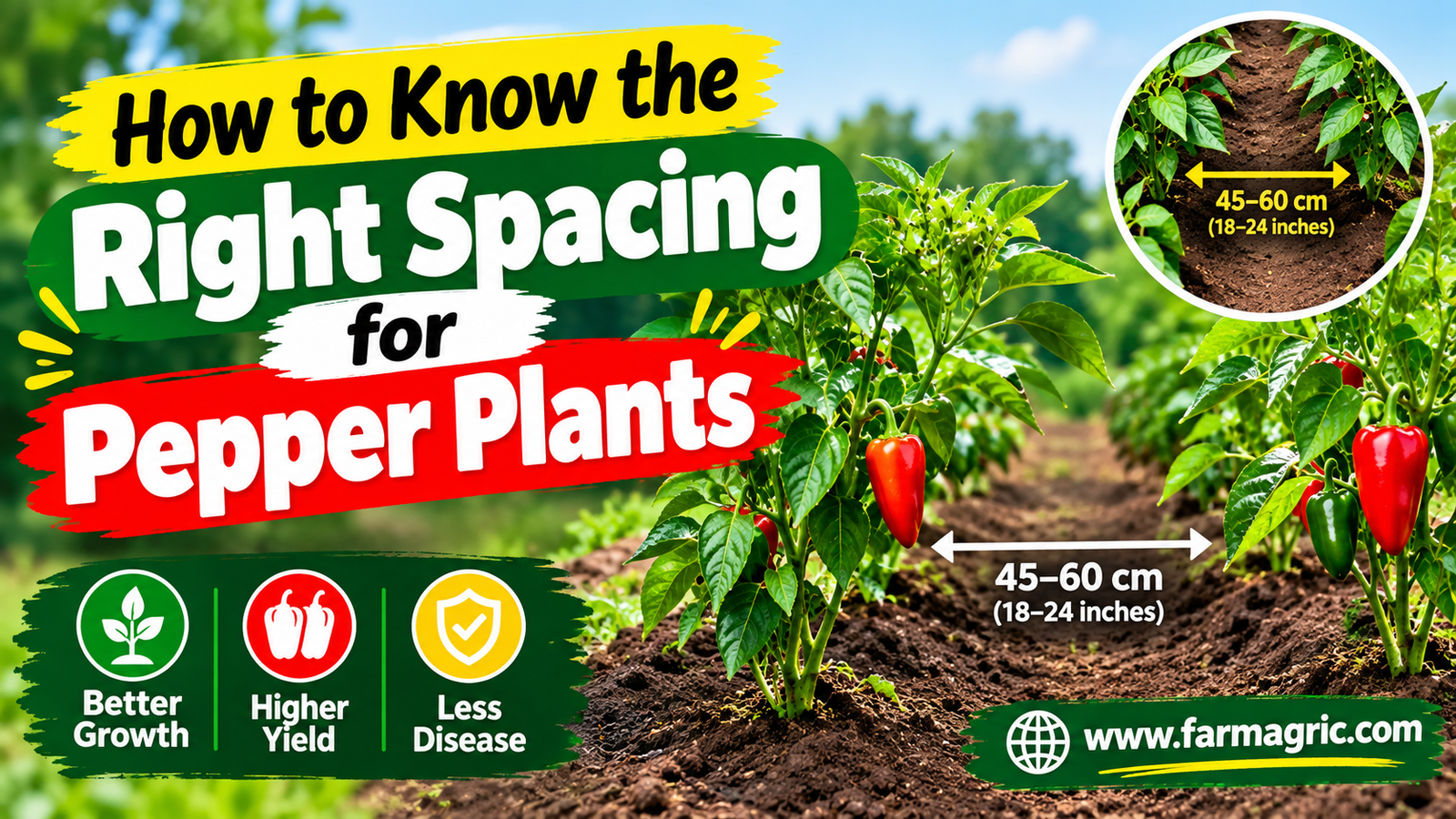
How to Know the Right Spacing for Pepper Plants
How to Know the Right Spacing for Pepper Plants
Early on, I planted a bed of peppers shoulder to shoulder because I wanted every inch of ground working for me. In the first month it looked wonderful, a solid green carpet. By the time the plants started flowering, the middle of that bed was damp, dark and tangled, the lower leaves were spotting, and the fruits I did get were small and uneven. A neighbor walked past, looked at it for about five seconds, and said, “You planted for the seedlings, not for the plants.” He was right, and I have never forgotten it.
Here is the straight answer. For most sweet and hot peppers, space plants about 45 to 60 cm (18 to 24 inches) apart within the row, with rows about 75 to 90 cm (30 to 36 inches) apart. Smaller, compact types can go a little closer, around 30 to 45 cm (12 to 18 inches). Big, bushy varieties and rich soil call for the wider end. The real rule behind those numbers is simple: give each plant enough room that its leaves just touch its neighbors when it is fully grown, without piling on top of each other.
That is the short version. The rest of this article shows you how to work out the right spacing for your own variety, your own soil and your own climate, because the number on a seed packet is only a starting point.
What most farmers get wrong
They plant for the size of the seedling. A transplant that fits in your hand looks lonely in a big field, so the temptation is to squeeze more in. But a pepper plant is not finished growing when you transplant it. It will multiply in width and height many times over. You are not spacing seedlings. You are spacing the grown plants they will become.
They copy one spacing for every pepper. A compact chili and a large, vigorous bell pepper are not the same plant. Neither is a small-fruited hot pepper and a big, leafy scotch bonnet type. One fixed number across all of them either wastes land or chokes the crop.
They believe closer always means more money. Closer planting can raise the total number of fruits per area, up to a point. But past that point, you get more disease, more competition, smaller fruit and harder harvesting. The extra plants cancel out their own gains.
They forget the space they need to walk. You have to scout, weed, spray, stake and pick. If you cannot get down a row without brushing every plant, you will damage stems and spread disease every time you work. I always leave room for my own body and my tools, not just for the plants.
They ignore airflow. Peppers do not like to sit in still, humid air. Tight spacing keeps leaves wet longer after rain or irrigation, and that is an invitation to fungal and bacterial leaf problems, especially in warm, wet weather.
Why spacing matters so much
Spacing controls four things at once, and each one hits your yield.
Light. Peppers need sun on their leaves to fill fruit. When plants are too close, they shade each other, the lower leaves yellow and drop, and the plants stretch upward and become tall and spindly.
Airflow and disease. Open spacing lets the foliage dry out quickly. Dense canopies hold moisture, which favors leaf spots and other diseases, and also makes it easier for pests to hide and spread.
Water and nutrients. Every plant is pulling from the same soil. Crowd them, and the roots compete, so each plant gets less. You end up feeding more plants poorly instead of fewer plants well.
Fruit size and quality. Plants with enough room usually carry bigger, more even fruit. Plants with too little room often set many small fruits, or drop flowers when stressed.
There is also a middle-ground benefit that surprises people. Peppers can get sunscald, a pale, papery patch on fruit exposed to harsh direct sun. A canopy that is fully open, with plants spaced too far apart, leaves fruit more exposed in hot climates. So the goal is not maximum space. It is the right amount, where leaves provide light shade over the fruit without smothering the plant.
Step-by-step: how to find the right spacing for your field
Step 1: Know your variety’s mature size. Check the seed packet, the seed supplier’s description, or ask a local grower who has planted it. Is it compact and bushy, medium, or large and sprawling? Write down the expected plant width and height. This single piece of information matters more than any chart.
Step 2: Start with a baseline. Compact hot peppers and small-fruited types do well at about 30 to 45 cm (12 to 18 inches) between plants. Most bell peppers and medium sweet peppers want about 45 to 60 cm (18 to 24 inches). Large, vigorous hot peppers such as scotch bonnet or habanero types need about 50 to 60 cm (20 to 24 inches), sometimes a bit more. For rows, about 75 to 90 cm (30 to 36 inches) apart suits most field plantings. Narrower rows can work with careful management, and wider rows help if you use machinery or need extra walking room.
Step 3: Adjust for your soil. In rich, well-fed soil, peppers grow bigger and bushier, so lean toward the wider spacing. In poorer or lighter soil, plants stay smaller, and you can go a bit closer, though you should improve the soil if you can, because crowding poor soil is a double problem.
Step 4: Adjust for your climate. In hot, humid areas where leaf diseases are a constant threat, give more room for airflow. In drier, cooler places, you can tighten up a little without the same disease pressure. In very hot, sunny places, slightly closer spacing can help the canopy shade the fruit, as long as air still moves through.
Step 5: Adjust for how you grow. If you stake or trellis your peppers, you can often plant a little closer because the plants grow upright instead of sprawling. If you use drip irrigation and mulch, you can manage dense plantings more easily than if you hand-water in a splash pattern that wets the leaves. If you plant in raised beds, many growers use a staggered double row, which fits more plants into a bed while keeping each plant out of its neighbor’s way.
Step 6: Space in a staggered pattern when planting beds. Instead of a straight grid, offset the plants in neighboring rows like a zigzag. Each plant ends up with a bit more breathing room for the same land.
Step 7: Test on a small block first. This is the step most people skip, and it saves the most pain. Plant a small test section of your crop at two or three different spacings, for example 40, 50 and 60 cm. Label them. Watch which block holds up best through the season on disease, fruit size and total harvest. After one season, you will know your own best spacing better than any chart can tell you.
Step 8: Watch the plants and adjust next time. Keep notes. If the plants closed the canopy tightly by mid-season and stayed damp, widen next time. If you saw bare soil, heavy weeds and sun-scalded fruit between plants, tighten up.
Warning signs your spacing is wrong
Plants set too close together give themselves away in a few ways. The leaves overlap heavily and the lower ones turn yellow and drop. The plants grow tall and thin as they stretch for light. Leaf spots and other diseases show up, especially after rain. Flowers drop, and the fruit that forms is small or poorly shaped. The rows become hard to reach and hard to scout, and stems may bend or break because plants lean on each other.
Plants set too wide have their own signs. You see a lot of bare soil and fast weed growth between plants. Yield per area is low even though individual plants look big. Fruit is exposed to harsh sun and shows sunscald, and you end up wasting water, fertilizer and bed space.
If you see signs from either group, do not panic. Note them, correct what you can for the current crop by thinning, pruning lower leaves or mulching bare soil, and fix the spacing next season.
Spacing in containers and small gardens
For pots and grow bags, the rule is one plant per container, and the container needs to be large enough for the root system. A larger container, in the range of 15 to 20 liters (roughly 4 to 5 gallons) for a full-size pepper, gives much better results than a small bucket. Compact varieties can manage in somewhat smaller pots. Leave a little space between pots so air can move around them and you can reach each plant.
In small home gardens, the same logic applies as in the field. Do not be tempted to cram extra plants into a tiny bed. Four healthy plants at proper spacing will give you more usable peppers than eight fighting each other.
What I would do differently if I were starting again today
If I were starting fresh, I would stop guessing and start measuring. Before transplanting, I would mark out my rows with string and a measuring stick, so every plant has its exact place. I would use a staggered pattern in beds. I would plant a small test block at two spacings, even on a small farm, and write down the results. And I would decide on a spacing based on the variety and my conditions, not on how empty the field looked on transplant day.
I would also stop pushing for the maximum number of plants. The best harvests I have seen came from growers who were willing to plant a little less and manage it a lot better.
FAQ
How far apart should I plant bell peppers?
Most bell peppers do well about 45 to 60 cm (18 to 24 inches) apart, with rows about 75 to 90 cm (30 to 36 inches) apart. Use the wider end in rich soil, in humid climates, or for large-growing varieties.
How far apart should hot peppers and chilies be?
Small, compact chili types can go about 30 to 45 cm (12 to 18 inches) apart. Larger, bushier hot peppers do better at around 50 to 60 cm (20 to 24 inches). Check the mature size of your specific variety.
Can I plant peppers close together?
You can, within limits. Slightly tighter spacing can boost yield per area and help shade the fruit, but too tight leads to disease, small fruit and difficult harvesting. If you go closer, make sure air can still move through the plants, and be ready to prune and scout carefully.
Does spacing affect pepper yield?
Yes. Spacing influences light, airflow, disease, and how much water and nutrition each plant gets. The best spacing balances plants per area against plant health and fruit size. Testing a small block at different spacings is the most reliable way to find your own best number.
How far apart should pepper rows be?
Around 75 to 90 cm (30 to 36 inches) works for most field plantings. Allow wider rows if you use equipment or want extra walking and working room.
Bookmark this
Space your peppers for the plant they will become, not the seedling you are holding.