
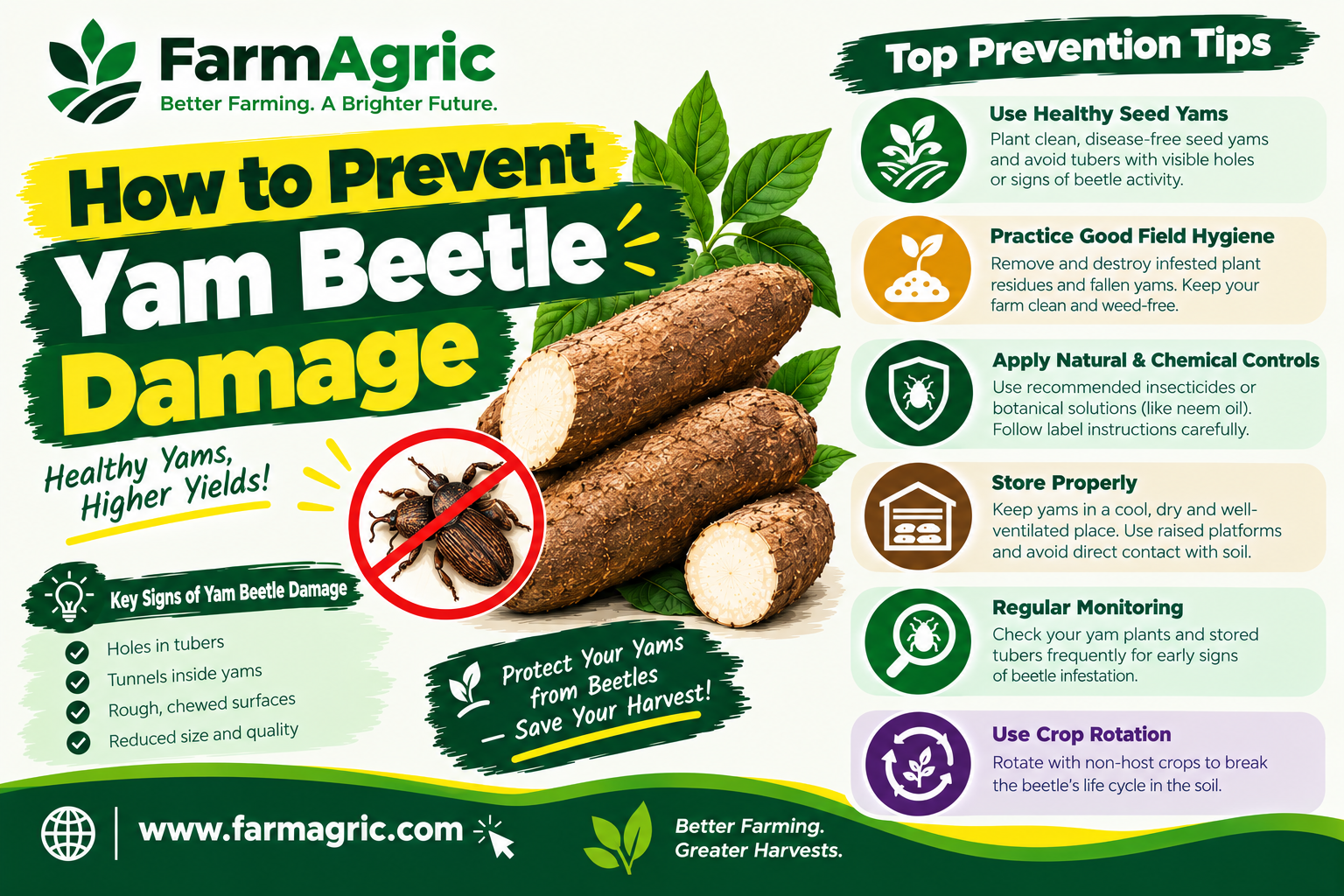
How to Prevent Yam Beetle Damage
How to Prevent Yam Beetle Damage
I once dug up a mound I had been proud of for months and found a tuber that looked like someone had drilled it with a bad bit. A fat, dark beetle was still sitting in the tunnel, chewing. The tuber was worth good money the week before. After that dig, it was worth almost nothing, because the buyer takes one look at the holes and walks away. That day I stopped treating the yam beetle as a small nuisance.
Here is the direct answer. To prevent yam beetle damage, avoid planting yam on freshly cleared grassland or bush fallow where beetle larvae have been feeding, till the land deeply in the dry season to expose larvae and pupae, rotate yam with cereals or legumes, keep the field clean of heaps of rubbish and grass, hand-pick adult beetles during the early rains, and use a registered insecticide treatment on seed and soil only according to the label where the pressure is high. No single trick stops the beetle. The farmers who protect their tubers combine several of these habits every season.
That is the short version. Here is the detail, from three decades of fighting this pest.
What Most Farmers Get Wrong
The biggest mistake is ignoring the beetle until the damage shows. By the time you see it, the beetle has already bored into the tuber and left a wound that rot fungi use. Prevention happens before and early in the season, not at harvest.
The second mistake is planting yam straight after clearing grass or bush. Beetle grubs live in the soil and feed on roots and decaying plant matter. Freshly cleared, grassy land can carry a large population. A farmer breaks new ground, sees the fertile soil, plants yam, and feeds the beetles instead.
The third mistake is leaving heaps of weeds, grass, and crop trash around the field. Piles of dead plant matter shelter and feed the grubs and hide the adults. A tidy field is a less comfortable home for the pest.
The fourth mistake is relying on chemicals alone. Spraying or dusting without good field hygiene, rotation, and early monitoring gives expensive and uneven results, and misuse can harm you, your soil, and useful insects.
The fifth mistake is assuming damaged tubers are a loss only at harvest. A beetle hole is an open door. Damaged tubers that go into the barn spread rot to healthy ones, so one careless decision at harvest becomes a storage disaster later.
Know the Enemy
You fight a pest better when you understand how it lives.
The adult beetle. It is a stout, dark brown to black beetle, roughly 2 to 3 centimeters long. Adults tend to appear when the early rains soften the ground. They come up from the soil, feed, and bore into the developing tubers and into the base of the vine.
The damage. Adults chew holes and tunnels in the tuber, usually near the head or the part close to the soil surface. Sometimes the plant wilts because the vine base is damaged. The holes let fungi and bacteria enter, so a tunnel often becomes a rot.
The grub. The larvae live in the soil and feed on roots and organic matter. They are fat, creamy, C-shaped grubs with a brown head. They are the next generation of beetles, so reducing them reduces next season’s attack.
The seasonal pattern. Beetle activity is tied to the rains. Timing varies by region and variety, so watch your own field and ask your extension officer what the local pattern is.
Because the life cycle runs through the soil, soil management is the heart of the fight.
Step-by-Step: How I Protect My Yam Field
Step 1: Choose the field with care. Avoid planting yam directly into freshly cleared grassland or bush if you can. Where you must, expect more beetle pressure and do the extra steps below. Land that has carried cereals or legumes for a season or two usually carries fewer grubs than rough, grassy fallow.
Step 2: Till deeply in the dry season. Plough or dig the field well before planting. Turning the soil exposes grubs and pupae to the sun and to birds, chickens, and other natural enemies. I like to do this a few weeks before mounding, and I let the soil rest open so the sun does its work.
Step 3: Clear and destroy trash. Remove grass, old vines, weeds, and crop residue from the field and burn or bury them far from the planting area. Do not leave heaps along the field edge, because beetles use them as shelter. Keep the bunds and surroundings slashed.
Step 4: Rotate crops. Do not plant yam on the same ground year after year. A rotation with maize, sorghum, or legumes breaks the beetle cycle and reduces other soil pests. I follow yam with a cereal, and I return to yam only after a break, as I do for nematode control.
Step 5: Use clean, healthy seed yams. Weak, damaged setts attract trouble. Pick sound seed with no holes or soft patches. If you cut setts, let them dry in the shade so wounds heal before planting.
Step 6: Consider a protective seed treatment. In areas where beetle pressure is high, many farmers treat seed yams and the planting hole with a registered insecticide or an approved dust. Wood ash is a cheap and common smallholder practice for sealing cut surfaces and discouraging pests, though its protection is modest. If you use a chemical product, buy only what is registered for yam in your country, read the label for dose, safety clothing, and waiting periods, and ask your extension officer first. I will not give you a mixing rate here, because rates depend on the product, and wrong use is dangerous.
Step 7: Mound properly. Tall, firm, well-made mounds make it harder for beetles to reach the tuber easily, and they keep the tuber growing deeper in loose soil. A mound that cracks open invites the beetle straight to the tuber.
Step 8: Scout from the first rains. The beetles are most active as the rains begin and during early growth. I walk the field every few days in that period. I look for fresh soil disturbance around mounds, small holes, wilting vines, and beetles on the surface. Early discovery means early action.
Step 9: Hand-pick adults. In a small or medium field, hand-picking adult beetles in the early morning or late evening is surprisingly effective. Do it carefully with gloves or a stick, and drop them in a bucket of soapy water or kill them. Involving workers or family for a short, focused period each week during the peak keeps the numbers down.
Step 10: Protect natural enemies. Birds, toads, ants, and other creatures eat grubs and beetles. Avoid spraying broad-spectrum chemicals unnecessarily, because that kills the helpers along with the pest.
Step 11: Harvest with care and sort immediately. When harvest comes, set aside every tuber with beetle holes. Sell or use the lightly damaged ones quickly, cutting away the affected part generously. Never put a bored tuber into the barn with healthy ones, because the wound is a ready-made site for rot.
Planting Time and Beetles
Many farmers ask me whether planting earlier or later helps. The honest answer is that it depends on your region and your variety, because beetle emergence follows the local rains. Some farmers adjust their planting date so that the most vulnerable stage of the tuber does not match the peak beetle activity. I would not copy a date from another place. I watch my own farm for a few seasons, write down when the first beetles appear, and talk to my extension officer and neighbors before changing anything. A planting date that cuts beetle damage but puts the crop into the dry season could hurt your size and yield, so balance both.
Using Chemicals Safely
Some seasons, the pressure is high enough that cultural methods alone do not hold the beetle back. If you decide to use a pesticide, follow these rules.
Use only products registered and recommended for yam or tuber crops in your country. Many older chemicals have been banned or restricted because of health and environmental harm.
Read the label from top to bottom. The dose, the method, the protective gear, and the waiting period before harvest are written there for a reason.
Wear gloves, a mask, long sleeves, and boots when handling any pesticide. Keep it away from children, water sources, and food.
Never reuse pesticide containers for water or food.
Apply only when needed and where needed, such as on seed setts and around the planting hole, rather than blanket spraying the whole field.
Talk to your local extension officer. They know which products are legal and effective in your area and can advise on safe use.
Warning Signs of Yam Beetle Attack
Watch for these during the season.
Small round holes or fresh loose soil around the base of the mound. A beetle may be entering or leaving.
Vines wilting or dying back suddenly while neighboring plants stay green. The base of the vine or the tuber may be damaged.
Tunnels or bored cavities in the tuber head. You will see these when you scrape back soil from a suspect mound or at harvest.
Dark, wet, or foul-smelling patches around a hole. Rot has followed the beetle.
Fat, creamy grubs when you turn the soil. A sign that a population is building for the next generation.
Beetles on the soil surface at dusk or dawn after the first rains. The adults are active.
If you find early signs, dig carefully beside a suspect mound and check the tuber. Remove beetles by hand, rebuild the mound firmly, and watch the neighboring plants closely.
What To Do With Damaged Tubers
A beetle hole does not always mean a total loss, but speed matters.
If the damage is small and shallow, cut away the bored area generously into clean flesh, then sell or cook the tuber soon. Do not store it.
If the tunnel is deep or rot has set in, cut out and discard the spoiled part and use the rest immediately, or discard the whole tuber if the smell or color is bad.
Never feed or dump damaged tubers near the field or the barn. Bury or burn them, so beetles and rot organisms do not return.
Make a separate pile for damaged tubers at every harvest. It stops the mistakes that spread rot in storage.
What I Would Do Differently If Starting Again Today
I would never plant my first yam crop straight into freshly cleared grass. It looked like rich, easy land, and it was full of grubs.
I would till earlier and more deeply every dry season. It costs labor, but the sun and the birds kill more grubs than any bottle I have bought.
I would walk my fields regularly as soon as the rains begin and keep notes on when beetles first appear. Over a few seasons, that record becomes the best guide I have.
I would rotate more strictly, and I would keep field edges and the area around my barn cleaner.
I would organize a short weekly hand-picking round during the early rains instead of waiting until the damage was visible.
I would talk to my extension officer before the season, not during the crisis, so I know exactly which product, if any, I am allowed and advised to use.
And I would be firm at harvest. Every bored tuber goes into its own pile, and none of them goes into my storage barn.
Frequently Asked Questions
What does a yam beetle look like?
It is a stout, dark brown to black beetle, about 2 to 3 centimeters long, that lives in the soil and comes out around the early rains. The grubs are fat, creamy, C-shaped larvae with brown heads, found in the soil.
What damage do yam beetles do?
Adults bore holes and tunnels into the tubers and sometimes into the base of the vine. This lowers the market value, weakens the plant, and opens the tuber to rot. The grubs feed on roots and organic matter in the soil.
Can I use wood ash to stop yam beetles?
Wood ash helps dry and seal cut seed surfaces and is a common low-cost practice, but it gives only partial protection. Use it together with deep tillage, rotation, clean fields, and hand-picking.
Is it safe to eat yam that a beetle bored into?
If the damage is small and the rest of the tuber is firm and clean, cut away the bored section generously and cook the remainder soon. If the tuber smells bad, is soft, or has dark, wet patches, throw it away.
Does crop rotation help against yam beetles?
Yes. Rotating with cereals or legumes breaks the pest’s cycle in the soil and reduces many other yam problems at the same time.
When should I start looking for yam beetles?
From the first rains onward. That is when adults tend to emerge and feed. Check mounds and vines every few days at the start of the season and adjust to what you see in your own field.
The Advice Worth Bookmarking
You do not beat the yam beetle in the barn or at harvest. You beat it in the dry season, with a plough, a clean field, and a rotation, long before the first rain falls.