How to Store Tomatoes Without Them Going Bad Fast
How to Store Tomatoes Without Them Going Bad Fast
I once drove 6 hours with a full load of beautiful tomatoes and arrived to find the bottom third of every basket crushed into red soup. The top layer looked perfect. The buyer lifted one tomato, saw the wet mess underneath, and offered me half the price. I stood there and watched a week of work turn into a bad bargain. That day I stopped thinking about storage as something that happens after farming. It is part of farming.
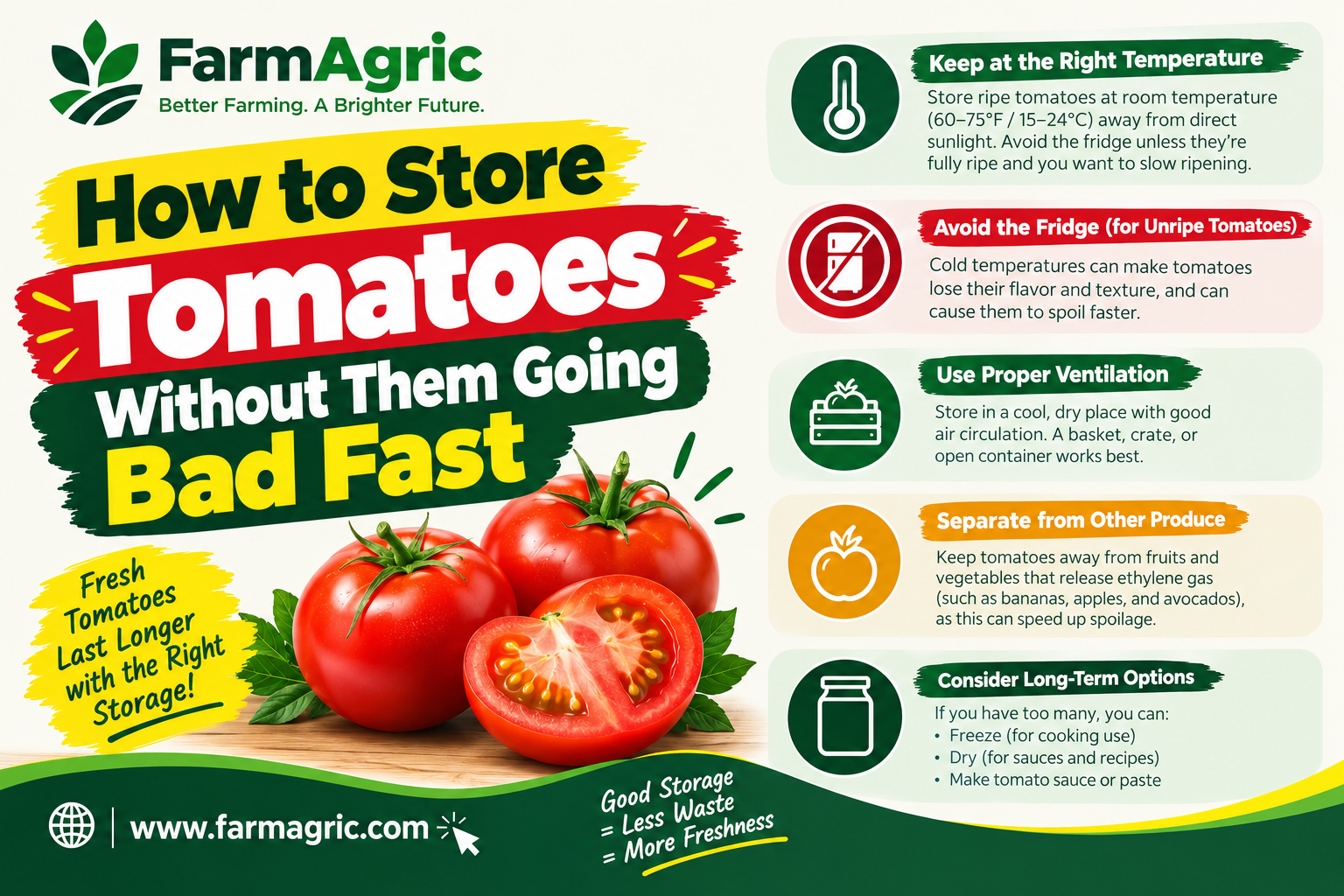
Here is the direct answer. To store tomatoes without them going bad fast, keep them at room temperature (about 15 to 22 degrees Celsius), out of direct sun, in a single layer with the stem scar facing up or down but never touching each other, and in air that can move around them. Do not refrigerate unripe or partly ripe tomatoes. Only fully ripe fruit that you cannot eat or sell within a few days belongs in the fridge, and it must come out an hour before eating. Sort out every bruised, split, or soft fruit first, because one bad tomato will spoil the whole crate.
That is the core of it. The rest of this article is the detail I wish somebody had given me 30 years ago.
What Most People Get Wrong About Storing Tomatoes
The first mistake is putting every tomato in the refrigerator. People think cold equals fresh. For tomatoes, it does not. Below about 12 degrees Celsius, the fruit suffers chilling injury. The flesh turns mealy, the flavor goes flat, and the skin develops pitted patches. The fruit looks fine for a few days and tastes like wet paper. I have watched farmers ruin a good harvest this way and then blame the variety.
The second mistake is washing tomatoes before storage. Water left in the stem scar and around the skin invites rot. I wash only what I am about to eat or sell. Everything else goes in dry.
The third mistake is stacking. In many markets I have seen baskets piled 5 or 6 deep, with the bottom fruit carrying the weight of everything above. Tomatoes are soft fruit. Even ripe fruit that looks firm bruises from pressure, and a bruise is a door for rot. Shallow containers are always better than deep ones.
The fourth mistake is mixing ripe and unripe fruit in one pile without thinking. Ripe tomatoes release ethylene gas, a natural ripening hormone. Mix a ripe tomato with green ones and the green ones speed up. That is useful when you want it and a disaster when you don’t.
The fifth mistake is storing damaged fruit with good fruit. A single split tomato leaks juice, and juice carries mold spores to its neighbors. I used to think I could save time by skipping the sorting. I never saved time. I only lost fruit.
Know the Stage Before You Choose the Storage
You cannot store all tomatoes the same way, because the right method depends on how ripe the fruit is. Here is how I handle each stage.
Mature green fruit. These are full-sized, glossy, with no color yet. Store them at about 12 to 15 degrees Celsius in a humid, shaded place. At that temperature, they can wait 2 to 3 weeks and ripen slowly when you want them. Put them in a single layer in a crate lined with clean paper, and check weekly.
Breaker and turning fruit. With the first streaks of color, they hold for 1 to 2 weeks at 13 to 18 degrees Celsius. This is my favorite stage for holding stock when the market price is low and I expect it to recover.
Pink and light red fruit. These keep for 4 to 7 days at room temperature, depending on the variety and how hot it is. Keep them in a cool, airy place and sell or eat them first.
Fully red ripe fruit. Use within 2 to 4 days at room temperature. If you must hold them longer, move them to the fridge for a day or two at most, then bring them back to room temperature before eating so the flavor returns.
Learning to read these stages saves more fruit than any storage gadget. If you want to know how to pick at the right stage in the first place, I wrote a separate article on harvest timing, because what you do in the field decides how long the fruit lasts in the store.
Step-by-Step: How I Store Tomatoes at Home and on the Farm
Follow this routine and you will lose far less fruit.
Step 1: Sort ruthlessly. Before anything goes into storage, I go through every fruit. Anything with a crack, a soft spot, a dark sunken patch, a pest hole, or a wet stem scar goes into a separate pile for immediate use or processing. Only clean, firm, undamaged fruit gets stored.
Step 2: Keep them dry. If the fruit is wet from rain or dew, spread it in the shade for an hour or two to dry before storing. Do not wipe aggressively, because that can scratch the skin.
Step 3: Choose shallow, ventilated containers. I use plastic crates with side holes, or shallow trays and woven baskets that hold no more than 2 or 3 layers. At home, a wide plate or open tray on the counter works well. Avoid sealed plastic bags and airtight boxes, because trapped moisture speeds up rot.
Step 4: Line the container. A layer of clean, dry newspaper or soft paper at the bottom and between layers absorbs moisture and protects against bruising. Change it if it gets damp.
Step 5: Arrange fruit with space between them. Do not let the fruit touch if you can help it. Touching fruit passes rot to each other, and airflow around each one slows the process.
Step 6: Find the right spot. Pick a cool, shaded, well-ventilated place away from direct sunlight, away from the stove, and away from the engine heat of a vehicle or generator. A dark room with a window open for airflow is ideal. A hot zinc roof room is a fruit killer.
Step 7: Keep ripe tomatoes away from bananas, mangoes, and other ripening fruit. Those fruits release a lot of ethylene, and your tomatoes will soften much faster next to them.
Step 8: Check every day. I walk through my stored fruit every morning. Anything that starts to soften or spot gets removed on the spot. That daily check takes 5 minutes and saves entire crates.
Cooling Without Electricity
Many farmers I know do not have cold rooms, and power cuts make household fridges unreliable. I have used a few cheap tricks that really work.
The wet sack method. Stack your crates in a shaded corner and cover them with a clean jute or cloth sack. Wet the sack with clean water in the morning and again in the afternoon. As the water evaporates, it pulls heat out of the air around the fruit. I have measured drops of 5 to 8 degrees Celsius this way on hot days.
The pot-in-pot cooler. Put a smaller clay pot inside a larger one, fill the gap between them with wet sand, place the tomatoes in the inner pot, and cover with a damp cloth. Keep the sand wet. This evaporative cooler can keep fruit fresh several days longer than leaving it in an open room.
A raised, shaded platform. Do not leave crates on bare concrete in the sun. Raise them off the ground on a wooden rack under a shade roof with open sides. Air moves under and around the fruit, and heat from the ground does not creep up into the crates.
None of these tricks beats a proper cold room set to 12 to 15 degrees Celsius, but they work, and they cost almost nothing.
Warning Signs That Stored Tomatoes Are Going Bad
Do not wait for a smell. Check for these early signs.
Soft, wrinkled skin. The fruit is losing water. It is still safe for cooking, but not for selling fresh.
Dark, sunken, or water-soaked patches. The start of rot. Remove the fruit at once.
White or grey fuzzy mold near the stem. Mold has taken hold. Discard that fruit and check its neighbors.
A sour, fermented smell. Yeast and bacteria are at work. Do not eat the fruit.
Fruit flies hovering over the crate. They find overripe fruit before you do. It is time to sort again.
Liquid at the bottom of the container. Juice is leaking from somewhere. Find the burst fruit, remove it, and replace the wet paper.
If a tomato has a small bad spot and the rest is firm, you can cut away the damaged area generously and use the rest quickly in cooking. If the mold has spread or the fruit smells off, throw it away.
What To Do With Tomatoes You Cannot Store Longer
Sometimes the market is flooded, the price is rubbish, or the fruit is simply ripening faster than you can sell it. Do not let it rot in the crate. Turn it into something that lasts.
Make tomato puree or sauce. Wash, chop, and cook the fruit down until thick, season with a little salt, and cool. Store in clean, tightly sealed containers in the freezer, or preserve in sterilized jars. Cooked puree is the easiest way to use up a glut.
Freeze them. Whole tomatoes freeze well if you plan to cook them later. Wash, dry, and place them in freezer bags. The skins slip off after thawing. They will not be good for slicing, but they are perfect for stews and soups.
Dry them. Slice ripe fruit thinly, lay the pieces on clean trays, and dry in strong sun, covered with a fine net to keep flies away, or in a solar dryer. Properly dried tomatoes keep for months in airtight containers. This is a good side business for farmers who want to add value.
Can with care. Tomatoes are borderline in acidity, so follow a tested canning method and add acid, such as lemon juice or citric acid, to each jar. Canning without proper acidity and heat can be unsafe.
Storing Cut Tomatoes
Once cut, tomatoes should go straight into a covered container and into the fridge, where they last about 2 to 3 days. Press cling film directly on the cut face or use an airtight lid to stop drying. Never leave cut tomatoes sitting out for hours, especially in hot weather.
What I Would Do Differently If Starting Again Today
I would build my storage before I planted my first row. A shaded, ventilated room with simple racks costs far less than the fruit I have thrown away over the years.
I would stop using deep baskets for good. Every farmer I know who switched to shallow, ventilated crates saw fewer losses within a single season. The crates cost money, but they pay for themselves.
I would sort fruit by stage at harvest and store each stage separately. That one habit gives you control. You decide what goes to market tomorrow, what waits a week, and what becomes sauce.
I would learn one preservation method well, whether drying, sauce, or freezing, so that a market glut becomes an opportunity and not a loss.
And I would keep a simple loss record. Every week, I would write down how many crates I stored, how many I lost, and why. After one season, the pattern shows you exactly what is costing you money.
Frequently Asked Questions
Should I keep tomatoes in the fridge or on the counter?
On the counter, in a cool, shaded spot, for unripe and partly ripe fruit. The fridge is only for fully ripe fruit that you cannot use within a few days, and for cut tomatoes. Cold damages flavor and texture in fruit that is not yet ripe.
How long can tomatoes last without a fridge?
Fully ripe tomatoes last 2 to 4 days at room temperature. Pink fruit lasts 4 to 7 days, and mature green fruit can last 2 to 3 weeks if stored cool and humid. Heat shortens all of these times.
Why do my tomatoes rot so quickly in storage?
The usual causes are damaged fruit mixed with good fruit, wet fruit stored without drying, deep stacking, and heat. Fix those four and most of the rot disappears.
Can I store tomatoes in a plastic bag?
Avoid it. A sealed bag traps moisture and gas, which speeds up rot. If you must use a bag, make sure it has holes and the fruit is dry.
Is it safe to eat a tomato with a small soft spot?
If the spot is small and the rest of the fruit is firm and smells fresh, cut away the damaged part generously and use the rest quickly. If there is mold, a sour smell, or widespread softness, throw it out.
The Advice Worth Bookmarking
A tomato does not spoil in the store. It spoils in the hands that sorted it badly, stacked it too deep, and left it in the heat. Take care of it in the first hour, and it will take care of you for the next week.