How to Know the Right Time to Harvest Tomatoes
How to Know the Right Time to Harvest Tomatoes
The first season I grew tomatoes for the market, I picked a whole field too early because I was scared of the rain. Three days of cloud were forecast, so I went out and harvested everything that had even a blush of color. I sold them at a good price on Monday. By Thursday, my buyers were calling me. Half the fruit had never reddened properly, and the rest was pale, hard, and tasteless. I lost a customer that week and learned a lesson that cost me more than any fertilizer ever did.
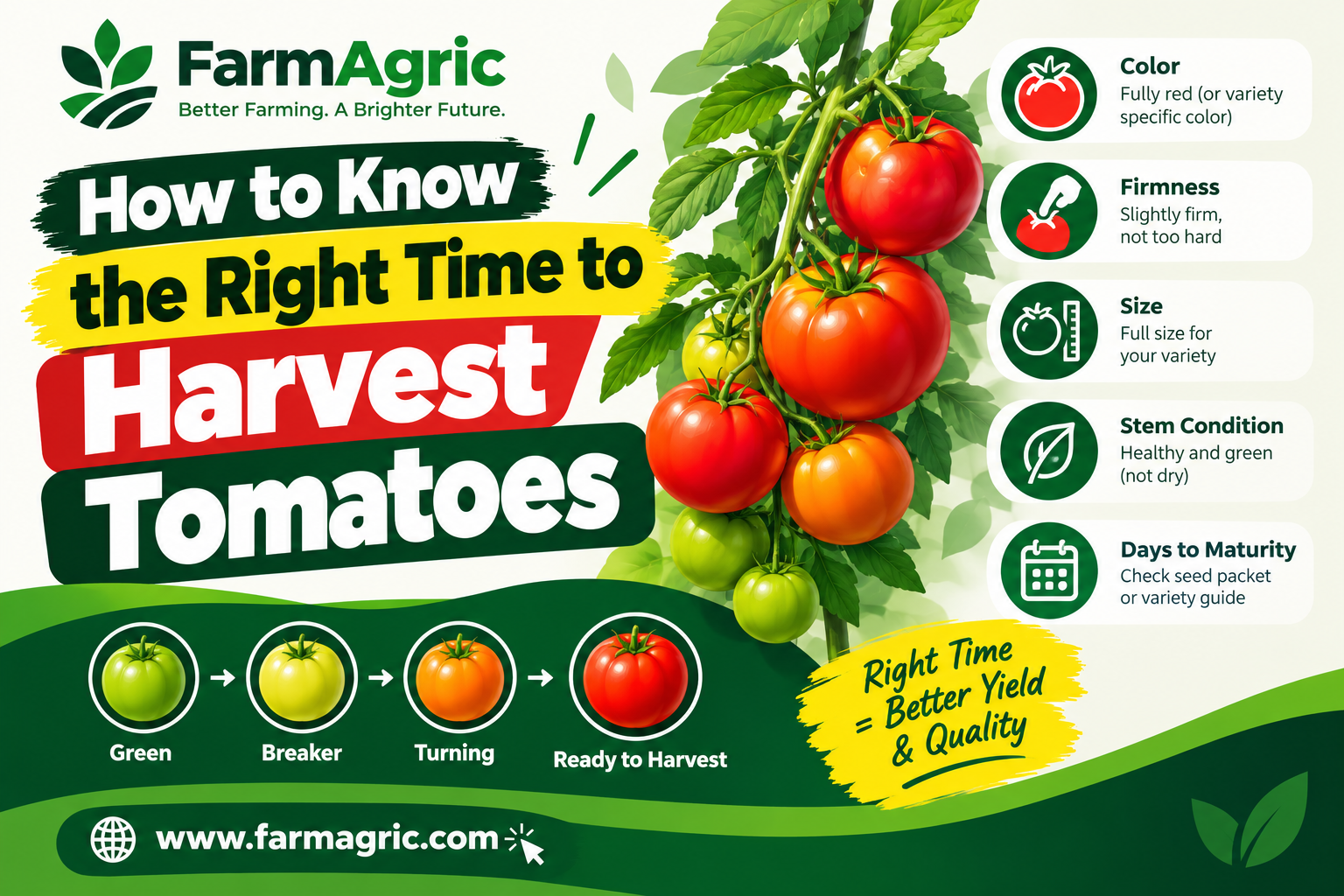
So here is the direct answer. Harvest tomatoes when the fruit has reached its full size and the color has broken, meaning about 30 to 90 percent of the surface has changed from green to pink, orange, or red, depending on where the fruit is going. For fruit you will eat or sell within two or three days, pick at the pink to light red stage. For fruit that must travel far, pick at the breaker stage, when the first streak of color shows at the blossom end. For eating fresh from your own plot, wait until the fruit is fully colored and gives slightly under gentle thumb pressure.
That is the short version. The long version is where farmers make or lose money, so let me take you through what thirty years of picking tomatoes has taught me.
What Most Farmers Get Wrong
The biggest mistake I see is picking by color alone. Color matters, but it is only one signal, and it lies to you in hot weather. When temperatures climb above 32 degrees Celsius, the red pigment (lycopene) stops forming properly. I have seen fully ripe, sweet, soft tomatoes that stayed stubbornly orange-yellow because the field was too hot. A farmer who waits for deep red in that heat will leave fruit on the plant until it overripens, splits, or gets attacked by fruit borers.
The second mistake is picking everything on one day. Tomatoes do not ripen together. A single plant can carry green fruit, breaker fruit, and fully red fruit at the same time. If you strip the plant in one pass, you mix 3 different stages in one crate, and the cheapest stage sets the price. I now pick every 2 to 3 days at peak season, taking only what is ready.
The third mistake is ignoring the variety. A determinate type, the kind that sets fruit over a short window, behaves very differently from an indeterminate type that keeps flowering for months. Hybrids bred for shipping stay firm for days. Old open-pollinated types, the juicy ones people love, soften fast and need picking at a much earlier stage. If you treat them the same, you will either lose firmness or lose flavor.
The fourth mistake, and the one that hurts most, is leaving ripe fruit on the vine “one more day” because the price is low. Tomatoes do not wait for the market. A ripe fruit left in the field starts losing value within 48 hours, especially in the wet season.
The Stages of Ripeness, in Plain Language
Learn these stages by eye and by hand. I teach every new worker on my farm using this list.
Mature green. The fruit has reached full size, the skin looks glossy, and the color is a lighter, slightly waxy green. If you cut one open, the seeds are surrounded by jelly and are not sliced by the knife. This fruit will ripen off the plant, but it is a gamble. Pick too early and it never develops proper flavor.
Breaker. A first hint of pink, yellow, or red appears at the blossom end, covering less than 10 percent of the fruit. This is the earliest stage I consider safe for long-distance transport. The fruit will finish coloring in the crate.
Turning. About 10 to 30 percent of the surface shows color. Good for markets 1 to 2 days away.
Pink. 30 to 60 percent color. This is my favorite stage for local markets. The fruit holds up to handling and still reaches full color by the time the buyer takes it home.
Light red. 60 to 90 percent color. Best for nearby sales and roadside stalls. It needs gentle handling.
Red ripe. Fully colored, slightly soft. This is the stage for your own kitchen, for processing into paste or sauce, and for same-day sales. Do not try to transport this fruit over rough roads.
Step-by-Step: How I Decide When to Pick
Here is the routine I follow on my own farm.
Step 1: Decide where the fruit is going. Before I enter the field, I ask one question. How far and how long until this fruit is eaten? A buyer in the next town tomorrow gets pink fruit. A trader driving 8 hours gets breaker fruit. My own kitchen gets red ripe.
Step 2: Check the days since flowering. Most varieties need 40 to 60 days from flowering to ripe fruit, depending on the type and the temperature. When I stake a flower cluster or note the date, I know roughly when to start checking. This saves me from walking blind through the rows.
Step 3: Look at the color pattern, not just the shade. Turn the fruit gently. Look at the blossom end and the shoulders. Color usually starts at the bottom and moves up. If the shoulders are still green but the bottom is red, the fruit is not fully developed in the way you want.
Step 4: Do the thumb test. Hold the fruit in your palm and press lightly with your thumb. Hard like a stone means it is early. A slight give, like pressing the base of your thumb, means it is ready. A deep dent that stays means you waited too long.
Step 5: Smell it. This sounds silly, but ripe tomatoes have a sweet, earthy smell near the stem scar. Fruit that was picked too early smells like nothing, or like grass.
Step 6: Pick in the cool part of the day. I harvest in the early morning, before the sun heats the fruit. Warm fruit goes soft faster and bruises easily. Never leave filled crates standing in direct sun, not even for 20 minutes.
Step 7: Twist and lift, don’t pull. Hold the fruit, tilt it upward, and let the joint on the stem snap. Many varieties have a natural break point, the knuckle on the stalk. Pulling straight down tears the skin and invites rot.
Step 8: Handle like eggs. Place the fruit in the crate. Never throw it. Never fill a crate beyond one layer deeper than the rim, or the bottom layer will crush.
Warning Signs You Waited Too Long
Watch for these, because they tell you the harvest window has closed.
Cracks around the stem. Radial cracks, the ones that spread outward from the stalk like a star, usually mean fruit took up water quickly after rain or irrigation while it was already ripe. Concentric cracks, the rings around the stem, appear when ripe fruit swells too fast. Either way, pick at once and sell fast.
Wrinkled or soft shoulders. The fruit is losing water. It will still cook well, but it will not survive a market trip.
Dull color with a slightly yellow patch. This can mean overripening or sun damage. Cut one open to check.
Fruit flies or ants around the fruit. Insects find ripe, sugary fruit before you do. If you see them, you are already late.
Dark, sunken spots at the blossom end. This is blossom end rot, a calcium problem, not a ripeness problem. These fruit should be removed and not sold.
Water-soaked patches. The start of rot. Remove these fruits from the field, so the problem does not spread.
What About Weather?
Weather forces your hand more than any calendar. Here is what I do.
Before heavy rain. If a long wet spell is coming, I harvest everything at pink stage or later. Ripe tomatoes soaked by rain split open within a day. Fruit picked early will finish indoors, and I lose less than I would in the field. This is the one time I sometimes pick at the breaker stage on purpose.
During a heat wave. Fruit may refuse to color red. I pick at the pink to orange stage and let it finish in a shaded, ventilated place. Do not leave it to bake on the vine.
Before frost or cold nights. In places where nights drop below 10 degrees Celsius, I pick all mature green fruit before the cold arrives. They will ripen indoors, though flavor will never match vine-ripened fruit.
Ripening Fruit Off the Plant
If you pick mature green or breaker fruit, you can finish them at home. Here is what works for me.
Keep the fruit at room temperature, around 18 to 22 degrees Celsius, out of direct sun. Place them in a single layer, stem side up, in a crate or on a tray. Do not put them in a refrigerator. Cold damage stops proper ripening and leaves the flesh mealy and the flavor flat.
To speed it up, put a ripe banana or ripe tomato in a paper bag with the green fruit. The ethylene gas from the ripe fruit pushes the others along. In 3 to 7 days, most will color well. Check daily and remove anything that starts to soften or spot.
What I Would Do Differently If Starting Again Today
I would keep a harvest notebook from day one. Every flower cluster date, every picking date, every rain, and every price. After 2 seasons, that book tells you more than any extension leaflet because it describes your soil, your variety, and your weather.
I would grow fewer varieties and know each one deeply. Chasing every new seed in the catalog gave me fields full of surprises, and surprises at harvest time are expensive.
I would plan the harvest before planting. Where will the crates stand? Is there shade? How will the fruit reach the road? A good crop with no plan for picking, cooling, and moving it is half a crop.
I would pay pickers by the day and not by the crate, and I would train them with the stage list above. Workers paid per crate pick green fruit to fill crates faster. That one change in how I paid people raised my average price within a single season.
And I would sell the first fruits cheaply to build a reputation. Buyers remember who delivers ripe, consistent tomatoes, and they come back.
Frequently Asked Questions
Can I pick tomatoes when they are still green?
Yes, but only mature green ones, which are full-sized with a glossy, lighter-green skin. Small, dark green, hard fruit will never ripen well. Mature green fruit can finish ripening indoors, but the taste is milder than vine-ripened fruit.
How many days after flowering are tomatoes ready?
Most varieties take 40 to 60 days from flowering to ripe fruit. Cherry types are often faster, and large beefsteak types are slower. Hot weather shortens the time and cool weather stretches it.
Is it better to let tomatoes ripen on the vine?
For flavor, yes. Vine-ripened fruit develops the best sugar and aroma. For selling and transport, picking at pink or breaker stage gives you a better shelf life with only a small loss in taste.
Should I refrigerate tomatoes after harvest?
No, not unless they are fully ripe and you need to hold them 1 or 2 extra days. Store unripe and partly ripe fruit at room temperature. Chilling below about 12 degrees Celsius damages the flavor and texture.
Why do my tomatoes crack before I can harvest them?
Uneven watering is the usual cause. When soil dries out and then gets soaked, the fruit swells faster than the skin can stretch. Keep watering steady, mulch the beds, and pick ripening fruit before heavy rain.
The Advice Worth Bookmarking
Pick for the buyer’s table, not for your own convenience. A tomato is ready not when it looks ready to you, but when it will look ready to the person who eats it.