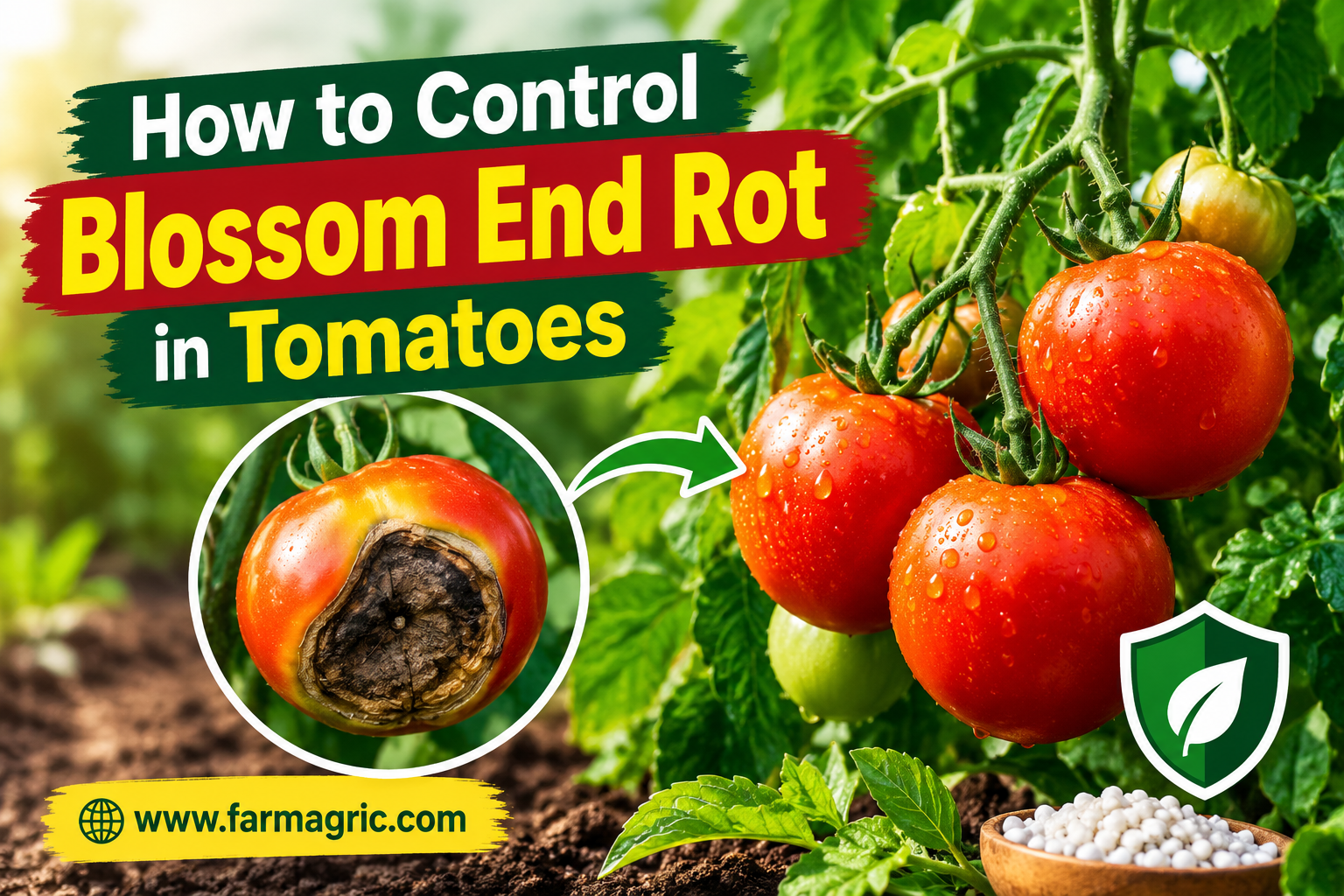
how to control blossom end rot in tomatoes
How to Control Blossom End Rot in Tomatoes: A Farmer’s Guide to Fixing the Fruit Problem That Isn’t Really About Fruit
I remember picking what looked like a perfectly healthy tomato off the vine, turning it over out of habit the way I always do, and finding a sunken, leathery black patch covering nearly a third of the bottom of the fruit. The plant itself looked fine, green and vigorous, no obvious pest damage, no wilting, nothing that would have warned me something was wrong. I pulled several more fruit off that same plant and found the same dark, sunken spot on nearly half of them, always in that same spot at the blossom end, opposite the stem. My first instinct was to blame a fungus and reach for a spray, and it took a conversation with an extension officer to understand that I was chasing the wrong culprit entirely. Blossom end rot has almost nothing to do with disease and almost everything to do with calcium never reaching the fruit, usually because of a watering problem rather than a soil problem, and once I understood that, I stopped losing fruit to it almost entirely.
So let me answer you straight, because I know you are looking at that same sunken, dark patch on your own tomatoes right now and wondering what disease has gotten into your plants. Blossom end rot is not a disease at all, it is a calcium deficiency at the fruit itself, caused almost always by inconsistent watering that disrupts the plant’s ability to move calcium into rapidly growing fruit, and you control it by watering deeply and consistently rather than in unpredictable bursts, mulching to keep soil moisture even, avoiding excess nitrogen which pushes leafy growth at the expense of calcium delivery to fruit, and only adding calcium to the soil itself if a proper soil test shows a genuine shortage, since most cases trace back to water management rather than a true lack of calcium in the ground. This is one of the few tomato problems where the fix has almost nothing to do with spraying anything on the plant and almost everything to do with how steady your watering routine actually is from week to week.
Why Blossom End Rot Happens Even in Soil With Plenty of Calcium
Calcium moves through a plant differently than most other nutrients, since it travels almost entirely through the water stream moving up from the roots, carried along with the water the plant is transpiring through its leaves, rather than being redistributed easily from one part of the plant to another once it has already been deposited. This means a rapidly growing tomato fruit, which needs a steady supply of calcium to build strong cell walls as it expands, depends on a consistent flow of water reaching it specifically, and if that water flow becomes inconsistent, alternating between drought stress and sudden heavy watering, the fruit can be starved of calcium even when the surrounding soil contains plenty of it. The calcium is there in the ground, but the delivery system to that specific, fast-growing fruit has been interrupted, which is exactly why adding more calcium to soil that already has adequate levels usually does nothing to fix the problem, while correcting the watering pattern often resolves it within a couple of weeks.
What Most Farmers Get Wrong
The first mistake, the one I made myself standing over that first affected fruit, is assuming blossom end rot is caused by a disease or a pest and reaching for a fungicide or insecticide that does absolutely nothing to address the actual problem. This wastes money and time while the real cause, an inconsistent watering pattern, continues affecting every subsequent fruit the plant produces.
The second mistake is assuming the soil must be lacking calcium and pouring on lime or a calcium supplement without ever testing to confirm this is actually the case. In most home gardens and farm fields, soil calcium levels are perfectly adequate, and the problem is entirely about water-driven delivery to the fruit rather than a true shortage in the ground.
The third mistake is watering inconsistently without realizing the direct connection to this specific problem, letting soil dry out significantly between waterings and then compensating with a heavy soak, rather than maintaining a steadier, more moderate watering rhythm throughout the week. This start-stop pattern is, by a wide margin, the most common underlying cause of blossom end rot in fields and gardens I have seen over the years.
The fourth mistake is applying heavy nitrogen fertilizer, particularly in fresh manure or high-nitrogen blends, without recognizing that this pushes the plant toward vigorous leafy growth that competes with developing fruit for the calcium and water available, sometimes worsening blossom end rot even when watering is reasonably consistent.
The fifth mistake is giving up on an affected plant entirely after finding rot on the first few fruits, when in most cases correcting the watering pattern allows the same plant to produce healthy, unaffected fruit within a couple of weeks, meaning the problem is very often recoverable rather than a permanent condition affecting everything that plant produces for the rest of the season.
Step-by-Step Plan to Control Blossom End Rot
Start by examining your recent watering pattern honestly, since this is where the vast majority of cases originate. Think back over the past two to three weeks and consider whether watering has been consistent and moderate, or whether it has swung between periods of drought stress and sudden heavy soaking, whether from irregular manual watering or from an unpredictable pattern of rainfall combined with insufficient supplemental watering during dry stretches.
Establish a consistent watering schedule going forward, aiming for deep, even watering two to three times a week rather than light, frequent sprinkling or infrequent heavy soaking. Deep watering encourages roots to grow further down into more stable soil moisture, which naturally helps buffer the plant against the short dry spells that otherwise trigger inconsistent calcium delivery to the fruit.
Apply a layer of mulch around the base of tomato plants, using straw, dried grass, or another suitable organic material, since mulch significantly reduces how quickly soil dries out between waterings and helps maintain the more even soil moisture that consistent calcium delivery depends on.
Check your soil drainage as well as your watering habits, since soil that drains poorly and stays waterlogged after rain can be just as disruptive to steady calcium uptake as soil that dries out too much between waterings. Where drainage is a persistent issue, raised beds or ridges can help maintain the more even moisture conditions tomatoes need.
Review your fertilizer program and reduce excess nitrogen if you have been applying it heavily, particularly through fresh manure or nitrogen-dominant blends, and consider a more balanced fertilizer that does not push leafy growth so aggressively at the expense of the calcium delivery fruit actually needs.
Get a soil test if you suspect calcium might genuinely be low, rather than assuming this is the case without checking. If a test does confirm a real calcium shortage in the soil itself, correcting it with agricultural lime, gypsum, or another appropriate calcium source addresses the true underlying deficiency, though this situation is considerably less common than a watering-related cause.
Avoid working the soil too closely around the base of plants once fruit has begun developing, since root damage from careless cultivation can also interrupt the water and calcium supply chain to developing fruit, compounding whatever watering inconsistency might already be present.
Remove any fruit already showing blossom end rot promptly, since these affected fruit will not recover and continuing to let the plant put energy into them is not worthwhile, while removing them also allows you to focus the plant’s resources on the new, healthy fruit that should follow once your watering correction takes effect.
Watch new fruit development closely over the following two to three weeks after correcting your watering pattern, since this is typically the window in which improvement becomes visible, with new fruit setting and developing normally once calcium delivery has stabilized again.
Continue monitoring your watering consistency through the rest of the season, particularly during any unusually hot or dry stretches when soil moisture can swing more dramatically without deliberate attention, since blossom end rot can return at any point in the season if watering inconsistency recurs, even after an earlier round of fruit was successfully corrected.
Choose varieties known for better tolerance to blossom end rot in future plantings if this has been a recurring, difficult problem on your specific land, since some tomato varieties handle inconsistent conditions somewhat better than others, though correcting watering practices remains the primary and most effective solution regardless of variety.
Warning Signs to Watch For
A sunken, water-soaked looking patch at the blossom end of the fruit, opposite where it attaches to the stem, that darkens to brown or black and takes on a leathery texture as it develops, is the clear, distinctive sign of blossom end rot and is unlikely to be confused with insect damage or typical fungal disease once you know to look for this specific location and pattern. Multiple fruit on the same plant showing the same blossom end damage around the same time often reflects a shared underlying cause, almost always a recent period of inconsistent watering affecting the whole plant rather than an isolated problem with one individual fruit. Blossom end rot appearing more heavily during a stretch of hot, dry weather, particularly if watering has not been increased to compensate, points clearly toward drought-driven calcium delivery disruption as the specific trigger. A pattern of blossom end rot easing off and eventually stopping in new fruit after you have deliberately corrected and stabilized your watering routine confirms that watering was indeed the underlying cause, and this improvement is one of the most reassuring signs available that you have addressed the real problem correctly. And blossom end rot that continues despite genuinely consistent, well-managed watering over several weeks is worth investigating further through a soil test, since this pattern suggests the less common scenario of an actual calcium shortage in the soil itself rather than a delivery problem caused by watering.
What I’d Do Differently If Starting Again Today
If I were starting over, I would learn to recognize blossom end rot correctly from the very first affected fruit instead of assuming disease and reaching for the wrong tools entirely, since that early confusion cost me both time and unnecessary spray applications before I understood what was actually happening. I would commit to a genuinely consistent watering schedule from the beginning of the season rather than watering reactively based on how the soil looked on any given day, since I now understand how directly that irregular pattern was driving the problem in my own fields long before I connected the two. I would mulch as standard practice around every tomato planting rather than treating it as optional, given how much more stable soil moisture stays under a proper mulch layer compared to bare soil exposed directly to sun and wind. And I would moderate my nitrogen application far more carefully, understanding now how much that lush, leafy growth I used to be proud of was sometimes coming at the direct expense of the calcium my developing fruit actually needed.
Frequently Asked Questions About Blossom End Rot in Tomatoes
Is blossom end rot a disease that can spread to other tomato plants? No, blossom end rot is a physiological calcium deficiency at the fruit level, almost always caused by inconsistent watering rather than any pathogen, so it cannot spread from plant to plant the way a fungal or bacterial disease would, though similar watering conditions across a planting often cause it to appear on multiple plants around the same time.
Does adding calcium or lime to the soil fix blossom end rot? Usually not, since most soil already contains adequate calcium and the real problem is inconsistent water delivery preventing that calcium from reaching the fruit, meaning correcting your watering routine is far more likely to solve the problem than adding more calcium to soil that does not actually need it.
Can I still eat tomatoes that have blossom end rot? The affected sunken portion should be cut away and discarded, but the rest of the fruit is generally still perfectly fine to eat, since blossom end rot is a physiological condition rather than a disease or contamination affecting the whole fruit.
Why is blossom end rot worse during hot, dry weather? Hot, dry conditions make soil moisture swing more dramatically between waterings, and this inconsistency disrupts the steady flow of water, and therefore calcium, that rapidly growing fruit depends on, which is why blossom end rot often becomes more noticeable and more frequent during particularly hot or dry stretches of the season.
Will fixing my watering schedule stop blossom end rot on fruit that already has it? No, fruit already showing blossom end rot will not recover and should be removed, but correcting your watering pattern typically prevents the problem in new fruit that sets and develops after the correction, usually showing visible improvement within about two to three weeks.
If there is one thing I want you to remember from all this, it is that blossom end rot is your watering can talking to you, not your soil failing you, so keep the moisture steady, mulch to help hold it there, and watch the fruit that comes after you fix your rhythm, because the plant that lost half its first fruit to that sunken black patch is very often capable of giving you a completely clean second half of the season once the water finally settles into a pattern it can actually count on.