How to Stop Pepper Flowers From Dropping Before Fruiting
How to Stop Pepper Flowers From Dropping Before Fruiting
Some years ago I walked my pepper rows in the early morning and the ground under every plant was covered in little white petals. Hundreds of flowers on the soil, and almost nothing on the branches. I had watered, fed, and sprayed, and I still felt like I had been robbed overnight. That was the season I stopped guessing and started paying attention to why peppers let go of their flowers.
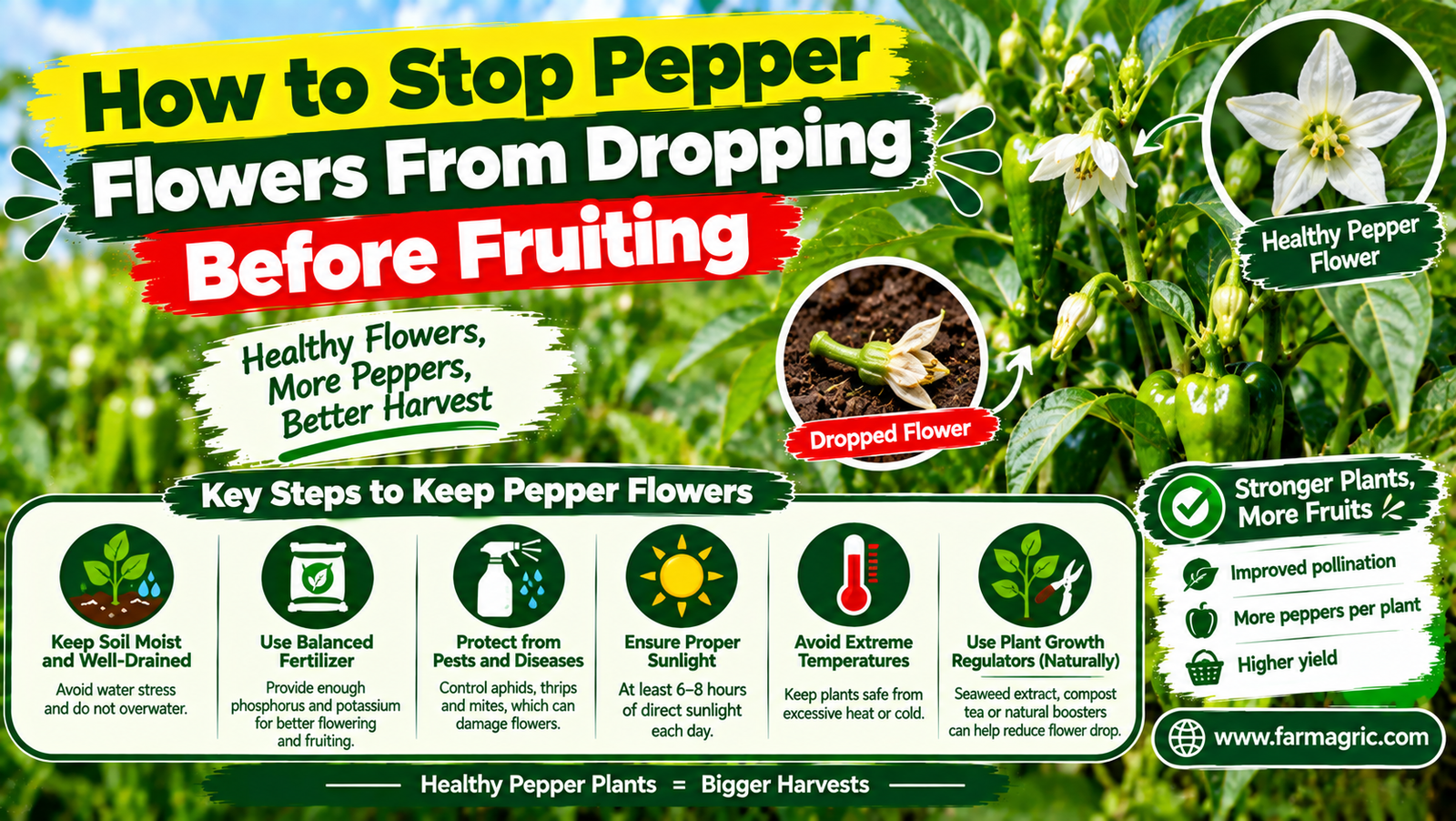
Here is the plain answer. A pepper plant drops its flowers when it decides it cannot afford to carry fruit, or when the flower was never pollinated in the first place. Nine times out of ten the cause is one of five things: heat, uneven water, too much nitrogen, pests, or a plant that flowered before it was big enough. Fix those and the flowers stay.
The quick version of what I do is this. I shade the plants in the hottest weeks, keep soil moisture steady with mulch, feed for flowers instead of leaves, check under the leaves for tiny pests every few days, and pinch off the first flowers on young plants. The rest of this article explains each of those so you can find which one is hurting your crop.
What Most Farmers Get Wrong
The first mistake is blaming a disease or a bad batch of seed. When flowers drop, farmers rush to spray fungicide or buy a new “booster” product. In my experience, flower drop is almost never a disease. It is a stress response. The plant is telling you something about its conditions, and a spray cannot answer that.
The second mistake is feeding more when flowers drop. It feels logical. The plant looks weak, so you give it more fertilizer. But if you reach for a high nitrogen feed, you push the plant into making leaves and shoots, and it will happily keep dropping flowers while it grows a beautiful green bush with no peppers. I have seen fields that looked like the best on the road in the vegetative stage and gave a poor harvest, because someone kept pouring in nitrogen.
The third mistake is ignoring the weather. Peppers are fussy about temperature during flowering. When daytime temperatures climb above about 32 to 35 degrees Celsius, or nights stay warm, above roughly 24 degrees, the pollen can become weak or sterile. The flower opens, nothing happens, and in a day or two it falls. No amount of fertilizer fixes pollen that has been cooked.
The fourth mistake is irregular watering. Many of us water heavily when we remember and barely at all when we are busy. Peppers hate that swing. A dry spell followed by a flood is one of the fastest ways to make a plant shed flowers and small fruit.
Reason One: Heat
Let me start with heat, because it catches more farmers than anything else. A pepper plant can look perfectly healthy in a heat wave and still drop every flower it makes that week. The damage happens inside the flower, so you do not see it until the petals are on the ground.
The first thing I do about it is plant at the right time. Where I can, I time transplanting so the main flowering period does not land in the hottest weeks. Walk back from the hot season and count the weeks to flowering. That is your planting window.
I also use shade cloth. A light shade net of around 30 percent over the crop during the hottest weeks makes a real difference. It lowers leaf temperature and reduces the stress on the flowers. You do not need to cover the field all season, only through the hot stretch.
Mulch helps too. A thick layer of dry grass, straw, or crop residue keeps the soil cooler and the roots happier. And I water in the early morning, which cools the root zone before the heat arrives and helps the plant keep its flowers.
If your flowers only drop in the hottest weeks and the plants recover when it cools, you have your answer. Next season, plan around it.
Reason Two: Uneven Water
A pepper plant wants steady moisture, not wet and dry swings. Too little water and the plant sacrifices flowers to save itself. Too much water and the roots suffocate, and the plant drops flowers there too.
Here is how I check. I push a finger into the soil about the depth of my knuckle near the plant. If it is dry at that depth, it is time to water. If it is sticky and wet, I wait. It sounds simple, but it beats any schedule I have ever written on a calendar.
On sandy soil, you will need to water more often and in smaller amounts. On heavy clay, water less often but make sure the field drains. Standing water around pepper roots is a quiet killer. If your rows hold water after rain, raise the beds. I learned that one the hard way in a wet season, when a whole section of the field dropped flowers and then yellowed from the bottom up.
Drip irrigation is the best thing I ever added to a pepper field. It gives a small, steady supply at the root and keeps the leaves dry. If you cannot afford drip, mulch plus careful hand watering gets you most of the way.
Reason Three: Too Much Nitrogen
I mentioned this already, but it deserves its own section because it is so common. Nitrogen pushes leaf and stem growth. That is exactly what you want in the first weeks after transplanting. But once flowering begins, a plant overloaded with nitrogen keeps pouring its energy into leaves and drops flowers along the way.
You can spot it. The leaves are very dark green, large, and a little curled or heavy. The stems are thick. And the plant has lots of foliage but few or no fruits.
My approach is to give a balanced feed early, then shift to a feed with less nitrogen and more potassium and phosphorus as flowering begins. Potassium supports flowering and fruit set, and phosphorus supports root and flower development. Follow the instructions on your fertilizer, and do not double up because the plant “looks hungry.” A soil test, even a basic one, is worth every naira or dollar you spend on it.
Organic matter helps too. Well-rotted compost improves the soil so plants take up nutrients more evenly, which means fewer swings in how the plant behaves.
Reason Four: Pests You Cannot See Easily
Small pests are a big cause of flower drop and farmers miss them because they are so small. Thrips are the main culprit in my experience. They hide inside the flowers and scrape the tissue, and the flower dries and drops. Mites, aphids, and whiteflies also stress the plant and weaken flowering.
Do not just look at the top of the plant. Turn the leaves over. Tap a flower over a white sheet of paper and see what falls out. If you see tiny slender insects moving, that is thrips. If the leaves are curling, turning silvery, or covered in a sticky coating, you have a pest problem and not a nutrition problem.
My routine is to check a few plants in different parts of the field every three or four days during flowering. Catch it early and a simple, correctly applied treatment or a soap-based spray can handle it. Wait until the plants look terrible and you are fighting a bigger fight. Use only products that are approved for peppers in your area, and follow the label on timing before harvest.
Reason Five: The Plant Flowered Too Early
This one surprised me the first time I understood it. If a young, small pepper plant sets flowers too early, it tries to carry fruit before it has the roots and leaves to support it. The plant then stalls, and the flowers and tiny fruits fall.
The fix is simple but hard for impatient farmers. Pinch off the first flowers, especially on small transplants. I usually remove the first flowers that appear in the first few weeks, until the plant is well established and has a strong branching frame. It feels wrong to remove flowers when you are chasing a harvest, but it gives you a stronger plant that holds far more fruit later.
Step-by-Step Practical Fix
If your flowers are dropping right now, here is the order I would work through.
Start with the weather. Have the last two weeks been very hot, very windy, or very wet? If so, you may be seeing weather stress, so add mulch and shade where you can.
Next, check your watering. Dig a finger into the soil and see whether it is consistent or swinging between dry and soaked. Fix the schedule and add mulch.
Then look at the plant itself. Dark, heavy, leafy growth with few flowers points to too much nitrogen. Stop high nitrogen feeding and switch to a flowering feed with more potassium.
After that, scout for pests. Tap flowers over white paper and check the undersides of leaves. If you find a problem, treat it early with an approved product.
Then consider the age of the plant. Small plants with early flowers should have those flowers pinched.
Finally, be patient. Once you correct the problem, new flowers need about one to two weeks to set properly. Do not panic and change five things at once. Fix one cause at a time so you know what worked.
Warning Signs to Watch For
Learn to read the plant before the flowers fall. Flowers that open but have shriveled or brown centers are a bad sign, and so are buds that yellow and drop before they open. Leaves curling upward in the afternoon heat tell you the plant is stressed. Very dark, lush leaves with no flowers point to too much nitrogen. Silvery streaks, sticky leaves, or tiny insects in the flowers mean pests. And a plant that looks stunted but carries a heavy first set of flowers is flowering too early.
If you see any of these, act that week, not next month.
What I Would Do Differently If Starting Again Today
If I were starting fresh, I would do four things from day one. First, I would put in drip irrigation and mulch before I planted a single seedling. Second, I would plan my planting dates around the hottest weeks instead of around when the nursery had seedlings ready. Third, I would keep a simple notebook, with the date, the weather, what I fed, and when flowers dropped, because patterns show up in a notebook that your memory will never catch. Fourth, I would pinch early flowers every single time, without exception.
I would also stop buying every “flower booster” product that a salesman pushed on me. Most of my problems were water, heat, and nitrogen, and none of those come in a bottle.
FAQ
Why are my pepper flowers falling off but the plant looks healthy?
A healthy-looking plant can still be heat stressed, overfed with nitrogen, or suffering from poor pollination. Check the temperature, your feeding program, and tap a flower over paper to look for thrips.
Is it normal for some pepper flowers to drop?
Yes. A plant normally sheds some flowers, especially the first ones and when it is carrying a heavy load. It becomes a problem when most of the flowers drop and you get little or no fruit.
Can too much water make pepper flowers drop?
Yes. Waterlogged roots cannot take up nutrients or oxygen properly, so the plant sheds flowers. Raise your beds and water only when the soil is dry at about a knuckle depth.
Should I spray something to stop flower drop?
Only if you have found a pest problem. Spraying without a diagnosis wastes money. Fix the growing conditions first, and treat pests only with products approved for peppers and used as labeled.
How long before new flowers set fruit after I fix the problem?
Usually one to two weeks for new flowers to open and set, then a few more weeks for visible fruit growth, depending on the variety and the weather.
The Advice Worth Bookmarking
A pepper plant never drops a flower for no reason. Find the stress, and you find the harvest.