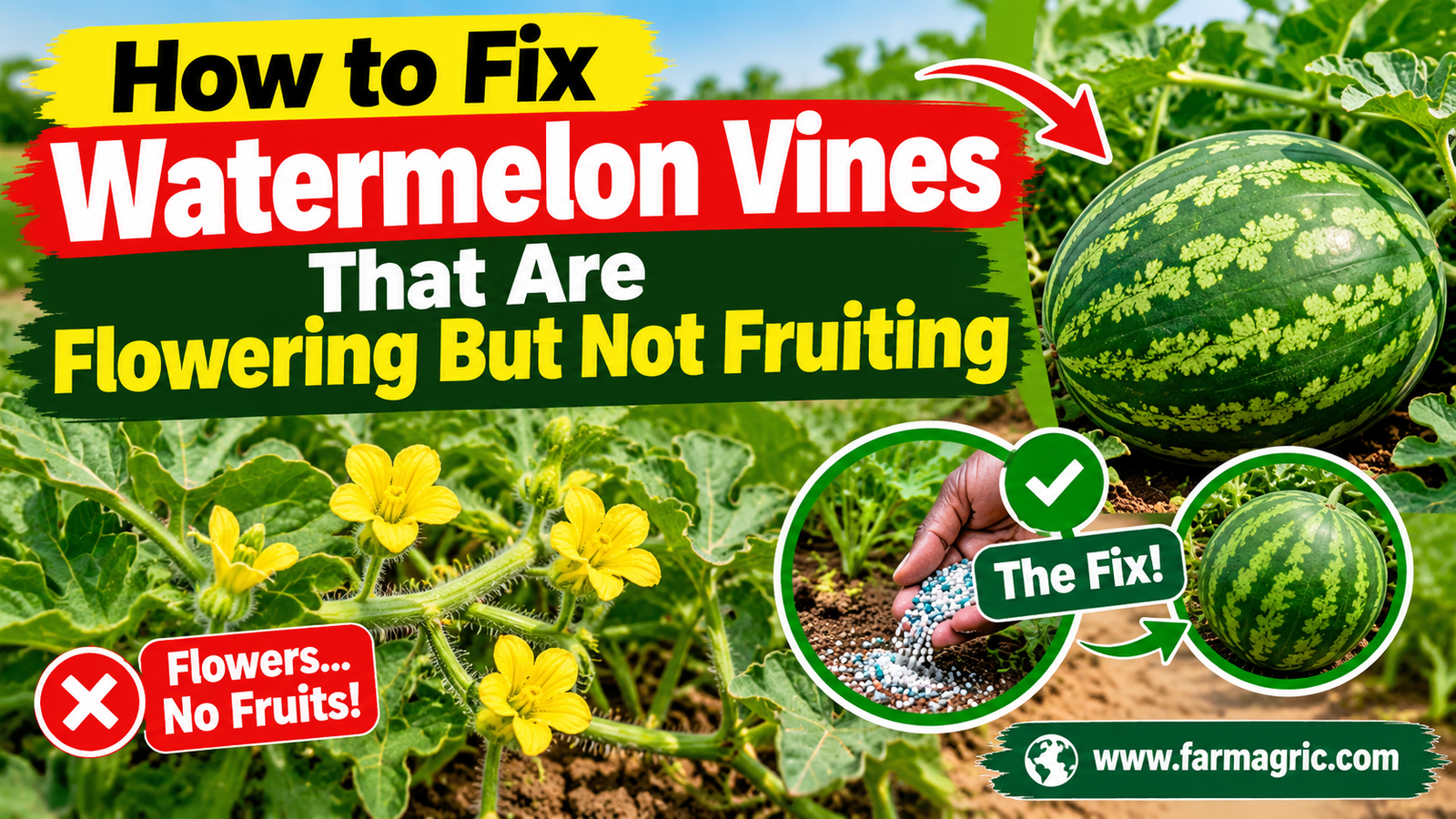
How to Fix Watermelon Vines That Are Flowering But Not Fruiting
How to Fix Watermelon Vines That Are Flowering But Not Fruiting: A Farmer’s Guide to Solving the Season’s Most Common Complaint
I once had a watermelon patch so covered in bright yellow flowers that I genuinely thought I had finally gotten something right, certain I was about to be overwhelmed with more melons than I could sell. Week after week those flowers kept opening and falling, and the vines themselves stayed exactly as bare of fruit as they had been at the very start. It took me embarrassingly long to understand something an older grower eventually explained in about two minutes, that watermelon produces two completely different kinds of flowers, and that most of what I had been admiring on my vines were male flowers that were never going to become fruit no matter how many of them opened. That conversation changed how I read a flowering watermelon vine permanently, because what looks like a flowering problem is very often not a flowering problem at all, it is a pollination and flower-type problem hiding behind an abundance of blossoms that were doing exactly what they were supposed to do, just not the job I had assumed every single one of them was there to perform.
So let me answer you straight, because I know you are looking at a vine thick with flowers and thin on fruit, wondering what has gone wrong. Watermelon vines flower without fruiting mainly because the plant is producing mostly male flowers with too few female flowers opening at the same time, poor pollination from low bee activity or extreme heat affecting pollen viability, excess nitrogen that pushes vigorous vine growth at the expense of fruit set, and stress from inconsistent watering or very young vine age before the plant has matured enough to set female flowers reliably, and fixing it means figuring out which of these applies to your vines rather than assuming the plant simply needs more time or more fertilizer. A watermelon vine loaded with flowers has not necessarily done very much toward giving you a melon yet, since the plant’s two flower types serve completely different purposes, and only one of them, the female flower, has any chance at all of becoming the fruit you are actually waiting for.
Why Watermelon’s Two Flower Types Confuse So Many Growers
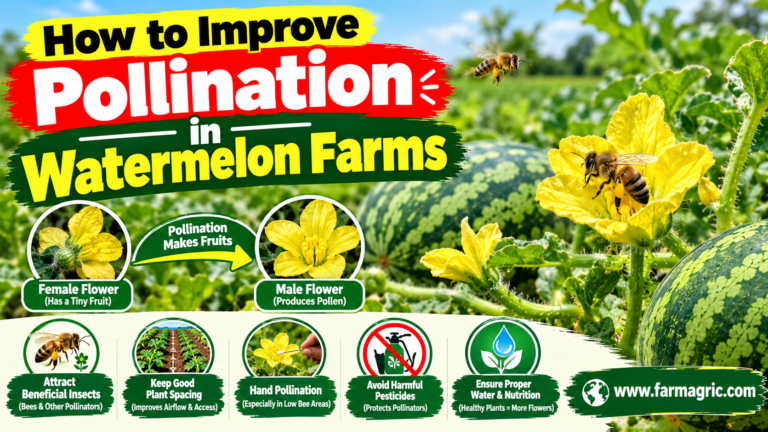
Watermelon plants produce separate male and female flowers on the same vine rather than a single flower type that handles both roles, and this distinction explains most cases of heavy flowering without fruiting far better than any disease or nutrient problem does. Male flowers typically appear first and in considerably greater numbers, sitting on a simple, straight stem with no swelling behind the petals, and their sole purpose is producing pollen. Female flowers are easy to tell apart once you know what to look for, since they have a small, round swelling directly behind the petals, visible even before the flower opens, which is the undeveloped fruit itself waiting to be pollinated. A vine can open dozens of male flowers for every female flower it produces, particularly early in its life, and because male flowers open, offer pollen, and drop within a day or two whether or not any pollination happens elsewhere on the plant, a grower watching this constant cycle of blooming and dropping can easily mistake it for a fruiting failure when the plant has simply not yet begun producing the female flowers that are the actual prerequisite for any fruit at all.
What Most Farmers Get Wrong
The first mistake, the one that had me convinced I was about to be overwhelmed with melons that never came, is not learning to tell male and female flowers apart, which means watching a vine covered in male blooms and assuming every one of them represents a fruit that failed to develop, when in reality the vast majority of those flowers were never going to produce fruit regardless of pollination, weather, or anything else a farmer could control.
The second mistake is not recognizing how directly watermelon’s flowering pattern changes with the plant’s age, since young vines typically produce only male flowers for the first few weeks of flowering before female flowers begin appearing, and a grower unfamiliar with this pattern can spend weeks worrying about a problem that was simply the plant not yet mature enough to produce the flower type that actually matters.
The third mistake is underestimating how dependent watermelon is on insect pollination specifically, since unlike self-pollinating crops such as tomato, watermelon flowers need pollen physically carried from a male flower to a female flower by a bee or other pollinating insect, and a planting with low bee activity, whether from pesticide use, lack of nearby flowering plants to attract pollinators, or simply an unlucky stretch of weather that kept bees less active, can see female flowers opening and failing to be fertilized despite looking completely healthy.
The fourth mistake is applying heavy nitrogen fertilizer throughout the season without easing off once vines are well established, not recognizing that excess nitrogen favors continued vigorous vine and leaf growth at the expense of the plant shifting toward producing female flowers and supporting fruit development.
The fifth mistake is not recognizing heat stress as a factor in poor fruit set, since very high daytime temperatures can affect pollen viability and sometimes cause female flowers to abort shortly after opening, a pattern that can look like a general fruiting failure when it is really a specific, weather-driven pollination problem.
Step-by-Step Plan to Fix Watermelon Flowering Without Fruiting
Learn to identify male and female flowers directly on your own vines before assuming any problem exists at all, checking the base of several open flowers for the small, round swelling that marks a female flower, and if you are seeing mostly or entirely male flowers, recognize that this alone explains the lack of fruit and is often simply a matter of the plant needing more time rather than a correctable problem.
Track how many female flowers are actually opening over a period of one to two weeks once you can identify them reliably, since a healthy, maturing vine should begin producing a reasonable number of female flowers within a few weeks of the first male flowers appearing, and a near-total absence of female flowers well beyond this window is worth investigating further rather than continuing to assume patience alone will resolve it.
Check for bee and pollinator activity around your planting during the hours when flowers are open, typically in the morning, since watermelon flowers generally only stay open for a single day, and a notable absence of visiting bees during this short window is a strong signal that pollination, rather than flower production itself, is the limiting factor.
Avoid applying any insecticide during flowering unless genuinely necessary, and if treatment is required, apply it in the evening after flowers have closed for the day rather than during active flowering hours, since even products not specifically targeted at bees can reduce pollinator visits if applied while flowers are open and actively attracting them.
Consider hand pollination as a direct, reliable fix where natural pollinator activity appears to be the limiting factor, using a small, soft brush or simply picking a freshly opened male flower and gently transferring its pollen directly onto the center of an open female flower, ideally done in the morning when both flower types are freshly open and pollen is most viable.
Plant flowering companion plants near your watermelon patch to help attract bees and other pollinators more reliably to the area, since a planting surrounded by little else in bloom offers less incentive for pollinators to visit consistently compared to a more diverse area with multiple nectar sources drawing them into the general vicinity.
Reduce nitrogen application once vines are well established and have begun flowering, shifting toward a more balanced fertilizer approach with adequate phosphorus and potassium, since these nutrients support flowering and fruit development more directly than nitrogen does at this stage of the plant’s life.
Maintain consistent, moderate watering through the flowering period specifically, avoiding both drought stress and waterlogged soil, since water stress in either direction can contribute to female flowers failing to set or aborting shortly after successful pollination.
Provide some afternoon shade during stretches of particularly intense heat where practical, since very high temperatures during flowering can affect pollen viability and increase the likelihood of female flowers aborting even after apparently successful pollination.
Monitor newly set, pea-sized fruit over the following week after confirming good female flower production and pollinator activity, since a successfully pollinated female flower should show the small fruit behind it beginning to swell and grow within several days, while an unpollinated or poorly pollinated flower typically yellows and drops without the fruit developing further.
Avoid excessive pruning or vine disturbance during the period when female flowers are opening and being pollinated, since unnecessary stress to the plant during this specific window can contribute to flower or very young fruit drop independent of pollination success itself.
Keep track of how many female flowers you observe opening, how many appear successfully pollinated based on early fruit swelling, and how many of those early fruit go on to develop fully, since this record helps pinpoint more precisely whether your specific limiting factor is female flower production itself, pollination, or early fruit retention, each of which points toward a different corrective focus.
Warning Signs to Watch For
A vine that has been flowering for several weeks with every flower you check showing no swelling at the base indicates you are looking entirely at male flowers, and this alone fully explains an absence of fruit without pointing to any underlying problem beyond the plant simply needing more time to begin producing female flowers. Female flowers that open, show no sign of pollinator visits during their single day open, and then close and yellow without the small fruit behind them swelling at all point clearly toward a pollination failure rather than any issue with the flower production itself. Small, newly set fruit that begins swelling promisingly for a few days and then yellows and drops before reaching any meaningful size suggests either incomplete pollination or a stress factor, such as heat or water inconsistency, interrupting early fruit development after an initially successful start. A planting with noticeably little visible bee or pollinator activity during flowering hours, especially compared to other flowering plants nearby that do seem to be attracting visitors, signals that pollinator shortage specifically is likely limiting fruit set on your watermelon vines. And vines that are notably lush, dark green, and vigorously spreading while producing comparatively few female flowers relative to the sheer volume of male flowers and leaf growth suggest a nitrogen imbalance keeping the plant oriented toward vegetative growth rather than shifting adequately toward fruit-focused flowering.
What I’d Do Differently If Starting Again Today
If I were starting over, I would learn to identify male and female watermelon flowers before my very first planting rather than spending weeks assuming a problem existed where the plant was simply doing exactly what young watermelon vines normally do. I would watch for pollinator activity deliberately during flowering rather than only noticing its absence after wondering for too long why promising-looking female flowers kept failing to develop. I would keep a small brush on hand specifically for hand pollination during any stretch where bee activity looked thin, rather than only discovering this simple, reliable fix well into my own growing experience. And I would moderate my nitrogen application once vines were established and flowering had begun, understanding now how much that lush, vigorous growth I used to feel proud of was sometimes coming directly at the expense of the female flowers and fruit I actually wanted that vigor to produce.
Frequently Asked Questions About Watermelon Flowering Without Fruiting
How can I tell the difference between male and female watermelon flowers? Female flowers have a small, round swelling directly behind the petals, visible even before the flower opens, which is the undeveloped fruit itself, while male flowers sit on a plain, straight stem with no swelling, and this single check is the fastest way to understand whether a vine is simply not yet producing the flower type needed for fruit.
Why does my watermelon vine have so many flowers but no fruit at all? This is most often because the vine is still producing mostly or entirely male flowers, which is normal in the first few weeks of flowering, or because female flowers are opening but not being pollinated due to low bee activity, both of which are far more common explanations than disease or a fundamental problem with the plant.
Do I need bees for watermelon to produce fruit? Yes, watermelon generally requires pollen to be physically carried from a male flower to a female flower by a bee or other pollinating insect, since the flowers do not self-pollinate the way some other vegetable flowers do, making pollinator activity a genuine requirement rather than an optional benefit.
Can I hand pollinate watermelon if I am not seeing enough bees? Yes, picking a freshly opened male flower and gently transferring its pollen directly onto the center of an open female flower, ideally in the morning when both are freshly open, is a reliable and simple way to ensure pollination happens even where natural pollinator activity is limited.
How long does it take for a watermelon vine to start producing female flowers? Young vines typically produce only male flowers for the first few weeks of flowering before female flowers begin appearing, so a vine well within this early window that has not yet fruited is often simply not mature enough yet rather than experiencing any correctable problem.
If there is one thing I want you to remember from all this, it is that a watermelon vine bursting with flowers is not making you a promise about fruit, it is mostly just doing the male flower’s job of handing out pollen and waiting for the female flowers and the bees to show up and finish the work, so learn to spot the swelling behind the petals, watch for the bees doing their part, and keep that small brush ready just in case they need a little help, because the patch that once had me dreaming of more melons than I could sell taught me that abundant flowers and an abundant harvest are, for this particular crop, two very different things entirely.