How to Start Exporting Farm Products: Top Crops, Markets and First Steps
Exporting farm products is not simply a matter of finding a foreign buyer and putting produce on a truck or vessel. A successful agricultural export business begins much earlier, with choosing the right product, understanding the target market, producing or sourcing consistent quality, calculating the complete export cost, and confirming the buyer’s requirements before committing money to a shipment.
For farmers and agribusinesses in Nigeria, the opportunity is particularly relevant because products such as cocoa, cashew, sesame, ginger and dry beans already form part of the country’s established agricultural export trade. The Nigerian Export Promotion Council also maintains product and market information for several of these commodities.
The practical approach is to start small, choose one product and one realistic market, understand the requirements, establish a dependable supply chain, and only then scale up.
What does agricultural export involve?
Agricultural export is the commercial sale and movement of farm products from one country to another.
The product could be sold as a raw commodity, semi-processed material or finished food product. Examples include dried ginger, sesame seed, cocoa beans, cashew nuts, dried beans, processed cocoa products, spices, fruit products and other commodities that meet the requirements of the destination market.
The export chain normally involves several parties:
- Farmers or producers
- Aggregators and buying agents
- Processors
- Quality inspectors
- Exporters
- Banks
- Customs and regulatory authorities
- Freight forwarders
- Shipping or airline companies
- Importers and distributors
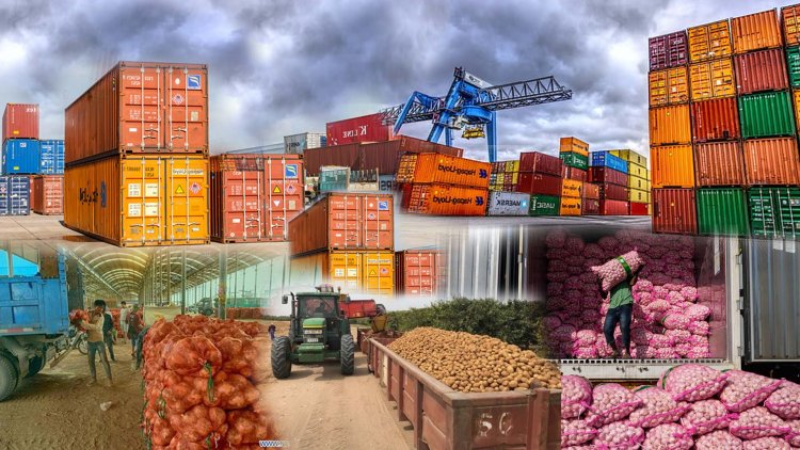
This is why export farming should be viewed as a supply-chain business rather than simply a farming activity.
A farmer may produce excellent crops but still struggle in the export market if the produce is poorly dried, contaminated, mixed with unsuitable grades, incorrectly packaged or supplied inconsistently.
Which farm products are suitable for export?
There is no universal list of the “best” export crops. The right product depends on production conditions, available supply, quality, processing capacity, buyer demand, regulations, transport costs and the specific destination market.
For Nigeria, several agricultural products already have established export relevance.
| Product | Export opportunity | Important considerations |
|---|---|---|
| Cocoa | Strong established international trade | Fermentation, drying, bean quality, traceability and destination requirements |
| Cashew | Established regional and international trade | Nut quality, moisture, sizing, aggregation and processing |
| Sesame | Established export commodity | Purity, moisture, foreign matter, food safety and buyer specifications |
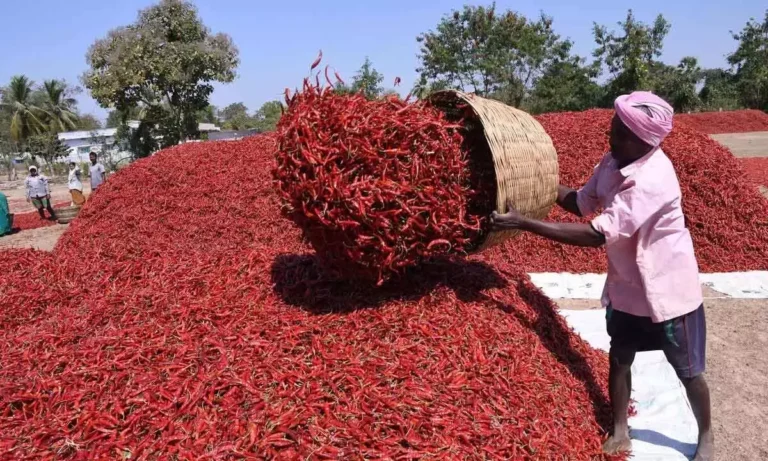
| Ginger | Exportable fresh and dried commodity | Drying quality, cleanliness, pesticide controls and packaging |
| Dry beans | Internationally traded agricultural product | Variety, pesticide residues, cleanliness, moisture and food safety |
| Processed agricultural products | Potential for additional value | Processing standards, food safety, packaging, labelling and shelf life |
NEPC’s current Nigeria product information specifically features dry beans, cashew, cocoa, ginger and sesame among its agricultural export products.
Recent NEPC reporting also indicates that cocoa, cashew and sesame were among Nigeria’s leading non-oil export products in 2025. NEPC reported cocoa beans generating about US$1.99 billion, cashew nuts about US$456.9 million and sesame seeds about US$300.3 million during that year. These figures describe reported 2025 export performance, not guaranteed returns for a new exporter.
Cocoa
Cocoa is one of Nigeria’s established export commodities and provides opportunities at several points in the value chain.
An exporter can deal in properly prepared cocoa beans or move further into processing, depending on available capital, technical capacity, buyer requirements and market access.
Quality begins at farm level. Fermentation, drying, moisture control, removal of defective beans and careful storage all influence the commercial value of cocoa.
For exporters targeting European buyers, cocoa requires additional attention to traceability and deforestation-related requirements. The EU Deforestation Regulation covers cocoa and is scheduled to apply from 30 December 2026 to large and medium operators, with most micro and small operators coming under the rules from 30 June 2027.
This means exporters supplying affected markets should begin discussing traceability and sourcing information with their suppliers and buyers rather than waiting until the regulatory deadline.
Cashew
Cashew offers opportunities in both raw and processed forms.
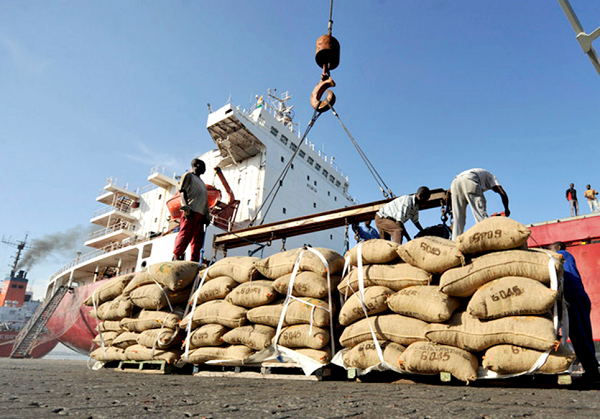
Raw cashew nuts can be aggregated from producing areas and supplied to processors or international buyers, while cashew kernels provide a higher level of processing and value addition.
The decision between exporting raw nuts and processed kernels depends on access to processing equipment, working capital, labour, quality control, market relationships and buyer specifications.
Cashew also demonstrates an important lesson for new exporters: having a crop in large quantities does not automatically mean that exporting it will be straightforward. Grading, moisture, contamination, kernel quality, packaging and reliable supply all influence buyer acceptance.
Sesame
Sesame is another established Nigerian export commodity.
The product is traded as a food ingredient and can move through several supply-chain channels before reaching processors, food manufacturers or distributors.
For an exporter, cleanliness and consistency are critical. Foreign materials, excessive moisture, poor storage conditions and contamination can create problems with buyers or border authorities.
An exporter should therefore know the buyer’s specification before purchasing large quantities. A specification should address issues such as acceptable moisture, purity, foreign matter, packaging, quantity, quality tolerances and any laboratory tests required by the destination market.
Ginger
Ginger can be marketed as fresh produce, dried ginger or processed ginger products.
Dried ginger can be particularly suitable for exporters who want a product with longer storage potential than fresh produce, although drying must be properly controlled.
The exporter should establish the required grade, moisture specification, cleanliness, packaging and permitted residue levels before purchasing from farmers.
Poor drying can reduce quality and create storage problems. Mixing different grades or buying material without adequate inspection can also make it difficult to satisfy an international buyer.
Dry beans and other food commodities
Dry beans and other food commodities can also enter export markets, but food safety deserves particular attention.
A product that appears acceptable visually may still fail laboratory testing because of pesticide residues, microbial contamination, mycotoxins or other quality problems.
This is why exporters should not rely solely on visual inspection. Depending on the commodity and destination, laboratory testing may be necessary.
The lesson is simple: know the destination market’s maximum residue limits and food safety requirements before sourcing the commodity.
How to choose the right farm product for export
Do not begin by asking, “Which crop will make the most money?”
A better question is, “Which product can I supply consistently at the quality, quantity and cost required by a specific buyer?”
Start by examining five areas.
Production availability
Determine whether you can obtain enough product throughout the period required by your buyer.
If you depend on farmers, identify how many producers you need, where they are located, when they harvest and how much marketable produce they can realistically supply.
Quality requirements
Find out exactly what the target buyer considers acceptable.
This may include:
- Moisture content
- Size and grade
- Colour
- Foreign matter
- Pest damage
- Defects
- Pesticide residues
- Microbiological limits
- Packaging
- Labelling
- Traceability
Market access
A product may be in demand internationally but restricted in a particular market because of sanitary, phytosanitary, food safety or other import requirements.
Never assume that because another exporter is selling a commodity to a country, your product will automatically qualify under the same conditions.
Logistics
Calculate how the product will move from farm or warehouse to the buyer.
Consider:
- Local transportation
- Warehousing
- Processing
- Packaging
- Inspection
- Port charges
- Freight
- Insurance
- Documentation
- Customs-related costs
- Bank charges
- Handling and other service costs
Working capital
Agricultural export transactions can require substantial working capital because money may be needed before the final buyer payment is received.
Your calculation should include the cost of purchasing the crop, sorting, processing, packaging, storage, transport and export preparation.
How to choose an export market
Do not select a country simply because someone says that farmers there are paying high prices.
Start with the product and work toward the market.
A practical market-selection process looks like this:
Product → HS code → importing countries → import requirements → buyer specifications → landed cost → commercial opportunity
The HS code is particularly important because trade statistics and many customs systems classify products according to these internationally recognized product codes.
Once you know the correct classification, research countries that import the product and compare:
- Import demand
- Product specifications
- Tariffs
- Import restrictions
- Phytosanitary requirements
- Food safety requirements
- Packaging requirements
- Shipping costs
- Transit time
- Currency and payment risks
- Competition
- Buyer type
Do not confuse large national import demand with an easy opportunity for a small exporter. A large market may also have demanding standards, established suppliers and strict documentation requirements.
How to find international buyers for farm products
Finding a buyer should happen before purchasing a large quantity of export produce.
Potential buyer channels include:
- Importers
- Food processors
- Commodity traders
- Distributors
- Wholesalers
- Manufacturers
- Retail suppliers
- Export trading companies
- Trade promotion organizations
- Agricultural trade events
- Verified business directories
- Industry associations
A professional buyer will usually want more than the name of your product.
Prepare a concise supplier profile containing:
- Product name
- Product grade
- Origin
- Available quantity
- Packaging
- Harvest or production period
- Processing method
- Quality specifications
- Laboratory test information where applicable
- Certifications where applicable
- Minimum order quantity
- Delivery location
- Payment terms
- Business registration information
Do not send vague messages such as “I have quality ginger for export.”
A serious buyer needs enough information to determine whether your supply matches their requirements.
How to verify an international buyer
One of the risks in agricultural exporting is dealing with an unknown buyer.
Before agreeing to a significant transaction, investigate the company.
Check:
- Legal company identity
- Physical business address
- Company registration where available
- Website and business history
- Industry references
- Import history where reliable data is available
- Bank information
- Proposed payment method
- Contract terms
- The person authorized to sign the agreement
Be particularly careful when a buyer pressures you to ship quickly while providing unclear company information or unusual payment instructions.
A written export contract should clearly establish the product specification, quantity, price, delivery terms, responsibilities of both parties, payment terms, inspection arrangements and procedures for handling disputes.
What documents are needed to export farm products?
The exact documents depend on the exporting country, commodity, destination and transaction.
For Nigerian exporters, NEPC identifies exporter registration as an initial requirement and lists commercial, financial, quality assurance and goods-movement documentation within the formal export process.
Common documents may include:
- Exporter’s certificate
- Proforma invoice
- Commercial invoice
- Packing list
- Nigeria Export Proceed form
- Certificate of Origin
- Applicable phytosanitary certificate
- Health certificate for relevant processed foods
- Inspection documents
- Certificate of Weight and Quality where required
- Bill of Lading for sea shipments
- Air Waybill for air shipments
- Other documents required by the destination country or buyer
Agricultural commodities may require a phytosanitary certificate, while processed food and animal products can have different competent authorities and documentation requirements. NEPC specifically identifies phytosanitary certification for agricultural commodities and other certificates for relevant processed food and animal products.
Do not treat this list as universal. Confirm the exact documentation for the commodity and destination before shipment.
Registering as an exporter in Nigeria
Businesses exporting from Nigeria are required to register with the Nigerian Export Promotion Council.
NEPC’s current registration guidance states that registration is carried out through its e-registration platform and results in an Exporter’s Certificate. The documentation required depends on the business structure.
For a limited liability company, NEPC lists documents including the Certificate of Incorporation, Memorandum and Articles of Association, relevant corporate information and a board resolution.
The certificate is currently valid for an initial two years and is renewable annually afterward. NEPC also currently lists a new certificate registration fee of ₦13,500, excluding applicable payment charges. Because fees and procedures can change, exporters should verify the current requirements directly with NEPC before making payment.
Understanding phytosanitary requirements
Phytosanitary controls are designed to prevent the movement of harmful plant pests and diseases through international trade.
If your product requires a phytosanitary certificate, do not wait until the shipment is ready before investigating the procedure.
The destination country may have specific conditions covering:
- Pest status
- Treatment
- Inspection
- Packaging
- Product condition
- Approved facilities
- Certificates
- Import permits
- Entry points
For example, the European Union requires phytosanitary certification for listed plants and plant products entering the EU, and consignments can be subject to documentary, identity and physical checks.
This is why market research must come before sourcing.
Food safety can determine whether a shipment succeeds
International buyers are not purchasing agricultural produce simply because it looks good.
They may require evidence that the product meets defined food safety specifications.
Depending on the commodity, this can involve testing for:
- Pesticide residues
- Mycotoxins
- Heavy metals
- Microbial contamination
- Moisture
- Foreign matter
- Adulteration
- Other commodity-specific hazards
For exporters supplying the EU, imported food and feed must comply with applicable food law, while traceability requirements can apply throughout relevant stages of production, processing and distribution.
The practical lesson for farmers is to establish good production and post-harvest practices before export demand arrives.
Prepare the farm product properly
Post-harvest handling can determine whether an otherwise good crop becomes export-grade.
A basic export preparation chain may include:
Harvesting → cleaning → drying or cooling → sorting → grading → inspection → testing where required → packaging → storage → transport
The exact process depends on the crop.
For dried commodities, moisture management is critical.
For fresh produce, temperature control, handling speed and packaging can become more important.
For processed foods, food-grade facilities, hygiene, labelling and shelf-life control become central.
Do not use one post-harvest system for every crop.
Packaging and labelling requirements
Packaging should protect the commodity throughout handling, storage and transportation.
The correct packaging depends on:
- Product characteristics
- Buyer specification
- Transport method
- Storage conditions
- Destination requirements
- Shelf life
- Weight
- Handling conditions
The label may also need information such as product name, net weight, origin, batch or lot information, producer or exporter details, dates and other information required by the destination market.
Never print large quantities of packaging until the buyer and applicable destination rules have confirmed the required information.
Calculate the real export cost
A common mistake among new exporters is calculating profit using only the farm-gate purchase price and expected selling price.
The actual export cost can include:
Product purchase cost + aggregation + sorting + processing + testing + packaging + storage + inland transport + inspection + documentation + port handling + freight + insurance + bank charges + other transaction costs
Only after calculating the complete cost can you determine whether a transaction makes commercial sense.
For example, a crop may appear cheap at the farm gate but become expensive after several hundred kilometres of transportation, additional sorting, laboratory testing, packaging and international freight.
This is why export pricing should be based on the total delivered cost rather than the farm-gate price alone.
Raw agricultural products versus processed products
Exporters often face a strategic choice between selling raw commodities and adding value.
Raw products may require less processing investment but can expose the exporter to commodity price competition.
Processed products can potentially create additional value but usually require greater investment in equipment, quality control, packaging, food safety systems, market development and regulatory compliance.
The right approach depends on the product and market.
A small exporter does not necessarily need to build a large processing factory. In some cases, working with an existing compliant processor can provide access to processing capacity without requiring the exporter to own the facility.
Should farmers export directly?
Not every farmer needs to become a direct exporter.
A farmer may participate in export markets by supplying a reliable exporter, joining a cooperative, working with an aggregator, supplying a processor or developing a direct export operation.
Direct exporting can provide greater control over the buyer relationship, but it also creates additional responsibilities involving documentation, quality assurance, logistics, finance and compliance.
For smallholder farmers, aggregation can therefore be important.
Several farmers producing consistent quality can collectively create the volume required by a commercial buyer.
Build an export supply chain before scaling
International buyers generally want consistency.
If a buyer orders several tonnes every month, the exporter must be able to supply the required quantity and specification repeatedly.
Build relationships with farmers before signing contracts that exceed your reliable supply capacity.
A useful supply system should identify:
- Where the produce comes from
- Who supplies it
- Expected production volume
- Harvest periods
- Quality-control procedures
- Collection points
- Storage facilities
- Processing capacity
- Transportation arrangements
- Backup suppliers
Do not promise a buyer 100 tonnes simply because you believe the crop is available somewhere in the market.
Export commitments should be based on verifiable supply.
Start with a trial shipment
New exporters often want to begin with a very large order.
A more controlled approach is to test the supply chain with a manageable shipment when the buyer and product allow it.
A trial can reveal problems involving:
- Product quality
- Packaging
- Documentation
- Transit time
- Customs procedures
- Buyer inspection
- Payment
- Product handling
- Actual logistics costs
The lessons from the first shipment can then be used to improve subsequent consignments.
Common mistakes new agricultural exporters make
One mistake is buying large quantities before confirming the buyer’s specification.
Another is choosing a market because the selling price appears attractive without calculating the complete landed cost.
Some exporters also assume that a government export certificate automatically means the product is accepted in every destination market. It does not. Export-country registration and destination-country import requirements are separate matters.
Other common problems include:
- Poor moisture control
- Inadequate storage
- Mixing different grades
- Weak traceability
- Incorrect documentation
- Underestimating freight costs
- Ignoring laboratory testing
- Depending on one supplier
- Accepting unclear payment terms
- Shipping without a properly defined contract
- Failing to research destination-country regulations
- Promising quantities that cannot be supplied consistently
Avoiding these mistakes can be more valuable than trying to increase the number of products you export.
A practical first-step plan for new exporters
If you are starting from zero, keep the first stage focused.
Choose one agricultural product that you can source consistently.
Identify its correct product classification and understand the quality requirements.
Choose one or two potential destination markets instead of trying to sell everywhere.
Research the import requirements for those markets.
Find potential buyers and request their product specification.
Calculate your complete export cost.
Confirm your available supply.
Complete the required exporter registration and documentation.
Arrange quality inspection and testing where required.
Agree on a written contract and payment terms.
Work with an experienced freight forwarder and other relevant service providers.
Then execute the shipment according to the agreed specifications.
This approach reduces the number of unknowns you have to manage simultaneously.
What makes an agricultural export business sustainable?
Long-term export success is built on reliability.
Buyers want suppliers who can provide the correct product, in the correct condition, at the agreed quantity, within the agreed timeframe and with the required documentation.
That requires more than access to farmland.
A sustainable agricultural export business needs:
- Reliable sourcing
- Consistent quality
- Good post-harvest handling
- Accurate documentation
- Working capital
- Market knowledge
- Buyer relationships
- Logistics planning
- Regulatory awareness
- Risk management
The exporter who understands the entire chain from farm to foreign buyer is generally in a stronger position to identify and solve problems before they become expensive.
Frequently Asked Questions
What farm products can I export?
The products you can export depend on the regulations of the exporting and importing countries. In Nigeria, established agricultural export products include cocoa, cashew, sesame, ginger and dry beans. The suitability of any product depends on its quality, supply, destination-market requirements, logistics and buyer demand.
How do I start exporting agricultural products?
Start by selecting one product you can source consistently, identifying a suitable destination market, researching the buyer’s specifications and import requirements, calculating the complete export cost, completing the required registration and documentation, and establishing a reliable logistics and quality-control process.
How do I find international buyers for farm products?
Potential buyers can be found through importers, processors, distributors, commodity traders, trade promotion organizations, agricultural trade events, industry associations and verified business directories. Before contacting buyers, prepare clear information about your product, grade, quantity, origin, packaging and availability.
What documents are needed to export agricultural products?
The exact documents depend on the product and destination. For Nigerian formal exports, common documents can include exporter registration, proforma and commercial invoices, packing lists, the Nigeria Export Proceed form, certificates of origin, applicable phytosanitary or health certificates, inspection documents and shipping documents. NEPC provides a detailed export-documentation framework.
Do I need a phytosanitary certificate to export farm produce?
It depends on the product and destination. Many plants and plant products are subject to phytosanitary requirements. The destination country’s plant-health authority determines the applicable import conditions. For the EU, listed plants and plant products entering the market generally require official phytosanitary certification and may undergo documentary, identity and physical checks.
Is it better to export raw or processed agricultural products?
Neither option is automatically better. Raw commodities may require less processing investment, while processed products can offer additional value but normally require greater attention to food safety, equipment, packaging, quality control and market requirements. The appropriate choice depends on the commodity, buyer and destination market.
Can a small farmer export directly?
Yes, but direct exporting involves responsibilities that go beyond production, including buyer management, documentation, quality assurance, finance, logistics and regulatory compliance. Small farmers can also participate in export markets by supplying established exporters, processors, aggregators or cooperatives.
How much money do I need to start an agricultural export business?
There is no single amount that applies to every agricultural export business. Capital requirements depend on the commodity, shipment size, sourcing model, processing requirements, packaging, transportation, testing, destination and payment terms. A realistic budget should be prepared from the complete cost of sourcing and delivering one specific shipment.