Top 10 Agricultural Products Nigeria Exported in Q2 2026
Nigeria exported agricultural products worth ₦802.99 billion in the second quarter of 2026, according to the latest Foreign Trade Statistics from the National Bureau of Statistics. That represented a 36.09% decline from ₦1.26 trillion recorded in Q2 2025 and a 31.51% decline from the ₦1.17 trillion recorded in Q1 2026.
Despite the overall decline, a relatively small group of commodities accounted for a large share of agricultural export earnings. The top 10 agricultural products generated a combined ₦747.54 billion during the quarter, with cashew nuts in shell, standard quality cocoa beans and sesamum seeds occupying the first three positions.
For farmers, commodity traders, processors and exporters, these figures are useful because they show which agricultural product categories generated the greatest export values during the quarter. They also reveal how quickly the composition of Nigeria’s agricultural exports can change from one quarter to another.
The NBS published its Q2 2026 Foreign Trade Statistics Report on September 7, 2026, providing the underlying trade data used for the analysis.
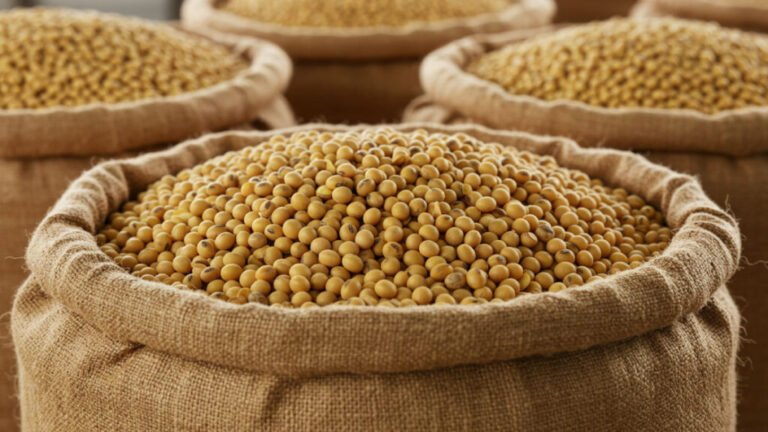
Flours and meals of soya beans generated ₦36.41 billion in Q2 2026.
Although the value was below the ₦53.20 billion recorded in Q1 2026, it was considerably higher than the ₦20.64 billion recorded in Q2 2025. That represents a year-on-year increase of about 76.4%.
This category is also notable because it demonstrates the presence of processed soybean products among Nigeria’s major agricultural exports.
Processing can change the characteristics and market application of an agricultural commodity, but it also introduces additional requirements involving product specifications, food safety, packaging, storage and buyer standards.
Businesses entering this segment need to understand the specifications of their target market before processing large quantities for export.
Other cut flowers and flower buds
Other cut flowers and flower buds generated ₦31.43 billion in Q2 2026, ranking seventh among the top agricultural export categories.
The value increased substantially from ₦12.23 billion in Q1 2026, although it remained slightly below the ₦33.41 billion recorded in Q2 2025.
Cut flowers are different from many of the bulk commodities on the list because freshness, presentation, handling speed and logistics are particularly important.
For businesses operating in this value chain, post-harvest handling is not simply a quality consideration. It can directly affect whether a shipment remains commercially acceptable when it reaches the buyer.
This makes access to efficient transportation, appropriate packaging and dependable logistics particularly important for exporters dealing with perishable agricultural products.
Natural cocoa butter
Natural cocoa butter ranked eighth, with an export value of ₦27.60 billion.
The figure declined from ₦41.69 billion in Q1 2026 and was substantially below the ₦105.07 billion recorded in Q2 2025.
Cocoa butter is particularly important when considering value addition because it is a processed cocoa product rather than simply an unprocessed agricultural commodity.
The Q2 figures show that cocoa exports cannot be understood only by looking at cocoa beans. Nigeria’s agricultural export basket also includes processed cocoa products, and changes in processing capacity, product quality and international demand can affect their performance.
Crude shea oil
Crude shea, or karite, oil generated ₦12.66 billion in Q2 2026, making it the ninth-largest product in the ranking.
Its export value increased from ₦9.14 billion in Q1 2026.
Shea has a broad value chain involving collection, processing, oil extraction and further industrial applications. For exporters, consistency in processing and quality control becomes increasingly important as buyers move beyond raw commodity purchasing.
The presence of crude shea oil among the top 10 also highlights the continued relevance of Nigeria’s shea value chain within agricultural trade.
Soya beans seed
Soya beans seed completed the top 10, with exports valued at ₦11.44 billion in Q2 2026.
This was more than double the ₦5.20 billion recorded in Q1 2026.
Seed exports require particular attention to product identity, quality and the requirements of the destination market. A business dealing in seed for planting purposes should not automatically assume that requirements for ordinary commodity soybeans are the same.
Exporters should confirm the specifications and regulatory requirements applicable to the exact product and destination before committing to a shipment.
What the Q2 2026 export figures reveal
The first major point is concentration.
Cashew nuts in shell alone generated ₦268.62 billion. When standard quality cocoa beans and sesamum seeds are added, the three products account for approximately 69.4% of the export value generated by the top 10 agricultural products.
That concentration creates exposure to changes affecting a relatively small number of commodities. A significant movement in cashew, cocoa or sesame exports can therefore influence the wider agricultural export picture.
The second point is volatility.
The sharp movement in superior quality cocoa beans between Q1 and Q2 is a good example. The category moved from ₦596.90 billion in Q1 to ₦58.82 billion in Q2. Standard quality cocoa beans moved in the opposite direction, rising from ₦2.40 billion to ₦154.31 billion.
The third point is the importance of looking beyond raw crops.
The Q2 top 10 included soybean flour and meals, natural cocoa butter and crude shea oil. These categories show that processing and value addition are part of Nigeria’s agricultural export activity.
The fourth point is that the overall agricultural export market weakened during the quarter. Total agricultural exports fell to ₦802.99 billion in Q2 2026, compared with ₦1.17 trillion in Q1 and ₦1.26 trillion in Q2 2025.
Where Nigerian agricultural exports were going
According to reporting based on the Q2 2026 NBS figures, Nigerian agricultural products were mainly exported to markets in Asia and Europe. Countries identified among the major destinations included Vietnam, India, Malaysia, the Netherlands and China.
The destination market matters because agricultural export requirements are not identical everywhere.
A product that can be accepted by one buyer may require different documentation, packaging, quality specifications, inspection procedures or regulatory compliance in another market. Exporters should therefore identify the specific destination and buyer requirements before preparing a commercial shipment.
What the figures mean for Nigerian farmers and exporters
The Q2 data should not be interpreted as a simple list of crops that every farmer should start producing for export.
Export value is only one part of an agricultural business decision. Farmers and businesses also need to consider production costs, access to raw materials, quality requirements, storage, aggregation, transport, processing, working capital and the reliability of buyers.
For farmers already producing cashew, cocoa, sesame, soybean or shea, the data provides evidence that these commodities were significant contributors to Nigeria’s agricultural export earnings during Q2 2026.
For processors, the appearance of cocoa butter and soybean flour and meals shows that export activity extends beyond unprocessed commodities.
For traders and aggregators, the figures highlight the importance of building dependable supply networks. International buyers generally need consistency in quality, quantity and delivery rather than a single large shipment that cannot be repeated.
For new exporters, the most important lesson is to research the destination market before buying large quantities of produce. A commodity being among Nigeria’s leading exports does not automatically mean every exporter will find a suitable buyer or achieve a viable margin.
Important considerations before exporting these products
A Nigerian agricultural business preparing for export should establish the following before entering into a shipment:
Product specification: Confirm exactly what the buyer is purchasing, including grade, moisture level, purity, size, processing status and packaging requirements where applicable.
Supply reliability: Determine whether enough produce can be sourced consistently to meet the buyer’s quantity requirements.
Quality control: Establish procedures for sorting, cleaning, drying, grading, storage and inspection before the product leaves the country.
Market requirements: Verify the rules and documentation applicable to the destination country and the particular agricultural product.
Logistics: Calculate transportation, warehousing, port handling, packaging and other logistics costs before agreeing to a selling price.
Buyer verification: Confirm the identity, business credentials, payment terms and contractual obligations of the overseas buyer.
Working capital: Ensure sufficient funds are available to purchase, process, store and move the commodity through the export chain.
These issues become especially important when dealing with commodities whose export values can change sharply from one quarter to another.
The bigger picture for Nigeria’s agricultural exports
Nigeria’s Q2 2026 agricultural export figures show a sector with substantial export activity but significant quarterly movement.
The top 10 products generated ₦747.54 billion, while total agricultural exports stood at ₦802.99 billion. This means the leading categories represented most of the agricultural export value recorded during the quarter, while other products made up the remainder.
Cashew led the ranking, cocoa occupied several positions through both bean and processed categories, sesame remained a major export commodity, and soybean products accounted for three positions in the top 10.
For Nigerian agricultural businesses, the useful lesson is not simply to identify the highest-value commodities. It is to understand the entire value chain behind those exports, including production, aggregation, quality management, processing, documentation, logistics and access to reliable international buyers.
The Q2 data also reinforces the need to distinguish between quarterly export performance and long-term market trends. One strong quarter or one weak quarter does not by itself establish a permanent change in the competitiveness of a commodity.
For farmers and exporters planning their next move, the most practical approach is to combine current trade statistics with product-specific market research, production economics and the requirements of the destination market.
Frequently Asked Questions
What was Nigeria’s largest agricultural export in Q2 2026?
Cashew nuts in shell were Nigeria’s largest agricultural export product in Q2 2026, with an export value of ₦268.62 billion.
How much did Nigeria earn from agricultural exports in Q2 2026?
Nigeria’s total agricultural exports were valued at ₦802.99 billion in Q2 2026. This was 36.09% lower than the ₦1.26 trillion recorded in Q2 2025.
Which three agricultural products had the highest export values in Q2 2026?
The three leading products were cashew nuts in shell at ₦268.62 billion, standard quality cocoa beans at ₦154.31 billion and sesamum seeds at ₦96.03 billion.
How did agricultural exports in Q2 2026 compare with Q1 2026?
Total agricultural exports fell from ₦1.17 trillion in Q1 2026 to ₦802.99 billion in Q2 2026, representing a 31.51% quarter-on-quarter decline.
Which cocoa products were among Nigeria’s top agricultural exports in Q2 2026?
Standard quality cocoa beans, superior quality cocoa beans and natural cocoa butter all appeared among the top 10 agricultural export products. Their respective export values were ₦154.31 billion, ₦58.82 billion and ₦27.60 billion.
Did soybean products appear among Nigeria’s top agricultural exports?
Yes. Soya beans excluding seeds, flours and meals of soya beans, and soya beans seed all appeared in the top 10. Their combined export value was ₦98.07 billion.
Does being a top agricultural export mean a product is automatically profitable for farmers?
No. Export value does not determine individual profitability. Farmers and businesses still need to account for production costs, quality, aggregation, processing, logistics, financing, buyer requirements, market prices and other commercial factors.
What should a Nigerian exporter do before exporting one of these products?
The exporter should first confirm the product specification and destination market, verify buyer requirements, establish reliable supply, meet applicable quality and documentation requirements, calculate the complete logistics cost and confirm the commercial terms before committing to a shipment.