EHD Detected in Wisconsin Dairy Cattle as Deer Outbreak Continues
EHD Detected in Wisconsin Dairy Cattle as Deer Outbreak Continues
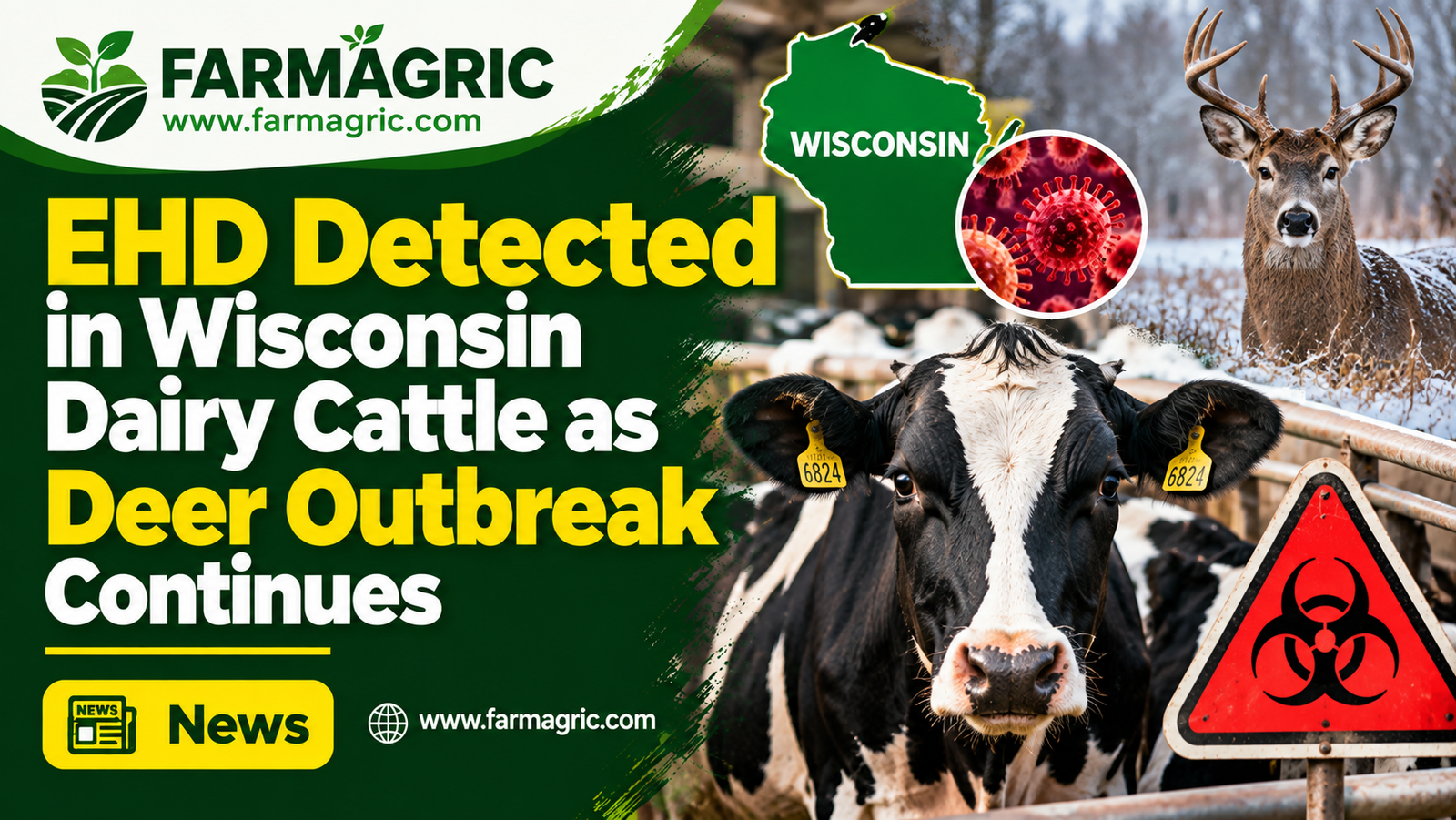
Wisconsin agriculture officials have confirmed epizootic hemorrhagic disease, known as EHD, in non-lactating dairy cattle in Waukesha County, marking the state’s first confirmed cattle case of the disease since 2013.
The Wisconsin Department of Agriculture, Trade and Consumer Protection confirmed on September 29 that samples collected from the affected dairy cattle tested positive for the virus. The latest information remains relevant to livestock farmers as of October 1, while the disease is also circulating among wild and captive deer in southeastern Wisconsin.
EHD is a viral disease spread primarily by biting midges, sometimes called no-see-ums. The insects are most active during late summer and early autumn, which is when EHD outbreaks typically become more common. Cases generally decline after the first significant frost kills off the insects that transmit the virus.
The cattle involved in the Wisconsin case were non-lactating dairy animals. State officials said EHD is much more commonly associated with deer and generally causes little or no illness in cattle. However, some infected cattle can develop visible signs of disease.
Farmers should watch for symptoms including fever, lameness, weight loss, excessive salivation and sores or lesions around the mouth, legs, hooves or teats. Some of these signs can resemble other serious livestock diseases, making veterinary examination and laboratory testing important before a diagnosis is made.
There is currently no specific treatment or cure for EHD. Wisconsin agriculture officials are advising livestock owners to work closely with their veterinarians and concentrate on general herd-health measures, including insect and parasite control, good nutrition and avoiding overcrowding.
The discovery in cattle comes during a wider EHD outbreak among Wisconsin’s deer population. The Wisconsin Department of Natural Resources has reported cases across several southeastern counties, with particularly significant activity in Washington and Waukesha counties.
The disease can be severe and frequently fatal in deer, but cattle generally respond differently. Wisconsin officials have stressed that the detection of EHD in cattle does not mean the disease poses the same level of threat to cattle as it does to deer.
For dairy farmers, one important point is that EHD is not considered a human health threat. State officials say people are not at risk from insect bites carrying EHD, and the disease is not transmitted to people through direct exposure to infected cattle or through consumption of meat or milk from infected animals.
The disease is also not spread from animal to animal in the same way as some contagious livestock diseases. Biting midges acquire the virus and transmit it when they bite susceptible animals. This makes control of the insects an important part of reducing exposure.
Farmers should nevertheless take unusual symptoms seriously. If cattle develop unexplained fever, lameness, mouth lesions, excessive salivation or other signs associated with EHD, livestock owners should contact their veterinarian for proper testing.
Wisconsin requires confirmed EHD cases to be reported to the Department of Agriculture, Trade and Consumer Protection within 10 days. If a veterinarian suspects a foreign animal disease, that situation requires immediate notification to the appropriate state veterinary authorities.
The timing of the outbreak is also important. EHD activity normally increases from late summer into early autumn and declines as temperatures fall and the first hard frost reduces the population of disease-carrying midges.
For livestock farmers, the current Wisconsin situation is therefore a reminder to maintain close observation of cattle during the remaining period of high insect activity. Good nutrition, appropriate parasite management, adequate space and regular veterinary attention can help farmers identify and respond to health problems quickly.
The Wisconsin cattle case is only the second confirmed occurrence reported by the state since 2013, making it an unusual finding even though EHD itself is well known among wildlife and livestock health officials.
With EHD continuing to circulate among deer and now confirmed in dairy cattle, Wisconsin farmers are being encouraged to remain alert while authorities continue monitoring the disease as the autumn season progresses.