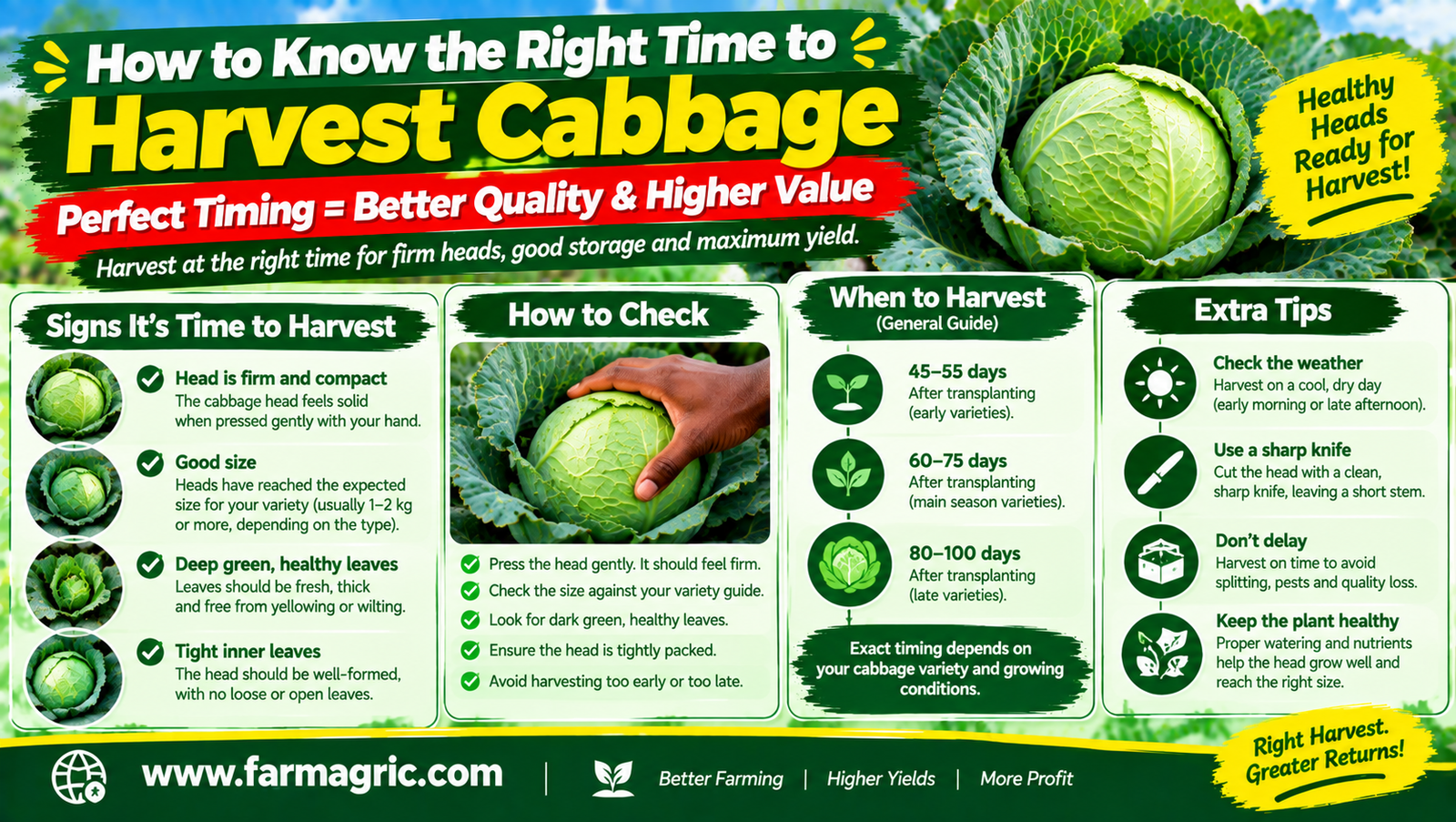
How to Know the Right Time to Harvest Cabbage
How to Know the Right Time to Harvest Cabbage
I once cut a whole row of cabbages a week too early because a buyer was waiting and the heads looked big enough. They were light, soft, and loose, and half of them were rejected at the market. The next season I got greedy the other way and left a row standing for “extra weight.” After a rain, a third of them split. Between those two mistakes I learned that the right day to cut a cabbage is a narrow window, and the plant tells you when it arrives if you know how to listen.
Here is the plain answer. A cabbage is ready when the head feels firm and solid when you squeeze it, with very little give, and it has reached the size normal for its variety. The squeeze test is the most reliable check. Count days from transplanting only as a rough guide, since most varieties mature in about 60 to 100 days, but let your hand make the final decision. Cut as soon as the head is firm, because a head left too long in the field is far more likely to split or rot than one cut a few days early.
The short version of what I do is this. I note the expected maturity date for the variety, start checking heads about a week before it, squeeze a sample from different parts of the field every two or three days, cut the firmest heads first, and harvest the whole row quickly once most are ready. The rest of this article explains how to judge ripeness, what most farmers get wrong, and how to time the cut around the weather and the market.
What Most Farmers Get Wrong
The first mistake is harvesting by the calendar alone. Seed packets give a maturity range, but your weather, soil, and planting conditions can move it by a week or more either way. Farmers who cut on day 70 because the packet said so end up with soft heads in a cool season or split heads in a warm one.
The second mistake is judging by size instead of firmness. A head can look large but be loosely packed, with air between the leaves, and weigh little. Another can be smaller and solid. Weight and firmness matter more than diameter.
The third mistake is waiting for the perfect price. A ready cabbage does not wait. Each extra week in the field raises the risk of splitting, rot, pest damage, and loss of quality, and the price you hope for rarely covers it.
The fourth mistake is squeezing too hard or too late. Some farmers press so hard they bruise the head, and others never check until the heads are already cracked. A gentle, regular check is better than a rough one at the end.
The fifth mistake is ignoring the weather. A heavy rain after a dry spell can burst mature heads in a single night. If the heads are firm and a storm is forecast, the right time to harvest is before it arrives.
The sixth mistake is harvesting the whole field at once when the heads are not all ready. Cabbages in the same row ripen at different speeds. Cutting everything on one day mixes mature heads with immature ones and lowers the value of the load.
The Squeeze Test
This is the simplest and best test I know. Place your palm on top of the head and press down gently with your fingers spread, the way you would test a loaf of bread. Then hold the sides of the head with both hands and give it a light squeeze.
A head that is not ready feels soft or spongy. It gives under your hand and you can sense hollow space inside. A ready head feels firm and solid, with only a slight spring. An overripe head feels rock hard and tight, and you may see small cracks or a bulge in the center.
For cabbage, firm means ready. Do not wait for it to feel like a stone. Test several heads in different parts of the field, since the edges, low spots, and areas with more fertilizer or water may ripen at different times.
Other Signs of Readiness
The squeeze test is your main tool, but a few other signs support it.
Look at the head itself. A mature head is well filled, with the wrapper leaves closing over the top, and it sits solid in the center of the plant. The outer leaves may begin to look slightly tired or yellow at the edges, which is normal near maturity.
Check the size against the variety. Seed companies describe the usual head weight and diameter, so compare your heads to that. For many varieties a ready head weighs somewhere between one and three kilograms, though some types are smaller and some larger.
Feel the weight. Lift the head. A ready cabbage feels heavy for its size. A loose head feels light.
Watch for danger signs of overripeness. Hairline cracks in the top, a head that looks like it is pushing apart from the inside, or leaves that begin to separate all mean the head is past its best. Cut those first and quickly.
Use the Calendar as a Guide
Write down your transplanting date and look up the expected days to maturity for your variety. Early varieties may be ready in about 60 to 70 days from transplanting, mid-season types in 70 to 90, and late types in 90 days or more. Seed companies usually give a range.
Start checking about a week before the earliest expected date. If the weather is warm, heads mature faster and you should check earlier. If it is cool or the plants were stressed early, they may take longer.
Keep a notebook with transplanting dates and the date you actually harvested. After a couple of seasons, you will know how your own land and weather change the timing, and that knowledge is worth more than any packet.
Timing the Harvest Around the Weather
Weather is the biggest risk in the last week. Check the forecast every day once the heads begin to firm up.
If heavy rain is coming and the heads are firm, harvest what you can before it arrives. Cabbage that is cut in time and kept in a cool, shaded place holds for days or even weeks, while a split head loses value immediately.
If you cannot cut everything in time, give the remaining mature heads a quarter turn or twist in the ground to break some of the roots. This slows water uptake and delays splitting for several days. It is a delay tactic only, and you should still harvest as soon as possible.
Hot weather also matters. In hot spells, heads can mature quickly, so check them more often. Harvest in the cool morning if you can, because heads cut in the heat wilt faster and lose weight.
How to Harvest Properly
Use a sharp, clean knife. Cut the stem just below the head, leaving a few of the outer wrapper leaves on the head to protect it during handling and transport. Remove loose or damaged leaves, but do not strip the head bare.
Handle the heads gently. Do not throw them into crates or sacks, because bruising leads to rot. Place them stem-down or on their sides in clean, shaded crates, and keep them out of direct sun while you work.
Cut the firmest heads first. Go through the field in rounds every few days instead of cutting everything at once, so you collect each head at its best. After the harvest, remove the plant stumps and old leaves from the field and bury or compost them, which cuts down on disease and pests for the next crop. Some farmers leave stumps in the ground to produce small secondary heads, but those are minor and are not worth keeping if the field has disease or pest problems.
After Harvest
Cabbage keeps better when it is cooled quickly. Move heads into a cool, shaded, well-ventilated place as soon as you can, and do not leave them in the sun or in a closed vehicle. Store them in a cool, humid spot if you must hold them for a few days, and avoid piling them so high that the bottom ones are crushed.
Sort out any split, bruised, or rotting heads and sell or use those first, away from the sound ones. Late-maturing storage varieties can last for weeks or months in a cool, dry store, while early types are best sold quickly.
Step-by-Step Practical Plan
If I were handing you a plan for the next crop, it would run like this.
Write down the transplanting date and the expected days to maturity for your variety.
Start checking heads about a week before the earliest expected date.
Use the squeeze test on a sample of heads from different parts of the field every two or three days.
Look at the head shape, weight, and size compared with the variety description.
Check the weather forecast daily once heads begin to firm up.
Cut firm heads with a sharp knife, in the cool morning, leaving a few wrapper leaves on.
Harvest in rounds, taking the ripest heads first.
If a storm is coming and heads are firm, harvest ahead of it, or twist the remaining heads to slow water uptake.
Cool and sort the heads quickly, and record dates and weights for next season.
Warning Signs to Watch For
Learn to read the field. Heads that feel soft and hollow are not ready. Heads that feel like stones, show hairline cracks, or bulge in the center are overdue. Outer leaves yellowing heavily and a strong smell from the field can mean rot is setting in. A heavy rain forecast after dry weather is a signal to harvest early. Heads that have been firm for more than a week are on borrowed time.
If you see any of these, act that week, not next month.
What I Would Do Differently If Starting Again Today
If I were starting fresh, I would plant in stages so my whole farm never ripened in a single week. I would learn the squeeze test on the first day and use it every other day in the final stretch. I would keep a notebook of planting dates, maturity dates, and what the weather did, so I could predict harvest windows more accurately each year. And I would line up buyers before the heads were ready, so I was never tempted to leave a ripe field standing while I waited for a better offer.
I would also stop cutting for the buyer instead of the plant. An early cut head sells badly, and a late one splits. The right day is when the head is firm, and the market has to adjust to the cabbage, not the other way round.
FAQ
How do I know when a cabbage is ready to harvest?
Squeeze the head gently. If it feels firm and solid with very little give, and it has reached the normal size for its variety, it is ready. Soft or spongy heads need more time.
How many days does cabbage take to mature?
It depends on the variety and weather, but most mature about 60 to 100 days after transplanting. Early types are faster and late types take longer.
What happens if I leave cabbage in the field too long?
Mature heads keep taking up water, so they are likely to split, especially after rain. They are also more exposed to rot, pests, and quality loss. Cut as soon as the heads are firm.
Can I harvest cabbage before it is fully firm?
You can, but the head will be lighter and may sell for less. Slightly early harvest is better than letting the heads split, especially if heavy rain is forecast.
Should I harvest cabbage in the morning or evening?
The cool morning is best. Heads cut in the heat wilt faster and lose weight. If you must harvest later, keep the heads in the shade right away.
The Advice Worth Bookmarking
Trust your hand over the calendar. A cabbage that feels firm is telling you the work is done, and every extra day is a bet against the weather.