Nigeria Rolls Out Guaranteed Price Model for 2 Million Smallholder Farmers
Nigeria Rolls Out Guaranteed Price Model for 2 Million Smallholder Farmers
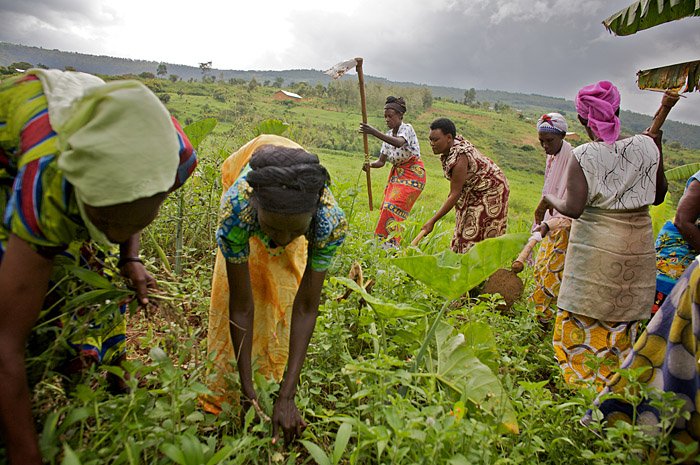
The Federal Government has launched a new Guaranteed Minimum Price model designed to support two million smallholder farmers across Nigeria, alongside the distribution of more than 10 million bags of fertiliser under a new agricultural support programme.
The initiative was flagged off in Zaria, Kaduna State, on July 17, 2026, under the Renewed Hope Smallholder Support and Value Chain Fund, RH-SVCF. The programme is designed to provide farmers with support beyond the initial distribution of farm inputs by connecting them with aggregation companies, extension services and structured markets.
Minister of Agriculture and Food Security, Senator Abubakar Kyari, said the new approach is intended to address one of the major problems facing farmers after production: finding a reliable market for their crops at harvest.
Under the model, participating farmers will be linked to Farmer Aggregation Companies. These companies are expected to provide certified seeds, fertiliser and extension support during the production cycle, from land preparation through harvest.
At the end of the farming season, the same aggregation structure will provide a route to market, with participating farmers expected to sell their produce at a Guaranteed Minimum Price approved by the government.
For smallholder farmers, the arrangement could provide greater certainty around the market value of their produce, particularly during periods when prices fall sharply at harvest. The government says the model is intended to reduce the pressure on farmers who are often forced to sell quickly because of storage, financing and market access challenges.
The programme also places emphasis on the timing of farm inputs. The Agriculture Minister said the fertiliser was being delivered during the planting period so that farmers could apply it when crops need it rather than receiving the inputs after the critical stages of production had passed.
The government said one-third of the beneficiaries under the programme are women. The initiative is expected to operate through Farmer Aggregation Companies across different parts of the country.
The Bank of Agriculture, which is involved in the programme, said the scheme is designed to reach two million smallholder farmers and deploy more than 10 million bags of fertiliser. The bank said nearly 300,000 farmers had already been onboarded at the time of the July flag-off.
More than 1.1 million bags of fertiliser and over 16,470 metric tonnes of improved seeds were also being deployed through 20 Farmer Aggregation Companies operating across more than 20 states, according to information released by the government.
The programme involves 15 accredited input suppliers and is intended to bring several parts of the agricultural value chain together. These include input supply, farm financing, extension services, production, aggregation, processing and marketing.
Arzikin Noma, identified by the government as a Farmer Aggregation Company leading implementation in Zaria, is one of the private-sector partners involved in the rollout. The company said its approach is based on providing farmers with support beyond the sale or distribution of agricultural inputs.
The government also said the model is expected to encourage investment in local processing. The objective is to ensure that more agricultural produce can be processed within Nigeria for food and livestock feed instead of leaving farmers dependent solely on the sale of raw commodities.
The Bank of Agriculture said the wider objective is to build an agricultural ecosystem in which farmers have access to quality inputs, financing, mechanisation support, aggregation and structured markets.
The new price guarantee model comes as the Federal Government continues to pursue measures aimed at increasing domestic food production and improving the connection between farmers and markets.
For farmers, the key issue will be how the guaranteed price system operates in practice, including the crops covered, the approved minimum prices, the participating aggregation companies and the arrangements for buying produce at harvest.
The effectiveness of the programme will therefore depend not only on the distribution of fertiliser and other inputs, but also on whether farmers receive the promised support throughout the production cycle and have dependable buyers when their crops are ready for the market.
With the government targeting two million smallholder farmers, the implementation of the scheme will be closely watched across Nigeria’s farming communities as the 2026 agricultural season progresses.