
Fertiliser Prices Surge After Iran War: Will Crop Yields Fall?
Fertiliser Prices Surge After Iran War: Will Crop Yields Fall?
Farmers across the world are asking the same question this autumn as they plan next year’s crops: can they afford to feed their soil, and what happens to the harvest if they cannot? Seven months after the war involving Iran disrupted one of the world’s busiest fertiliser routes, prices have come down from their spring peaks but remain well above where they stood a year ago. The pain is shifting from the headlines to the budget sheet, and from this season’s decisions to next season’s yields.
Start with the numbers. In the United States, retail prices tracked by DTN in mid-September averaged $659 a ton for urea and $925 a ton for anhydrous ammonia, with potash near $495. Anhydrous was up about 22 percent from a year earlier, and urea was about 6 percent higher. Data compiled by AgroLatam from the same price series show urea peaking at roughly $866 a ton earlier this year, so the current level is about 24 percent below that high. Anhydrous reached about $1,118 a ton in late May and has since fallen roughly 15 percent, though a separate late-September reading put it near $977 and rising again. The pattern is the same everywhere: relief compared with the worst of spring, but nothing close to cheap.
The cost shows up in the national accounts as well. The U.S. Department of Agriculture is forecasting a jump of about 15 percent in nutrient spending this year, according to the same reporting. For a corn or wheat grower, fertiliser is one of the largest bills on the farm, and it has risen at the same moment that diesel has climbed above $6 a gallon and several crop prices remain weak.
To understand why prices have stayed stubborn, look at where the supply comes from. Before the war, roughly a third of global fertiliser trade passed through the Strait of Hormuz, the narrow waterway off Iran. The World Trade Organization calculated that Gulf economies supplied about 24.8 percent of the world’s nitrogen fertiliser exports and 11.4 percent of its phosphate exports. CoBank adds that more than 30 percent of global urea exports and about half of traded sulfur, a key raw material for phosphate, originate in the region. When shipping seized up in March, urea prices roughly doubled in a matter of weeks in some markets, and farmers in import-dependent countries felt it almost at once.
The strait has not returned to normal. The WTO and AXSMarine shipping tracker showed fertiliser shipments out of the Gulf still near zero in early September. Iran and Oman agreed in August on safe shipping routes, but traffic has not recovered in a meaningful way, because shipping companies remain cautious over insurance and security guarantees. One daily tracker reported that the strait was effectively closed to commercial traffic as of September 30, with a single transit recorded against a pre-crisis baseline of 85 a day. Some Gulf producers are rerouting cargo through the Red Sea and Suez Canal or by pipeline, but that adds cost and time.
There is also physical damage to deal with. CoBank estimates that 31 ammonia plants in the Middle East have been directly affected by the conflict or have shut down. Another 49 plants in India, Pakistan and Bangladesh have been curtailed or stopped because of feedstock shortages, and at least 20 plants in Russia have been damaged by Ukrainian drone attacks. The bank argues that this makes the present shock different from the one in 2022, when the main problem was trade rerouting. Damaged capacity takes time and money to restart, even after fighting ends. That is why many analysts expect prices to stay above pre-war levels for years. North Dakota State University projects a long plateau that remains elevated until 2028, and CoBank expects phosphate prices in particular to stay higher through that year.
Demand has already bent under the strain. CoBank reports that global urea import demand fell 27 percent between April and June as affordability collapsed, and by mid-June the benchmark urea price at New Orleans had slumped to $386 per short ton, about 18 percent below its pre-war level, as buyers stepped back and China returned to the export market. That is the market’s way of saying that when fertiliser costs too much, farmers simply buy less. Argus projects total phosphate fertiliser consumption in 2026 will be down about 13 percent, with India and Brazil together accounting for 39 percent of that decline.
So will crop yields fall? The honest answer is that it depends on the nutrient, the country and the time frame. In the United States, farmers have so far protected nitrogen, the nutrient that gives corn and wheat their biggest yield response. CoBank notes that under-fertilising can cost more than the higher price of the product, which is why many American growers have not cut nitrogen despite the surge. They have relied instead on soil testing, variable-rate technology and better nutrient management to get more from every pound.
Phosphate and potash tell a different story. American farmers have trimmed applications of both by as much as 10 to 15 percent in recent years, and CoBank says total NPK use has fallen about 20 percent since 2008. The catch is timing. Skipping or cutting these nutrients can leave a gap of two to three years before yield losses show up, because the soil can be drawn down for a while. At the agronomy level, lower phosphate can lead to standability problems and higher grain moisture. A farmer who saves money this year may be paying the bill in 2028.
Outside the United States, the picture is harsher. Brazil depends almost entirely on imported fertiliser, with about 40 percent of it arriving through Hormuz, and the International Food Policy Research Institute reported local prices jumping more than 35 percent in the first two weeks of the conflict. India’s fertiliser makers cut urea output as natural gas prices rose. In a more pessimistic scenario modelled by researchers cited by IFPRI, the fertiliser crisis could stretch into 2028. Fertiliser companies themselves say that lower application rates around the world could modestly reduce yields and lend some support to commodity prices, though so far grain prices have not rallied the way they did after the 2022 shock.
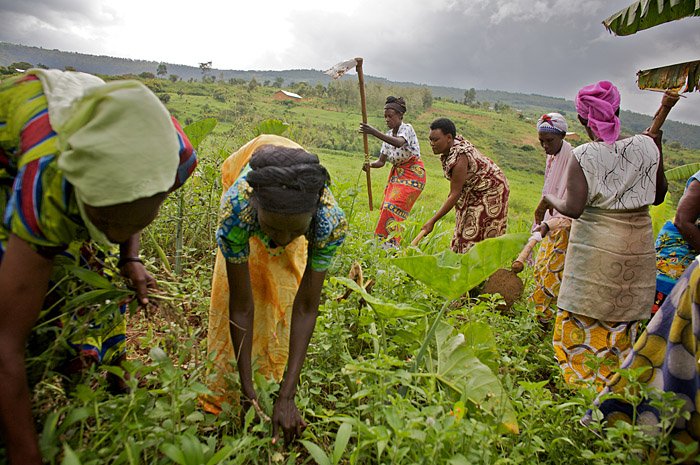
For African farmers, the story carries its own warning and its own opening. In Nigeria, the Federal Ministry of Agriculture says national fertiliser use is about 18.6 kilograms per hectare, far below the 50 kilogram benchmark set by the 2006 Abuja Declaration, according to Vanguard. The industry association FEPSAN put the figure at 24 kilograms in March using a different measure. Either way, farmers were using too little before this crisis began. When the war started, a 50 kilogram bag in Nigeria reportedly rose from about N33,000 to roughly N36,500 within a week, an increase of around 11 percent. Kaduna farmers warned in May of a possible food crisis as costs bit, and the Federal Government has since flagged off distribution of more than 10 million bags of fertiliser and announced a Guaranteed Price Model for 2 million smallholders. Commentators argue that Nigeria, with its large natural gas reserves and expanding fertiliser plants, could become a more important supplier while the Gulf is disrupted. That would be a real prize, but only if the product reaches farmers on time and at a price they can pay.
On the ground, the next few weeks matter. Fall is when many Corn Belt farmers apply phosphate and potash and book supplies for spring. CoBank says retailers saw brisk summer nitrogen fill programmes, with some liquid nitrogen prices pulled within hours because suppliers sold out faster than expected. Storage space is limited compared with the tons usually applied in the fall, and if farmers hold off buying because of affordability, applications may slide into spring. That creates a different risk, since short planting windows leave little room for delays, and retailers carrying inventory at interest rates of 6 to 8 percent have little appetite for waiting. Fill prices have historically marked the low point of the market about 80 percent of the time, though this year could fall into the other 20 percent.
What can a farmer actually do? Experts keep returning to the same practical steps. Test the soil before deciding what to buy, so that money goes where the crop will respond. Protect nitrogen first, since it delivers the biggest return, and treat phosphate and potash cuts as a loan against future yields, not a saving. Use variable-rate application where equipment allows, apply at the right time and place, and compare the cost per pound of nutrient, not just the price per ton. In DTN’s September figures, anhydrous worked out to about 57 cents per pound of nitrogen, against 71 cents for urea and 75 cents for liquid UAN28. Manure, legumes in rotation and careful timing can stretch purchased fertiliser further. A trusted agronomist can help balance these choices, and none of this replaces that advice.
The wider lesson is one farmers have learned before. Input markets move on events far from the field, and when a single sea lane carries so much of the world’s plant food, a conflict thousands of kilometres away can decide how much a farmer in Kano, Kansas or Paraná can spread on his land. Yields may not collapse, but the margin for error has shrunk, and the full effect of this season’s thin applications may only become clear in the harvests still to come.