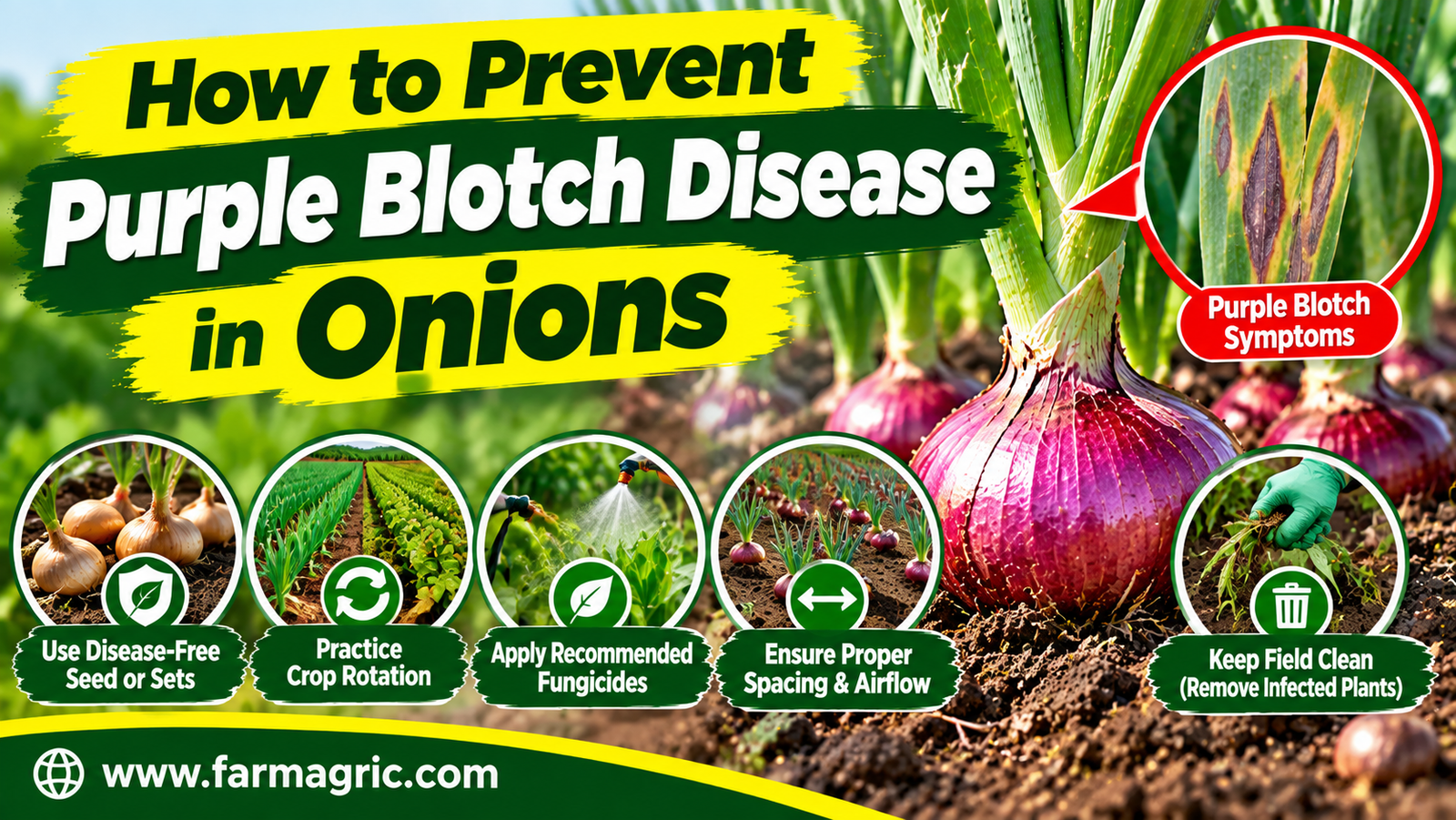
How to Prevent Purple Blotch Disease in Onions
How to Prevent Purple Blotch Disease in Onions
I remember the first time I saw purple blotch take hold in a field. It started as a few pale, sunken spots on the older leaves after a week of warm, damp nights. I told myself it was nothing and decided to look again on the weekend. By the weekend, the spots had grown purple centers with yellow edges, the leaf tips were folding over, and half the field looked scorched. The crop never recovered its full size. What stayed with me was how quickly it moved once the weather turned in its favor, and how little I had done in the weeks before to stand in its way.
Here is the direct answer. To prevent purple blotch in onions, you cut off the conditions the fungus needs and the places it survives. Use clean seed and healthy transplants, plant tolerant varieties where you can find them, rotate away from onions and other alliums for a few seasons, space plants and manage irrigation so the leaves dry quickly, control thrips and weeds, keep fertilizer balanced instead of heavy on nitrogen, and clear crop debris after harvest. If the weather turns warm and humid, add a protective fungicide program before the disease takes hold, not after. Prevention works because this disease is much easier to stop than to cure.
The rest of this article explains how, and what farmers usually get wrong.
What purple blotch is, in plain terms
Purple blotch is a fungal disease of onions, caused by a fungus called Alternaria porri. It also affects garlic, leeks and other alliums. It attacks the leaves and the flower stalks, and in bad cases it can reach the bulb neck and cause rot during storage.
The first signs are small, sunken, water-soaked spots, often whitish, on the leaves or seed stalks. As the spots grow, they turn brown to purple, often with concentric rings like a target, and are usually surrounded by a yellow halo. The spots enlarge and join together, and when they wrap around a leaf or stalk, the part above it collapses and dries out. Because the leaves feed the bulb, heavy infection means a smaller bulb and a smaller yield. Infected plants also have more trouble in storage.
The fungus loves warm, humid, wet conditions. It spreads on the wind and through splashing water, and it needs long periods of leaf wetness, such as heavy dew, drizzle or overhead irrigation that leaves the foliage wet overnight, to infect the plant. It survives between crops on infected plant debris, on volunteer onions and other alliums, and sometimes on seed or infected bulbs. Plants that are wounded, stressed, or damaged by insects like thrips are easier for the fungus to enter.
What most farmers get wrong
They wait for symptoms before they act. By the time the purple spots are everywhere, the fungus has already produced spores that are traveling across the field. At that stage, you are chasing the disease instead of stopping it. Prevention has to begin before the weather turns favorable.
They water in the evening or overhead. Wetting the leaves late in the day means the foliage stays damp through the night, which is exactly what the fungus needs. Many outbreaks begin after a spell of evening irrigation or heavy dews.
They plant too thickly. A crowded canopy traps humidity and dries slowly after rain or dew. Good spacing is one of the cheapest disease controls there is.
They replant onions in the same field year after year. The fungus survives on old residue and in the soil surface, so planting onions again where they grew last season gives the disease a head start.
They ignore thrips. Thrips scar the leaves, and those wounds provide easy entry points for the fungus. Fields with heavy thrips damage often have worse purple blotch.
They overfeed with nitrogen. Lush, soft growth is more susceptible to infection, and a dense, over-fed canopy stays damp longer.
They leave residue and culls lying around. Old leaves, discarded bulbs and volunteer plants carry the fungus straight into the next crop.
They mistake it for something else. Purple blotch can look like downy mildew, Stemphylium leaf blight, thrips damage, or simple leaf tip burn. Treating the wrong problem wastes time while the real one spreads. Look closely at the pattern of the lesions, and when in doubt, take a sample to your local extension office for proper identification.
Step-by-step: how to prevent purple blotch in onions
Step 1: Start with clean seed and healthy transplants. Buy seed from a reliable supplier, and avoid saving seed from a crop that had purple blotch. Raise seedlings in a clean nursery bed that is well drained and not crowded, and inspect them before transplanting. Discard any seedlings with spots, lesions or signs of disease. Starting with healthy plants keeps the fungus out of the field to begin with.
Step 2: Choose tolerant varieties where possible. Some onion varieties show better tolerance to purple blotch than others, although complete resistance is rare. Ask your seed supplier, neighboring growers and your local extension service which varieties hold up best against the disease in your area, and also which are suited to your day length and climate. Tolerance helps, but it works best as one part of a larger plan.
Step 3: Rotate your crops. Avoid planting onions, garlic, leeks or other alliums in the same field more than once every two to three years, and longer if disease has been severe. Rotate with crops that are not hosts, such as cereals, legumes or many vegetables. Rotation gives the leftover fungus time to die back as old residue breaks down.
Step 4: Choose the site and timing carefully. Pick a well-drained field with good airflow, and avoid low-lying spots where cool, damp air collects. Raised beds can help drainage. Where you can, plan your planting so that the crop’s most vulnerable stages do not coincide with the peak of the warm, humid, rainy period. Do not plant right beside an old onion field or a plot with a history of disease.
Step 5: Prepare the soil and field properly. Before planting, clear the field of old onion residue, culls and volunteer plants, and remove weeds, especially any wild alliums. Plow or turn under debris so that it decomposes. A clean field removes the places where the fungus carries over.
Step 6: Give the plants room and keep the canopy open. Use the recommended spacing for your variety, commonly around 10 to 15 centimeters between plants with rows 30 to 45 centimeters apart, and avoid overcrowding. Good airflow dries the leaves faster after rain and dew. Keep weeds down, because they trap moisture and block air movement around the plants.
Step 7: Manage irrigation to keep the leaves dry. Drip irrigation is ideal because it waters the soil and not the foliage. If you must use overhead or sprinkler irrigation, water early in the morning so the leaves dry quickly in the sun, and never in the evening. Water deeply and less often instead of lightly and frequently, and avoid creating waterlogged conditions. Do not let the field stay wet for long periods.
Step 8: Feed the plants in balance. Avoid excess nitrogen, which causes soft, dense growth that is more prone to infection. Use a balanced fertilizer program based on a soil test or local advice, with adequate phosphorus and potassium. Potassium supports plant strength and disease tolerance, and onions also benefit from sufficient sulfur in many soils. A steady, healthy plant resists disease better than a pushed one.
Step 9: Control thrips and other pests. Because thrips and other insects create wounds that help the fungus enter, keeping them down reduces infection. Scout regularly, clear weeds that shelter them, and use gentle controls such as water sprays, insecticidal soap or neem when numbers pass the local threshold, always following the label. Avoid damaging the leaves when you weed or work in the field, especially when they are wet.
Step 10: Scout often, especially in warm, humid weather. Walk the field at least once a week, and more often after periods of rain, heavy dew or warm, muggy nights. Look at the older, outer leaves first, since symptoms often appear there. Watch for small, pale, sunken spots with purple centers. If you find them early, you can act while the disease is still limited to a few plants.
Step 11: Use a protective fungicide program when conditions demand it. In regions and seasons where purple blotch is a regular threat, a preventive spray program is often part of good management. Protective fungicides work best when applied before infection or at the very first signs, and they are much less effective once the disease is widespread. Copper-based products are used in organic systems, and a range of conventional fungicides are registered for onions in different countries. Rules, approved products and rates vary widely by location, so ask your local extension service or a qualified agronomist what is registered and recommended where you farm. Always follow the label exactly, including rates, spray intervals and the waiting period before harvest. Rotate between different fungicide groups to reduce the risk of resistance, and use a spreader or sticker if the label recommends it, because onion leaves are waxy and sprays tend to roll off. Good coverage matters.
Step 12: Harvest, cure and store carefully. Handle bulbs gently to avoid wounds, harvest on a dry day, and cure the onions in a shaded, well-ventilated place until the necks are dry and tight and the outer skins are papery. Discard any bulbs with neck rot or lesions, and do not store them with healthy bulbs. Well-cured bulbs store better and carry less disease into storage.
Step 13: Clean up after the crop. When harvest is finished, remove and destroy old leaves, culls and volunteer plants, or bury them deeply, and do not leave piles of cull onions near the next planting. Good sanitation at the end of the season is one of the most effective and least expensive ways to cut the disease next year.
Warning signs to watch for
Look for small, white or pale, sunken spots with a water-soaked look, particularly on older leaves and flower stalks. Watch for spots that turn brown to purple, develop ringed patterns and a yellow border, and then enlarge and merge. Leaves that bend, collapse or dry out above a lesion are a sign the infection has girdled the leaf. Warm, humid weather, heavy dews and recent leaf wetness are warnings to scout right away. And in storage, look for soft, discolored or rotting necks.
If you see these signs early, remove the worst-affected leaves or plants where practical, improve airflow, adjust your irrigation, and consider a protective spray as advised locally.
What I would do differently if I were starting again today
I would treat the weeks before the disease arrives as the most important weeks of the season. I would start with clean seed and a clean nursery, choose a field that has not grown onions for several years, and clear every scrap of old residue before planting. I would use drip irrigation or irrigate only in the morning, space the plants properly, keep nitrogen sensible and keep thrips in check. I would scout weekly from the first month, and I would not wait for a bad week of weather to decide on a protective spray program with my local advisor. Above all, I would stop thinking of purple blotch as bad luck. It is nearly always the result of conditions I could have changed.
The farmers who avoid this disease are not luckier than the rest. They are simply the ones who make life hard for the fungus before it shows up.
FAQ
What causes purple blotch in onions?
It is caused by the fungus Alternaria porri. It thrives in warm, humid conditions with long periods of leaf wetness, and survives on crop debris, volunteer alliums and sometimes seed.
How do I recognize purple blotch?
Look for small, sunken, whitish or water-soaked spots on leaves and flower stalks that enlarge and turn brown to purple, often with ring patterns and a yellow halo. Heavily infected leaves collapse and dry out.
Can purple blotch be cured once onions are infected?
Infected tissue does not recover, but you can slow the spread by improving airflow, adjusting irrigation, removing badly affected plants where practical, and applying protective fungicides as advised locally. The best results come from preventing the disease in the first place.
Does crop rotation help prevent purple blotch?
Yes. Rotating away from onions and other alliums for two to three years or more gives the fungus on old residue time to die back, and it lowers the chance that disease will carry over into the new crop.
Does watering at night make purple blotch worse?
Yes, in most cases. Evening or night watering leaves the foliage wet for long periods, which is exactly what the fungus needs. Water early in the morning or use drip irrigation to keep the leaves dry.
Bookmark this
You cannot out-spray purple blotch once it arrives, so keep the leaves dry, the field clean and the plants open, and the fungus never gets its start.