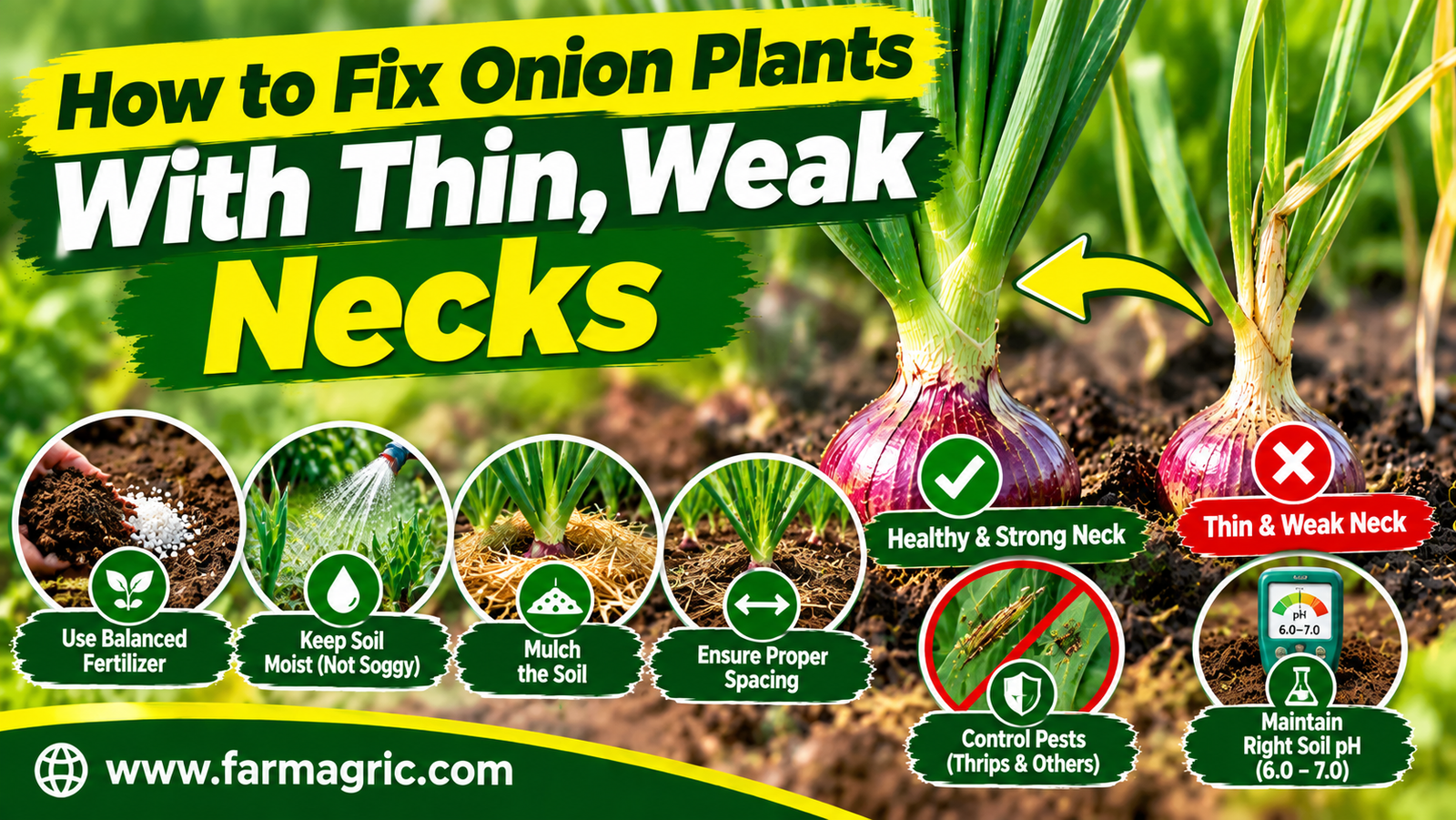
How to Fix Onion Plants With Thin, Weak Necks
How to Fix Onion Plants With Thin, Weak Necks
I once had a bed of onions that looked healthy at first glance, but when I ran my hand down the stems I could feel that the necks were thin, floppy, and pinched, like a drinking straw. Some tops folded over at the base while the leaves were still green. The farmer next to me said the plants were just “tired.” They were not tired. They were stressed, and within two weeks the thin-necked plants had made small, soft bulbs that rotted in the shed while the thick-necked ones kept fine. That was when I learned that a weak neck is not a cosmetic problem. It is the plant telling you something has gone wrong with its roots, its feeding, its water, or its health.
Here is the plain answer. Onion necks turn thin and weak because of nutrient imbalance (too little potassium or too much nitrogen), uneven watering, compacted or waterlogged soil that damages roots, thrips and other pests, root or basal rot diseases, crowding, or because the plant is bolting or maturing early from stress or the wrong variety for the day length. The fix depends on the cause. Check the roots and the base of the bulb first, then correct watering and drainage, balance your feeding, control pests, and give the plants room. A neck that is already thin will not thicken again, but new growth can come in stronger and the rest of the crop can be saved.
The short version of what I do is this. I dig up a plant and look at the roots and base, check the soil moisture with my finger, loosen compacted ground gently, correct the feeding by stopping late nitrogen and making sure potassium is available, scout for thrips, remove sick plants, and keep the water steady until the dry-down before harvest. The rest of this article explains how to read the symptoms, what most farmers get wrong, and how to fix each cause.
What Most Farmers Get Wrong
The first mistake is pouring on nitrogen. A weak plant looks pale or soft, so farmers feed it more. But too much nitrogen is one of the most common causes of thin, floppy, soft necks, because it pushes fast, lush leaf growth that the stem cannot support. More nitrogen makes the problem worse and delays proper bulbing.
The second mistake is ignoring potassium. Potassium builds strong cell walls and firm tissue. Onions short of potassium have weak, soft necks, thin skins, and bulbs that store poorly. Most farmers feed only nitrogen and never think about it.
The third mistake is uneven watering. Dry spells followed by heavy watering stress shallow onion roots. The plant responds with weak, uneven growth. Overwatering in heavy soil suffocates roots and does the same.
The fourth mistake is overlooking pests. Thrips scrape the leaves and weaken the plant, and onion fly maggots damage the base. Both lead to thin, sickly plants, but farmers blame nutrition and never turn a leaf over.
The fifth mistake is planting too deep or too crowded. Deep planting buries the neck and keeps it wet and soft. Crowded plants compete for light and grow tall and thin, with weak necks that fold.
The sixth mistake is using the wrong variety. Onions are sensitive to day length. A variety that needs long days will bulb poorly in short-day areas, and the reverse. A mismatched variety grows tall tops with thin necks and weak bulbs.
The seventh mistake is skipping the root check. The trouble is often underground, in damaged roots or a rotting base, and most farmers only look at the leaves.
Read the Symptoms First
Before changing anything, walk the field and look closely.
Look at the neck. Is it thin and floppy along its whole length, or pinched just above the bulb? A thin neck with dark green, lush leaves points to excess nitrogen. A thin, soft neck with pale leaves suggests poor nutrition or root trouble.
Look at the base. Pull up a plant. White, firm roots and a firm base are healthy. Brown, soft, or shriveled roots, a mushy base, or white fuzzy growth point to rot. Tunnels or maggots at the base mean onion fly.
Look at the leaves. Silvery streaks and tiny insects mean thrips. Purplish blotches or pale patches suggest leaf disease. Leaves that fold over while still green may mean weak necks from nitrogen excess or root damage.
Look at the pattern. Patches in low spots suggest waterlogging. Whole blocks suggest feeding or soil issues. Scattered single plants suggest pests or disease.
Check the timing. If thin-necked plants appear early and the plants then form small bulbs fast, that may be early bolting or maturing due to stress or the wrong variety.
Cause One: Too Much Nitrogen
Excess nitrogen gives tall, dark green, lush leaves and soft, thick-looking but weak, watery necks that fold. The bulbs form late and stay small, and they store badly.
Stop any further nitrogen feeding immediately. Water steadily and avoid fresh manure. Make sure potassium is adequate so the plant can firm up. Next season, apply nitrogen in small doses early, in the first weeks after transplanting, and stop when bulbing starts, usually around six to eight weeks after transplanting depending on variety.
Cause Two: Low Potassium and Poor Balance
Potassium shortage gives weak, soft necks, thin skins, scorched leaf tips, and bulbs that do not firm up. Sandy soils and heavily cropped fields run short first.
A soil test is the best way to know. If potassium is low, apply a potassium fertilizer at the label rate or as advised locally, and water it in. Compost and well-rotted manure help maintain it over time. Do not overdo it, because too much potassium can block other nutrients such as magnesium. Sulfur also supports onion quality, and a soil test or local advice will tell you if your soil is short of it.
Cause Three: Uneven Water and Root Stress
Onions have shallow roots and are sensitive to swings. Dry spells stress the plant and cause weak growth, and heavy flooding suffocates roots.
Check the soil with a finger pushed a knuckle deep. If it is dry, water slowly and deeply. If it is soggy, hold off and open drainage. Mulch lightly between rows to keep moisture steady, keeping the mulch away from the necks. Drip irrigation is the best choice, because it gives steady water without wetting the necks. Plant on raised beds or ridges where soil holds water.
Cause Four: Compacted or Poor Soil
Onion roots are fine and weak, and compacted soil limits them. The plants are small and thin-necked, and the roots may grow sideways. Loosen the soil gently between rows with a fork or hoe, without cutting roots. For the future, prepare the bed deeply, add compost, and avoid walking or driving on wet ground. Keep the soil pH around 6.0 to 7.0, since acidic or unbalanced soil weakens plants.
Cause Five: Pests
Thrips scrape the leaf tissue, leaving silvery streaks and weakened plants. Onion fly maggots tunnel into the base and cause wilting and rot. Scout twice a week by checking the leaf folds and tapping leaves over white paper. Treat early with products approved for onions in your area, following the label and the days to wait before harvest. Soap sprays or neem extracts may be enough for light thrips outbreaks. Remove and destroy plants with maggots at the base, and rotate crops.
Cause Six: Diseases at the Base and Roots
Fusarium basal rot, white rot, pink root, and bacterial rots all damage the roots and base and leave thin, weak, yellowing plants. Pull up an affected plant and check the base. If it is brown, soft, or has white fuzzy growth, remove the plant in a bag, bury or burn it, and do not compost it. Rotate away from onions, garlic, shallots, and leeks for at least three years, and longer if white rot is present. Plant on well-drained soil and use clean seed or healthy sets.
Cause Seven: Spacing, Planting Depth, and Variety
Plant at the recommended spacing, commonly around 10 to 15 centimeters between plants and 30 to 40 centimeters between rows, and set the base just covered, not deep. Check that your variety suits your day length and season, since a mismatched variety will give thin necks and poor bulbs. Ask your extension office or seed dealer what performs locally, and buy certified seed.
If a number of plants have bolted, sending up a flower stalk, they will have thick hard centers and poor bulbs. Pull them and use them first. Bolting is usually caused by cold stress after planting, planting too early, or large transplants, so adjust the planting date next season.
What to Do With Weak-Necked Plants
Be realistic. A neck that is already thin will not thicken. Lift weak-necked bulbs first when the crop matures, cure them well, and use or sell them first, because they store poorly. Keep them separate from sound bulbs. Do not store thick-skinned and thin-necked bulbs together, since the weak ones can rot and spread problems.
Step-by-Step Practical Fix
If your onions have thin necks right now, here is the order I would work through.
Start by noting what the neck, base, leaves, and pattern in the field look like.
Next, dig up one or two plants and check the roots and base for rot, maggots, or damage.
Then check the soil moisture with your finger. Fix drainage if soggy, and water slowly and deeply if dry.
After that, stop all nitrogen feeding, and if a soil test suggests low potassium, apply it at the label rate.
Scout for thrips and onion fly, and treat early with approved products if you find them.
Loosen compacted soil gently between rows, and keep weeds under control.
Remove sick plants in a bag and bury or burn them.
Change one thing at a time, and give it a week or two before judging. New leaves should be firmer and healthier.
Keep the water steady until the dry-down about two weeks before harvest.
Warning Signs to Watch For
Learn to catch it early. Tall, dark green, lush leaves with floppy stems mean too much nitrogen. Scorched leaf tips with thin soft necks suggest low potassium. Silvery leaf streaks mean thrips. Plants that pull out easily with brown bases suggest rot. Leaves folding over while green and necks pinched at the base mean the plant is under stress. A flower stalk in the center means bolting. Heavy rain or irrigation after a dry spell is a stress period, so check the field more often.
If you see any of these, act that week, not next month.
What I Would Do Differently If Starting Again Today
If I were starting fresh, I would test my soil before planting and put in compost and potassium where it was needed. I would split my nitrogen into small early doses and stop sooner than I thought was safe. I would plant on raised beds with drip irrigation, choose a variety matched to my day length, and keep a notebook of planting dates, feeding, and neck problems. And I would dig up a plant the first time I saw a weak neck instead of reaching for fertilizer.
I would also stop mistaking lush for healthy. The onions that look the most impressive in the middle of the season are often the ones that disappoint at harvest.
FAQ
Why are my onion necks thin and weak?
The common causes are too much nitrogen, low potassium, uneven watering, root damage, thrips, onion fly, root and base rots, crowding, deep planting, or a variety that does not suit your day length. Digging up a plant and checking the roots helps you find the cause.
Can thin onion necks be fixed?
A thin neck will not thicken again, but you can stop the cause so new growth is stronger. Correct feeding, water, pests, and soil conditions, and lift weak-necked bulbs first at harvest.
Does nitrogen cause weak onion necks?
Yes. Too much nitrogen, especially late, gives lush leaves and soft, weak necks. Apply nitrogen early in small doses and stop when bulbing begins.
Will thin-necked onions store well?
Usually not. They are more likely to rot, so cure them carefully, keep them separate, and use or sell them first.
Do thin necks mean my onions are bolting?
Not always. Bolting shows as a flower stalk with a thick, hard center. Thin, floppy necks are usually from feeding, water, pests, or root problems.
The Advice Worth Bookmarking
A thin neck is a message from the roots. Dig up the plant, read the base, and fix what is underground before you feed what is above it.