How to Control Groundnut Rosette Disease
How to Control Groundnut Rosette Disease
I once walked into a groundnut field in the third week after emergence and saw a few small, bright yellow plants scattered between healthy green ones. A neighbor told me not to worry, it was just a few weak plants. Five weeks later those few plants had turned into patches, the patches had joined up, and I was standing in a field that would give me almost nothing. That was the season I learned that rosette is not a disease you can negotiate with. You win or lose it in the first weeks, and most of the winning happens before the first sick plant appears.
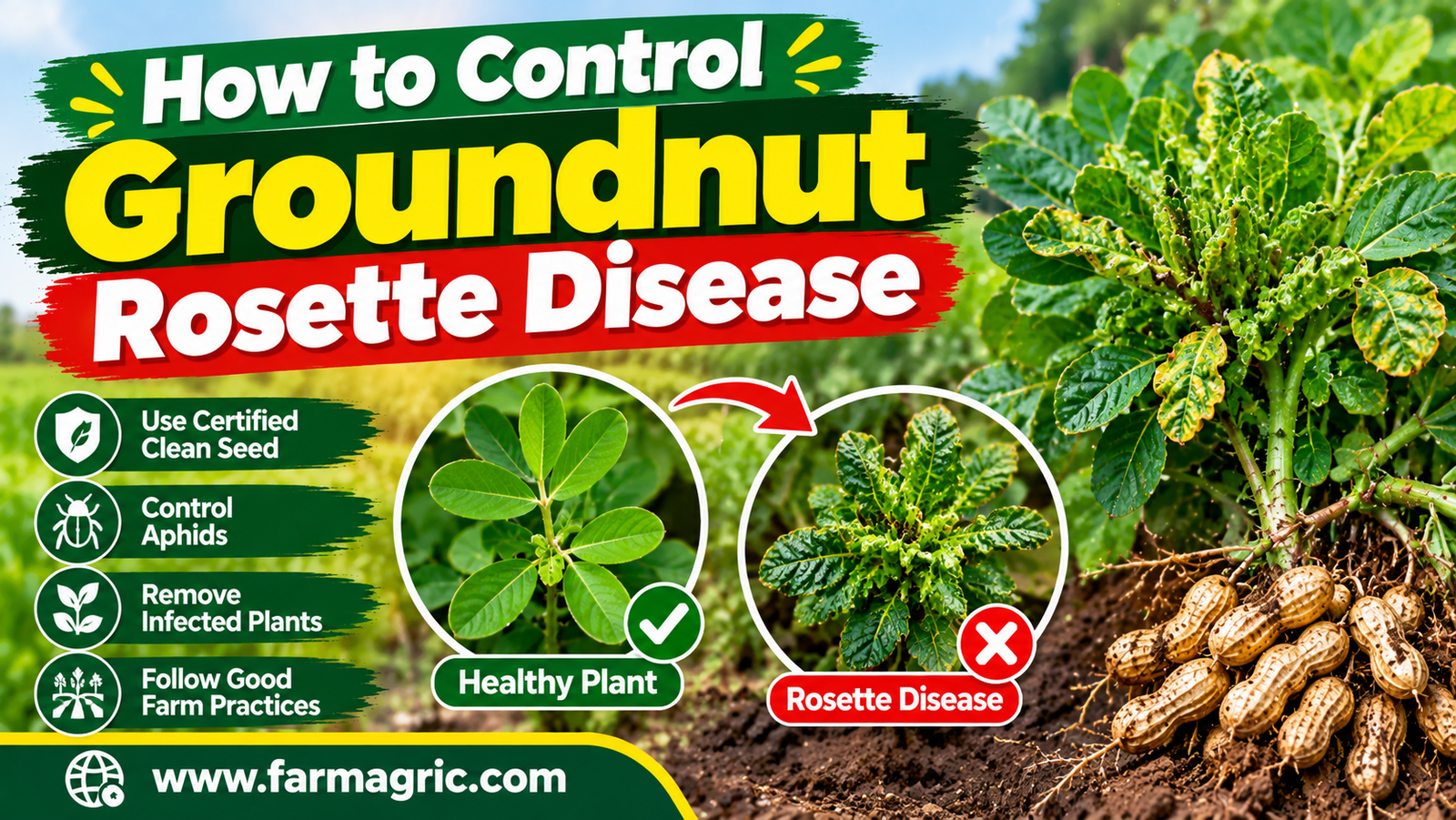
Here is the plain answer. Groundnut rosette cannot be cured once a plant has it. It is spread by aphids, so you control it by stopping infection early: plant at the first good rains, plant all your fields at the same time, use resistant varieties where you can get them, keep the plant stand dense, control aphids and weeds, and pull out infected plants while they are young. The earlier a plant is infected, the more yield you lose, and a plant infected in its first weeks can give you nothing at all.
The short version of what I do is this. I buy resistant or early maturing seed from a trusted source, plant right at the start of the rains, use a closer spacing than I was taught, dress the seed or protect the seedlings from aphids as the label allows, remove sick plants in the first few weeks, keep the field weed free, and stay away from old groundnut ground and leftover volunteer plants. The rest of this article explains how to spot rosette, what most farmers get wrong, and how to put each step into practice.
What Most Farmers Get Wrong
The first mistake is planting late. Farmers wait to see whether the rains are serious, or they finish other work first, and the groundnuts go in two or three weeks after their neighbors. Late fields meet an aphid population that has already built up on older crops and weeds. Early planting is the cheapest rosette control I know.
The second mistake is planting in stages. One field goes in early, another goes in a month later, and the late field becomes an easy target because the early one is already full of aphids. Staggered planting gives the disease a green bridge from field to field.
The third mistake is spraying after the symptoms show. By the time you see yellow, stunted plants, the virus is already inside them. No spray will cure those plants. Spraying at that stage only protects the healthy plants around them, and it may be too late even for that.
The fourth mistake is planting too wide. Thin stands let aphids land and spread freely between plants and leave bare soil where weeds grow. A denser stand has been shown to reduce rosette, because aphids prefer to land on bare ground and widely spaced plants.
The fifth mistake is ignoring the plants nearby. Volunteer groundnuts from last season, weeds, and old crop residue carry the virus and the aphids over the dry months. Farmers clean the field and forget the edges and the neighboring fallow.
The sixth mistake is saving seed from a field that had rosette. The disease does not travel in the seed in any important way, but a farmer who saves seed from a poor field is also saving the habits that produced it, and usually a variety with no resistance.
Know What You Are Looking At
Rosette is caused by a combination of viruses working together, spread by the groundnut aphid, a small dark insect often found in clusters on the growing tips and under young leaves. The aphid feeds on a sick plant, flies to a healthy one, and passes the virus along in minutes to hours. You do not need to understand the viruses. You need to recognize what they do to the plant.
The most common form in my area is chlorotic rosette. The leaves turn bright yellow, often with green flecks, and they are small and curled. The plant is stunted with short joints between the leaves, so it looks bunched up, like a rosette. Green rosette is different. The leaves stay dark green but are small, twisted, and mottled, and the plant is just as stunted. A mosaic type also exists, with light and dark patches on the leaves.
Rosette can be confused with several other problems, so check before you pull plants. Nutrient shortage usually affects whole patches evenly, and the plants are not bunched up and twisted. Waterlogging yellows the plants but leaves the leaf shape normal. Herbicide drift distorts leaves, but often across the whole field in the direction of the wind. A rosette plant is typically a single plant or small cluster, stunted and distorted, with aphids somewhere nearby. If you are unsure, show a sample to your extension officer or a research institute.
Plant Early and Plant Together
If I could give a farmer only one piece of advice about rosette, it would be this one. Plant at the first dependable rains, and finish the whole farm in one go. Crops planted early have a few weeks of growth before the aphid numbers climb, and plants that are past the seedling stage when infected lose much less yield than those infected in their first weeks.
Prepare your land before the rains arrive so that you can plant the moment the soil is wet enough. Get your seed ready ahead of time. Do not wait for the perfect day, because the cost of waiting is paid in infected plants. If you have several plots, plant them within days of each other, not weeks apart. If you farm with neighbors, talk to them. A whole community planting together gives aphids fewer places to hide.
If you can choose an early maturing variety, do so. A crop that matures quickly spends less time exposed to the disease, and in many places that is the difference between a decent crop and a failed one.
Use Resistant Varieties
Resistant varieties are the strongest tool a smallholder has. Plant breeders in West and Southern Africa have developed groundnut varieties with real tolerance to rosette, and several have been released in different countries. In Nigeria, the research institutes and seed companies carry released varieties with rosette resistance, but the best choice depends on your area, so ask your local agricultural extension office or research institute what is currently recommended and available. I would rather not name one variety and send you to the wrong shop.
Buy certified seed from a trusted dealer, not from a market heap with no label. Resistant does not mean immune, so the other measures still matter, but a resistant variety planted early at the right spacing gives you the best protection you can realistically get.
If resistant seed is scarce, plant what you can on your best land and in the earliest planting, and give the rest the other protections.
Spacing and Plant Stand
This surprised me when I first learned it. A dense, even stand of groundnuts suffers less from rosette than a thin one. Aphids tend to land on plants that stand out against bare soil, and close canopies cover the ground quickly and discourage landing. In many rosette areas, recommended spacing is close, around 50 centimeters between rows and 10 to 20 centimeters between plants, with one or two seeds per hole, but the right figure depends on your variety and local advice. Check what your extension service recommends and stay near the closer end.
Fill gaps early. If seeds fail to come up, replant within the first week, so that the replacements are not far behind the rest. Late gap-filled plants fall behind, stay small, and are more likely to be infected and die. Keep the stand uniform.
Weeds, Volunteers, and Neighboring Plants
Aphids and the viruses survive between seasons on volunteer groundnuts and some weeds. Before planting, clear the field and its borders. Pull up any groundnut seedlings that came up from last season’s pods, because those volunteers are often the first source of infection in the new crop. Weed the field early and keep it clean through the first six weeks, since weeds compete with the crop and hide aphids.
Avoid planting next to an old groundnut field that has been left unharvested or full of dying plants. If you irrigate groundnuts in the dry season, remember that they can keep the virus and the aphids alive until the next rains. Where possible, avoid having a green groundnut crop standing in the dry season right next to where you will plant in the wet season.
Rotate your groundnuts with cereals such as maize, sorghum, or millet. Rotation helps with soil diseases and with volunteer plants, and cereals do not host the rosette viruses.
Intercropping
Many farmers already grow groundnuts mixed with cereals, and this habit helps. Groundnut planted between rows of maize, sorghum, or millet is less attractive to aphids than a pure stand of bare-looking plants, and the taller crop gives some shade and a broken canopy that confuses landing aphids. Intercropping is not a replacement for early planting or resistant seed, but it adds a layer of protection and is easy to add to a mixed farm.
Keep the groundnut population reasonable in an intercrop. If the cereal shades the groundnut too heavily, the groundnut yield drops. Test a pattern on a small area first and keep the groundnut plants evenly distributed.
Controlling the Aphids
Insecticides do not cure rosette, but timely aphid control can slow its spread. Where seed treatments are available and approved in your country, dressing the seed with a recommended systemic insecticide protects the seedlings during the early weeks when infection hurts most. Follow the label exactly, wear protective clothing, and keep treated seed away from food and children.
After emergence, check the crop every few days. Look at the growing tips and the underside of the young leaves for clusters of small dark aphids, and for ants, which often farm them. If you find aphids building up in the early weeks, spray an insecticide approved for groundnuts in your area, following the label for the rate and the waiting period before harvest. Spraying in the first six weeks is where it pays the most. Spraying a mature crop that is already full of rosette wastes money.
Some farmers use neem seed extract or soap sprays for light infestations. They are gentler, but they need more frequent application and good coverage, so do not rely on them alone in a heavy aphid year.
Rogue Out Infected Plants
Walk the field every few days in the first weeks. When you find a plant with rosette symptoms, pull it out right away, with its roots, and bury it or burn it away from the field. Do not just leave it on the ground, because aphids will keep feeding on the dying plant and carry the virus onward. Rogueing is most useful when the infection is light and you catch it early. If a large part of the field already shows rosette, pulling plants will not save the crop, and you are better off focusing on protecting what remains and learning for next season.
Wear nothing special for this job, but do wash your hands and tools before moving to healthy ground if you have been handling other diseased plants. Aphids are the main carrier of rosette, but good hygiene helps with other problems in the same field.
Step-by-Step Practical Fix
If you are planning for next season, here is the order I would follow.
Start by finding resistant, early maturing certified seed from a reliable source, and book it before the rains.
Prepare your land and clear volunteers and weeds from the field and its borders before planting.
Plant at the first dependable rains, and plant all your fields within a few days of each other.
Use a close, even spacing, with one or two seeds per hole, and fill any gaps in the first week.
Treat the seed or protect the seedlings from aphids with a product approved in your area, following the label.
Scout every few days for aphids and for stunted, yellow, or twisted plants, and pull out and bury any infected plant at once.
Spray for aphids when you find colonies building up in the early weeks, and keep the field weed free.
After harvest, remove crop residue and any volunteers, and rotate to a cereal next season.
If your field already has rosette, pull out the sick plants and protect the healthy ones from aphids immediately, then use the lesson to plant earlier and more densely next season.
Warning Signs to Watch For
Learn to see rosette early. Small, bright yellow plants scattered in a young field are the first and most important sign. Plants with short joints and tightly bunched leaves are stunted by the disease. Twisted, curled leaves with a mottled or light and dark green pattern point to green or mosaic rosette. Clusters of small dark insects at the growing tips mean aphids are present. Ants running up and down stems often mean aphids are being tended. Volunteer groundnuts in a fallow field are a standing warning that the disease can start early.
If you see any of these, act that week, not next month.
What I Would Do Differently If Starting Again Today
If I were starting fresh, I would stop treating rosette as bad luck. I would book resistant seed before the dry season ended, plant on the first good rains, plant everything together, and use closer spacing from the very first season. I would walk the field twice a week in the first six weeks, because that is when the crop is won or lost, and I would pull sick plants without feeling sorry for them. I would talk to my neighbors about planting dates, since a disease like this does not respect fences.
I would also stop buying sprays after the damage was done. Every season I wasted money on chemicals applied to fields that were already infected, when the same money spent on good seed and early planting would have saved the crop.
FAQ
Can groundnut rosette be cured?
No. Once a plant is infected, it cannot be cured, and spraying will not bring it back. The aim is to prevent infection through early planting, resistant varieties, close spacing, aphid control, and removing sick plants quickly.
What causes groundnut rosette disease?
It is caused by a group of viruses that work together and are spread by the groundnut aphid as it moves between plants. The aphids pick up the virus from infected plants, including volunteers and weeds, and carry it to healthy ones.
Which groundnut varieties resist rosette?
Several resistant or tolerant varieties have been released in West and Southern Africa, but availability differs by country and region. Ask your local extension office, research institute, or certified seed dealer for what is currently recommended for your area.
When is the best time to plant to avoid rosette?
As early as the rains allow, and across all your fields at about the same time. Early planted crops are more advanced when aphid numbers rise and lose less yield if infected.
Should I spray insecticide on a field that already has rosette?
Spraying will not cure infected plants, but it can protect healthy plants if aphids are present and the crop is still young. Use only approved products as labeled, and do not spray a field that is already largely lost.
The Advice Worth Bookmarking
You cannot cure rosette, but you can plant around it. Early seed, dense stand, and sharp eyes in the first six weeks decide the harvest.