How to Store Fresh Pepper Longer Without a Fridge
How to Store Fresh Pepper Longer Without a Fridge
I have lost more peppers after harvest than I ever lost to pests in the field. That still bothers me. You spend months watering, weeding and protecting a crop, you pick a beautiful basket, and two days later the bottom layer is soft, wet and smelling sour. The first time it happened to me, I had washed every pepper clean, piled them into a sack, and set the sack in a closed room because I thought that would keep them safe. I had done almost everything wrong in one afternoon.
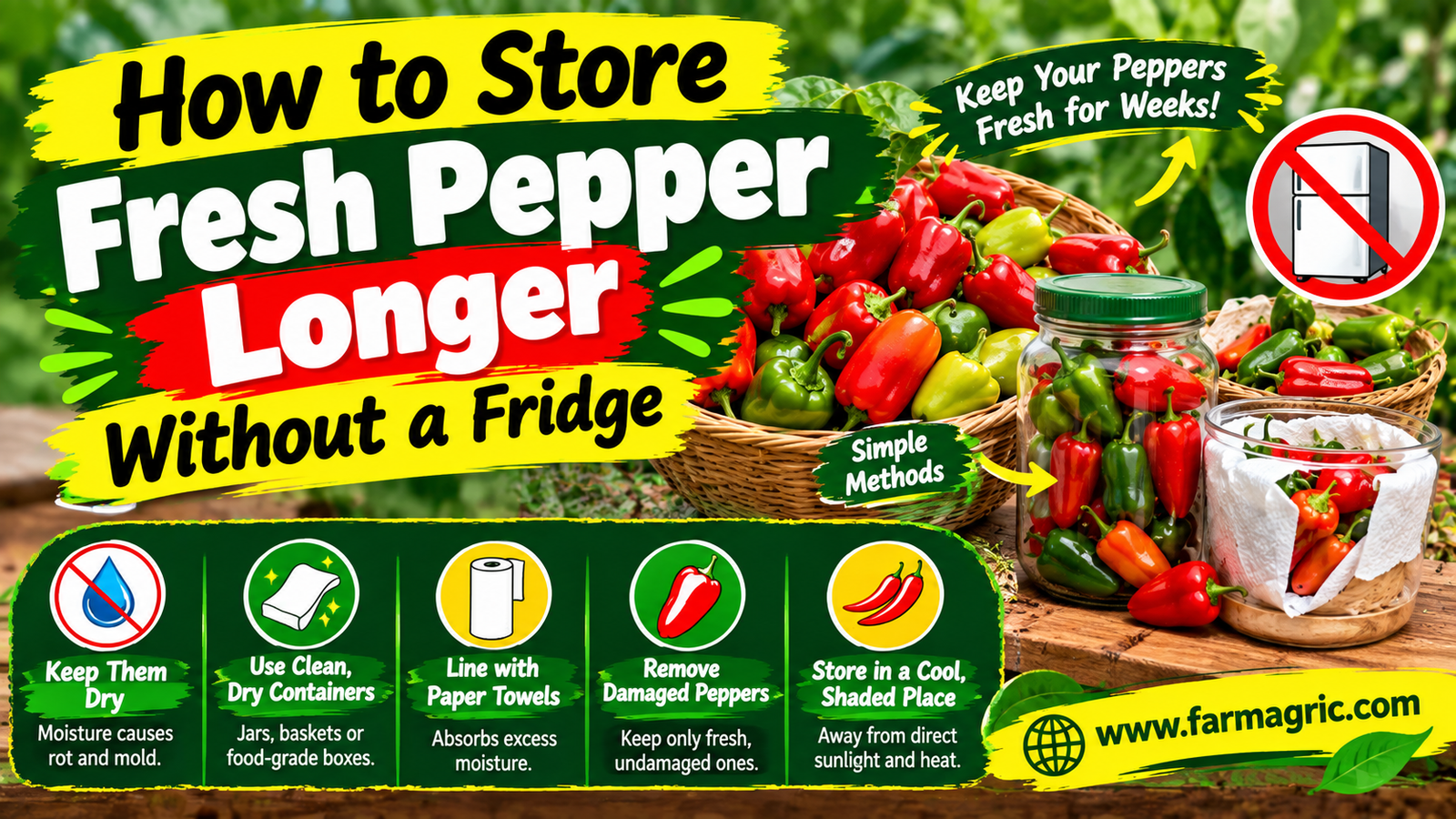
Here is the direct answer. To store fresh peppers longer without a fridge, pick them at the right stage with a bit of stem attached, keep them dry, sort out anything damaged, and store them in a single loose layer in a cool, shaded, well-ventilated place. Use shallow crates or baskets lined with clean dry paper or straw, and never seal them in a closed plastic bag. If you need to hold them longer than a week or so, an evaporative cooler made from clay pots can help, and beyond that, the honest answer is to preserve them by drying, pickling or fermenting. Fresh pepper is a short-lived product, and the real skill is knowing when to stop trying to keep it fresh and turn it into something that lasts.
The rest of this article explains how to do each of these properly, and why the common habits cause so much loss.
What most farmers get wrong
They wash the peppers before storing them. Water left on the skin or in the stem cup is an invitation for rot. A washed pepper looks cleaner, but it spoils faster. If peppers need washing for sale, do it at the last moment and dry them completely.
They pile them deep in sacks. Peppers are living produce, and they give off heat and moisture. In a packed sack, the heat builds up, the peppers at the bottom get crushed, and rot spreads quickly from one fruit to its neighbors. A single bruised pepper can spoil a large part of a sack.
They seal them in plastic. A closed plastic bag traps moisture and gives mold perfect conditions. If you do use bags, they need to be perforated or open at the top, and the peppers must be dry going in.
They leave them in the sun or a hot room. Heat shortens the life of fresh pepper dramatically. Even a short time in direct sun, on the back of a truck or in a hot shed, begins to wilt and soften the fruit.
They store damaged fruit with good fruit. Cracked, bruised, insect-bitten or soft peppers are the first to rot, and they take the healthy ones with them. Sorting is not optional.
They pull off the stems. The stem and the little cap on top, called the calyx, protect the pepper from losing moisture and from infection. A pepper with its stem torn out of the top is an open wound.
They pick at the wrong time. Peppers picked wet after rain, or picked overripe or damaged, do not store well. Harvest quality sets the limit for how long they can keep.
Why peppers spoil, in plain terms
Understanding the cause makes the solutions obvious. Fresh peppers lose water through their skin, so they wrinkle and go soft. They are also alive, so they keep breathing, which produces heat. And their moist skin and flesh are an easy target for molds and bacteria, especially where there are wounds or trapped water. So the three enemies of stored peppers are heat, trapped moisture and damage. Everything in the next section is about reducing one of those three.
There is also a point many people do not know: peppers do not like being too cold. Chilling injury can occur when they are kept at low temperatures for too long, showing up as pitting, soft spots and faster decay. That means that even where a fridge is available, it is not always the perfect place. What peppers want is cool, not freezing, with moderate humidity and moving air. A shaded, ventilated spot in a good store can get you surprisingly close to that.
Step-by-step: how to keep fresh peppers longer without a fridge
Step 1: Harvest at the right time and in the right way. Pick in the cool part of the day, in the early morning if you can, when the peppers are firm and full of moisture but the dew has dried. Avoid picking right after rain, when the fruit is wet. Choose fruit that is firm, glossy and free from cracks, soft spots and insect damage. Cut the pepper with a short piece of stem attached, using clean scissors or a knife, instead of pulling or twisting. Handle the fruit gently, because bruises become rot later.
Step 2: Move the peppers to shade immediately. Do not leave harvested baskets sitting in the field in the sun. Get them into shade within minutes. Heat damage starts quickly, and fruit that has been baking in the sun will never store well, no matter what you do afterward.
Step 3: Sort carefully. Go through the peppers and set aside anything cracked, bruised, soft, wrinkled, or with insect holes or dark spots. Use those for cooking or drying right away. Only the best fruit goes into storage. Also sort by ripeness, because fully colored fruit and green fruit age at different speeds, and a very ripe pepper will not last as long as a firmer one.
Step 4: Keep them dry, and let them air. Do not wash the peppers before storing. If there is dirt on them, brush it off gently with a dry cloth. If fruit is slightly damp from dew or handling, spread it out in a shaded, breezy place for a while and let it dry completely before you pack it. Moisture is the thing you are trying to avoid.
Step 5: Choose the right container. Use shallow, open containers that let air move, such as woven baskets, slatted wooden crates or plastic crates with holes. Line them with clean, dry paper, dry straw or soft dry leaves to cushion the fruit and absorb any stray moisture. Fill them in a shallow layer, not piled high, ideally one or two layers deep. Never use a closed airtight container for fresh pepper. If you want to separate the fruit further, wrapping each pepper loosely in a piece of clean, dry paper can slow the spread of rot from one fruit to the next, though it takes more time.
Step 6: Pick the best place in your home or farm. The ideal spot is cool, shaded, dry and well ventilated, away from direct sun and away from heat sources such as cooking areas or roofing that gets hot. A shaded room with cross-breeze, a covered porch on the cooler side of a building, or a cool store with air vents works well. Raise the crates off the floor so air can circulate underneath and so damp ground does not touch them. Keep them away from ripening fruit like ripe tomatoes and bananas, which give off ethylene gas, a natural ripening signal that can speed up softening and color change in peppers.
Step 7: Build a simple evaporative cooler if you need more time. In hot, dry weather, an evaporative cooler can lower the temperature around your produce without electricity. The simplest version is a pot-in-pot cooler. Place a smaller clay pot inside a larger one, and fill the gap between them with clean sand. Wet the sand thoroughly, put the peppers in the inner pot, and cover the top with a damp cloth. Keep the sand wet, and place the whole thing in a shaded, breezy spot. As water evaporates from the sand, it draws heat away and cools the inside. A larger version can be made with a wet-cloth-covered frame, where water drips slowly over the cloth and a breeze passes through. Be realistic about its limits. Evaporative cooling works best in dry air and works less well when the weather is very humid. It can give you a few extra days, not weeks.
Step 8: Check the stored peppers every day. This habit saves more fruit than any gadget. Every day, look through your stored peppers, remove anything showing soft spots, mold, wrinkling or a sour smell, and wipe away any moisture in the container. One spoiled pepper removed early can protect the whole batch.
Step 9: Set a realistic time limit. In a cool, shaded, ventilated place, good fresh peppers may stay in decent condition for several days up to around a week or two, depending on the type, the harvest quality and the weather. Hot, humid conditions will shorten that. If you cannot sell or use the fruit within that window, do not wait for it to begin spoiling. Move on to preservation.
When fresh storage is not enough: preserve them instead
This is the part many farmers resist, but it is where the real savings are. If you have more peppers than you can sell fresh, preserving them turns a short-lived crop into one that lasts for months.
Drying is the most reliable method without a fridge, especially for hot peppers. Spread clean, whole or split peppers in a single layer on a raised rack or mesh tray, never directly on the ground, and dry them in a sunny, airy spot or in a covered solar dryer, which protects them from dust, insects and rain. They are ready when they are brittle and snap or crumble, with no soft or leathery spots, because any remaining moisture leads to mold in storage. Store dried peppers in clean, dry, airtight containers away from light and moisture. You can also grind them into powder once fully dry.
Pickling in vinegar works well for many peppers. Use clean jars and a vinegar brine of proper strength, and follow a tested recipe from a reliable source so the acidity is high enough to keep the peppers safe. Pickled peppers can last months when prepared and stored properly.
Fermenting peppers in a salt brine, for example to make a pepper mash or sauce, is a traditional method that preserves them and adds flavor. Use clean equipment, the right amount of salt, and a tested recipe, and keep the peppers submerged under the brine.
A word of caution about oil. Do not preserve fresh peppers, garlic or other low-acid vegetables by packing them in oil at room temperature. This creates conditions where dangerous bacteria can grow, and it can cause serious food poisoning. Likewise, canning low-acid vegetables safely requires specific equipment and tested procedures. If you are not sure, stick to drying, vinegar pickling and salt fermenting with proven recipes.
Warning signs your stored peppers are going bad
Watch for skin that wrinkles and feels soft or rubbery, water-soaked or sunken spots, dark patches near the stem, any visible mold, white, grey or fuzzy growth, and a sour or fermented smell. If one pepper shows these signs, remove it at once and check its neighbors. If the fruit is slimy, moldy or smells off, do not eat it. When in doubt, throw it out.
What I would do differently if I were starting again today
I would treat storage as part of the harvest, not as something to figure out afterward. I would have clean, shallow crates ready before the first picking, a shaded spot with good airflow set up in advance, and a solar dryer built before the season even started, so that surplus peppers had somewhere to go on the day they came in. I would pick in the cool of the morning, sort hard, and never wash before storing. And I would plan to sell or process the bulk of any harvest within days, instead of hoping fresh storage would stretch further than it can.
The farmers who lose the least are not the ones with the cleverest storage tricks. They are the ones who respect how short the life of a fresh pepper really is, and who move quickly.
FAQ
How long can fresh peppers last without a fridge?
It depends on the variety, harvest quality and conditions. In a cool, shaded, well-ventilated place, good peppers may keep for several days up to a week or two. In hot or humid conditions the time is shorter. An evaporative cooler can add a few days in dry weather.
Should I wash peppers before storing them?
No. Moisture encourages rot. Brush off dirt with a dry cloth and wash the peppers only right before you use or sell them, drying them thoroughly afterward.
Can I keep fresh peppers in a plastic bag?
Only if the bag is perforated or open and the peppers are completely dry. A sealed bag traps moisture and speeds up mold and rot.
What is the best way to keep hot peppers for months without a fridge?
Drying is the most dependable method. Dry the peppers completely until they are brittle, then store them in clean, dry, airtight containers away from light. Pickling and salt fermenting are also good options when done with tested recipes.
Is it better to store peppers green or ripe?
Firm, mature green or just-turning fruit usually holds up better than fully ripe, soft fruit. Whatever the color, the fruit should be sound, dry and free of damage when it goes into storage.
Bookmark this
A fresh pepper is on a short clock, so keep it dry, cool and unbruised, and when the clock runs low, dry it or pickle it instead of watching it rot.