Nigeria Opens 40 Million-Dose Veterinary Vaccine Facility in Lagos
Nigeria Opens 40 Million-Dose Veterinary Vaccine Facility in Lagos
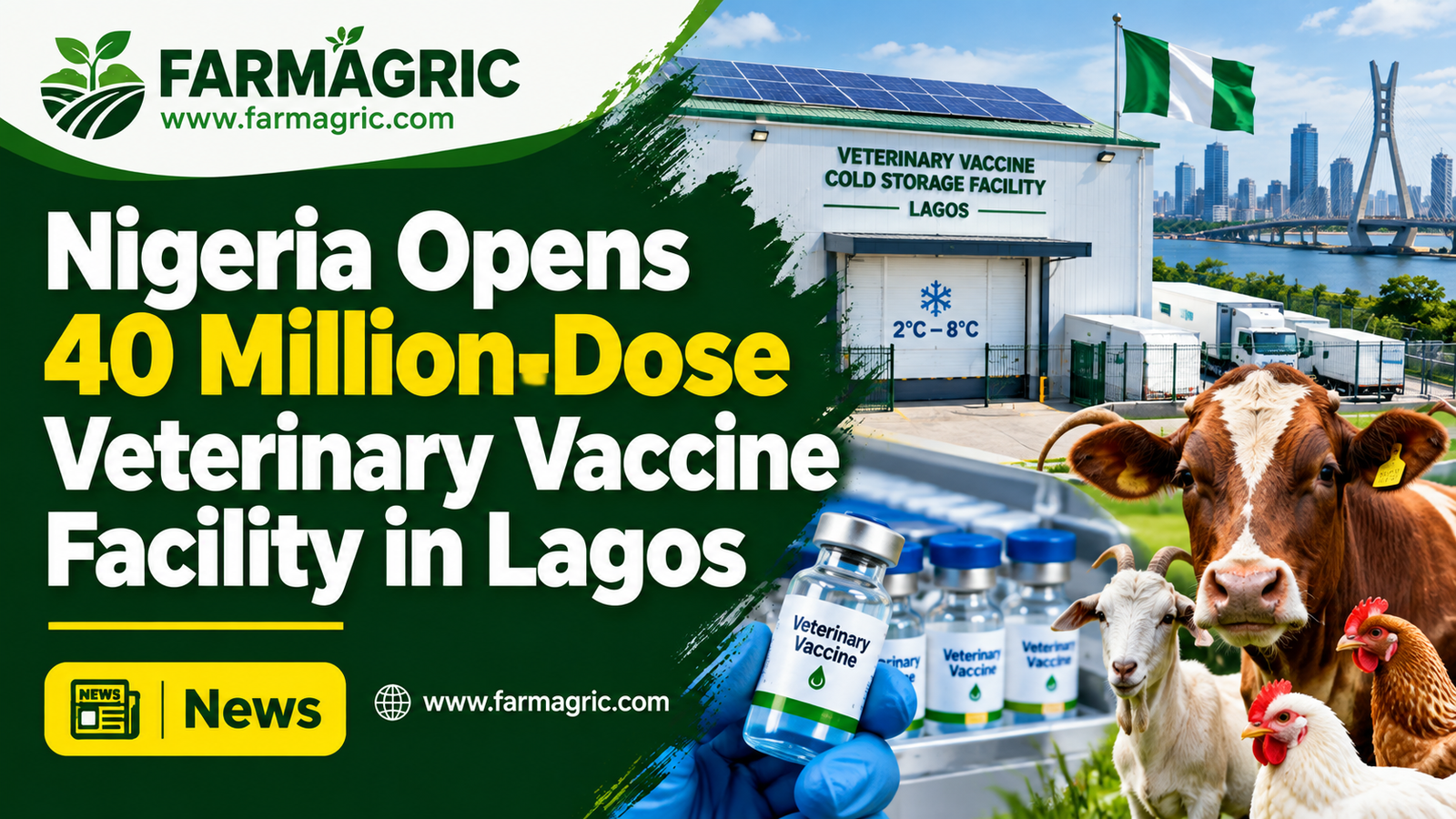
The Federal Government has inaugurated a new veterinary vaccine cold storage facility in Agege, Lagos, with capacity to store about 40 million doses of vaccines for livestock and poultry.
The facility, commissioned on October 1, 2026, is expected to strengthen the storage and distribution of veterinary vaccines across the South-West and improve Nigeria’s response to animal diseases.
The solar-powered facility was delivered under the Livestock Productivity and Resilience Support Project, L-PRES, with support from the World Bank. The project is part of the Federal Government’s wider effort to strengthen animal health services and improve livestock productivity.
Minister of Livestock Development, Idi Mukhtar Maiha, said the facility would help Nigeria move from mainly responding to disease outbreaks after they occur to a stronger system based on prevention and early intervention.
For livestock farmers, reliable vaccine storage is important because vaccines can lose their effectiveness when they are not maintained under the required temperature conditions. A dependable cold-chain system therefore plays a major role in ensuring that vaccines reaching farms remain effective.
The new facility is expected to serve as a regional hub for the storage and distribution of veterinary vaccines to Lagos and other states in the South-West. It will also provide services to government agencies and private-sector operators involved in animal health.
The livestock ministry said the facility would help preserve vaccine potency, reduce wastage and improve the availability of vaccines during disease-control campaigns.
Animal diseases remain a major concern for livestock producers because outbreaks can result in animal deaths, reduced productivity, higher veterinary costs and losses of income. Diseases can also disrupt livestock markets when restrictions are introduced to control their spread.
The government said the new facility is part of a growing national network of strategic veterinary vaccine storage centres. Similar facilities have been established in Abuja, Sokoto, Yola, Edo and Imo states.
The Federal Government is also upgrading the National Veterinary Research Institute in Vom, Plateau State, as part of efforts to increase domestic vaccine production.
According to the Ministry of Livestock Development, the upgrade is expected to raise Nigeria’s annual veterinary vaccine production capacity from about 120 million doses to more than 850 million doses.
If that target is achieved alongside improvements in storage and distribution, it could reduce some of the logistical challenges associated with supplying vaccines to livestock farmers in different parts of the country.
For farmers, however, having vaccines available is only one part of effective disease prevention. Proper vaccination schedules, veterinary supervision, animal identification, biosecurity and timely reporting of suspected diseases remain important for protecting herds and flocks.
The facility also comes as Nigeria continues to place greater emphasis on livestock production as part of its food security strategy. Government officials have repeatedly identified animal health as an important part of increasing meat, milk, eggs and other livestock products.
The Minister said stronger animal-health systems would help protect the livelihoods of millions of Nigerians who depend on livestock while supporting food security and economic activity.
The Agege facility is expected to support both public vaccination campaigns and the wider veterinary supply chain in the South-West. Its location in Lagos also gives it access to one of the country’s largest commercial and transportation centres.
For livestock farmers, the immediate significance of the development will depend on how efficiently vaccines stored at the facility reach veterinary services, farms and animal-health programmes across the region.
With Nigeria working to expand livestock production, strengthening the systems used to prevent and control animal diseases will remain an important part of the country’s agricultural development.