How to Find International Buyers for Agricultural Products
Finding buyers for agricultural products is one of the most important steps in turning agricultural production into an export business. A farmer or exporter can have a good-quality commodity, adequate supply and proper packaging, but without a reliable buyer, the product may remain in storage or be sold into a less suitable market.
For Nigerian agricultural businesses, the challenge is not simply finding somebody overseas who says they want to buy. The real objective is to identify an importer whose business actually uses the product, confirm that the company is legitimate, understand its requirements and establish commercial terms that protect both sides.
There are several ways to build this type of buyer network. International buyer directories, trade fairs, importer research, industry associations, government-supported matchmaking and direct business development can all produce leads. However, every lead still needs to be qualified and verified before an exporter commits significant money or ships valuable produce.
Start With the Product, Not the Buyer
Before searching for buyers, clearly define what you are selling.
An importer looking for sesame seed, for example, is likely to have very different requirements from a company buying dried ginger, cocoa beans, cashew nuts or processed agricultural ingredients. Even within the same commodity, buyers can have different requirements for grade, moisture, purity, packaging, quantity and delivery.
A useful buyer search therefore begins with a clear product specification. The exporter should know the exact commodity, grade, available quantity, packaging format, quality characteristics, country of origin and expected supply period.
This makes the search much more precise. Instead of looking for “agricultural buyers,” an exporter can search for companies importing Nigerian sesame, cashew, cocoa, ginger or another specific product.
NEPC advises exporters to focus market research on a specific product, study the target market and develop direct contacts with potential buyers through authentic online directories.
Use International Buyer Directories
International buyer directories are one of the easiest places to begin building a list of potential customers.
NEPC currently maintains a list of international buyer-directory resources, including Global Buyers Online, Europages, Panjiva, Hotfrog and the Canadian Importers Database. These platforms differ in their coverage, search functions, pricing and the amount of trade information available. Some provide free searches while others operate partly or entirely through paid subscriptions.
The important thing is not to treat every company found in a directory as a confirmed buyer.
A directory provides a lead. The exporter still needs to determine whether the company actually imports the commodity, whether it is currently active, whether it buys quantities similar to those being offered and whether its business identity can be independently confirmed.
For example, if a Nigerian exporter has 50 tonnes of sesame available, a directory search should ideally identify companies involved in sesame imports, food ingredients, edible oils, tahini production or commodity trading rather than companies that simply have the word “agriculture” in their business description.
Research Verified Importers
A more targeted approach is to research companies that already import the product you want to sell.
Trade data and importer databases can sometimes show which companies are receiving particular commodities, depending on the market and data source. NEPC includes trade statistics and trends among the areas exporters should examine when researching international markets.
This can help answer an important question: Does this company actually buy products like mine?
A prospective buyer that has an established history of importing the relevant commodity may be more useful as a sales prospect than an unrelated company discovered through a general business directory.
Where trade data is available, look at the commodity description, HS code, importing company, origin countries and other available shipment information. The objective is to identify companies whose existing business activity matches your product.
Use Trade Fairs to Meet Buyers Directly
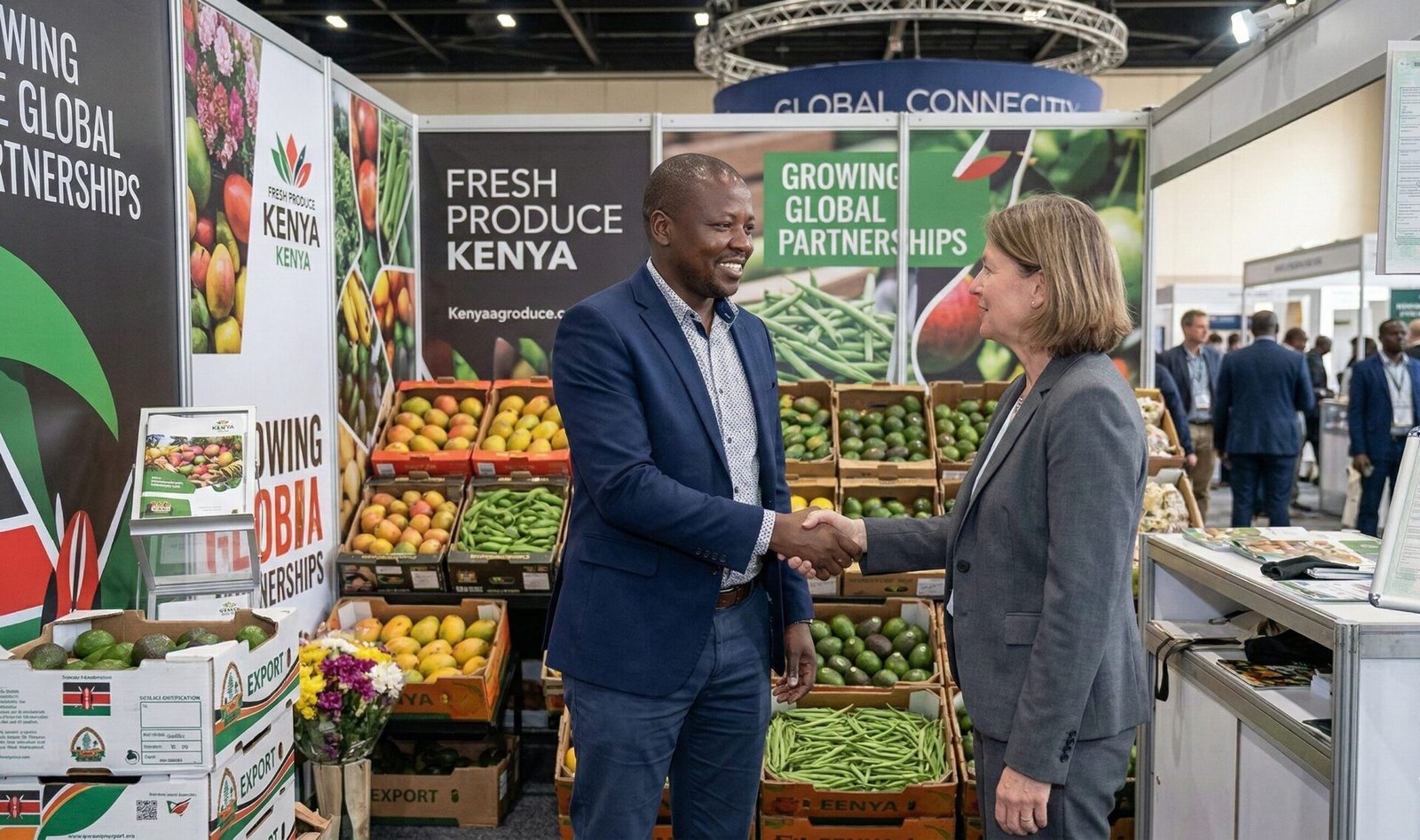
Trade fairs can shorten the distance between exporters and international buyers because they provide opportunities for face-to-face discussions.
NEPC describes trade fairs as opportunities for meeting new customers, generating export orders, concluding sales and contracts, entering new markets and conducting market research.
The important mistake to avoid is attending a trade fair without researching the participants beforehand.
NEPC recommends researching the market and buyers before selecting a trade fair and examining exhibitors, visitor profiles, products, costs, location and previous exhibitor information.
A Nigerian exporter attending a food or agricultural trade fair should therefore study the exhibitor and buyer lists before travelling. Identify the companies that could realistically purchase the product, then try to arrange meetings in advance.
The purpose of the fair should be more than collecting business cards. The exporter should leave with qualified leads, clear buyer requirements and agreed follow-up actions.
Prepare Properly Before a Trade Fair
Your first conversation with a buyer should not be the first time you think about your product specification.
Have a professional company profile, product information, photographs, packaging details, quality information and indicative commercial terms ready.
Samples can also be important, particularly for commodities where appearance, quality and physical characteristics influence purchasing decisions.
NEPC recommends advance preparation, clear objectives, visitor marketing and effective follow-up after trade fairs. It also advises exporters to document leads and promptly provide information or samples promised to prospective buyers.
A trade fair can generate a large number of contacts, but the value comes from what happens after the event.
Use NEPC Matchmaking Services
Nigerian exporters do not necessarily have to build their entire international buyer network without institutional support.
NEPC’s matchmaking services include handling trade enquiries, establishing business contacts between relevant parties and publishing trade information and opportunities from Nigeria and abroad.
NEPC also provides services for international buyers seeking Nigerian suppliers, including support with finding relevant exporters and establishing business contacts.
For an exporter, this can provide another route to potential customers, particularly when the product is already export-ready and the company can clearly explain its supply capacity and specifications.
However, an introduction from a trade-promotion organisation should still be followed by normal commercial due diligence. A referral is an opportunity to investigate a potential business relationship, not a substitute for verification.
Research Embassies and Industry Associations
Embassies, trade missions and industry associations can provide useful information about markets and business contacts.
NEPC identifies relevant trade fairs and embassies as useful sources of market information.
Industry associations can be particularly useful when looking for specialist buyers. An exporter of cocoa, for example, may find more relevant prospects among chocolate manufacturers, cocoa processors, ingredient companies and commodity traders than through a generic agricultural directory.
The same principle applies to other commodities. A buyer should be connected to the actual commercial use of the product.
Create a Buyer Shortlist
Once potential buyers have been identified, create a shortlist instead of contacting every company at once.
A simple buyer research record can contain:
| Buyer information | What to establish |
|---|---|
| Company name | Exact business identity |
| Country | Main operating market |
| Product | Whether it imports your commodity |
| Contact person | Relevant purchasing or commercial representative |
| Website | Whether the business has an established online presence |
| Business address | Whether the address can be independently verified |
| Import activity | Evidence of relevant commercial activity |
| Requirements | Quantity, grade, packaging and documentation |
| Contact history | Dates and outcome of communications |
| Verification status | What has been independently confirmed |
This makes the sales process easier to manage and prevents an exporter from confusing an unverified lead with an active customer.
Verify the Buyer Before Negotiating a Large Order
A professional-looking website does not prove that a company is genuine.
Before entering into a substantial transaction, verify the company independently.
Look at its business registration where available, physical address, website, corporate contact information, industry presence and importing activity. Check whether the person communicating with you actually works for the company.
Pay particular attention to inconsistencies. A buyer may claim to represent a large company but communicate from an unrelated email address. The company name may differ between the website, purchase order and proposed payment account. The supposed buyer may also refuse ordinary verification questions.
For a significant transaction, independent legal or commercial due diligence may be appropriate.
NEPC also advises exporters dealing with overseas commercial relationships to understand legal issues and seek professional legal assistance where necessary, particularly around contracts and disputes.
Verify the Person, Not Just the Company
Fraud does not always involve a completely fictional company.
A real company can be impersonated by someone using its name, logo and business information.
If you receive an unexpected enquiry, independently locate the company’s official contact details and use them to confirm the identity of the person contacting you.
Do not rely exclusively on telephone numbers, email addresses or payment instructions supplied in the original message.
This is particularly important when the transaction suddenly changes from normal commercial communication to urgent requests for money, documents or shipment.
Be Careful With Large Purchase Orders
A large purchase order can look attractive, especially to an exporter trying to secure a first international customer.
But the size of the order should not replace due diligence.
A supposed buyer may send a purchase order and then demand payment for an unexplained registration, clearance, insurance, certification or processing fee before the order can proceed.
That should be investigated independently.
If a legitimate regulator, inspection company, bank, shipping company or other service provider requires a payment, verify the requirement directly with that organisation rather than relying solely on instructions from the buyer.
Prepare a Professional Buyer Offer
Once a prospective buyer has been identified and the initial verification has been completed, send a clear commercial offer.
The buyer should be able to understand exactly what you are offering without having to ask basic questions repeatedly.
A good offer normally explains the product specification, quantity, packaging, origin, quality information, price, currency, delivery term, loading point, availability, payment expectations and quotation validity.
For agricultural commodities, quality information is particularly important. Saying that the product is “premium quality” is less useful than providing measurable specifications relevant to the commodity.
Send Samples Carefully
Samples can be an important stage between buyer interest and a commercial order.
An importer may want to examine the colour, size, moisture, purity, foreign matter, defects, processing quality or other characteristics of the commodity.
The sample should represent the product that will eventually be supplied.
This is critical.
An exporter who sends an exceptionally clean sample but later supplies a materially different commercial lot can create a quality dispute even if the original sample was approved.
Before sending the sample, agree on what is being tested and what specifications the buyer expects.
Make the Sample Commercially Useful
A sample should answer the buyer’s purchasing question.
If the buyer is interested in a particular grade, send that grade. If laboratory testing is relevant, establish which tests are required. If packaging is part of the buyer’s decision, provide information about the intended commercial packaging.
For higher-value commodities or larger samples, clarify who pays for the sample and international courier charges.
NEPC’s trade-fair guidance also highlights the importance of following up with potential buyers and sending samples or other information promised during the event.
Move From Sample Approval to Contract
A buyer approving a sample does not automatically create a completed sale.
The next stage is to establish the commercial terms.
An agricultural export contract should clearly identify the buyer and seller, describe the product, establish quantity and quality requirements, state the price and currency, define delivery responsibilities, establish payment terms and explain how disputes or quality claims will be handled.
The applicable Incoterm should also be clearly identified because it determines important responsibilities between buyer and seller.
NEPC advises exporters to pay close attention to export-contract details and recommends obtaining legal advice where appropriate.
What to Check Before Signing the Contract
The contract should answer a simple question: What exactly has each party agreed to do?
The product specification should be unambiguous. Quantity should be clear. The price should identify the currency and relevant delivery basis. The payment schedule should be understood. Shipment timing should be realistic.
The contract should also establish what happens if the product fails the agreed specification, if shipment is delayed or if either party fails to perform its obligations.
For significant export transactions, professional legal review can help identify terms that an exporter may otherwise overlook.
Match the Contract With the Actual Product
One common agricultural export problem occurs when the commercial contract contains specifications that the exporter cannot consistently meet.
Before accepting the order, compare the buyer’s requirements with your actual supply.
If the buyer requires a particular moisture level, grade, packaging format or certification, confirm that you can meet it before signing.
Do not agree to specifications simply because you want to secure the order.
A contract that looks commercially attractive can become expensive if the exporter later has to reprocess, replace or reject a large quantity of produce.
Protect the Payment Side of the Transaction
The buyer’s identity is only one part of risk management.
The payment arrangement also matters.
Depending on the transaction, parties may use arrangements such as advance payment, documentary collections, letters of credit or other agreed payment structures.
The appropriate structure depends on the buyer, country, transaction value, commodity and commercial relationship.
The exporter should understand exactly when payment becomes due, which documents are required and what happens if payment is delayed.
For substantial transactions, trade-finance and legal advice can help the exporter assess the risks associated with the proposed payment arrangement.
Understand the Buyer’s Import Requirements
A buyer may want a product that satisfies requirements beyond those normally applied in the Nigerian domestic market.
The importer may require particular food-safety documentation, phytosanitary certification, testing, packaging, labelling, traceability or other compliance measures.
NEPC states that required export certificates depend on the product and can include documents from organisations such as NAFDAC, NAQS and DVPCS where applicable.
The buyer’s requirements should therefore be established before finalising the transaction.
Finding the buyer first and discovering the compliance requirements later can create avoidable costs and delays.
Make Your Own Business Easy to Verify
International buyers also need to trust the Nigerian exporter.
An exporter looking for international buyers should have a professional company profile and be able to provide appropriate business and export documentation when requested.
NEPC operates exporter-related resources, including exporter information and an exporter certificate verification system. Its importer-facing platform also allows prospective buyers to research Nigerian suppliers.
This means buyer verification works in both directions. The exporter needs to investigate the buyer, while the buyer needs confidence that the Nigerian supplier is genuine and capable of delivering the agreed product.
Build Relationships Instead of Chasing One-Off Orders
International agricultural trade can become more valuable when a first transaction develops into repeat business.
After a successful shipment, maintain communication with the buyer. Ask whether the product met expectations, whether packaging was suitable and whether future quantities or specifications need to change.
A buyer who has already evaluated your quality and reliability may require less education during a future transaction.
This is one reason accurate records are important. Keep copies of product specifications, sample results, contracts, shipment documentation and buyer feedback.
Common Warning Signs of Buyer Fraud
Fraud prevention should be part of buyer acquisition from the beginning.
Be particularly cautious when a supposed buyer refuses basic identity verification, creates extreme urgency, requests unexplained upfront payments or changes payment instructions unexpectedly.
Another concern is inconsistency between the company name and bank account details. A buyer may also insist that all communication must remain on an unusual messaging platform while refusing to communicate through independently verified corporate channels.
None of these signs alone proves fraud, but several together warrant additional investigation.
NEPC’s guidance recognises the importance of understanding fraud, scams, corruption risks and legal issues when conducting international export transactions.
Turn Buyer Research Into a Repeatable Process
Finding international buyers should not happen only when you have agricultural products sitting in a warehouse.
Build a continuing prospecting system.
Each month, research new importers, update existing buyer information, contact relevant prospects and follow up with companies that have already shown interest.
Keep separate records for unqualified leads, verified prospects, sample-stage buyers, negotiating buyers and completed customers.
This approach gradually creates a commercial network instead of forcing the exporter to search from scratch whenever a new harvest becomes available.
Where Nigerian Exporters Should Look First
For Nigerian agricultural exporters, the most practical starting points are usually the channels that connect a specific product with an identifiable market.
NEPC’s current resources include international buyer directories, market information, matchmaking, trade-promotion activities and information on Nigerian export sectors such as cocoa, cashew, sesame, ginger and dry beans.
The best source of a buyer will depend on the commodity and destination. A cocoa exporter may need a different network from a sesame supplier, while a processed food exporter may need to focus more heavily on food manufacturers and distributors.
The principle remains the same: identify the businesses that actually use or import your product, then qualify them carefully.
The Buyer-Finding Process From Start to Contract
The complete process can be viewed as a simple commercial chain:
Product definition → Market research → Buyer discovery → Buyer verification → Initial contact → Product information → Sample → Negotiation → Contract → Payment arrangement → Shipment → Follow-up
Each stage has a different purpose.
Buyer directories help with discovery. Trade fairs create opportunities for direct contact. Trade data can help identify actual importers. Samples allow buyers to evaluate the product. Contracts establish the agreed commercial terms. Verification and appropriate payment arrangements reduce transaction risk.
Skipping several of these stages because a buyer appears enthusiastic can expose an exporter to unnecessary financial and operational risk.
Conclusion
Finding buyers for agricultural products requires more than putting a product advertisement online and waiting for enquiries.
The strongest approach begins with a clearly defined agricultural product and a specific target market. From there, exporters can use buyer directories, trade fairs, importer research, industry networks and NEPC matchmaking services to identify potential customers.
The next step is qualification.
A genuine buyer should be able to explain what they purchase, what specifications they require, what quantities they normally handle and how they intend to conduct the transaction. The exporter should independently verify the company’s identity and the person representing it before committing significant resources.
Samples can then establish whether the product meets expectations, while a properly prepared contract records the commercial agreement.
For Nigerian farmers and exporters, the goal should not simply be to collect the largest possible number of buyer contacts. The objective is to develop a smaller network of relevant, verified and commercially suitable buyers who can potentially become repeat customers.
Frequently Asked Questions
How can I find buyers for agricultural products?
You can find potential buyers through international buyer directories, trade data, agricultural trade fairs, industry associations, embassies, direct importer research and export-promotion organisations. Nigerian exporters can also use NEPC’s international buyer directories and matchmaking services.
Where can I find international buyers for Nigerian agricultural products?
Start by identifying companies that already import your specific commodity in your target market. NEPC provides international buyer-directory resources and matchmaking services, while trade fairs and importer databases can provide additional prospects.
How do I know whether an international buyer is genuine?
Independently check the company’s identity, physical address, website, business activity and contact information. Also verify the person communicating with you through an independently sourced company channel. For substantial transactions, additional legal or commercial due diligence may be appropriate.
Should I send samples to an international buyer?
Samples are useful when the buyer needs to assess product quality before placing a commercial order. The sample should accurately represent the product you intend to supply, and the exporter should agree with the buyer on specifications, quantity, testing and shipping arrangements.
What should an agricultural export contract contain?
The contract should clearly identify the buyer and seller, product, quantity, quality requirements, price, currency, delivery terms, payment arrangements, documentation, inspection requirements and procedures for handling claims or disputes. The appropriate Incoterm should also be stated clearly.
How can I avoid fake agricultural buyers?
Do not rely solely on a website, email address or purchase order. Independently verify the company and the person contacting you. Be particularly cautious about unexplained upfront fees, urgent payment requests, inconsistent company information and instructions to send goods without appropriate payment protection.
Can NEPC help Nigerian exporters find buyers?
Yes. NEPC’s matchmaking service handles trade enquiries, facilitates contacts between relevant parties and publishes trade information and opportunities. NEPC also provides international buyer-directory and trade-promotion resources.
Can I attend international agricultural trade fairs to find buyers?
Yes. Trade fairs can provide opportunities to meet importers and other commercial contacts directly. NEPC recommends selecting fairs based on the target market and buyer profile, preparing in advance and following up promptly with contacts made at the event.