How to Control Worms and Parasites in Pigs Naturally
How to Control Worms and Parasites in Pigs Naturally
For two seasons I could not work out why my growers looked so poor. They ate well, they had clean water, and they had shelter, yet their ribs showed, their coats stood up rough, and a few of them coughed in the mornings. Then I helped a neighbour clear out a pen and saw what was in the dung of one of his sick pigs, long pale worms the length of a pencil. I went home, looked closely at my own pens, and found the same thing. I had been feeding worms for a year.
Here is the direct answer. You can keep worms and parasites in pigs under control without leaning only on drugs by breaking the parasite life cycle: keep pens clean and dry, remove dung often, rotate and rest pasture, avoid overcrowding, feed well so pigs resist infection, use clean feed and water, quarantine new animals, and take dung samples to see what you actually have. Natural methods work best as a system and cut parasite burdens a great deal, but they are not a guaranteed cure. If pigs are visibly sick, losing weight, or have heavy infestations, you need a vet’s diagnosis and, often, an approved dewormer. The best farms combine natural management with careful, minimal, vet-guided treatment.
Let me explain how worms get into your pigs, and what I do about each part of the cycle.
What most farmers get wrong
The first mistake is treating pigs without knowing what they have. Roundworms, whipworms, nodular worms, lungworms, kidney worms, lice, mites, and coccidia are all different, and they need different management. A random drench is a gamble.
The second mistake is dewormers only, with no change to the pen. A dewormer kills worms in the pig, but the eggs in the soil and floor remain, and the pigs are reinfected within weeks.
The third mistake is believing a pig that looks fat is worm-free. Many pigs carry worms and still look reasonably well, while quietly growing slower and eating more feed per kilogram of gain.
The fourth mistake is trusting folk cures without checking. Some home remedies are harmless but do little. Others can poison pigs or contaminate meat.
The fifth mistake is overcrowding and dirty pens. Crowded pens with wet, fouled floors are paradise for worm eggs and mites.
The sixth mistake is bringing in new pigs without quarantine. A new animal can carry worms, mange mites, and other parasites into a clean herd.
Know your enemy: the main pig parasites
You do not need to become a parasitologist, but a basic picture helps you understand why natural control works.
Roundworms (Ascaris). The large roundworm is one of the commonest pig parasites. Adult worms live in the gut and shed huge numbers of eggs in dung. The eggs are very tough and can survive in soil and pens for a long time. Pigs swallow the eggs from contaminated floors, feed, or water. Larvae hatch, travel through the liver and lungs, and return to the gut, damaging tissues along the way. Heavy infections cause poor growth, coughing, and unthrifty pigs. Liver damage can show up at slaughter as white spots, leading to condemned livers.
Whipworms and nodular worms. These live in the large intestine. They cause scouring in some pigs, poor growth, and can be serious in heavy infestations. Nodular worms form lumps in the gut wall.
Lungworms and kidney worms. These are more common in pigs raised outdoors or on soil, and they can involve earthworms as carriers. Lungworms cause coughing, and kidney worms can cause poor growth and condemned kidneys and loins.
Coccidia. Single-celled parasites that cause diarrhoea in young piglets, often in the first few weeks of life, especially in dirty pens.
Mange mites. These burrow into the skin, causing intense itching, scratching, rough skin, and crusts. Pigs rub against walls and each other.
Lice. Visible on the skin, especially behind ears, on the neck, and in skin folds. They cause itching and can spread between pigs.
Other parasites. Depending on where you farm, other worms and external parasites may also be present, and some can affect people too, such as certain tapeworm cysts. Ask your vet which parasites are the most important in your area.
Signs your pigs may have parasites
Look for poor growth despite adequate feed, a pot belly with thin body, a rough, dull coat, pale skin or gums in young pigs, coughing, especially in the morning or after exercise, diarrhoea or soft dung, visible worms in dung or vomit, scratching, rubbing, crusty skin or red patches, and white spots on livers at slaughter. Many of these signs can also be caused by other diseases, so avoid guessing.
The most useful single step is a dung sample. Collect fresh dung from several pigs, keep it cool and clean in a sealed container, and take it to a vet or laboratory for a faecal egg count. This tells you what parasites are present and how heavy the burden is. For skin problems, a vet can scrape the skin and check for mites.
Controlling parasites naturally: break the life cycle
Most worm eggs and larvae spend part of their lives in the environment, in the pen floor, soil, feed, and water. That is where natural control works best.
Keep pens clean and dry. Remove dung from pens at least daily where possible, and more often in warm, wet weather. Worm eggs need time and moisture to become infective, so quick removal of dung prevents many from ever reaching that stage. Use pens with floors that drain well, and fix leaks and wet spots. Concrete or slatted floors are easier to clean than bare earth, though they must be well managed, since cracks can hide eggs. Scrub and disinfect with a product your vet recommends, because many worm eggs resist common disinfectants. Hot, dry sunlight is one of the best natural killers of eggs, so let cleaned pens dry thoroughly.
Use all-in, all-out management. Where possible, move groups of pigs in and out of pens together, and clean and rest the pen between groups. This breaks the chain of infection from older pigs to younger ones.
Rotate and rest pasture. If your pigs graze outdoors, do not keep them on the same ground year after year. Move them to fresh land, and rest used paddocks for a long time, since eggs can survive in the soil for months or even years, depending on the parasite and conditions. Rotate with crops or other livestock that do not share the same worms, and consider ploughing and sunlight exposure to help reduce egg numbers. Ask your extension officer about suitable rotation periods for your area. Avoid muddy, wet areas, and do not let pigs graze near manure heaps.
Control stocking density. Fewer pigs per square metre means less dung per square metre, and fewer chances to swallow eggs. Overcrowded pens also stress pigs and lower resistance.
Keep feed and water clean. Feed from troughs, not from the floor, and keep troughs raised or designed so that pigs cannot stand in them or foul them. Clean troughs and drinkers regularly. Provide clean, fresh water, ideally from a drinker that cannot be contaminated with dung. Store feed in a dry, clean place, away from rodents and wild animals that carry parasites.
Separate age groups. Piglets and young pigs are the most vulnerable, and adult pigs often carry worms without showing signs. Keep young pigs away from older animals and from areas used by them. Wash sows before farrowing and put them in clean pens, to reduce transfer of eggs to piglets.
Control rodents, flies, and wild animals. Rats, flies, and other animals can spread parasites and disease. Good waste management and pest control help.
Quarantine new animals. Keep new pigs separate from your herd for a few weeks, and have your vet test dung or treat as advised before mixing. Do not share boars or equipment without cleaning.
Manage manure properly. Do not spread fresh pig manure on land where pigs will graze soon. Composting manure properly, so it heats up, kills many parasites, and makes a safer fertiliser, though it needs proper management. Keep manure heaps away from pens and water sources.
Practise good personal hygiene. Some pig parasites and diseases can affect people. Wash hands after handling pigs and dung, wear clean boots and clothes, and keep children away from pig pens.
Natural feeding support
A well-fed pig resists parasites better than a hungry one. Feed a balanced diet with enough protein, energy, vitamins, and minerals for the pig’s age and purpose. Underfed pigs and young pigs with poor nutrition suffer more from worms. Ask your livestock officer for rations that suit your pigs.
Herbal and traditional remedies: honest advice
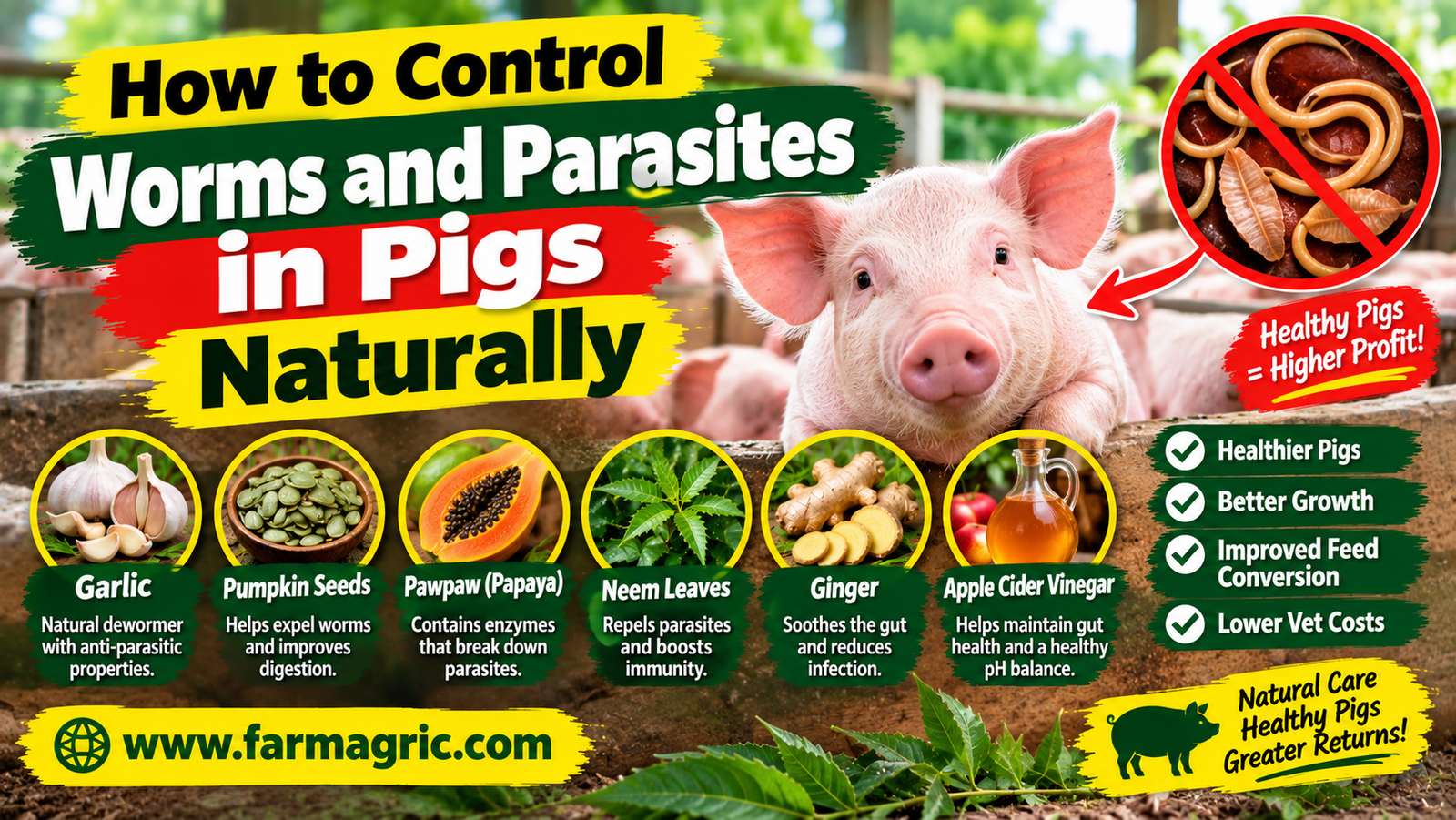
Many farmers use plant-based remedies, and I understand why. They are cheap, familiar, and sound safer than chemicals. Some plants traditionally used for worms in livestock include pawpaw seeds, neem, garlic, pumpkin seeds, wormwood, and others. I have to be straight about the evidence. Some show promise in laboratory or small studies, but results in real farm conditions are mixed, the active content varies between plants and preparations, and I am not aware of a herbal product proven to replace a proper dewormer for heavy infestations. Some plants can also be toxic in the wrong amount or to young or pregnant pigs.
If you want to try them, treat them as a support, not a cure. Ask your vet or livestock officer which preparations are reasonably safe in your area, start with small amounts, watch the pigs closely, and keep using dung egg counts to see if the worm burden is falling. Do not rely on herbs alone if pigs are weak, losing weight, or coughing, and never give any remedy to a very sick pig in place of proper veterinary care. I will not give recipes or doses here, because I cannot see your pigs, and a wrong dose can harm them.
When natural methods are not enough
If dung tests show a heavy burden, if pigs are thin, pale, coughing, or scouring, if mange is spreading, or if young pigs are failing to thrive, bring in your vet. Approved dewormers and treatments for skin parasites work well when used correctly, and delay can cost you the pigs. A vet can recommend the right product, dose, and timing for your pigs, and tell you about withdrawal periods before slaughter, so that meat is safe.
Use medicines carefully, and only as advised. Overusing dewormers leads to resistant worms, which is a growing problem in many places. Treat based on dung tests, rotate products only as advised, and combine treatment with the cleaning and management steps above, so that pigs do not simply reinfect. Treating a pig and returning it to a contaminated pen wastes money.
Warning signs to watch for
I keep an eye out for pigs that eat well but stay thin, rough coats, coughing, diarrhoea, visible worms, pale gums in piglets, constant scratching or rubbing, crusty skin, uneven growth within a group, and white-spotted livers at slaughter. If I see any of these in more than one pig, I take a dung sample and call the vet.
What I would do differently if I started today
I would take dung samples early, even before I saw signs.
I would build pens that are easy to clean and dry, with good drainage.
I would plan pasture rotation and rest periods from the start.
I would quarantine every new pig, without exception.
I would keep records of dung counts, treatments, and growth rates.
And I would make friends with a vet who understands pigs, and call before the herd looks sick.
Frequently asked questions
Can I control worms in pigs without drugs?
You can reduce worms a lot through cleanliness, rotation, good feeding, and quarantine, but heavy infestations usually need approved treatment. Use natural management as the foundation and drugs only when needed and on advice.
Do herbal dewormers work for pigs?
Evidence is limited and mixed. Some plants may help a little, but they should not replace proper treatment in sick pigs. Ask a vet before using them and monitor results with dung tests.
How often should I deworm pigs?
It depends on your system, the parasites present, and the pig’s age. Many vets recommend deworming based on dung tests and herd risk rather than a fixed calendar. Ask your vet for a schedule.
How do I know if my pigs have worms?
Look for poor growth, pot bellies, rough coats, coughing, and diarrhoea, and confirm with a dung sample. Many pigs carry worms with few signs.
Can pig parasites affect people?
Some can, so practise good hygiene, wash hands, keep children away from pens, and cook pork thoroughly. Ask your vet or health officer about risks in your area.
The advice worth bookmarking
Worms live in your pens as much as in your pigs, so clean the floor, rest the ground, count the eggs, and treat only what the dung sample proves.