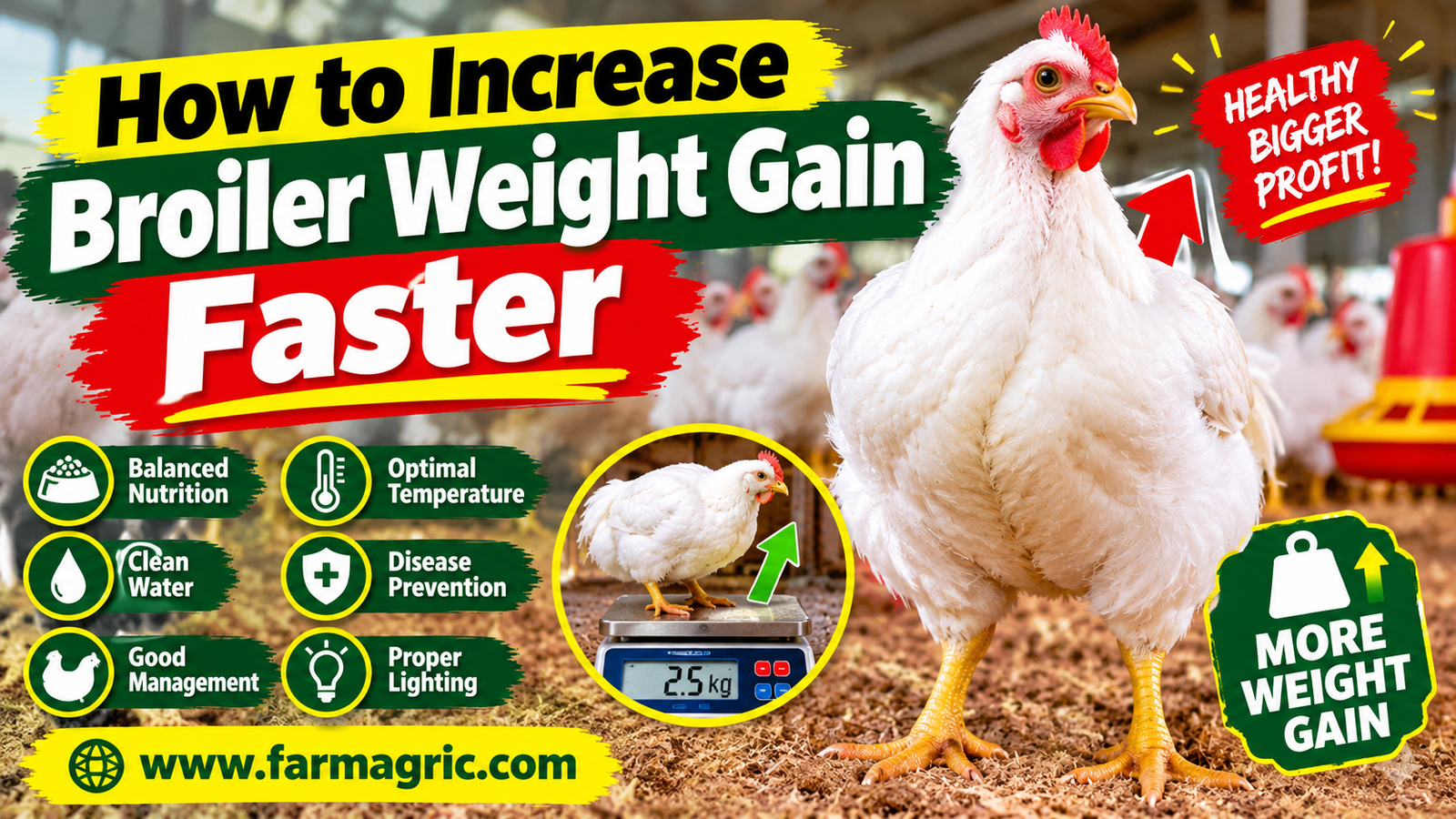
How to Increase Broiler Weight Gain Faster
How to Increase Broiler Weight Gain Faster
For a long time I believed that the secret to heavy broilers was a secret feed. I tried one brand after another, switched when a neighbor boasted, and kept wondering why my birds always seemed to lag behind at week five. Then a retired poultry technician spent an afternoon walking my house with me, and he did not once ask about my feed. He knelt and felt the brooder floor, smelled the air near the litter, looked at how the chicks were spread out, and checked how I filled the drinkers. “You are trying to fix the last three weeks,” he said, “and the problem started in the first three days.”
Here is the direct answer. To increase broiler weight gain faster, you have to get four things right and keep them right: a strong start, with quality chicks, correct brooding temperature and immediate access to feed and water; good nutrition, using the right feed for each stage, fed fresh and available at all times; a comfortable environment, with clean air, dry litter, controlled temperature and sensible stocking density; and strong health, through vaccination, biosecurity and early action on disease. Add careful record keeping, weekly weighing and the discipline to sell at the right age, and you will see weight gain and feed efficiency improve without any miracle product.
The rest of this article walks through each part in practical terms, and the mistakes that slow growth the most.
What “faster weight gain” really means
It is easy to chase weight alone, but profit comes from weight gained per unit of feed and per day. Two numbers matter. The first is body weight at a given age compared with the standard for your strain. The second is feed conversion ratio, or FCR, which is the amount of feed the flock eats for each kilogram of weight it gains. A lower FCR means cheaper meat. Under good management, modern broiler strains can reach around 1.8 to 2.2 kilograms by roughly 35 to 42 days with an FCR in the region of 1.6 to 1.9, although results depend on the strain, the feed, the climate and the management. In hot climates and basic housing, results are usually lower, and your target should come from the performance guide for your strain and your own past records.
Remember that feed efficiency worsens as birds get older, because they eat more to gain each extra gram. Keeping birds too long to chase a few extra grams can lose money. Faster, efficient growth to the right market weight is the real goal.
What most farmers get wrong
They neglect the first week. Early growth sets the pace for the rest of the cycle. Chicks that are chilled, dehydrated, underfed or crowded in the first days never fully catch up. A great deal of final weight is decided before the chicks are a week old.
They buy cheap feed and call it a saving. Feed is the largest cost in broiler production. Low-quality feed with weak protein, poor amino acid balance, low energy or contamination costs more in slow growth and wasted time than it saves on the bag price.
They use the wrong feed at the wrong age. Starter, grower and finisher feeds are designed for different needs. Feeding finisher to chicks or starter for too long, or switching abruptly, slows growth and upsets the gut.
They ignore the water. Birds drink around twice as much water as the weight of feed they eat, and more in heat. Dirty, warm, scarce or interrupted water directly cuts feed intake and growth.
They overcrowd the house. Squeezing in extra birds raises heat, moisture, ammonia and competition at feeders and drinkers. The birds grow slower and more unevenly, and the extra birds rarely repay the loss.
They tolerate wet litter and bad air. Wet litter and ammonia damage the lungs and skin, cause breast blisters and footpad burns, and reduce appetite. A house that stings your eyes is slowing your birds.
They underestimate heat. Hot weather reduces feed intake, and less feed means slower growth. Many farmers lose most of their potential weight in the hottest weeks without realizing the cause.
They do not weigh the birds. Without weekly weights, farmers do not know whether the flock is on target until it is too late to fix anything.
They chase shortcuts. Unapproved growth boosters, hormones or random drugs are illegal or unsafe in many places, can harm the birds and consumers, and rarely pay. Real gains come from management.
Step-by-step: how to grow broilers faster
Step 1: Start with good chicks. Buy day-old chicks from a reputable hatchery that supplies a proven fast-growing strain suited to your conditions. Chicks should be active, bright-eyed, uniform in size, with a dry, fluffy coat, a healed navel and no deformities. Weak, small or uneven chicks grow slowly. Transport chicks quickly and in good conditions, and place them in the house as soon as they arrive. Ask the hatchery about the vaccination program and parent flock health.
Step 2: Prepare the house before the chicks arrive. Clean, wash and disinfect the house and equipment between flocks and let it dry. Spread fresh, dry litter to a good depth. Pre-heat the brooding area for several hours before the chicks arrive, so the floor and air are warm and the litter is not cold. Set out feeders and drinkers, check that they work, and place them so that chicks find them easily.
Step 3: Get brooding right. In the first week, chicks need a warm environment, usually in the range of about 32 to 35 degrees Celsius at chick level, with temperature reduced gradually by roughly 2 to 3 degrees each week until it matches the outside temperature or the target in the strain guide. Humidity of around 50 to 60 percent helps prevent dehydration. Watch the chicks, not just the thermometer. Chicks evenly spread and busy are comfortable. Chicks huddled under the heater are cold. Chicks panting and away from the heater are too hot. Use a draft-free brooding area and a small brooding ring in the first days that you widen as the chicks grow.
Step 4: Get feed and water to the chicks immediately. Provide fresh water and feed right away. Place feed on trays or paper in the first days, in addition to feeders, to encourage early eating, and keep water clean, cool and easy to reach. The first 24 to 48 hours matter a great deal, and early feed intake drives gut development and growth. Check crops by gently feeling a sample of chicks a few hours after placement. A full, soft crop shows they have found feed and water.
Step 5: Feed the right ration for each stage. Use a high-quality starter feed for the first weeks, a grower feed after that, and a finisher feed for the last stage, as recommended by your feed supplier or strain guide. Typical broiler diets start with higher crude protein, roughly 21 to 23 percent in the starter, easing down to lower levels in the grower and finisher, with high energy levels and a balanced amino acid profile, particularly lysine and methionine. Ask your supplier for the nutrient specification and compare it with the strain’s requirements. Change from one feed to the next gradually over a day or two to avoid upsetting the gut. Crumbled or pelleted feed often gives better intake and efficiency than mash, if available and affordable.
Step 6: Keep feed fresh, available and well managed. Store feed in a cool, dry, rodent-proof place and use it within a few weeks. Throw away moldy or caked feed, since mycotoxins slow growth and damage health. Keep feed available at all times for fast-growing broilers unless your program says otherwise, and fill feeders often in small amounts so feed stays fresh and birds are stimulated to eat. Provide enough feeder space, for example around one pan feeder per 50 to 70 birds or the equivalent trough space, and adjust feeder height as birds grow so that the lip is at about back height.
Step 7: Provide plenty of clean, cool water. Supply enough drinkers, for example one nipple per 10 to 12 birds or one bell drinker per 80 to 100 birds, or as the equipment guidelines advise, and adjust height as the birds grow. Clean drinkers daily, flush water lines, and make sure the water supply never runs dry. Keep tanks shaded and clean in hot weather so water does not become warm, and check that water is free from contamination. Monitoring water intake is a quick way to spot problems early, because a drop in drinking often comes before a drop in feed intake and signals trouble.
Step 8: Manage lighting. Broilers grow best with a lighting program that encourages feeding while allowing rest. Many programs give nearly continuous light in the first days to encourage chicks to find feed and water, then introduce a short dark period as the birds grow, though the best program depends on your strain, house type and local guidelines. Avoid very bright light, which can increase activity and stress. Ask your hatchery or feed company for a recommended program.
Step 9: Control temperature and ventilation. As birds grow, they produce more heat and need more fresh air. Good ventilation removes moisture, ammonia, dust and heat, and brings in oxygen. In hot weather, increase airflow, provide shade and insulation, reduce density if necessary, and give cool water, possibly with electrolytes and vitamins during extreme heat. Feed in the cooler parts of the day, such as early morning and late evening, and make sure the feed is nutrient dense enough that reduced intake still meets requirements. In cool weather, avoid drafts on young birds and keep the house warm enough without sacrificing air quality. If you can smell ammonia strongly or your eyes sting, ventilation and litter need attention.
Step 10: Keep the litter dry and clean. Fix leaking drinkers, stir or turn the litter regularly, remove wet or caked patches and replace them with dry material. Dry litter reduces ammonia, coccidiosis, breast blisters and footpad problems, and supports appetite. Good ventilation and sensible stocking density help keep litter dry.
Step 11: Stock at a sensible density. Follow the recommended density for your housing type and climate, which is generally lower in hot, open-sided houses than in controlled-environment houses. Overcrowding limits access to feed and water, raises temperature and humidity, and slows growth and uniformity. Fewer birds that grow well usually beat more birds that grow poorly.
Step 12: Protect health. Follow a vaccination program suited to your area, typically including vaccines for diseases such as Newcastle disease and infectious bursal disease, and others as advised by your veterinarian. Keep strict biosecurity, with limited visitors, clean boots and clothing, foot baths, rodent and wild bird control, and an all-in all-out system so that new chicks do not meet old birds. Keep coccidiosis under control with dry litter and an appropriate program. Watch the flock closely, and call a veterinarian at the first signs of unusual deaths, respiratory problems, diarrhea or a drop in feed and water intake. Use medication only on professional advice, following dose and withdrawal periods.
Step 13: Weigh and record every week. Weigh a random sample of birds each week, for example around 5 percent of the flock or at least 50 to 100 birds, and calculate the average weight and how uniform the birds are. Compare with the target weight for your strain at that age. Record feed given, mortality, temperatures and any events. Calculate FCR as total feed used divided by total weight gained. If you see the flock falling behind, you can look into feed, water, temperature, health or density straight away instead of waiting for the end of the cycle.
Step 14: Improve uniformity. A flock with uneven sizes means some birds are lagging and others are ahead. Provide even feeder and drinker access across the house, avoid overcrowding, and in the first weeks, sort out weak or small chicks into a separate area with extra care. Remove and humanely cull birds that are seriously ill or deformed, following local guidelines.
Step 15: Choose the right market age. Birds grow quickly at first, but feed efficiency worsens as they approach heavier weights. Calculate your cost per extra day compared with the extra weight and the market price, and sell when the extra gain no longer covers the extra feed. This is often earlier than farmers expect. Plan your marketing so that birds are not waiting for buyers while eating expensive feed.
Warning signs your flock is falling behind
Look for chicks that are unevenly distributed or huddled, birds with low feed or water intake, a flock that is below the target weight at weekly checks, uneven sizes, wet litter, strong ammonia smell, birds panting in the heat, diarrhea or unusual droppings, and rising mortality. Any of these deserves immediate attention, because a few days of poor conditions can set the flock back for the rest of the cycle.
What I would do differently if I were starting again today
I would spend more time and money on the first week than on any later week. I would test the heating before the chicks arrived, check every drinker, and sit in the house watching the chicks for an hour rather than hurrying off. I would buy the best feed I could reliably afford, store it properly, and weigh the birds every single week. I would stop overstocking, fix the litter and ventilation, and talk to a vet before disease took hold. And I would stop looking for miracle additives, because the real gains were always in the plain, daily management.
Fast weight gain is not a trick. It is the sum of many small things done on time.
FAQ
How can I make my broilers grow faster?
Focus on a strong start with good chicks and correct brooding, high-quality feed for each stage, plenty of clean water, good ventilation and dry litter, sensible stocking density, vaccination and biosecurity, and weekly weighing to catch problems early.
What is a good weight for broilers at 6 weeks?
It depends on the strain, feed and management. Under good conditions, modern strains often reach around 2 kilograms or more by 5 to 6 weeks, but your strain’s performance guide gives the right target for your birds and conditions.
What feed gives the best weight gain in broilers?
A complete broiler ration matched to the age of the birds, with the right protein, energy and amino acids, from a reliable source. Use starter, grower and finisher feeds in sequence, keep feed fresh, and consider crumble or pellet forms if available.
Does heat slow broiler growth?
Yes. Hot weather reduces feed intake, so birds gain less weight. Improve ventilation and shade, provide cool water, feed in the cooler hours, and reduce density during hot periods.
When should I sell broilers?
When the extra weight gained no longer covers the extra cost of feed and labor, which is often around the target market weight for your area. Track FCR and daily gain to find the best point for your flock.
Bookmark this
Broilers are made in the first week and lost in the last, so nail the brooding, keep the feed fresh and the water cool, and weigh them every week.