How to Control Bean Weevils in Storage
How to Control Bean Weevils in Storage
The worst day of my farming life was not a drought or a flood. It was the morning I opened a store room I had locked six weeks earlier and found a fine, powdery dust on the floor beneath my sacks of beans. I picked up a handful from the top bag and saw what I did not want to see: round holes in nearly every seed, and tiny brown beetles walking around like they owned the place. I had worked five months for those beans. The weevils needed only six weeks to eat a third of them.
I have stored beans and cowpeas for over thirty years since that day, and I have not lost a harvest to weevils again. This is everything I do and everything I wish someone had told me before that morning.
The short answer
To control bean weevils in storage, dry your beans properly before they go into the store, clean out every broken seed and bit of trash, and put them in airtight containers filled to the top so the weevils run out of oxygen. Keep new beans away from old stock, check your sacks every two weeks, and use a safe protectant such as vegetable oil, ash or neem only as a second line of defence. Most storage losses happen because of what the farmer did, or did not do, in the first week after harvest, not because of what he sprays later.
What most farmers get wrong
I made most of these errors myself, so I will be plain without being harsh.
They think weevils come from the store. Most of the time the weevil arrives with the beans. The female lays her eggs on the pods in the field, sometimes in the last weeks before harvest. You carry the eggs home on the seed, and you cannot see them. Then the store gets blamed for something that started on the farm.
They store beans while they are still a little damp. Beans that feel dry to the hand can still hold too much moisture inside the seed. Damp beans heat up in a sack, and warm grain is where weevils multiply fastest.
They mix new beans with old ones. A single sack of old infested beans will infest every fresh bag it touches. I once emptied a half bag of last season’s seed into a newly threshed batch to “finish it up”. I lost the lot.
They spray the wrong thing. I have watched farmers dust their stored food beans with a chemical meant for the field. That is dangerous for the family, and it is also unnecessary, because there are far safer ways that work as well or better.
They open the bag too often. Every time you open a sealed container, you let fresh air in and restart the clock for any insects still inside.
Know your enemy: how the weevil works
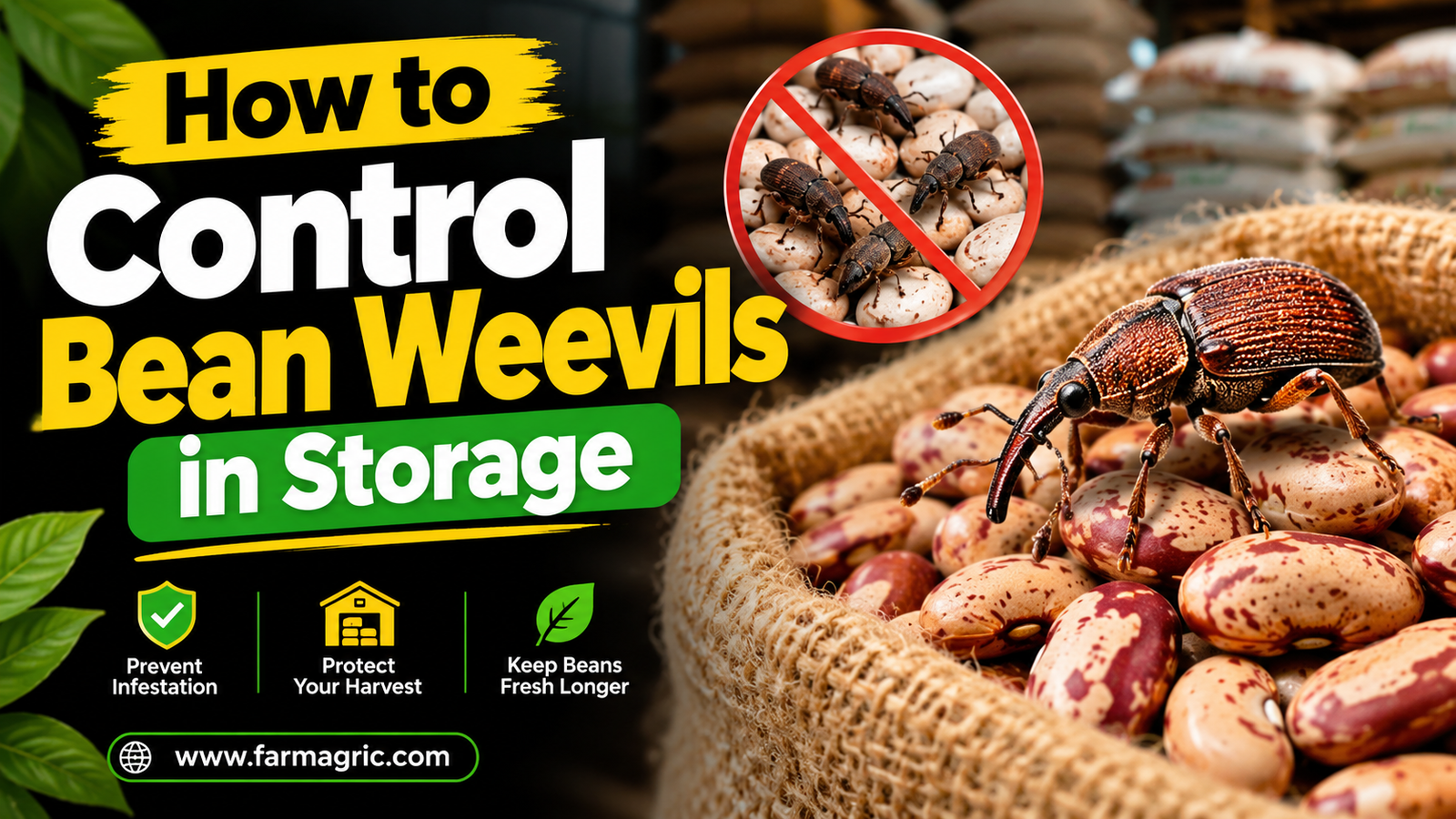
The bean weevil, called the bruchid by the extension people, is a small brown beetle about the size of a sesame seed. The female sticks her tiny white eggs, almost like specks of salt, on the outside of the bean. A day or so later the egg hatches, the grub bores into the seed, and it lives and feeds inside, completely hidden.
Inside the seed the grub grows into a pupa, then an adult. The adult chews a small round exit hole, climbs out, mates, and the female starts laying again. In warm weather this whole cycle takes about three to four weeks. That means a handful of weevils in a sack in September can be a few thousand by November, and the seed that took all your season can be hollow by the time you want to sell it.
Here is what saved me once I understood it. The weevil needs air, warmth, and a food source with enough moisture. Take any of the three away and the population collapses. Every method that works is just a way of taking one of them away.
Step by step: how I protect my beans
Step 1: Harvest at the right time
Pick the pods when they are dry and brown on the plant, and do not leave them standing in the field for weeks after they are ready. The longer mature pods stay on the plant, the more time the field weevils have to lay eggs on them. I harvest as soon as the pods are dry, and I do it in the morning to avoid shattering.
Step 2: Dry the beans properly
After threshing, I spread the beans thin on a clean tarpaulin or a concrete floor in full sun, never on bare ground. I turn them several times a day. On a good sunny stretch, two to four days is usually enough. The beans should feel hard, and a good test is to bite one. A properly dry bean resists and cracks sharply instead of denting.
For safe long storage, you want the moisture content around ten to twelve percent. If you have a moisture meter, use it. If you do not, a simple old test works: put a handful of beans with a spoonful of dry salt in a clean closed glass jar for a few hours. If the salt clumps or the jar shows moisture on the inside, the beans are not dry enough, so go back to the sun.
Step 3: Heat treat in the sun to kill the eggs
This is the step most farmers skip, and it is the one that makes the biggest difference. After the first drying, I spread a thin layer of beans, about a finger thick, on a black plastic sheet in strong afternoon sun for a few hours, stirring every half hour or so. The surface gets hot enough to kill eggs, grubs and adults inside the seed. Do not overdo it, because too much heat for too long can harm seed meant for planting. I do this for food grain, and I keep a small separate sample for seed.
Step 4: Clean and sort
Pick out broken seeds, split seeds, trash, and any beans with holes. Weevils love broken seed because it is easy to enter, and the powder from damaged beans feeds them. I sort by hand with the family on a tarpaulin in the evening. It is slow, but I do it every season, and it is cheaper than any chemical.
Step 5: Choose the right container
This is where I changed everything. Sealed, airtight storage works because the weevils and grubs inside the sealed container use up the oxygen, and then they die, usually within a few days to a couple of weeks. They cannot get out and no new ones can get in.
The tools I trust are hermetic triple layer bags made for grain storage, which many agro dealers now sell, as well as tightly sealed drums with a good lid, thick plastic containers, or clean metal drums with a good seal. Plain woven sacks, the ordinary sacks most of us grew up using, are not enough. Weevils walk right through them.
Fill the container right to the top so little air is left, and seal it fully and firmly. For hermetic bags, tie each layer separately, the way the instructions say. Do not poke holes in them, and do not store them where rats can chew through them. I put a small heavy stone or board over my drums so rodents cannot knock them.
Step 6: Prepare the store room
Before the new harvest goes in, I sweep and wash the store, and I remove every old sack, bean husk and scrap of old grain. I seal cracks in the walls and floor where insects hide. I place the containers on wooden pallets or planks so air can flow beneath them and so damp does not creep up from the ground. A dry, cool, dark room is the goal.
Step 7: Use natural protectants when needed
Where airtight storage is not possible, or where I am keeping open bags for a short while, I use a natural protectant.
Vegetable oil is the one I rely on most. I mix about five to ten millilitres of groundnut, palm kernel or soybean oil with each kilogram of beans and stir it until every seed has a thin, barely visible coat. The oil blocks egg laying and stops the grubs from entering the seed. It works for months, and the beans are safe to eat. I do not use oil on seed beans, because a heavy coat can lower germination.
Wood ash, dry and fine, mixed through the beans at a ratio of roughly one part ash to ten parts beans, keeps weevils from moving and laying. Clean dry sand layered on top of the beans in a container also helps by blocking movement. Neem seed powder or dried neem leaves mixed through the grain help repel insects, though they work best as a supporting measure and not as the only defence.
I do not use field pesticides on food beans. If I ever need a chemical, I choose only one that is registered for stored grain in my country, I follow the label to the letter, and I respect the waiting period before the grain goes to the table. For large stores, treatments like fumigation should only be done by trained, licensed people. Never improvise with these.
Step 8: Inspect regularly
Every two weeks, I look. I check the top of the sacks, I run my hand through a sample, and I look for fine dust, small round holes, live beetles, and any warm spot in the bag. If I find a problem early, I can solve it. If I find it late, I lose the lot.
Warning signs of weevils in your beans
The first sign is usually a few small round holes in the seeds, about the size of a pin head. Fine powder, like flour, near the bottom of the sack or on the floor means grubs are eating the inside of the seed. Tiny white dots stuck on the surface of the beans are eggs. Live beetles on the top layer or along the wall of the store mean the infestation is already active. And beans that feel warm in the middle of the sack, or have a musty smell, point to a heat build up that comes with heavy infestation.
A simple test I use is to drop a handful of beans in a basin of water. Hollowed seeds float, and healthy ones sink. If a lot of them float, the grubs have already been at work.
What I would do differently if I started again today
If I were starting my storage over this season, I would do five things first.
I would buy proper hermetic bags before I bought anything else for the harvest. I spent years losing grain because I thought they were too expensive, and the cost of one bad season paid for a lifetime of bags.
I would dry the beans fully and heat treat them every time, without exception. Skipping this step once cost me an entire store.
I would keep new and old beans in separate rooms, and never mix them, even for a “quick top up”.
I would label every container with the date and the variety, and I would open each one only when I need the beans, not to look at them for fun.
And I would sell or eat the oldest stock first. A bean that sits for a year in a leaky sack is a weevil nursery waiting to happen.
Frequently asked questions
How do I stop weevils from getting into my beans?
Dry the beans to about ten to twelve percent moisture, clean out broken seed, heat treat them in strong sun, and store them in an airtight container filled to the top. Keep the store clean and dry, and keep new stock separate from old stock.
Can I use cooking oil to protect stored beans?
Yes. A small amount of groundnut, palm kernel or soybean oil mixed through the beans, about five to ten millilitres per kilogram, helps stop egg laying and grub development. Use it on food beans only, and keep a separate untreated sample for planting.
How long can I store beans without weevils?
Properly dried beans in a sealed hermetic bag or airtight drum can stay in good condition for a year or more. In ordinary open sacks, damage can begin within a few weeks in warm weather.
Are beans with weevil holes safe to eat?
Beans with a few holes are usually not poisonous, but they have lost weight and nutrition, and they often carry droppings and dust. If most of the seeds are hollowed out, or the beans smell musty or look mouldy, do not eat them. Sort, wash and cook any beans you do use, and discard the rest.
Can I save weevil damaged beans for planting?
I would not. Seed with holes germinates poorly and gives weak plants. Always keep a clean, separate, well sealed portion of healthy seed for the next season.
The one thing to bookmark
You do not win against weevils in the store room, you win in the first week after harvest, so dry it, clean it, seal it, and the weevil never gets its turn.