Dried Pepper Export: How Farmers Can Prepare Produce for Overseas Buyers
Producing dried pepper for export is not simply a matter of removing water from fresh peppers and putting the dried product into bags. Overseas buyers expect a product that is clean, properly dried, free from unacceptable contamination and consistent in appearance and quality.
For farmers and exporters in Nigeria, the drying process is particularly important because poor drying can expose peppers to dust, insects, mould and excessive moisture. The choice of drying method can also affect colour and other quality characteristics. Research on Nigerian Capsicum frutescens found that drying conditions affected moisture, water activity and colour, with cabinet drying showing better colour retention than sun drying in the varieties studied.
International food safety requirements add another layer. Depending on the destination and product classification, buyers or regulators may require controls relating to pesticide residues, mycotoxins, microbiological contamination, packaging and traceability.
For farmers who want to supply export markets, the objective should therefore be to produce dried pepper that is not only dry, but commercially acceptable and supported by a reliable quality-control system.
Start With the Right Fresh Pepper
Export quality begins before drying.
Farmers should harvest mature, healthy peppers that are appropriate for the target market. Rotten, heavily damaged, mouldy or pest-infested peppers should not be mixed with sound produce simply to increase the quantity going into the dryer.
The variety also matters. Different pepper types naturally vary in colour, size, pungency, flesh thickness and drying behaviour. An exporter should therefore agree on the product specification with the buyer before large-scale production begins.
For a buyer purchasing whole dried chilli peppers, appearance may be particularly important. A processor purchasing pepper for grinding may place greater emphasis on cleanliness, moisture, microbiological quality, pesticide residues and other analytical characteristics.
The target market should determine what quality characteristics farmers prioritize.
Why Drying Method Matters
The purpose of drying is to reduce the water available for microbial growth and deterioration while maintaining the characteristics expected of the product.
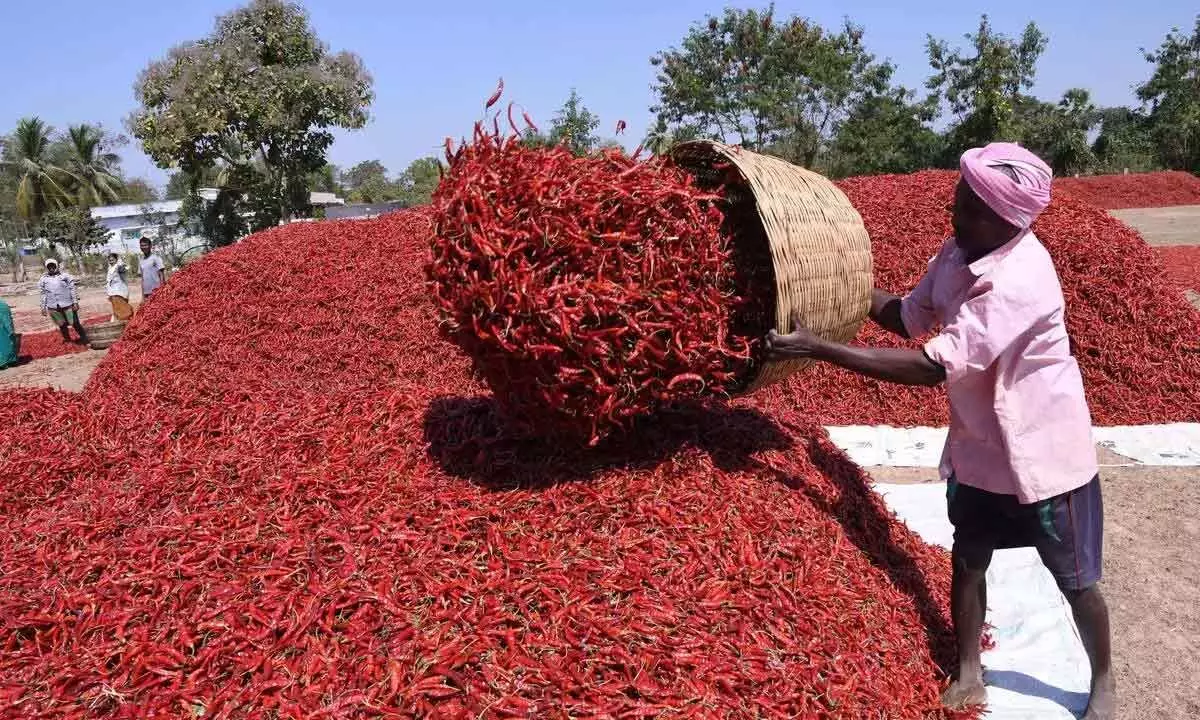
Traditional open-air sun drying is inexpensive and accessible, but it exposes the peppers to environmental contamination and gives the producer less control over drying conditions. FAO guidance on drying agricultural produce identifies exposure to dust, insects, animals and uncontrolled conditions as disadvantages of direct sun drying.
A farmer can improve the process by using raised drying surfaces, clean trays or a properly designed solar dryer rather than spreading pepper directly on bare ground.
Solar dryers can provide better protection from environmental contamination while still using solar energy. Research on chilli drying has also found that solar tunnel systems can improve drying performance compared with conventional open sun drying.
Mechanical or hot-air drying offers greater control over temperature and airflow and can be suitable for commercial operations with sufficient investment and reliable energy. However, excessive drying temperatures can damage colour and other quality characteristics.
The appropriate method depends on production scale, available infrastructure, energy costs, weather conditions and the buyer’s specification.
How to Dry Pepper Without Sacrificing Quality
Fresh pepper should be sorted before it enters the drying process. Removing visibly rotten, mouldy or severely damaged fruits reduces the chance of carrying obvious defects into the finished product.
The peppers should then be spread in a relatively thin and even layer so that air can circulate around the produce. Overloading a dryer can create uneven drying, leaving some peppers sufficiently dry while others retain excessive moisture.
During drying, the objective is controlled moisture removal rather than simply applying as much heat as possible.
Excessive heat can accelerate drying but may also contribute to colour degradation. A 2024 study on red chilli drying found that colour values deteriorated as temperature increased under the tested cabinet-drying conditions.
Research specifically examining Nigerian pepper has similarly shown that drying conditions affect colour characteristics.
For this reason, farmers should follow the operating conditions appropriate for their particular dryer and pepper variety instead of assuming that the hottest available drying temperature will produce the best export product.
Colour Is a Commercial Quality Attribute
Bright, characteristic colour can influence how dried pepper is perceived by buyers and processors.
Codex’s standard for dried or dehydrated chilli pepper and paprika specifies that the product should have characteristic odour, flavour and colour and should be free from foreign odour, flavour and other quality defects.
Colour changes can result from the variety, maturity at harvest, drying temperature, drying duration, exposure to sunlight and storage conditions.
A farmer who produces very dark or unevenly coloured pepper may therefore face a lower-value market even if the product is technically dry.
This does not mean that every export market demands one particular shade of red. Buyer specifications differ. The sensible approach is to obtain a sample specification and, where possible, provide a representative sample before committing a large quantity to production.
Hygiene Must Be Controlled Throughout Drying
One of the biggest weaknesses in poorly managed dried pepper production is contamination during handling.
Drying peppers directly on bare soil or dirty surfaces can introduce soil, stones, insects, animal contamination and other foreign material. Open drying areas can also expose the product to dust and human contact.
Codex guidance for low-moisture foods specifically recommends inspecting and sorting incoming spices and dried culinary herbs for foreign matter, odour, appearance and visible mould. It also emphasizes precautions against microbial, chemical and physical contamination.
Farmers should therefore keep drying surfaces clean, prevent domestic animals from entering drying areas and avoid placing footwear, tools, chemicals or unrelated materials around the produce.
Workers handling the peppers should also maintain appropriate personal hygiene.
The principle is simple: once contamination enters a dried spice supply chain, removing it can be difficult or impossible.
Do Not Mix Mouldy Pepper With Good Produce
Mould should be treated as a serious rejection factor rather than a cosmetic defect.
Dried spices can be vulnerable to mycotoxin contamination when they are improperly dried or stored. Codex guidance specifically recommends rejecting spices and dried culinary herbs showing signs of pest damage or mould growth because of the potential presence of mycotoxins such as aflatoxins.
This is why drying should be followed by proper storage. A batch that was adequately dried can still absorb moisture later if it is stored in a humid environment or packaged in a material that does not adequately protect it.
Farmers should inspect stored pepper regularly and isolate any suspect batch rather than mixing it with good stock.
Measure Dryness Instead of Guessing
A common mistake is deciding that pepper is ready for storage simply because it feels dry on the outside.
The inside of the fruit can retain moisture even when the surface appears sufficiently dry. This creates a potential problem during storage, particularly where the product is exposed to high humidity.
Drying should therefore be assessed using an appropriate measurement method and according to the specification for the particular product and market.
There is no single moisture number that should automatically be presented as the universal export requirement for every dried pepper shipment. Buyer specifications, commodity standards, processing form and destination requirements must be considered.
The Codex standard for dried or dehydrated chilli pepper and paprika provides specific chemical and physical requirements, illustrating why exporters should work from the applicable specification rather than relying on appearance alone.
Packaging Should Protect the Pepper From Moisture
Packaging is part of the quality-control system.
Dried pepper can reabsorb moisture from the surrounding environment, particularly when exposed to humid conditions. Poor packaging can therefore undermine an otherwise well-managed drying process.
Codex guidance recommends non-porous bags or containers that protect dried spices from contamination, moisture, insects and rodents. It also recommends appropriate liners where necessary and says food-contact packaging should be new or properly cleaned and disinfected when reusable.
Packaging should also be strong enough to survive handling and transportation without tearing or allowing contamination into the product.
The appropriate packaging size depends on the buyer and supply chain. Bulk industrial buyers may request larger food-grade bags or containers, while retail or specialty buyers may require smaller, branded packs with additional labelling requirements.
Farmers should not purchase large quantities of packaging before confirming the buyer’s preferred format.
Never Wet Dried Pepper During Packing
Dried pepper should remain dry during handling and packing.
Codex specifically warns against spraying dried chilli peppers with water to prevent breakage during packing because this can encourage mould and microbial growth.
This is particularly important where exporters are trying to improve the physical appearance of brittle dried peppers. Any attempt to make the product more flexible by adding moisture can create a food-safety problem.
Handling should instead be designed to reduce breakage without compromising dryness.
Pesticide Residues Begin at Farm Level
Pesticide-residue compliance cannot be fixed at the warehouse after harvest.
Farmers should use only pesticides approved for the crop and follow the product label regarding application rate, timing and pre-harvest interval. Records should be maintained for products applied to the crop, particularly where the produce is being assembled for export.
This becomes particularly important when exporting to highly regulated markets.
The European Commission explains that maximum residue levels, or MRLs, establish legally tolerated levels of pesticide residues in food and feed. It also states that food business operators exporting to the EU are expected to know the applicable EU MRLs and be able to demonstrate that appropriate controls have been taken.
The lesson for farmers is that pesticide selection should be based not only on whether the chemical controls a pest, but also on whether its use is appropriate for the crop, destination and intended export market.
Pesticide-Residue Testing Should Be Based on the Destination
Testing every possible chemical is not necessarily the most efficient approach.
The better system is to identify the destination market and buyer specification first, then establish a testing programme appropriate to the product and risks involved.
For example, EU food-safety controls include pesticide MRLs and specific control measures for certain imported foods. EU legislation also contains specific controls for dried, roasted, crushed or ground Capsicum products in relation to contaminants such as aflatoxins.
This demonstrates why an exporter should not simply tell a laboratory, “Test my pepper for export,” without explaining the destination and intended product.
The laboratory and exporter need to know whether the shipment is whole dried pepper, crushed pepper, ground pepper or another processed form, because regulatory requirements can differ according to product classification.
Food Safety Rules Differ Between Export Markets
There is no single worldwide food-safety rule for dried pepper.
The importing country can establish its own requirements covering pesticide residues, contaminants, microbiological hazards, labelling, packaging and documentation.
The EU, for example, operates a harmonized pesticide MRL system and publishes its requirements through its regulatory framework.
Other markets may apply different limits or additional controls.
Farmers and exporters should therefore avoid producing for an undefined “international market.” The better approach is to identify the destination first.
Once the market is known, the exporter can determine the applicable food-safety requirements, testing requirements, documentation and buyer specifications.
Nigerian Export Documentation and Quality Certification
For agricultural exports from Nigeria, quality and phytosanitary documentation form part of the export process.
NEPC identifies the phytosanitary certificate for agricultural commodities as a quality-assurance document issued by NAQS. NEPC also identifies other competent authorities and certificates that may apply depending on the nature of the exported product.
For a farmer supplying an exporter, this means the commercial relationship should include clear expectations about how the product will be inspected, tested, graded and documented.
Where dried pepper has been processed beyond the form of raw agricultural produce, additional requirements may apply depending on its classification and destination.
The exporter should confirm the requirements with the relevant Nigerian authorities and the importing country’s competent authority before shipment.
Traceability Makes Export Quality Easier to Manage
A farmer or aggregator should know where each batch came from.
Simple records can identify the farm or supplier, harvest period, pepper variety where relevant, pesticide applications, drying method, drying date, storage location and batch number.
This information becomes valuable if laboratory testing identifies a problem.
Instead of treating an entire warehouse as one undifferentiated quantity, the exporter can investigate the specific source or lot associated with the problem.
Codex guidance also emphasizes traceability and maintaining records that link incoming raw materials with outgoing product lots.
Traceability therefore has practical commercial value beyond regulatory compliance.
Common Mistakes Farmers Should Avoid
The most damaging mistakes are often simple ones.
Drying pepper directly on bare ground, allowing animals around the drying area, storing dried pepper in damp rooms, mixing mouldy peppers with sound produce, using dirty packaging and failing to measure moisture can all undermine an export shipment.
Another major mistake is applying pesticides without considering the destination market. A pesticide that is legally available for agricultural use in one country does not automatically mean that residues from its use will meet the requirements of an importing market.
Buying large quantities of pepper before confirming the buyer’s specification can also create avoidable problems. If the buyer later requires a different colour, moisture range, packaging format or laboratory test, the exporter may be left with stock that does not match the contract.
A Better Farm-to-Export Approach
The strongest dried pepper supply chains treat quality as a continuous process.
The process starts with suitable varieties and healthy mature fruits. Harvesting is followed by sorting and hygienic handling. Drying is then conducted under controlled conditions appropriate to the equipment and product. The dried pepper is tested and inspected before being placed into clean, protective packaging.
Storage must maintain the quality achieved during drying. Before shipment, the exporter should conduct the required quality and safety checks against the destination market and buyer specification.
This approach is more reliable than trying to correct quality problems immediately before export.
What Farmers Should Agree With Buyers Before Production
Before supplying a foreign market, farmers or their aggregation partners should know what the buyer expects.
The discussion should cover the type and variety of pepper, whole or processed form, colour expectations, moisture requirements, acceptable defects, packaging, laboratory tests, pesticide-residue requirements, microbiological requirements, contaminant limits, quantity, delivery period and documentation.
The buyer should also specify the destination country because food-safety requirements can change from one market to another.
A sample approval process can be useful where appearance and physical quality are particularly important. It allows the farmer or exporter to understand what the buyer considers acceptable before large volumes are prepared.
Conclusion
Dried pepper export can create a market for farmers who can consistently produce clean, properly dried and traceable produce. But international buyers are not purchasing dryness alone. They are purchasing a food ingredient that must meet defined quality and safety expectations.
Drying method affects more than moisture. It can influence colour and other quality attributes. Hygiene protects the product from contamination. Appropriate packaging prevents moisture and pest problems after drying. Pesticide management and laboratory testing help exporters address residue requirements, while destination-specific research determines which food-safety rules apply.
For Nigerian farmers, the most important shift is to think about export quality from the beginning of production. The pepper that eventually reaches an overseas buyer should already have a documented history of how it was grown, harvested, dried, handled, tested, packaged and stored.
That is what turns dried pepper from a farm commodity into an export-ready agricultural product.
Frequently Asked Questions
What is the best drying method for pepper intended for export?
There is no single best method for every farm. Open sun drying is inexpensive but exposes pepper to dust, insects and other contamination. Solar dryers and controlled mechanical dryers can provide greater control. The appropriate choice depends on scale, climate, equipment, energy costs and the buyer’s quality requirements.
How can farmers maintain the red colour of dried pepper?
Farmers can improve colour retention by starting with suitable mature peppers and avoiding uncontrolled or excessively high drying temperatures. Research on Nigerian pepper has shown that drying conditions affect colour characteristics, while other studies have found better colour retention under controlled drying conditions than under conventional sun drying.
Does dried pepper need pesticide-residue testing before export?
Testing may be required or commercially advisable depending on the destination and buyer. For EU exports, applicable pesticide MRLs must be considered, and food business operators are expected to ensure that exported products comply with those limits.
Can farmers dry pepper directly on the ground?
Direct ground drying is unsuitable for an export-oriented food supply chain because it increases the risk of contamination from soil, dust, insects and animals. Clean raised surfaces, trays or appropriately designed dryers provide better control over hygiene.
What packaging is suitable for dried pepper exports?
The packaging should protect the pepper from moisture, insects, rodents and contamination. Codex guidance recommends non-porous food-contact packaging and appropriate liners where needed. The final packaging format should also comply with the buyer’s requirements and the destination country’s rules.
What food-safety tests may be relevant for dried pepper?
Depending on the destination and product, testing may involve pesticide residues, mycotoxins such as aflatoxins, microbiological hazards and physical quality characteristics. The exact testing programme should be established from the importing country’s requirements and the buyer’s specification rather than using the same test panel for every market.
Does Nigeria require a phytosanitary certificate for agricultural exports?
NEPC identifies a phytosanitary certificate issued by the Nigeria Agricultural Quarantine Service as a quality-assurance document for agricultural commodities exported from Nigeria. Other certificates may apply depending on the product and transaction.
Should farmers test dried pepper before finding an overseas buyer?
It is generally more efficient to identify the target market and buyer specification first. That allows the exporter to understand which quality parameters and laboratory tests matter for the intended destination instead of paying for tests that may not correspond to the buyer’s requirements.