Agricultural Financing Opportunities in Nigeria: Where Farmers Can Find Funding
Agricultural Financing Opportunities in Nigeria: Where Farmers Can Find Funding
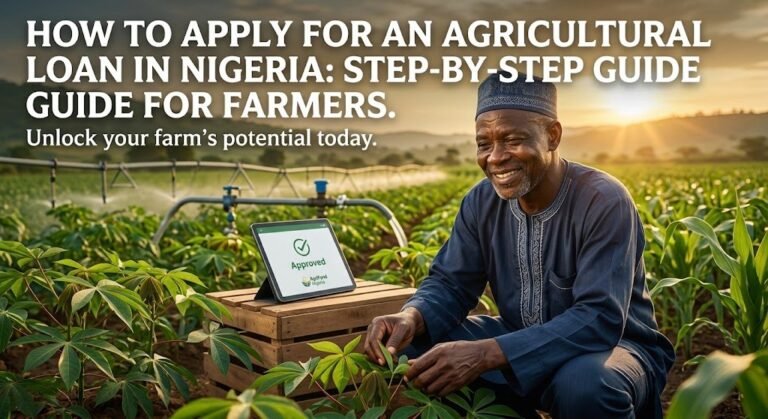
Finding money for farming is not always as simple as applying for a bank loan. Nigerian farmers and agribusiness owners can encounter several forms of agricultural financing, including bank credit, government-backed guarantees, development finance, input subsidies, on-lending facilities, blended finance and non-interest financing initiatives.
The challenge is knowing which opportunity matches the actual need.
A smallholder farmer preparing for the planting season may need seasonal working capital. A commercial farmer may need machinery finance. A processor may need long-term investment capital, while an agricultural startup may be more suited to equity or grant funding.
Nigeria’s agricultural finance system is also changing. The National Agricultural Development Fund (NADF) is currently developing additional financing structures, including a proposed non-interest finance framework and blended-finance initiatives designed to bring more private capital into agriculture.
What Are Agricultural Financing Opportunities?
Agricultural financing opportunities are the different channels through which farmers, agricultural businesses and other participants in the food value chain can obtain financial or financial-related support.
They can include:
- Farm loans
- Bank agricultural loans
- Microfinance
- Government-backed credit
- Credit guarantees
- Input subsidies
- Grants
- Development finance
- Blended finance
- Equipment financing
- Working capital
- Equity investment
- Non-interest finance
- Cooperative financing
- Value-chain finance
These options should not be treated as interchangeable.
A loan has to be repaid. A grant generally does not operate as a conventional repayable loan. A guarantee supports the lender’s risk position, while a subsidy reduces the cost of an input or service.
Main Agricultural Financing Channels in Nigeria
1. Bank Agricultural Loans
Commercial and specialized agricultural banks can provide financing for farming and agribusiness activities.
Depending on the institution, financing can support:
- Crop production
- Livestock
- Poultry
- Fisheries
- Farm equipment
- Irrigation
- Processing
- Storage
- Working capital
- Agricultural trading
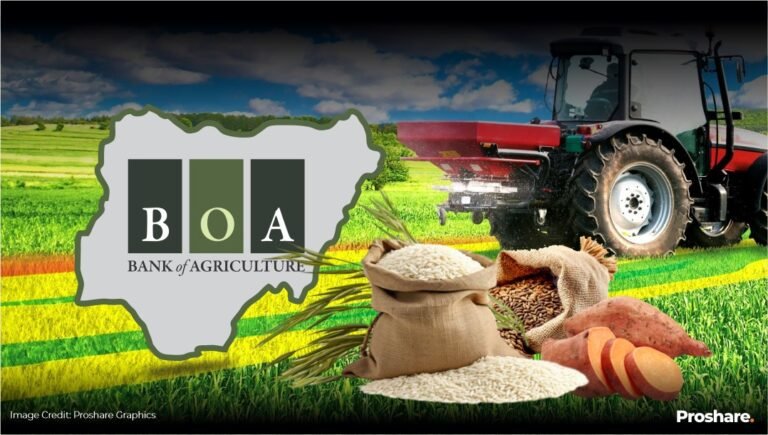
The Bank of Agriculture is a specialized institution within Nigeria’s agricultural finance ecosystem, while commercial banks can also participate in agricultural lending.
The requirements vary according to the lender, facility and applicant.
2. Agricultural Credit Guarantee Scheme Fund
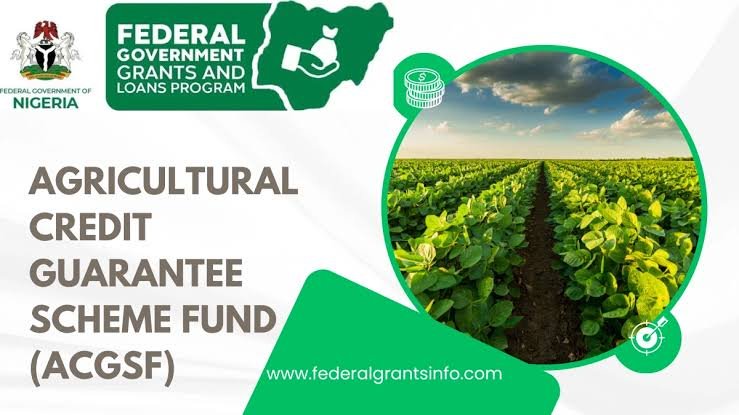
The Agricultural Credit Guarantee Scheme Fund is designed to encourage financial institutions to provide more agricultural credit by sharing part of the lending risk.
The CBN says ACGSF guarantees eligible agricultural loans issued through participating financial institutions. Its guidelines identify deposit money banks and qualifying microfinance banks among participating institutions.
In December 2025, the CBN inaugurated a new ACGSF board and said the scheme could guarantee up to 75% of the loan value, subject to the scheme’s conditions.
Farmers should understand that this is a credit guarantee mechanism, not a grant paid directly to applicants.
3. National Agricultural Development Fund
NADF is one of the key institutions to monitor when looking for agricultural financing opportunities in Nigeria.
Its mandate includes facilitating access to finance, designing financial products for farmers and supporting loan guarantee programmes. It also supports research, capacity building and agricultural market information systems.
Its current programme portfolio demonstrates that agricultural support can take different forms.
For example, NADP-1 is an on-lending facility, while AgGrow provides subsidized inputs for participating smallholder farmers.
This makes it important to examine each programme individually rather than assuming that everything under an agricultural development fund is a grant or loan.
4. Agricultural Input Financing and Subsidies
Farmers sometimes need support with production costs rather than a large cash facility.
Input support can include:
- Fertilizer
- Improved seeds
- Crop-protection products
- Other approved agricultural inputs
NADF’s AgGrow programme provides a 50% subsidy on selected inputs for key crops including maize, rice, cassava and soybeans, according to the Fund’s programme information.
This type of support can reduce production costs without creating the same repayment obligation as a conventional loan.
5. Development Finance
Development-finance institutions can support agriculture directly or through Nigerian financial institutions and other partners.
The funding may be directed toward:
- Agricultural SMEs
- Processing businesses
- Agribusinesses
- Infrastructure
- Equipment
- Value chains
- Financial institutions serving agricultural businesses
Farmers should check who the actual beneficiary is when reading development-finance announcements.
A headline announcing millions or billions of dollars for agriculture does not necessarily mean individual farmers can apply directly to the international institution involved.
6. Blended Finance
Blended finance combines different types of capital to make agricultural investments more viable.
It can involve:
- Public development capital
- Commercial lending
- Concessional finance
- Guarantees
- Insurance
- Technical assistance
- Private investment
NADF launched a blended-finance initiative in 2026 to help attract private capital into Nigerian agriculture and address barriers that have limited investment in agribusiness.
In February 2026, the Fund also inaugurated a blended-finance working group involving development-finance institutions, commercial lenders, insurers and climate-finance experts.
For farmers and agribusinesses, blended finance may eventually create additional financing channels through participating institutions rather than requiring direct applications to NADF.
7. Microfinance Agricultural Finance
Microfinance institutions can provide smaller-scale financing to farmers and agricultural entrepreneurs.
Possible uses include:
- Small farm inputs
- Poultry
- Livestock
- Small processing businesses
- Trading
- Agricultural working capital
Applicants should compare the total cost of financing, repayment frequency and other conditions before accepting a facility.
The repayment schedule should also match the business’s income cycle.
8. Cooperative Financing
Farmers who belong to organized cooperatives may have access to financing opportunities that are less accessible to individuals.
A cooperative can help members with:
- Input purchases
- Produce aggregation
- Marketing
- Equipment access
- Financing applications
Group-based arrangements can also help lenders understand the farmers’ production and market relationships.
However, farmers should understand exactly how liability works before joining a group financing arrangement.
9. Value-Chain Financing
Value-chain finance connects funding with agricultural production and commercial relationships.
A financing structure may involve:
Farmer → Cooperative → Aggregator → Processor → Buyer
Each participant has a financial relationship with another part of the chain.
For example, a processor may have an agreement to purchase produce from farmers. Financing can then be structured around the expected production and sale of that commodity.
This approach can reduce some of the uncertainty involved in agricultural lending because the financing is connected to an established commercial activity.
10. Equipment and Asset Finance
Farmers do not always need cash deposited into their bank accounts.
Sometimes the actual requirement is equipment.
Financing can potentially support:
- Tractors
- Irrigation systems
- Harvesting equipment
- Processing machines
- Cold storage
- Solar-powered systems
- Farm transportation
Asset finance can be useful when the equipment itself contributes to revenue generation.
Before accepting the financing, the farmer should calculate the expected income generated by the equipment against the total financing cost.
11. Grants and Agricultural Support Programmes
Grants can provide non-loan support for qualifying projects.
Potential areas include:
- Agricultural research
- Youth agribusiness
- Women-led enterprises
- Innovation
- Climate resilience
- Training
- Community agriculture
- Agricultural technology
However, agricultural grants are usually competitive or targeted and should not be confused with general-purpose government cash payments.
Applicants should also check reporting and monitoring requirements.
12. Non-Interest Agricultural Finance
Non-interest finance is another area developing within Nigeria’s agricultural financing landscape.
In September 2026, NADF began validating a proposed Non-Interest Finance Framework and Guidelines intended to widen financing options for farmers, agribusinesses and other agricultural value-chain participants. NADF described the framework as a draft undergoing stakeholder review at the time.
This means applicants should distinguish between a proposed financing framework and an active financing product accepting applications.
Choosing the Right Financing Opportunity
The first question should not be “Which programme gives the biggest amount?”
Instead, identify what the business actually needs.
| Need | Potential financing channel |
|---|---|
| Seasonal farm inputs | Agricultural loan, input support, cooperative finance |
| Machinery | Equipment or asset finance |
| Small working capital | Microfinance, bank finance |
| Large agribusiness expansion | Bank, development finance, investment |
| Agricultural research | Research grants |
| Startup innovation | Grants, investment, specialized finance |
| Agricultural processing | Bank finance, development finance, investment |
| Climate resilience | Climate-focused finance, blended finance |
| Risk-sharing | Guarantee-backed lending |
| Input cost reduction | Subsidy or input-support programme |
The table is a starting point, not a guarantee of eligibility.
How to Find Agricultural Financing Opportunities
Search official institutions first
Start with institutions responsible for agricultural finance rather than relying on social media advertisements.
Useful sources include:
- National Agricultural Development Fund
- Central Bank of Nigeria
- Bank of Agriculture
- Federal Ministry of Agriculture and Food Security
- State agricultural agencies
- Development-finance institutions
- Recognized financial institutions
Check the date
An agricultural programme announced in 2024 or 2025 may no longer be accepting applications.
Always look for the latest official announcement.
Check the beneficiary
Determine whether the opportunity is intended for:
- Individual farmers
- Cooperatives
- SMEs
- Agribusinesses
- Researchers
- Youths
- Women
- States
- Financial institutions
Check the financing structure
Determine whether it is:
- A loan
- Grant
- Subsidy
- Guarantee
- Investment
- Technical assistance
- Equipment support
Check the application channel
Some programmes are direct, while others are delivered through banks, cooperatives or partner organizations.
How to Prepare Before Applying
Farmers can improve their readiness by keeping accurate records.
Important information can include:
- Farm size
- Crops or livestock
- Production history
- Sales
- Expenses
- Existing debts
- Bank statements
- Land arrangements
- Equipment
- Customers
- Suppliers
- Expected production
- Expected revenue
A lender or programme administrator needs enough information to understand the agricultural activity and proposed use of funds.
Documents Commonly Requested
Depending on the opportunity, applicants may need:
- Valid identification
- Bank account details
- Business registration documents
- Farm records
- Land documents or evidence of access
- Business plan
- Production plan
- Cash-flow projection
- Financial statements
- Bank statements
- Cooperative documents
- Equipment quotations
- Market or off-take agreements
Not every programme requires all of these documents.
Applicants should follow the official checklist for the specific opportunity.
What Farmers Should Check Before Accepting Financing
A financing opportunity can appear attractive because of its advertised interest rate or funding amount.
Look beyond those figures.
Check:
- Total repayment
- Interest or financing cost
- Processing fees
- Insurance charges
- Repayment frequency
- Grace period
- Loan duration
- Collateral requirements
- Default conditions
- Early repayment conditions
- Approved use of funds
The cheapest-looking loan is not necessarily the one with the lowest total cost.
Match Repayment to the Agricultural Cycle
Agriculture has seasonal cash flows.
A crop farmer may spend money months before receiving substantial revenue. A livestock business may generate income more frequently.
The financing structure should therefore reflect the business cycle.
For example, a facility that requires large monthly repayments before a crop is harvested can create pressure even when the underlying farming business is viable.
Before borrowing, create a simple cash-flow schedule showing:
Money going out → production period → harvest/sales → money coming in → loan repayment
Financing Opportunities for Young Farmers
Young farmers can investigate more than conventional agricultural loans.
Possible categories include:
- Youth-focused agricultural programmes
- Agribusiness grants
- Training
- Equipment support
- Input programmes
- Business development
- Investment
- Agricultural cooperatives
The important factor is to check the actual target group.
A programme described as “youth agriculture” may support training rather than provide a cash grant.
Financing Opportunities for Women Farmers
Women farmers and women-led agricultural businesses may encounter financing programmes specifically designed for women or programmes that include women among their eligible beneficiaries.
Potential support can include:
- Loans
- Guarantees
- Grants
- Input support
- Equipment
- Business training
- Investment
Applicants should confirm the eligibility rules rather than assuming that every agricultural finance programme has the same conditions for women.
Climate-Smart Agricultural Finance
Climate risk is increasingly relevant to agricultural financing.
Drought, floods and changing weather patterns can affect farm production and repayment.
NADF announced a September 2026 partnership with German climate-fintech company YAPU Solutions to strengthen climate-risk management and explore financial mechanisms for smallholder farmers. The partnership includes work on climate-risk assessment, data infrastructure and potential financial products.
This is an example of how agricultural finance is increasingly incorporating climate-risk information into financing design.
How to Avoid Fake Financing Opportunities
Farmers should be especially careful with online agricultural-finance advertisements.
In February 2026, BOA issued a public statement warning about online claims concerning agricultural loans, grants and the Renewed Hope National Agricultural Mechanization Program. The bank said applications for the referenced programmes had already closed and advised Nigerians to rely on official BOA channels.
Warning signs include:
- Guaranteed approval
- Requests for payment before verification
- Personal bank accounts for “registration”
- Unofficial application websites
- Pressure to apply immediately
- Claims that everyone qualifies
- Requests for unnecessary personal information
- Agents promising to influence approval
Always verify the opportunity with the institution named in the advertisement.
A Simple Agricultural Finance Checklist
Before applying, answer these questions:
1. What do I need money for?
Inputs, machinery, working capital, expansion, processing or another purpose?
2. How much do I actually need?
Prepare a realistic budget.
3. When will the business generate income?
Identify the expected sales or harvest period.
4. What type of finance fits the need?
Loan, grant, subsidy, investment, guarantee or equipment finance?
5. Who provides it?
Identify the actual institution.
6. Is the opportunity currently active?
Check the latest official announcement.
7. Who is eligible?
Confirm the target beneficiaries.
8. What will I have to repay or contribute?
Calculate the full financial obligation.
9. What documents are required?
Prepare them before applying.
10. Is the application channel official?
Verify the website, office, bank or authorized partner.
Frequently Asked Questions
What are the main agricultural financing opportunities in Nigeria?
They include bank loans, agricultural development finance, government-backed guarantees, microfinance, input subsidies, grants, cooperative finance, equipment finance, blended finance and emerging non-interest finance structures.
Is every agricultural financing opportunity a loan?
No. Some opportunities are grants, subsidies, guarantees, investment, equipment support or technical assistance.
Can smallholder farmers access agricultural financing?
Yes, depending on the programme and eligibility requirements. Current Nigerian initiatives include facilities and support specifically designed for smallholder farmers. NADF’s programme portfolio includes both subsidized inputs and on-lending facilities.
Can farmers get financing without collateral?
Some financing structures may use guarantees, group arrangements, value-chain relationships or other forms of risk-sharing. Requirements depend on the specific institution and facility.
How can I find legitimate agricultural funding?
Start with official government institutions, regulated financial institutions, recognized development-finance organizations and established agricultural organizations. Confirm that the opportunity is current before applying.
What is the difference between agricultural finance and agricultural grants?
Agricultural finance is a broad term covering different forms of capital and financial support. A grant is one specific form of support that generally does not operate as a conventional repayable loan.
Before You Apply
Nigeria’s agricultural financing landscape is broader than a list of government loans. Farmers and agribusinesses can encounter conventional lending, credit guarantees, input subsidies, grants, development finance, blended finance, cooperative arrangements, equipment financing and emerging non-interest structures.
NADF’s current mandate and programme portfolio illustrate this diversity, while its 2026 initiatives show an increasing emphasis on blended finance, private capital, climate-risk management and new financing models.
The safest approach is to identify the exact agricultural need first, then match it with an appropriate financing structure. Verify the institution, programme status, eligibility rules, application channel and full financial terms before providing documents, paying any fees or accepting financing.
For Nigerian farmers, a legitimate financing opportunity should always be traceable to a responsible institution and supported by clear, verifiable terms.