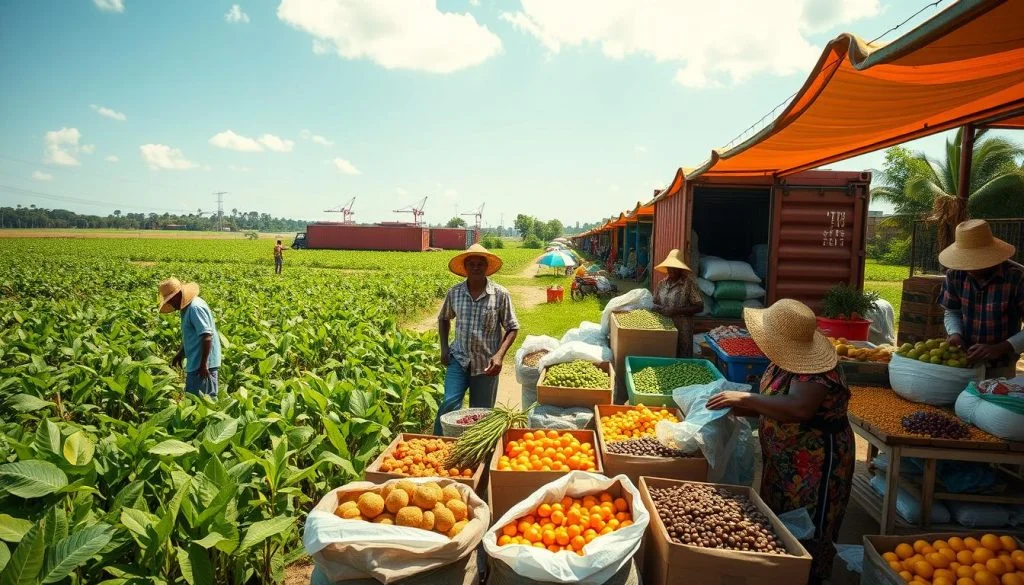
Best Agricultural Products to Export From Africa to International Markets
Africa has a broad range of agricultural products with established connections to international markets, from cocoa and cashew nuts to sesame, coffee, spices, fruits, vegetables and processed foods.
But choosing an agricultural product for export should involve more than asking which commodity has the highest international price.
The right export opportunity depends on where the crop is produced, the quality that can be achieved, available supply, processing capacity, buyer requirements, logistics, market regulations and the ability to deliver consistently.
This regional difference is important. FAO’s current One Country One Priority Product initiative identifies very different priority agricultural products across African countries, including cocoa in Equatorial Guinea and Uganda, teff in Ethiopia, cashew in Guinea-Bissau, avocado in Tanzania, cloves in parts of the region, honey in Rwanda and Benin, and baby vegetables in Eswatini.
Africa’s broader export structure also shows why agricultural value addition matters. UNCTAD reported that primary goods accounted for 76.7% of Africa’s merchandise exports in 2025, illustrating the continent’s continued reliance on primary commodities.
For agricultural businesses, the opportunity is therefore not only in exporting raw commodities. There is also potential in cleaning, grading, processing, packaging and developing products that meet specific international market requirements.
Cocoa
Cocoa is one of Africa’s most established agricultural export commodities, particularly in West and Central Africa.
Côte d’Ivoire and Ghana are the world’s largest cocoa exporters, while Cameroon is also a major producer. FAO states that exports from Côte d’Ivoire, Ghana and Cameroon together account for nearly two-thirds of global cocoa exports, with the European Union among the major consuming markets.
Nigeria is also a cocoa-producing and exporting country, although its scale is smaller than that of Côte d’Ivoire and Ghana.
The importance of cocoa extends beyond the farm gate. International buyers can purchase cocoa beans for processing into cocoa liquor, cocoa butter, cocoa powder and chocolate products. This creates opportunities across several stages of the value chain.
For African exporters, however, cocoa is also an example of why international market access cannot be considered separately from compliance.
The European market has increasingly placed emphasis on sustainability and supply-chain transparency. FAO’s Sustainable Cocoa Initiative specifically links cocoa-market access with environmental and social sustainability requirements.
This means exporters targeting demanding markets need to consider traceability, quality, origin information and other applicable requirements alongside production volume.
Cashew Nuts
Cashew is another important African agricultural export, with production concentrated in several West and East African countries.
Guinea-Bissau is a particularly strong example. FAO describes cashew as the country’s main export product and is currently supporting improvements in production practices, agroforestry, local processing and value addition.
Côte d’Ivoire is also a major cashew-producing country, while cashew production and processing are important in countries including Tanzania, Mozambique, Guinea and other parts of West Africa.
The cashew opportunity is particularly interesting because there are two different export strategies.
One involves exporting raw cashew nuts to established processors. The other involves increasing domestic processing so that more value is captured within the producing country.
Mozambique provides an example of the policy and value-chain issues surrounding this choice. Research on its cashew sector has examined the relationship between raw nut exports and domestic processing, with policies used to encourage local processing.
For farmers, aggregators and exporters, quality begins with harvesting, drying, storage and careful handling. For processors, opportunities can extend to cashew kernels and other processed products.
Sesame Seeds
Sesame is an important export crop in parts of Africa, with Ethiopia being a notable producer.
FAO research identifies sesame as a major cash crop in Ethiopia, with production concentrated in several regions including South Omo.
The commodity has a wide range of uses. Sesame can be purchased for food manufacturing, bakery products, tahini, edible oil and other applications.
This makes quality particularly important. Buyers can distinguish between sesame lots based on characteristics such as purity, colour, moisture and other specifications relevant to their intended use.
For exporters, sesame also illustrates the importance of understanding the buyer before production and aggregation. A commodity sold into one market may have different specifications from sesame destined for another market.
African sesame exporters therefore need reliable cleaning, sorting, drying, storage and quality-control systems.
Coffee
Coffee remains an important export commodity for several African countries.
East Africa has particularly strong coffee-producing traditions, with Ethiopia and Uganda among the continent’s major coffee-producing countries. Rwanda, Kenya, Tanzania and other countries also participate in international coffee markets.
Coffee is different from some bulk agricultural commodities because quality, origin, processing method and flavour characteristics can significantly influence buyer interest.
This creates opportunities for both commodity exports and more differentiated products.
African businesses can participate in the coffee value chain through production, washing, drying, grading, roasting, packaging and branded products, depending on their capabilities and market.
The key consideration is consistency. Specialty buyers may require traceability and detailed information about origin, processing and quality, while larger commodity buyers may have different purchasing requirements.
Spices
Africa has opportunities in a range of spices, including ginger, chilli, cloves, pepper, vanilla and other aromatic crops.
The regional distribution is diverse. Tanzania, for example, is actively working to improve international market access for crops including vanilla, black pepper and cloves, alongside avocado, pineapple, cocoa, banana and Irish potatoes.
Spices can be attractive export products because many are relatively high-value compared with bulky staple commodities. However, they also require careful quality management.
Contamination, moisture, mould, pesticide residues and poor post-harvest handling can create serious problems for spice exporters. FAO material on African spice production has highlighted the importance of controlling quality and contamination from the field through to the importer.
This makes proper drying, cleaning, storage and testing particularly important.
Ginger
Ginger is another African agricultural commodity with international applications in food, beverages, spices and processing.
Nigeria is an important producer, while other African countries also cultivate ginger and related spices.
For exporters, dried ginger can offer different logistical advantages from fresh ginger because the product has a longer storage life when properly processed and dried.
However, the export opportunity depends heavily on quality. Buyers can have specific requirements concerning cleanliness, moisture, size, colour, microbial quality and other characteristics.
The lesson for African ginger exporters is straightforward: production volume alone is not enough. Consistent quality and proper post-harvest handling are central to maintaining access to international buyers.
Horticultural Produce
Fresh fruits and vegetables represent another major area of agricultural export potential.
African countries already participate in international markets for products such as avocado, bananas, pineapples, citrus, berries, vegetables and other horticultural products.
FAO’s African priority-product programme illustrates the regional diversity of horticultural opportunities. Tanzania identifies avocado as a priority product, Cameroon identifies banana, Eswatini identifies baby vegetables and Zambia identifies onion.
Horticultural exports differ from dry commodities because logistics and time are much more critical.
A product can lose commercial value quickly if harvesting, cooling, packaging, transportation or storage is poorly managed.
For exporters of fresh produce, market selection should therefore consider the entire cold chain rather than simply the buyer’s purchase price.
Avocado
Avocado has become an important horticultural export opportunity in several African markets.
Tanzania identifies avocado as its priority agricultural product under FAO’s One Country One Priority Product initiative.
Avocado exports require careful attention to maturity, grading, handling, packaging and transport. The product must reach the destination in an acceptable condition, making supply-chain coordination important.
The commercial opportunity can extend beyond simply growing the fruit. Sorting, packing, quality control, cold-chain services and processing can create additional roles within the value chain.
Bananas
Bananas are another important African horticultural product, particularly in East, Central and Southern Africa.
FAO identifies banana as Cameroon’s special agricultural product under its African priority-product initiative.
Banana exports require specialised handling because the fruit continues to ripen after harvest.
Exporters therefore need to understand maturity, packaging, temperature management, transport timing and destination-market requirements.
For smaller agricultural businesses, supplying established exporters or packing operations may sometimes be more realistic than attempting to manage the entire international supply chain independently.
Flowers and Other High-Value Horticulture
Flowers and ornamental horticultural products represent another export segment in which African producers can participate.
Kenya and Ethiopia have developed internationally recognised flower industries, while other African countries are exploring horticultural exports.
This segment demonstrates that agricultural exports are not limited to food crops.
The commercial requirements can be demanding, however. Flowers are highly perishable, so production needs to be closely connected to harvesting, grading, packing, cold-chain management, air freight and buyer schedules.
The infrastructure required means that flower exports are often better suited to organised commercial producers and specialised supply chains than to informal production systems.
Fruits for Processing
Not every fruit needs to be exported as fresh produce.
African agricultural businesses can also supply fruits for processing into juice, puree, dried fruit, concentrates and other ingredients.
This can provide an alternative when fresh exports are constrained by shelf life, transport costs or cosmetic specifications.
Processing can also create opportunities for produce that does not meet the appearance requirements of fresh retail markets but remains suitable for industrial processing, provided it meets the processor’s safety and quality standards.
This approach fits the broader value-addition objective highlighted by FAO’s African agricultural initiatives, which promote stronger value chains extending from production through storage, processing and marketing.
Processed Agricultural Foods
One of the biggest opportunities for African agricultural businesses is moving beyond raw commodity exports.
Instead of exporting only cocoa beans, businesses can participate in cocoa processing.
Instead of exporting raw cashew nuts, businesses can develop kernel-processing capacity.
Instead of selling raw fruits, businesses can produce dried fruit, juice, puree or other food ingredients.
Processed foods can potentially capture more stages of the value chain, although they also introduce additional requirements involving food safety, processing technology, packaging, labelling, shelf life and market regulations.
ITC research on Uganda’s processed-food sector illustrates this distinction. Its business survey found that many interviewed companies were interested in expanding into new markets and diversifying their products, with exports extending beyond African markets.
For African businesses, value addition therefore needs to be considered alongside raw commodity exports.
Honey
Honey is another agricultural product with export potential in selected African markets.
FAO identifies honey as the special agricultural product for Benin and Rwanda under its African priority-product programme.
Honey can be sold as a raw food product or incorporated into processed food products, depending on the market and applicable requirements.
Quality control is particularly important because international buyers may require testing for moisture, residues, contaminants and other characteristics.
African honey exporters therefore need reliable collection, filtration, storage and packaging systems rather than simply collecting honey and filling containers.
Teff and Other Traditional Crops
Some African export opportunities lie in crops that have historically received less international attention.
Ethiopia identifies teff as its special agricultural product under FAO’s African priority-product initiative. FAO has also highlighted opportunity crops across Africa, including millets, sorghum landraces, fonio, bambara groundnut and indigenous vegetables.
These products can serve both domestic and international markets.
The important commercial question is whether there is sufficient demand, consistent supply and a suitable quality and regulatory framework to support exports.
For emerging crops, exporters should conduct market research before scaling production rather than assuming that international interest will automatically translate into profitable sales.
Regional Differences Matter
Africa should not be treated as a single agricultural export market.
West Africa has particularly strong positions in cocoa, cashew, sesame, shea-related products, cotton and several other commodities. East Africa has important coffee, tea, horticultural, spice and oilseed value chains. Southern Africa has significant fruit, wine, horticultural, grain and livestock-related agricultural industries. Central Africa has opportunities in cocoa, bananas, cassava and other crops.
FAO’s current African priority-product map demonstrates this diversity across individual countries.
The result is that the most suitable export product for a farmer in Côte d’Ivoire may be very different from the product that makes sense for a producer in Ethiopia, Tanzania, Nigeria, Rwanda or South Africa.
Climate, soil, rainfall, existing infrastructure, farming traditions and established buyer networks all influence which export products can be supplied competitively.
Raw Products or Processed Products?
One of the most important decisions for an African agricultural exporter is whether to export raw produce or add value before export.
Raw commodities can require less processing investment, but the exporter may capture less of the overall value chain.
Processing can create additional value and employment, but it requires investment in machinery, quality control, food safety, packaging, energy, labour and market development.
There is no universal answer.
The appropriate strategy depends on the commodity, scale of production, available infrastructure, buyer demand, financing and regulations in the target market.
Choose the Product Based on Supply Capacity
International buyers generally need consistency.
A farmer may produce an excellent commodity in one season, but an exporter supplying an overseas buyer needs to consider whether the same quality and quantity can be delivered repeatedly.
This is why aggregation can be important for African agricultural exports.
Farmer cooperatives, aggregators and structured supply chains can combine production from multiple farms while applying common quality and handling standards.
The objective is not simply to collect more produce. The supply must remain traceable and consistent.
Quality Can Matter More Than Volume
A large agricultural harvest does not automatically create an export opportunity.
International buyers can reject or discount a commodity because of moisture problems, contamination, physical damage, inconsistent grading, poor packaging or failure to meet regulatory requirements.
For spices and food products, contamination can be particularly serious. For fresh horticultural products, maturity and cold-chain performance can determine whether the product reaches the market in acceptable condition.
For cocoa, cashew and sesame, grading, cleaning, drying and storage can strongly influence commercial quality.
This means export preparation should begin at farm level.
Market Access Should Influence Product Choice
The product should be selected together with the market.
A commodity may have international demand but face strict import requirements in a particular destination. Another market may offer easier access but lower prices or stronger competition.
FAO’s 2026 agricultural-market analysis emphasises that global agricultural trade is increasingly exposed to shocks including extreme weather, conflict, pandemics and macroeconomic pressures.
For African exporters, diversification of both products and markets can therefore be relevant to long-term resilience.
Consider Regional African Markets Too
International markets do not necessarily mean Europe, North America or Asia.
African exporters should also consider markets elsewhere on the continent.
ITC estimates that there is substantial unrealised export potential within Africa as well as outside the continent, while its research on African businesses highlights opportunities for market and product diversification.
The African Continental Free Trade Area also creates a broader framework for increasing intra-African trade, although actual market access still depends on product requirements, customs procedures, logistics and implementation in individual markets.
For some agricultural businesses, a nearby African market may offer a more manageable first export destination than a distant overseas market.
How to Choose the Right Agricultural Export Product
The most appropriate export product should be assessed using several factors rather than price alone.
| Factor | What the exporter should examine |
|---|---|
| Production | Can the crop be produced consistently? |
| Supply | Is enough volume available for export? |
| Quality | Can the required grade be maintained? |
| Demand | Are there established international buyers? |
| Processing | Can value be added locally? |
| Storage | Can the product remain stable before shipment? |
| Logistics | Can it reach the market in acceptable condition? |
| Regulations | Can the destination’s requirements be met? |
| Competition | Which countries already supply the market? |
| Traceability | Can the origin and handling of the product be documented? |
| Capital | Can the business finance production and export operations? |
The answers will differ from one African country and commodity to another.
Export Opportunities Are Not the Same as Guaranteed Profits
A product can have strong international demand and still be difficult for an individual exporter to sell profitably.
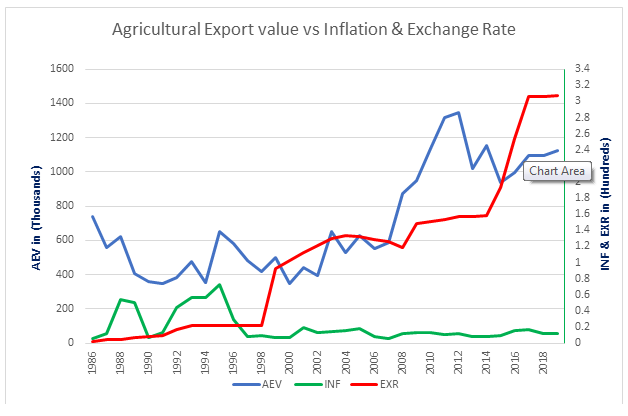
Production costs, farmgate prices, aggregation costs, processing, packaging, inland transport, freight, insurance, tariffs, finance, rejection risk and exchange-rate movements can all affect the final result.
This is why claims that a particular crop is automatically the “most profitable export product” should be treated cautiously.
The more useful question is whether the product fits the producer’s resources and can meet a specific market’s requirements at a commercially sustainable cost.
Final Thoughts
Africa has a wide range of agricultural products capable of serving international markets. Cocoa, cashew, sesame, coffee, spices, horticultural produce, honey and processed foods all represent important parts of the continent’s agricultural value chains, while emerging crops such as teff, fonio and other traditional products may create additional opportunities in suitable markets.
But there is no single agricultural product that is automatically the right export opportunity for every African country.
West Africa’s strengths differ from those of East, Central and Southern Africa. Even within the same region, production conditions and established supply chains can vary substantially.
For farmers and agribusinesses, the strongest starting point is therefore to identify products that the region can produce consistently, research international demand, understand quality and regulatory requirements, assess logistics and determine whether processing or value addition can improve the commercial proposition.
International agricultural trade rewards reliable supply and consistent quality. The export opportunity begins not simply with finding a buyer, but with building a product and supply chain that can satisfy that buyer repeatedly.
Frequently Asked Questions
What are the best agricultural products to export from Africa?
Major African agricultural export products include cocoa, cashew nuts, sesame, coffee, spices, horticultural products, honey and various processed foods. The appropriate product depends on the producing country, available supply, quality, market demand, logistics and destination-market requirements.
Which African countries are major cocoa exporters?
Côte d’Ivoire and Ghana are the world’s largest cocoa exporters, while Cameroon is also a significant exporter. FAO states that the three countries together account for nearly two-thirds of global cocoa exports.
Is cashew a good agricultural export product from Africa?
Cashew is an established export commodity in several African countries. Guinea-Bissau, for example, identifies cashew as its main export product, while FAO is supporting efforts to improve production, sustainability and local processing in the country’s cashew value chain.
Which African countries produce sesame for export?
Ethiopia is an important African sesame-producing country, with sesame identified as a major cash crop in several parts of the country. Other African countries also produce and export sesame, so exporters should examine country-specific production and trade data before entering a market.
What African agricultural products can be processed before export?
Many products can be processed or value-added before export, including cocoa, cashew, sesame, coffee, fruits, vegetables, spices and honey. Processing can include cleaning, grading, roasting, drying, milling, extracting, packaging or producing finished food products, depending on the commodity and market.
Are fresh fruits and vegetables good export products from Africa?
Fresh horticultural products can access international markets, but they require strong post-harvest handling and logistics. Products such as avocado, banana, pineapple, vegetables and other fresh produce can require careful harvesting, grading, packaging, cooling and transportation.
Should African exporters sell raw agricultural products or processed products?
The answer depends on the commodity, available capital, processing infrastructure, buyer demand and regulations. Raw exports can require less processing investment, while value addition can create opportunities to capture more stages of the supply chain. Processing also introduces additional requirements for equipment, quality control, food safety and packaging.
How can I find international buyers for African agricultural products?
Start by identifying countries that import your specific commodity, then research importers, processors, distributors and manufacturers in those markets. Trade databases, agricultural trade fairs, industry associations, export-promotion agencies and buyer directories can help identify potential customers.