How to Calculate Agricultural Export Prices in Nigeria
An agricultural export price is more than the amount you paid a farmer or the prevailing market price of a commodity. A Nigerian exporter must account for sourcing, sorting, processing where applicable, packaging, transportation, warehousing, quality assurance, documentation, forwarding, banking, freight, insurance and other costs before deciding what to charge an overseas buyer.
The Nigerian Export Promotion Council recommends that exporters capture all export-related costs, understand their break-even point, set realistic margins, monitor exchange rates and understand Incoterms 2020 when preparing export prices. It also recommends using both the cost-plus and top-down approaches rather than relying on only one calculation.
This makes agricultural export pricing a costing exercise as well as a market exercise. A price that looks profitable on paper can become unprofitable when freight increases, exchange rates change, produce loses weight during handling or unexpected export costs are left out.
What Agricultural Export Pricing Means
Agricultural export pricing is the process of determining the amount an overseas buyer should pay for a specified quantity and quality of agricultural produce after considering the costs and commercial conditions associated with getting the product from its source to the agreed delivery point.
For a Nigerian exporter, the calculation should answer four questions:
- How much did it actually cost to obtain and prepare the product?
- What additional costs are required to export it?
- What delivery responsibilities belong to the exporter under the agreed Incoterm?
- What price and margin are commercially realistic in the destination market?
The final export quotation should therefore be based on a clearly defined quantity, quality specification, currency, delivery term and destination.
The Basic Agricultural Export Pricing Formula
A useful starting formula is:
Total Export Cost = Product Cost + Processing + Packaging + Inland Logistics + Warehousing + Quality Assurance + Documentation + Banking + Forwarding + Freight + Insurance + Other Applicable Costs
Then:
Export Selling Price = Total Export Cost + Desired Profit
For a simple cost-plus calculation:
Profit = Export Selling Price – Total Export Cost
And:
Profit Margin on Selling Price = Profit ÷ Export Selling Price × 100
For example, suppose an exporter has a shipment with the following hypothetical costs:
| Cost item | Hypothetical amount |
|---|---|
| Agricultural produce | ₦8,000,000 |
| Sorting and grading | ₦300,000 |
| Export packaging | ₦450,000 |
| Inland transportation | ₦350,000 |
| Warehousing | ₦150,000 |
| Quality and inspection-related costs | ₦200,000 |
| Documentation and administrative costs | ₦100,000 |
| Bank and financial charges | ₦100,000 |
| Freight and other delivery costs | ₦1,000,000 |
| Insurance and other applicable costs | ₦100,000 |
| Total export cost | ₦10,750,000 |
If the exporter adds a hypothetical ₦1,250,000 profit:
Export selling price = ₦10,750,000 + ₦1,250,000
Export selling price = ₦12,000,000
The figures above are only an illustration. Actual agricultural export costs vary according to the commodity, volume, quality, destination, logistics provider, payment arrangement, delivery term and other transaction-specific factors.
Start With the Actual Cost of the Agricultural Product
The first major component is the cost of obtaining the commodity.
This could be:
- The farm-gate purchase price
- The price paid to aggregators
- Production cost if you own the farm
- Collection and aggregation expenses
- Loading and handling
- Transport from farms to the aggregation centre
Farmers who grow the product themselves should avoid treating the produce as having zero cost simply because they did not purchase it from another farmer.
Production inputs, labour, machinery, land preparation, harvesting, post-harvest handling and other relevant costs contribute to the economic cost of the product.
For an exporter who buys from farmers, the purchase invoice or documented procurement cost becomes the starting point.
Account for Sorting, Grading and Processing
Agricultural products rarely leave the farm in exactly the condition required by an international buyer.
Depending on the commodity, exporters may need to pay for:
- Cleaning
- Sorting
- Grading
- Drying
- Moisture testing
- Shelling
- Milling
- Processing
- Removal of defective products
- Quality control
- Repackaging
This is particularly important for commodities where buyers specify moisture content, foreign matter, defect levels, size, grade or other quality characteristics.
An exporter should also consider yield loss.
For example, if 10 tonnes of raw produce are purchased but only 9.5 tonnes meet the export specification after cleaning and sorting, the cost of the rejected or lost quantity has effectively been absorbed by the exportable 9.5 tonnes.
The calculation should therefore be based on the actual exportable quantity, not simply the original quantity purchased.
Calculate the Cost Per Exportable Tonne
This is one of the most important steps in agricultural export pricing.
Suppose an exporter spends ₦10,000,000 acquiring and preparing 10 tonnes of agricultural produce but, after cleaning and grading, only 9.5 tonnes are exportable.
The effective product cost is:
₦10,000,000 ÷ 9.5 tonnes = ₦1,052,632 per exportable tonne
This is different from dividing ₦10,000,000 by the original 10 tonnes.
The same principle applies to:
- Broken grains
- Rejected nuts
- Moisture losses
- Processing losses
- Damaged produce
- Sorting losses
- Weight differences
Ignoring these losses can cause an exporter to underestimate the real cost per tonne.
Add Export Packaging Costs
Export packaging should be calculated according to the buyer’s specifications and the requirements of the destination market.
Potential costs include:
- Bags
- Cartons
- Pallets
- Liners
- Strapping
- Labels
- Printing
- Sealing
- Palletisation
- Packaging labour
The packaging cost can be calculated per bag, carton, pallet, tonne or shipment depending on the commodity.
For example:
Number of bags × cost per bag = packaging material cost
Then add labour and any other packaging-related expenses.
Packaging is not simply a marketing expense. It can affect product protection, handling, weight, shipping efficiency and compliance with buyer specifications.
Include Inland Transportation
The agricultural product must usually move through several points before reaching the port, airport or another export gateway.
A typical supply chain may look like:
Farm → Aggregation Centre → Warehouse → Processing Facility → Port/Airport
Every movement can create a cost.
Include:
- Farm-to-warehouse transportation
- Warehouse-to-processing transportation
- Processing-to-port transportation
- Loading and unloading
- Handling charges
- Trucking
- Local haulage
- Waiting or demurrage-related costs where applicable
NEPC also advises exporters to understand logistics options, freight forwarding and the responsibilities of the parties under the agreed terms of delivery.
Add Warehousing and Storage Costs
Agricultural commodities may remain in storage while an exporter waits for:
- A buyer’s confirmation
- Quality inspection
- Packaging
- Documentation
- Vessel availability
- Consolidation of a shipment
- Suitable freight arrangements
Storage costs can include:
- Warehouse rent
- Handling
- Loading and unloading
- Pest control
- Security
- Pallet costs
- Electricity where applicable
- Product monitoring
Per-tonne storage costs can be calculated by dividing total storage expenses by the quantity actually exported.
Include Quality Assurance and Certification Costs
The exact certificates required depend on the agricultural product and destination.
NEPC states that relevant certificates can include a phytosanitary certificate from the Nigeria Agricultural Quarantine Service for applicable agricultural products, a health certificate from NAFDAC for applicable products, and an international veterinary certificate for animal products.
Depending on the product and transaction, an exporter may also encounter costs related to:
- Inspection
- Laboratory testing
- Fumigation
- Phytosanitary certification
- Quality certification
- Product testing
- Certificate of origin
- Other buyer or destination requirements
These should be included before the final price is quoted.
Include Export Documentation Costs
Documentation is another part of export costing.
NEPC identifies commercial export documents such as the proforma invoice, commercial invoice and packing list. It also identifies financial documentation involving the Nigeria Export Proceeds form and other export documentation requirements.
The exporter should therefore identify all transaction-specific documentation and related charges before setting the final quotation.
Do not assume that documentation costs are too small to matter. For small shipments, fixed documentation and administrative expenses can have a substantial effect on the cost per tonne.
Add Freight and Insurance
International freight can become one of the largest components of an agricultural export quotation.
The amount depends on factors such as:
- Origin
- Destination
- Shipping route
- Port
- Mode of transport
- Shipment volume
- Container type
- Commodity
- Season
- Freight market conditions
- Agreed delivery term
An exporter should obtain a current quotation from the relevant freight or logistics provider rather than relying on an old freight rate.
Insurance should also be considered where it is the exporter’s responsibility under the transaction terms.
Understand FOB, CIF and Other Delivery Terms
An agricultural export price cannot be properly understood without knowing what the quoted price includes.
Incoterms determine important responsibilities between buyer and seller. NEPC specifically advises exporters to understand Incoterms 2020 when calculating export prices.
Ex-Works
Under an Ex Works arrangement, the seller’s responsibility is generally much more limited than under terms where the seller arranges transport and insurance.
This means the quotation can be significantly different from a price that includes international freight.
FOB
FOB, or Free On Board, generally involves the seller handling the agreed obligations up to loading the goods on board the vessel at the named port, subject to the specific Incoterms 2020 rules and contract.
A simplified pricing structure is:
FOB Price = Product Cost + Export Preparation Costs + Inland Logistics + Export Charges + Applicable Seller Costs + Profit
CIF
CIF, or Cost, Insurance and Freight, adds the relevant international freight and insurance obligations to the transaction.
A simplified calculation is:
CIF Price = FOB Price + International Freight + Insurance
The exact allocation of responsibilities should always be checked against the selected Incoterms 2020 rule and the contract.
An exporter should not quote a buyer a CIF price simply by adding an estimated shipping cost to the product price.
Calculate the Break-Even Price
Before adding profit, calculate the minimum price required to recover the relevant costs.
For example:
Total export cost = ₦15,000,000
If the shipment contains 20 tonnes:
Break-even cost per tonne = ₦15,000,000 ÷ 20
Break-even cost per tonne = ₦750,000
The exporter would therefore need to sell above the relevant break-even level to create a positive operating margin, assuming all relevant costs have been included.
NEPC specifically advises exporters to know their break-even points before setting export prices.
Add the Desired Profit Margin Correctly
One common mistake is confusing markup with profit margin.
Suppose total cost is ₦1,000,000.
If an exporter adds a 20% markup:
Selling price = ₦1,000,000 × 1.20
Selling price = ₦1,200,000
The profit is ₦200,000.
But the profit margin on the selling price is:
₦200,000 ÷ ₦1,200,000 × 100 = 16.67%
Therefore, a 20% markup does not produce a 20% profit margin on sales.
If the target is a 20% margin on the final selling price, the calculation is different:
Selling Price = Total Cost ÷ (1 – Target Margin)
For a ₦1,000,000 total cost:
₦1,000,000 ÷ (1 – 0.20) = ₦1,250,000
The profit is ₦250,000, which represents 20% of the ₦1,250,000 selling price.
Use the Cost-Plus Method
The cost-plus method starts with the exporter’s costs and works upward.
The process is:
Product Cost → Preparation Costs → Export Costs → Freight/Insurance Where Applicable → Total Cost → Profit → Export Price
This method is useful because it shows exactly how much the exporter needs to recover from the transaction.
However, a cost-plus price does not automatically mean that buyers in the destination market will accept it.
That is why NEPC recommends combining cost-plus pricing with the top-down approach.
Use the Top-Down Pricing Method
The top-down approach starts with the market and works backward.
Instead of asking:
“How much did my product cost me?”
the exporter asks:
“What price can this product reasonably achieve in the destination market, and what can I afford to pay for the product after deducting the other costs?”
A simplified calculation is:
Maximum Allowable Product Cost = Target Market Price – International Costs – Local Export Costs – Desired Margin – Other Applicable Costs
This method helps exporters identify whether their procurement cost is commercially workable.
For example, if the expected market price is equivalent to ₦1,500,000 per tonne after conversion, and freight, export costs and desired margin consume ₦400,000 per tonne, the exporter has ₦1,100,000 remaining for the product and other costs.
If farmers or suppliers are demanding a price that makes the transaction unprofitable, the exporter needs to renegotiate, improve efficiency, change the market, change the delivery term or decide not to proceed.
Compare Both Pricing Methods Before Quoting
The most practical approach is to prepare two calculations.
| Calculation | Starting Point | Main Question |
|---|---|---|
| Cost-plus | Your actual costs | What price do I need to cover costs and earn my target return? |
| Top-down | Destination market | What can the market support after all costs and margin are considered? |
If the cost-plus price is substantially above the price indicated by the destination market, the transaction requires further analysis.
Possible reasons include:
- High procurement cost
- Excessive inland transportation
- High processing losses
- Expensive packaging
- Expensive freight
- Inefficient warehousing
- Incorrect Incoterm assumptions
- Exchange-rate exposure
- Small shipment volume
- High financing costs
- Product quality problems
Convert the Export Price Into the Buyer’s Currency
International agricultural transactions are often quoted in currencies such as US dollars or euros.
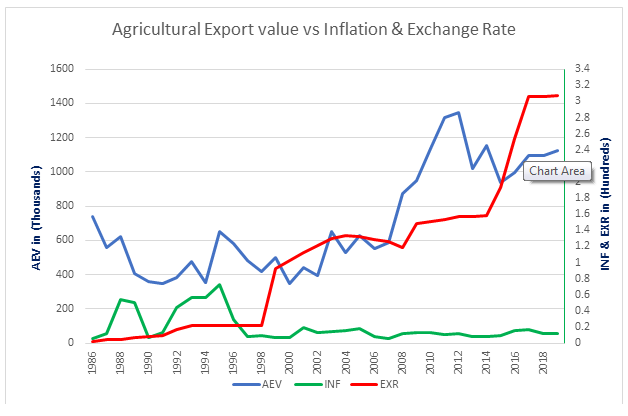
The exporter therefore needs a reliable exchange-rate assumption.
The Nigerian Export Promotion Council advises exporters to keep abreast of exchange rates when preparing export prices.
A basic conversion is:
Foreign Currency Price = Naira Export Price ÷ Applicable Naira-to-Foreign-Currency Rate
For example, if the hypothetical export cost is ₦13,800,000 and the exporter uses an illustrative exchange rate of ₦1,380 per US dollar:
₦13,800,000 ÷ ₦1,380 = US$10,000
This is only a calculation example. Exporters should use the applicable rate and transaction assumptions when preparing an actual quotation.
Because exchange rates can change, exporters should avoid using an outdated rate when negotiating a transaction that will be settled later.
Consider the Cost of Funds
Agricultural exports can require substantial working capital.
The exporter may need to finance:
- Product purchases
- Packaging
- Labour
- Storage
- Transportation
- Processing
- Inspection
- Documentation
- Freight
- Insurance
- Staff
- Buyer acquisition
If borrowed funds are used, the financing cost should be reflected in the export costing where appropriate.
NEPC notes that export financing requirements depend on the product and destination and advises exporters to explore appropriate financing options.
Account for Payment Terms
The price may need to reflect the payment arrangement.
For example, there is a financial difference between receiving payment before shipment and waiting for payment after delivery.
Potential payment structures include:
- Advance payment
- Letter of credit
- Documentary collection
- Cash against documents
- Deferred payment
- Open account arrangements
The exporter should understand how the agreed payment structure affects financing requirements, bank charges and transaction risk before finalising the quotation.
Consider Minimum Order Quantity
Export pricing can change significantly with volume.
Suppose an exporter has fixed expenses of ₦500,000 for a transaction.
If the shipment is 5 tonnes:
₦500,000 ÷ 5 = ₦100,000 fixed cost per tonne
If the shipment is 25 tonnes:
₦500,000 ÷ 25 = ₦20,000 fixed cost per tonne
The same fixed expense therefore has a very different effect on unit cost.
This is one reason exporters should calculate prices at the actual shipment volume rather than simply applying a standard price per kilogram.
NEPC also recommends taking minimum order quantities into account when setting export prices.
Use Current Nigerian Commodity Prices as a Starting Reference
Local commodity prices can help an exporter understand the procurement environment, but they should not automatically become the final export price.
NEPC maintains an Indicative Market Prices section with local commodity price publications for different periods in 2026.
These market references can help exporters compare current sourcing conditions across locations and periods.
However, an export price still needs to include the additional costs associated with preparing and delivering the product to the international buyer.
Do Not Confuse Local Market Price With Export Price
Consider a hypothetical example:
A commodity is available locally at:
₦800,000 per tonne
An exporter cannot automatically quote an overseas buyer ₦800,000 per tonne.
Suppose the exporter incurs:
- ₦60,000 sorting and preparation
- ₦40,000 packaging
- ₦50,000 inland logistics
- ₦20,000 warehousing
- ₦30,000 documentation and quality-related costs
- ₦100,000 freight and related delivery costs
Total additional cost:
₦300,000 per tonne
The cost before profit becomes:
₦800,000 + ₦300,000 = ₦1,100,000 per tonne
A profit margin then needs to be considered.
This illustrates why local farm-gate or wholesale prices should not be used as the final export quotation.
Build an Agricultural Export Pricing Sheet
A spreadsheet makes pricing easier to update and reduces the chance of forgetting a cost.
A basic export costing sheet can contain:
| Section | Cost to Record |
|---|---|
| Product | Quantity purchased and purchase price |
| Processing | Cleaning, drying, grading or processing |
| Losses | Rejected, damaged or unusable quantity |
| Packaging | Bags, cartons, pallets and labels |
| Inland logistics | Farm, warehouse and port transportation |
| Warehousing | Storage and handling |
| Quality | Testing, inspection and certification |
| Documentation | Export and commercial documents |
| Banking | Transaction and financing-related charges |
| Forwarding | Freight forwarder and customs-related services |
| Freight | International transportation |
| Insurance | Where applicable |
| Other costs | Destination-specific or transaction-specific costs |
| Total cost | Full shipment cost |
| Unit cost | Total cost divided by exportable quantity |
| Profit | Target profit |
| Final quotation | Amount charged to buyer |
The spreadsheet should also have a separate section for the exchange rate, shipment volume, currency, Incoterm and quotation validity period.
A Complete Hypothetical Export Pricing Example
Assume a Nigerian exporter wants to ship 20 tonnes of a cleaned agricultural commodity.
The hypothetical costs are:
| Cost | Amount |
|---|---|
| Purchase of commodity | ₦12,000,000 |
| Sorting and grading | ₦400,000 |
| Packaging | ₦500,000 |
| Inland logistics | ₦350,000 |
| Warehousing | ₦150,000 |
| Quality assurance | ₦200,000 |
| Documentation | ₦100,000 |
| Banking and administration | ₦100,000 |
| Freight and applicable delivery costs | ₦1,200,000 |
| Insurance | ₦100,000 |
| Total cost | ₦15,100,000 |
Unit cost:
₦15,100,000 ÷ 20 tonnes = ₦755,000 per tonne
If the exporter targets a 15% profit margin on the final selling price:
Selling price = ₦15,100,000 ÷ 0.85
Selling price = approximately ₦17,764,706
Price per tonne:
₦17,764,706 ÷ 20 = approximately ₦888,235 per tonne
The exporter should then compare this result with the destination-market price and the buyer’s expected price before accepting the transaction.
If the market cannot support the resulting quotation, the exporter should revisit the cost structure rather than simply reducing the price and hoping the transaction remains profitable.
Common Agricultural Export Pricing Mistakes
Using the farm-gate price as the export price
The farm-gate price represents only one component of the transaction. Packaging, logistics, quality control, documentation and international delivery can materially change the final cost.
Forgetting product losses
If some produce is rejected during sorting or fails quality specifications, the remaining exportable quantity carries the cost of the lost quantity.
Quoting without confirming freight
International freight can change the economics of a shipment. Obtain a current freight quotation where possible.
Ignoring the Incoterm
A buyer asking for FOB is not asking for the same cost structure as a buyer asking for CIF.
Confusing markup with margin
Adding 20% to cost does not produce a 20% profit margin on the final selling price.
Using an old exchange rate
Currency movements can change the naira equivalent of a foreign-currency quotation.
Ignoring financing costs
If the exporter borrows money to purchase and prepare the shipment, financing costs can affect the actual transaction economics.
Pricing without checking the destination market
A calculation can be mathematically correct but commercially unrealistic if the final price is above what buyers can obtain elsewhere.
Leaving out fixed costs
Bank charges, documentation, inspection, warehousing and other fixed expenses can have a significant effect on small shipments.
Giving a quotation without an expiry date
Commodity markets, freight charges and exchange rates can change. A quotation should clearly state its validity period where appropriate.
A Practical Agricultural Export Pricing Checklist
Before sending a price to an international buyer, confirm:
- Product quantity is clearly defined
- Product grade and specification are confirmed
- Actual procurement cost is recorded
- Expected processing losses are included
- Packaging costs are included
- Inland transportation is included
- Warehousing costs are included
- Quality assurance and certification costs are included
- Documentation costs are included
- Banking and financing costs are reviewed
- Freight quotation is current
- Insurance responsibility is understood
- Correct Incoterm is identified
- Applicable currency is confirmed
- Exchange-rate assumption is recorded
- Break-even price is calculated
- Desired profit margin is calculated correctly
- Destination-market pricing has been checked
- Minimum order quantity has been considered
- Buyer payment terms are understood
- Quotation validity period is stated
How to Make Agricultural Export Pricing More Accurate
The most reliable pricing system is not a single formula. It is a process of updating the major cost variables before every quotation.
An exporter should maintain current information on:
Local commodity prices
NEPC provides local commodity price information that can be used as one market reference when reviewing sourcing costs.
International market conditions
NEPC also provides market information and international price information to assist Nigerian exporters in assessing prospective markets.
Exchange rates
Foreign-currency quotations should be based on a current and clearly identified exchange-rate assumption.
Freight
International transportation should be based on current quotations where possible.
Regulatory requirements
The required certificates and documentation depend on the commodity and transaction. NEPC notes that exporters should identify the certificates applicable to their specific products.
Incoterms
The selected delivery term determines which costs and responsibilities belong to the exporter and buyer.
Final Formula for Agricultural Export Pricing in Nigeria
For a practical starting point, use:
Export Price = Product Cost + Processing + Packaging + Inland Logistics + Warehousing + Quality Assurance + Documentation + Banking + Forwarding + Freight + Insurance + Other Applicable Costs + Profit
Then calculate:
Unit Export Price = Total Export Price ÷ Exportable Quantity
After that, perform the second check:
Destination Market Price – Export Costs – Desired Margin = Maximum Viable Procurement Cost
The first calculation tells you what the shipment needs to sell for based on your costs.
The second tells you whether your costs are compatible with the market.
Using both approaches gives the exporter a clearer basis for deciding whether to accept a buyer’s offer, renegotiate the procurement price, adjust the shipment size, change the delivery terms or pursue another market.
Agricultural export pricing in Nigeria should therefore be treated as a continuously updated business calculation rather than a fixed price copied from the local market. NEPC’s current guidance specifically encourages exporters to review cost elements periodically, monitor exchange rates, understand HS codes and Incoterms, negotiate service-provider rates and calculate their break-even points.
Frequently Asked Questions
How do I calculate agricultural export prices in Nigeria?
Start with the actual cost of obtaining the agricultural product, then add processing, packaging, inland logistics, warehousing, quality assurance, documentation, banking, forwarding, freight, insurance and other applicable costs. Add the desired profit and divide the resulting amount by the exportable quantity to determine the unit export price.
What costs should be included in an agricultural export price?
Costs can include sourcing, processing, packaging, transportation, warehousing, quality assurance, documentation, bank charges, forwarding, freight, insurance and other transaction-specific expenses. NEPC recommends that exporters capture all export-related and associated costs when calculating their prices.
What is the difference between cost-plus and top-down export pricing?
Cost-plus pricing starts with the exporter’s costs and adds a target profit. Top-down pricing starts with the price available in the destination market and works backward to determine what the exporter can afford to spend while still covering costs and achieving the desired return.
How do I calculate FOB price for agricultural products?
A simplified FOB calculation starts with the product cost and adds the export preparation, inland logistics and other seller costs required to meet the FOB obligation under the agreed Incoterms 2020 rule, followed by the desired profit. The precise cost responsibilities should be checked against the specific contract and Incoterm.
How do I calculate CIF price?
A simplified CIF calculation starts with the relevant FOB price and adds the international freight and insurance that the seller is responsible for under the CIF arrangement. The actual calculation should follow the applicable Incoterms 2020 requirements and the agreed contract.
Should I use Nigerian commodity market prices when setting an export price?
Local commodity prices can provide a useful reference for sourcing costs, but they are not the final export price. NEPC publishes local commodity price information, while the exporter must separately calculate preparation, logistics, documentation, freight and other export costs.
How does the exchange rate affect agricultural export pricing?
When a Nigerian exporter receives payment in a foreign currency, changes in the exchange rate affect the naira value of the transaction. Exporters should therefore identify the exchange-rate assumption used in their quotation and review it before committing to a transaction.
What is the biggest mistake when calculating agricultural export prices?
One of the biggest problems is calculating the price from the farm-gate or purchase price alone. The exporter should calculate the complete cost of getting the required quantity and quality of produce to the agreed delivery point and then compare that cost with the destination-market price.
Agricultural Export Price Calculator
Calculate your estimated export cost, selling price and profit.