How to Increase Pepper Yield Per Plant
How to Increase Pepper Yield Per Plant
Two neighbors of mine once planted the same variety, in the same week, on the same kind of soil. At the end of the season one of them was carrying baskets out of the field while the other was complaining about “bad seed.” The seed was fine. The difference was what happened between transplanting and the first flower. I have seen that pattern so many times that I now say it plainly: yield per plant is mostly decided in the first six weeks, and most farmers spend those weeks doing the wrong things.
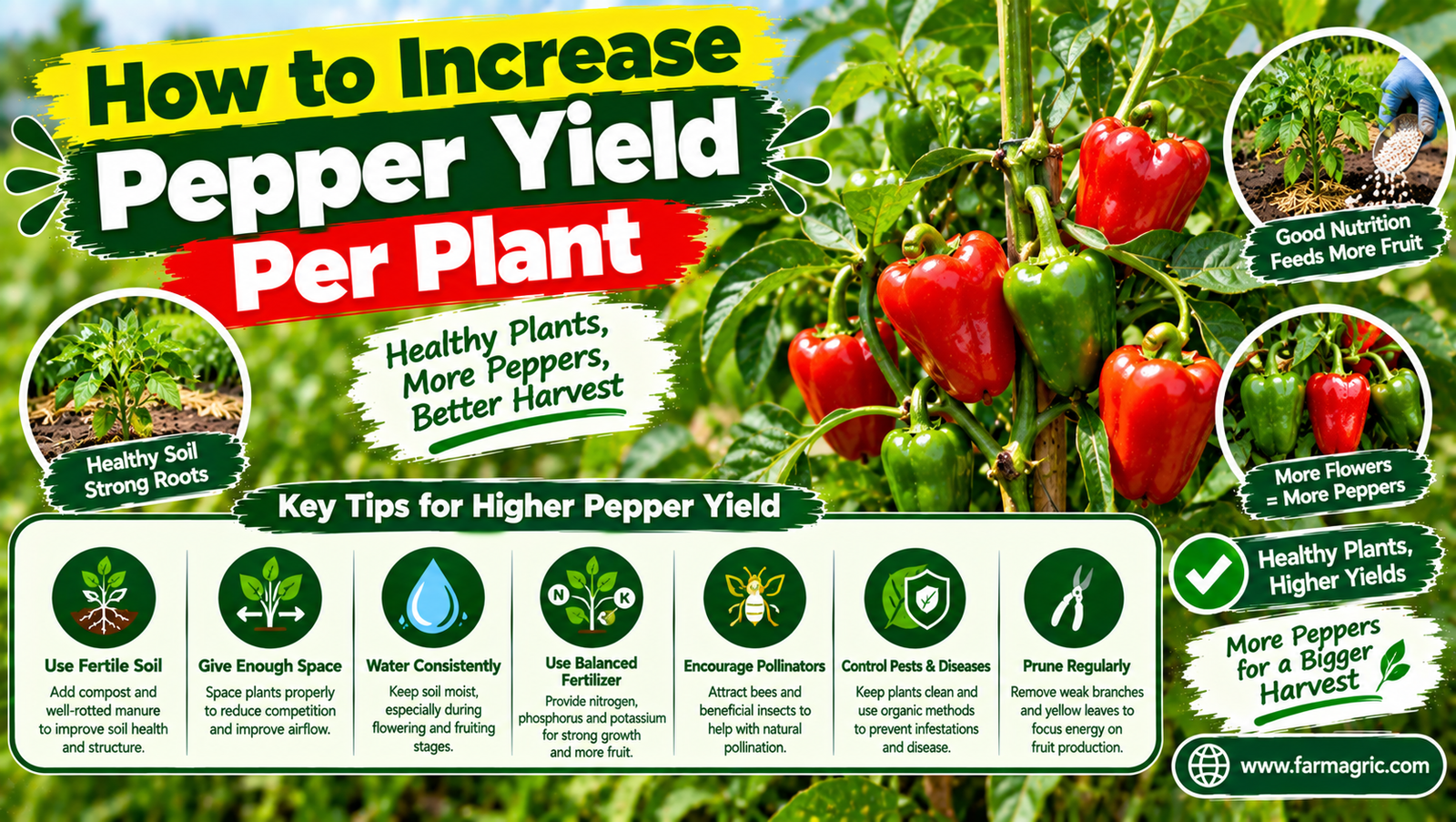
Here is the plain answer. To increase pepper yield per plant, you need a strong, well-branched plant before it starts carrying fruit, steady water and balanced feeding through flowering and fruiting, enough space and sun for every plant, and a harvest routine that keeps the plant producing. Yield is built from four things: how many branches the plant has, how many flowers it keeps, how many of those become fruit, and how long the plant stays healthy enough to keep going.
The short version of what I do is this. I start with healthy seedlings, plant them at the right spacing, pinch the first flowers, feed for growth early and for fruit later, keep the soil evenly moist under mulch, control pests and disease early, and pick often. The rest of this article explains each step and the mistakes that cost farmers the most.
What Most Farmers Get Wrong
The first mistake is planting too close. Farmers think more plants means more peppers. But crowded plants fight for light, water, and nutrients, stay wet longer, and catch disease faster. Each plant gives less, and the field total often ends up no better than a properly spaced one.
The second mistake is chasing leaves. A pepper plant with huge, dark green leaves looks impressive, but it may be carrying too much nitrogen and too little fruit. I have seen farmers proud of a jungle of foliage and then disappointed at harvest.
The third mistake is letting the plant fruit too early. A small transplant that sets fruit in its first weeks stays small for the rest of its life. You get a few peppers, and the plant never builds the frame it needs to hold more.
The fourth mistake is starving or flooding the plant in the middle of the season. Peppers need steady water and steady food. A plant that is stressed at flowering drops flowers, and a plant that is stressed at fruit filling gives small, poor fruit.
The fifth mistake is leaving ripe fruit on the plant. Mature fruit tells the plant its job is done. Pick on time and the plant keeps making more.
Start With the Right Seedling
A strong seedling is worth more than any fertilizer you will buy later. I want a stocky seedling with thick stems, dark healthy leaves, and a good root ball that holds together when I lift it. I do not want tall, thin, pale seedlings that stretched in a shaded nursery, and I do not want seedlings that already carry flowers.
Choose a variety that suits your area and your market. A high yielding variety planted in the wrong climate will lose to a local one that handles your heat, rain, and diseases. Ask the farmers who sell at your market what is performing, and buy certified seed from a source you trust.
Harden your seedlings for a week before transplanting by giving them more sun and a little less water. Transplant in the late afternoon or on a cloudy day, water them in well, and shade them for a few days if the sun is fierce. A seedling that does not stall after transplanting gets a head start that shows up at harvest.
Spacing and Land Preparation
Prepare the soil deeply and loosely so roots can go down. Mix in well-rotted compost or manure, because peppers respond to good soil more than almost any other vegetable I grow. Make raised beds or ridges so water drains and the roots never sit wet.
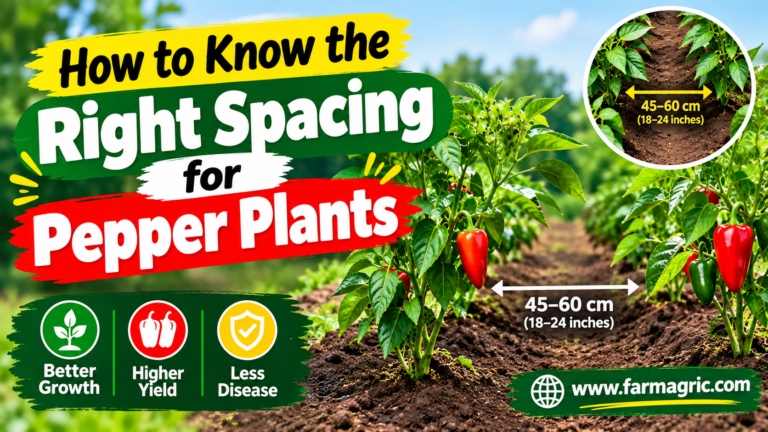
For spacing, I plant in rows with enough room that the leaves of neighboring plants just touch when the plants are mature. The exact distance depends on the variety, but a common range is around 45 to 60 centimeters between plants and 75 to 100 centimeters between rows for most types. Large types need more room and small hot types can go a bit tighter. Check what your seed supplier recommends and adjust to your soil.
Build the Frame First
This is the step that changes yields the most, and it is the one most farmers skip. In the first three to four weeks after transplanting, your job is to grow the plant, not the fruit. Pinch off the first flowers and any early fruit set while the plant is small. It hurts to do it, but the plant will put that energy into roots, stems, and branches.
Once the plant has several strong branches and has started to fill its space, let it flower. A plant with more branches has more places to carry flowers, and more flowers kept means more fruit. Some farmers also pinch the growing tip of young plants to encourage branching, and this can help with some varieties. If you try it, test it on a few plants first so you can see the difference in your own field.
Stake or support the plants when they begin to carry weight. Heavy-fruiting plants snap, and a broken branch is a lost harvest. Light stakes with soft ties keep branches upright, keep fruit off the ground, and improve airflow.
Feeding for Yield
Pepper plants are hungry, but what they eat and when matters. Before planting, work in compost or manure and a balanced fertilizer based on a soil test if you can get one. A basic soil test is the cheapest way to stop guessing.
In the first weeks, the plant needs a good supply of nitrogen and phosphorus for leaves and roots. When flowering begins, I shift toward more potassium and less nitrogen, because potassium supports flowering, fruit set, size, and quality. Too much nitrogen at this stage gives you a leafy plant with few peppers.
Do not forget calcium and other minerals. Calcium moves into the fruit with water, so even watering matters as much as the calcium itself. If your soil is acidic, liming according to a soil test helps the plant take up what it needs. Split your feeding into several smaller doses through the season instead of one heavy dose, because small regular meals keep the plant steady and reduce loss from rain washing nutrients away.
Follow the rates on the fertilizer label. More is not better, and overfeeding burns roots and wastes money.
Water and Mulch
Peppers want even moisture from transplant to last harvest. The two worst things you can do are let the soil dry out completely and then flood it, or keep it soggy all the time. I check by pushing a finger a knuckle deep. If it is dry, I water. If it is wet and sticky, I wait.
Mulch every row with straw, dry grass, or crop residue once the soil has warmed. It holds moisture, keeps the roots cool, suppresses weeds, and cuts down on soil splashing onto leaves. Drip irrigation is the best investment you can make for yield, because it gives steady water at the root and keeps the leaves dry.
The most sensitive stages are flowering and fruit filling. Never let the plant go through a dry spell at those times.
Protecting the Plant
A plant that spends its energy fighting pests and disease has little left for fruit. Walk the field at least twice a week. Look under the leaves, check the growing tips, and tap flowers over white paper to look for thrips. Watch for aphids, mites, whiteflies, and fruit borers, and treat early with products approved for peppers in your area, following the label.
Keep the field clean of weeds, which hide pests and compete for water. Rotate your peppers with cereals or legumes, and avoid planting after tomatoes, eggplant, or potatoes in the same ground. Remove and bury diseased plants or fruit instead of leaving them in the field.
Heat protection matters too. In very hot weeks, a light shade net can save your flowers and fruit set. The plant that keeps its flowers in a heat wave is the plant that gives the heavy harvest.
Harvest to Keep the Plant Producing
Harvest regularly. Ripe or fully sized fruit left on the plant slows new flowering. When I am picking, I use a knife or sharp scissors to cut the stem instead of pulling, because pulling can break branches. Pick in the cool of the morning, handle the fruit gently, and keep it shaded.
Whether you pick green or wait for color depends on your market. Green fruit can be harvested earlier and the plant keeps flowering. Fully ripe red fruit takes longer on the plant, so it slows down the number of fruit you get per plant. Decide based on what pays better for you.
Step-by-Step Practical Plan
If I were handing you a plan for the next season, it would run like this.
Prepare the beds deeply with compost and good drainage, and set up your irrigation and mulch before the seedlings go in.
Choose a suitable variety and raise or buy stocky, healthy seedlings. Harden them off for a week.
Transplant at the right spacing, in the late afternoon, and water well.
For the first three to four weeks, pinch off early flowers and feed for growth, using balanced nutrition and compost.
When the plant has a strong frame, let it flower. Switch to a feed with less nitrogen and more potassium, split into small regular doses.
Keep watering even and keep the mulch in place. Stake the plants before they get heavy.
Scout twice a week for pests and disease, and act early.
Start harvesting on time and keep picking regularly through the season.
Write down what you did and what happened, so next season you improve on it.
Warning Signs to Watch For
Learn to read the plant. A very dark green plant with few flowers is getting too much nitrogen. Pale, slow plants with yellowing lower leaves may need feeding or have root trouble. Flowers dropping in hot weather point to heat stress. Small, thin fruit usually means water or nutrient stress during filling. Leaves curling and silvery streaks suggest mites or thrips. Wilting in the heat of the day that does not recover by evening can mean root or water problems.
If you see any of these, act that week, not next month.
What I Would Do Differently If Starting Again Today
If I were starting fresh, I would spend more on the first six weeks and less on rescue sprays later. I would put in drip irrigation and mulch before planting. I would stop crowding the rows to squeeze in extra plants. I would pinch early flowers on every plant without exception. I would test my soil before buying fertilizer, and I would keep a notebook of every feeding, watering problem, pest outbreak, and harvest weight, because numbers teach you more than memory does.
I would also compare my own plants, not other people’s stories. Weigh the harvest from ten plants, change one thing next season, and weigh again. That is how a farmer actually raises yield.
FAQ
How many peppers should one plant produce?
It depends on the variety, climate, and management. A well-grown plant of a productive variety can give many times what a neglected one gives, and the gap is usually management, not seed. Track your own plants to set a realistic target.
Does pinching or pruning increase pepper yield?
Pinching the first flowers on young plants usually helps by building a stronger frame. Pinching the growing tip can encourage branching in some varieties. Heavy pruning later in the season can expose fruit to sunscald, so go lightly.
What fertilizer is best for more peppers?
A balanced feed with good nitrogen early, then more potassium and less nitrogen once flowering starts, based on a soil test where possible. Compost or well-rotted manure underneath it all makes every fertilizer work better.
Why does my pepper plant have lots of leaves but few fruits?
Too much nitrogen is the most common reason. Heat stress, uneven water, and pests can also cause it. Cut back on nitrogen, even out the watering, and check for thrips and mites.
Should I pick peppers green or wait for them to turn red?
Picking green keeps the plant flowering and usually gives more fruit per plant. Waiting for red gives fruit with more sweetness or heat but fewer fruit overall. Choose based on your market price.
The Advice Worth Bookmarking
Grow the plant first and the pepper second. A strong frame carries a heavy harvest, and a rushed plant never catches up.